What Counts as Contaminated DEF
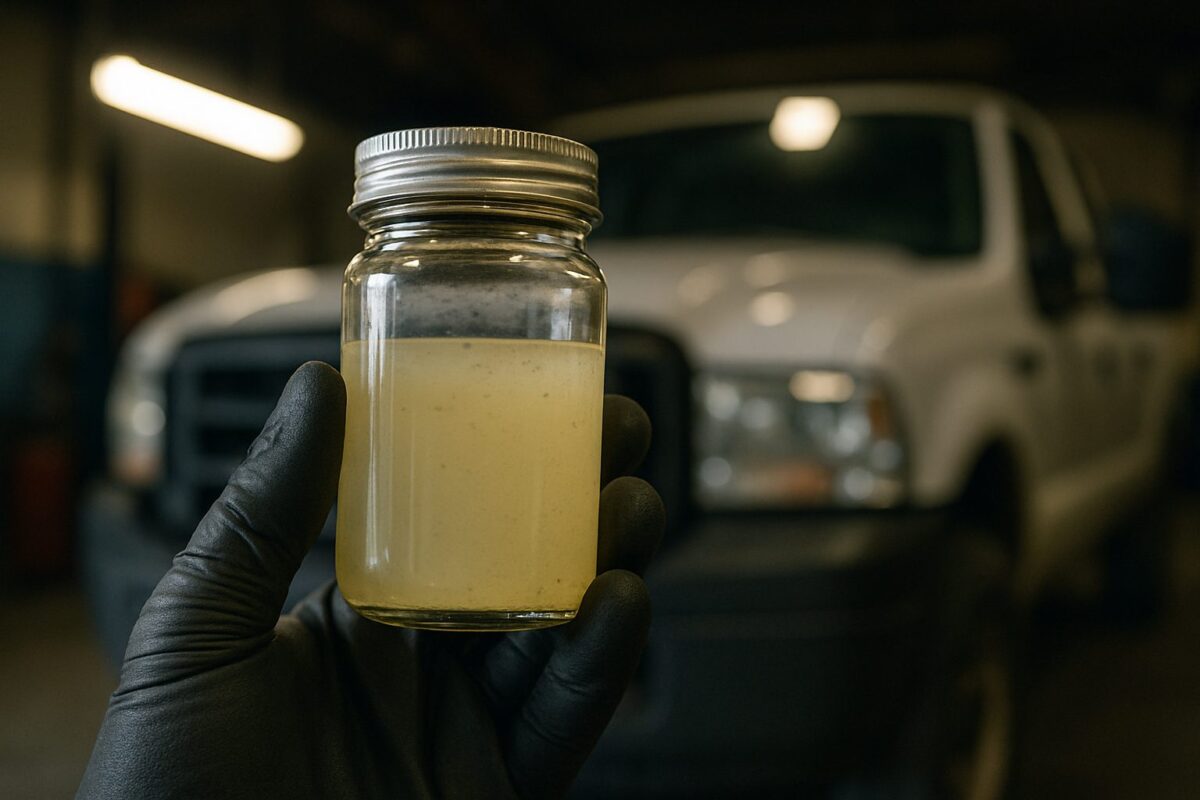
Contaminated DEF is diesel exhaust fluid that has picked up anything besides urea and purified water, or has drifted off its 32.5% urea concentration. Water, tap-water minerals, diesel or oil, dirt, and heat damage are the usual causes. If you see a film or smell fuel, leave the engine off, drain the tank, rinse it with distilled water, and refill with fresh certified DEF from a sealed container. Then fix whatever let the contamination in, or it comes back with the next fill.
DEF is held to the ISO 22241 standard: 32.5% urea, with a working band of 31.8% to 33.2%, and an insoluble matter limit under 20 ppm. The SCR system doses on the assumption that the fluid in the tank meets that spec. It takes very little to break it. One equipment dealer’s warning is that about a tenth of a teaspoon of many common elements can push a 5,000-gallon tank of DEF off spec. Calcium, sodium, potassium, magnesium, iron, copper, and zinc are all on that list, and plain tap water is enough to do it.
Contaminated DEF Symptoms, Stage by Stage
Contaminated DEF shows itself in roughly this order. The earlier you catch it, the less of the system it has touched.
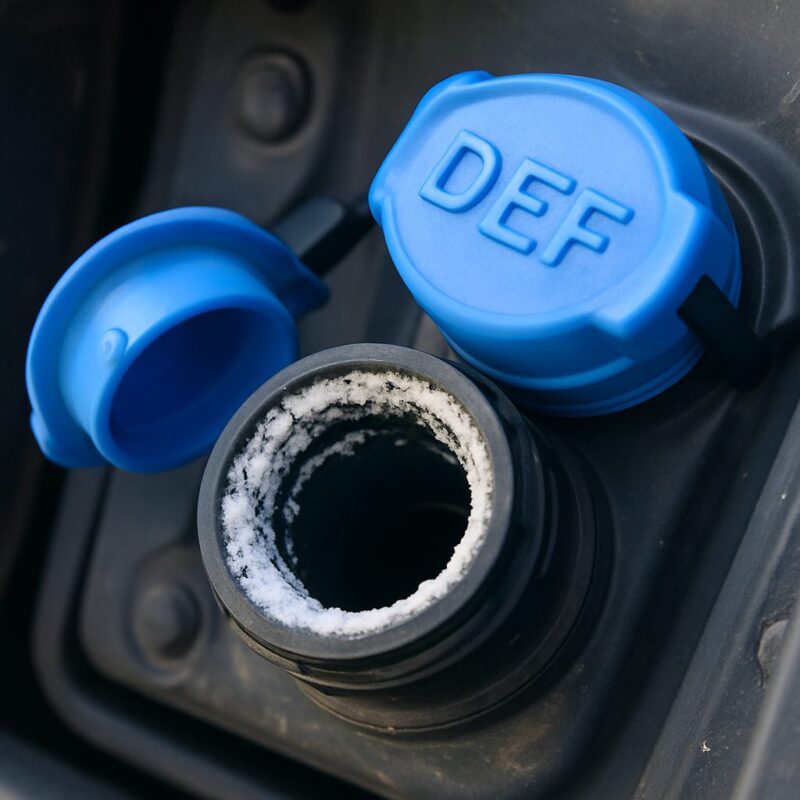
- Stage 1, in the jug or tank: fresh DEF should be clean, with nothing floating in it. A brown film on top of the fluid, a fuel smell, particles, or debris around the filler neck all point to contamination. Engine or hydraulic oil floats, so a sample taken from the top layer of the tank is the one to check.
- Stage 2, on the dashboard: the truck runs its own check. Some trucks spell it out with an “Exhaust Fluid Contaminated” message; others show the DEF quality poor warning or the broader Service DEF System message. A stored fault code and the check engine light usually follow.
- Stage 3, in the codes: read the codes before you clear anything. The DEF trouble codes guide and the pages for P20E8, P204F, P203F, and P249D explain what each one points at, and the sensor guide covers the parts behind them.
- Stage 4, in behavior: higher DEF consumption, poor engine performance, and then a derate. The engine will derate and can eventually shut down when the DEF tank is filled with contaminated fluid, the same end point as an empty tank described in what happens if you run out of DEF.
The quick test: a handheld DEF refractometer reads urea concentration on the spot. Inside 31.8% to 33.2% the concentration is fine; outside it the fluid is diluted or concentrated and gets drained. A refractometer reads concentration only. A smell test catches fuel, and minerals take a lab sample tested by ICP or XRF against ISO 22241-1. Our guide on how to test DEF fluid covers taking the sample and reading each result.
The Five Contamination Types and What Each Does to the SCR System
- Water (dilution): rain through an open cap, condensation, or water added to stretch the fluid. Diluted DEF loses NOx reduction effectiveness, the system burns through more of it, and off-spec concentration throws dosing off.
- Tap-water minerals: tap water alone can bring DEF off spec, and it can carry contaminants that are harmful to SCR systems. Calcium, magnesium, sodium, potassium, and iron are among the trace metals that ISO 22241 quality testing covers. The injector cleaning guide covers what buildup at the doser looks like.
- Diesel or oil: other fluids in the DEF tank can damage the SCR system and shut the engine down. A shared funnel or a container that once held fuel or oil is the usual path in. If fuel got into the DEF tank, or DEF into the fuel tank, the steps are in DEF in the diesel tank: what to do.
- Dirt and dust: insoluble matter clogs DEF injectors and filters. Dust gets in at an open fill neck, a dirty nozzle, or a coupler that was not wiped before connecting.
- Heat and sunlight (degradation): nothing added, but prolonged sunlight and high temperatures degrade DEF. Heat drives off water and pushes the concentration up, and warm storage converts urea toward ammonia. Fluid that goes off spec this way trips the same quality checks, and the guide to how long DEF lasts covers how temperature affects it.
Over time, contaminated fluid damages the SCR catalyst. Off-spec fluid also leaves solid deposits on the exhaust wall that can degrade the catalyst and raise backpressure, which costs fuel economy and power.
Can You Put Water in a DEF Tank?
No. Water dilutes the fluid below the 31.8% floor, and diluted DEF does a poorer job of reducing NOx while the truck uses more of it. Tap water also carries contaminants that are harmful to SCR systems. Water belongs in a DEF system in exactly one place: rinsing. Engine makers call for distilled water to rinse a DEF tank or equipment, followed by a rinse with DEF if tap water was all that was available. The same rule holds for every other fluid, washer fluid, coolant, and diesel included. Only certified DEF goes in the DEF tank. If you are out and nothing certified is on hand, park until you can get it.
How DEF Gets Contaminated: At the Fill, in Storage, in the Tank
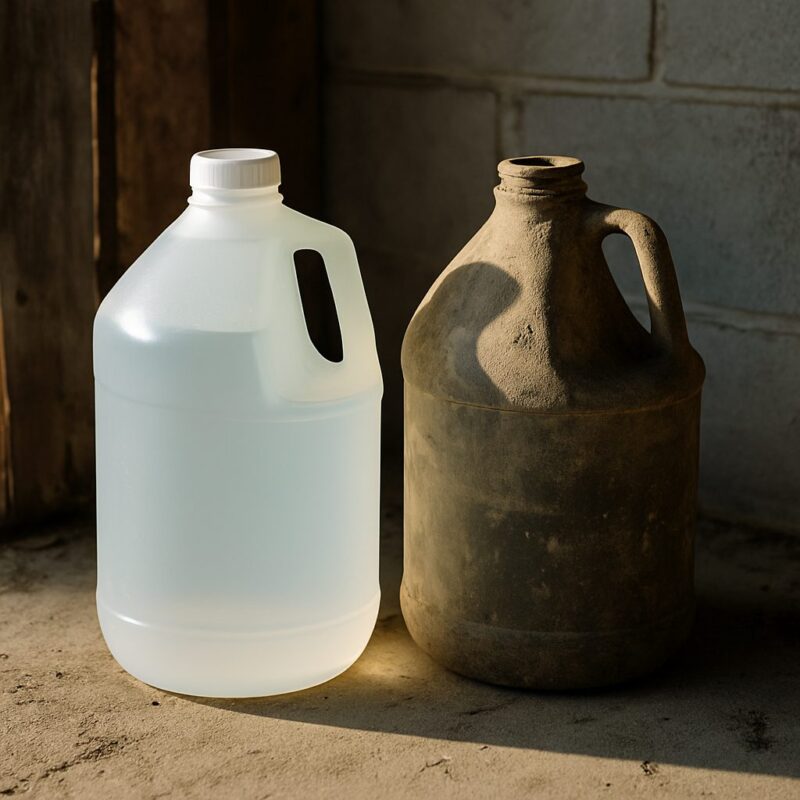
DEF contamination is a handling problem, and older containers that were never dedicated to DEF raise the odds most. It happens in three places.
- At the fill: a funnel carrying leftover dirt, grease, or another fluid. A jug that once held something else. A dirty nozzle or a fill neck that was not wiped before the cap came off. Engine makers list the same habits to avoid: clean the tank neck before removing the cap, wipe the container before opening it, and clean the dispensing nozzle before filling.
- In storage: containers left in direct sun or heat. Bulk totes kept unshaded in warm weather, where water evaporates and urea converts to ammonia. Opened containers with a paper seal under the cap, a seal that degrades over time and adds to contamination. Mixing certified brands is a smaller question, covered in can you mix DEF brands.
- In the tank: a damaged fill cap, a clogged tank vent filter, or worn parts that let dirt and water in. DEF freezes at 12°F and expands as it freezes, so cold-weather tank and heater problems belong on the inspection list too (see the heater guide).
How to Fix Contaminated DEF: Drain, Flush, Refill
Topping off with fresh fluid leaves the contaminant in the tank, and the system keeps pulling from that tank. The fix is a drain.
- 1. Leave the engine off. If there is a brown film on the fluid or any fuel smell, do not start the engine until the tank has been drained and refilled.
- 2. Drain the tank completely. Use the tank drain plug where the truck has one, or a clean pump used only for DEF. Dispose of the fluid as described in how to dispose of DEF.
- 3. Rinse with distilled water. Engine-maker guidance is to rinse DEF tanks and equipment with distilled or deionized water, and if only tap water is available, to finish with a rinse of DEF. Drain the rinse fully.
- 4. Clean the tank if dirt or sediment got in. A rinse does not lift sediment from the floor of the tank. The full procedure is in the DEF tank cleaning guide, and crystal buildup already downstream is covered in the crystallized DEF guide.
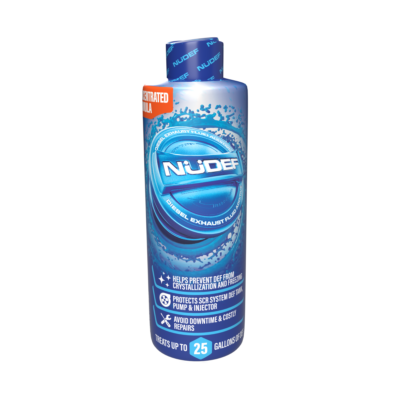
- 5. Refill with fresh certified DEF and treat it. Fill from a sealed container and dose NüDef into the new fill to help prevent crystallization in the replacement fluid: one 8 oz bottle per 25 gallons, at every refill.
- 6. Confirm with a refractometer and a drive. Check that the new fill reads inside 31.8% to 33.2%, then drive and confirm the warning stays off. A warning that returns on fresh, verified fluid points at the hardware, and the sensor guide takes over.
When it goes to the shop: if any other fluid reached the DEF tank, or contamination got past the tank, have the DEF system cleaned by the dealer or an authorized repair shop. In the worst cases, components have to be replaced. What not to do: do not add water to thin out a contaminant, do not reuse the container the bad fluid came from, and do not clear codes and keep driving.
What Contaminated DEF Costs: Ignoring It vs Fixing It
The cost grows with how far the contaminant travels.
- Caught in the jug or tank: a drain, a rinse, and a fresh fill of certified DEF.
- Dirt that reached the doser: clogged injectors and filters, which means parts and labor on top of the drain.
- Other fluids in the system: a dealer cleaning of the DEF system, and component replacement in the worst cases.
- Left in service: catalyst damage over time, higher backpressure, a derate, and possible shutdown with the truck stuck where it stopped.
- Warranty: some engine makers have said they will decline warranty claims when damage is traced back to contaminated DEF.
Against that list, prevention is a refractometer, sealed storage, a dedicated funnel, and a treated fill.
Prevention: Cheap, Boring, Effective
Buy certified DEF and look for the certification on the label. Rotate stock so older fluid gets used first. Keep containers sealed, shaded, and cool: one engine maker’s guidance is to store DEF around 77°F to avoid crystal precipitation, and that DEF stays stable for at least one year when kept between 10°F and 90°F. Use containers made for DEF (polyethylene, polypropylene, or 316 stainless) and keep the funnel and pump for DEF only. Then treat each fill: NüDef DEF Treatment, Additive & Stabilizer helps prevent DEF crystallization and helps protect the SCR tank, pump, and injector. One 8 oz bottle treats up to 25 gallons. Order direct from nudef.com. Fleets can set up case pricing through the wholesale program.
Contamination at Fleet Scale
One contaminated jug affects one truck. One contaminated tote affects every vehicle that filled from it before anyone noticed. At fleet scale, contamination nearly always enters through storage and transfer equipment, so the fixes are procedural.
- Closed-system transfer: a closed-loop system keeps airborne dust out, and engine makers point to a closed system wherever the fill area cannot be kept clean. The bulk DEF guide covers setup.
- Certificate of Analysis with every delivery, and first-in, first-out rotation so no tote ages in a hot corner of the yard.
- A refractometer at the fuel island: check in-tank and stored DEF on a schedule, and inspect tank necks and vent filters while you are there. Heavy-truck patterns are in the semi truck guide.
- Treat at every fill: dosing NüDef at one 8 oz bottle per 25 gallons helps prevent crystallization in slow-turning stock. Case pricing runs through the wholesale signup.