What P249D Actually Means
The P249D code is a feedback code. The SCR system runs closed-loop: the engine computer doses DEF into the exhaust, the downstream NOx sensor reports how much NOx survived, and the computer trims the dose to hit its target. P249D sets when that loop hits its ceiling — the ECM is commanding maximum reductant flow and the NOx numbers say the exhaust still isn’t getting enough. Either the fluid isn’t physically arriving, or what’s arriving isn’t doing its job.
That makes P249D broader than a simple pressure fault like P20E8. The problem can live anywhere in the delivery path — injector, pump, lines — or in the fluid itself, or occasionally in the sensor doing the reporting. The full code family is mapped in our DEF trouble codes guide.
Symptoms You’ll Notice
P249D usually arrives quietly. The first sign is a check-engine light with no change in how the truck drives, because the SCR loop has simply run out of adjustment range and logged it. What follows depends on how long it is ignored:
- A check-engine light alone, often on a highway trip when the exhaust is hot and dosing demand is highest.
- A NOx-efficiency or “SCR performance” companion code (P20EE on most platforms, P207F on Cummins-powered trucks) within a few drive cycles, because the same shortfall that trips P249D fails the conversion-efficiency check.
- A “Service DEF System” or “Service Emission System” message on GM and Ram trucks once the fault is confirmed on consecutive trips, with a countdown to a speed derate. Our Service DEF System guide walks that sequence.
- A faint ammonia or urea smell at the tailpipe in some cases, when a partially blocked injector dribbles rather than atomizes.
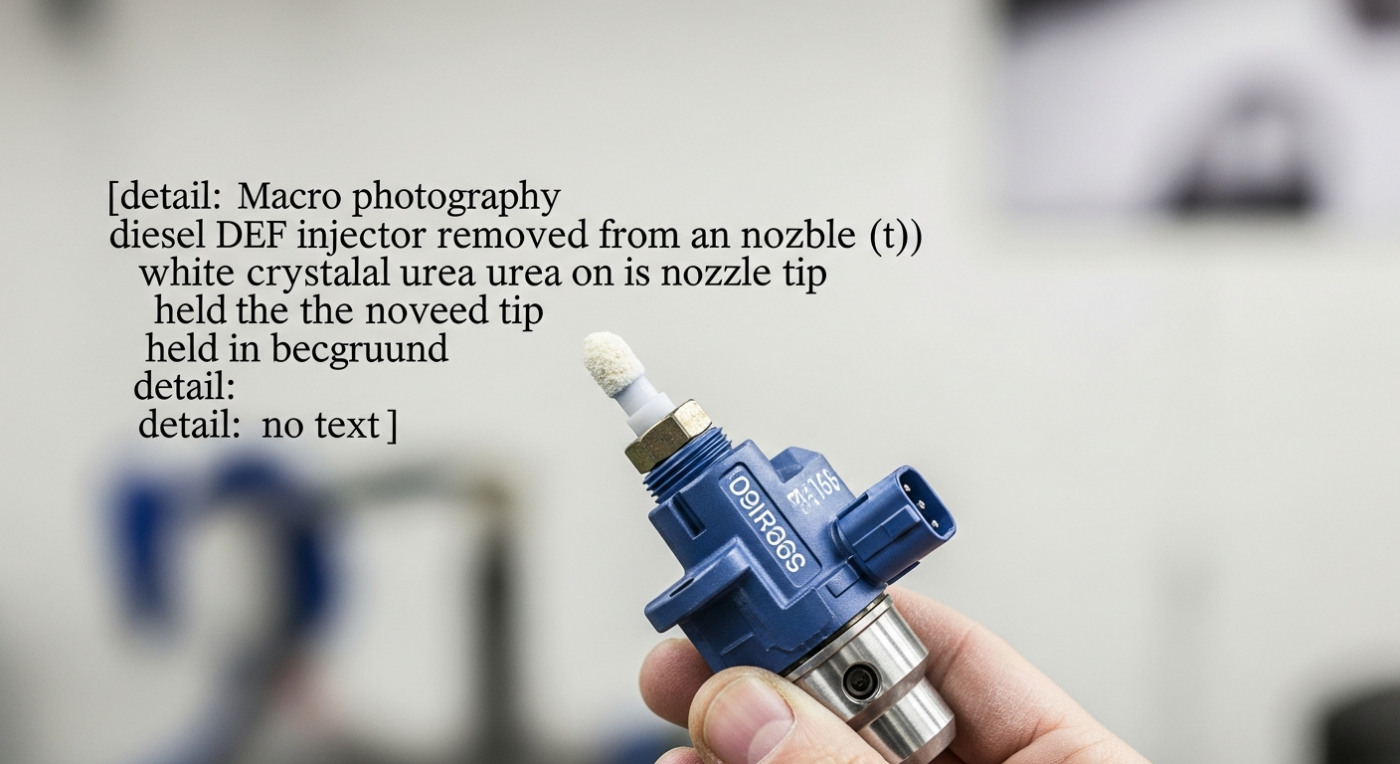
- White crust at the injector or a fitting if you look under the truck: the visible form of the restriction.
What P249D does not do is cut power on its own. The derate comes from the emissions strategy after the code has persisted, which is why the first week after the light is the cheapest time to act.
Why Duramax Trucks See It Most
Search any diesel forum for P249D and the results skew heavily GM: 6.6 Duramax pickups, LML and L5P generations especially. The Duramax injector (GM calls it the emission reduction fluid injector) mounts close to hot exhaust, and heat plus DEF residue is the recipe for urea crystal buildup at the nozzle. The tip restricts a little more each month until commanded flow and actual flow drift far enough apart to set the code.
The same failure happens on Ram, Ford, and heavy equipment — Duramax owners just meet it more often. If your truck is a Duramax with more than one DEF complaint, our Duramax DEF system guide covers the platform’s full pattern by generation.
Causes, Ranked by Likelihood
1. Crystallized or clogged DEF injector. The number-one cause. Urea crystals build at the injector tip and inside the nozzle, throttling flow. The injector still clicks, still doses — just less than commanded. Our DEF injector cleaning guide shows the removal and cleaning procedure, which often saves the part.
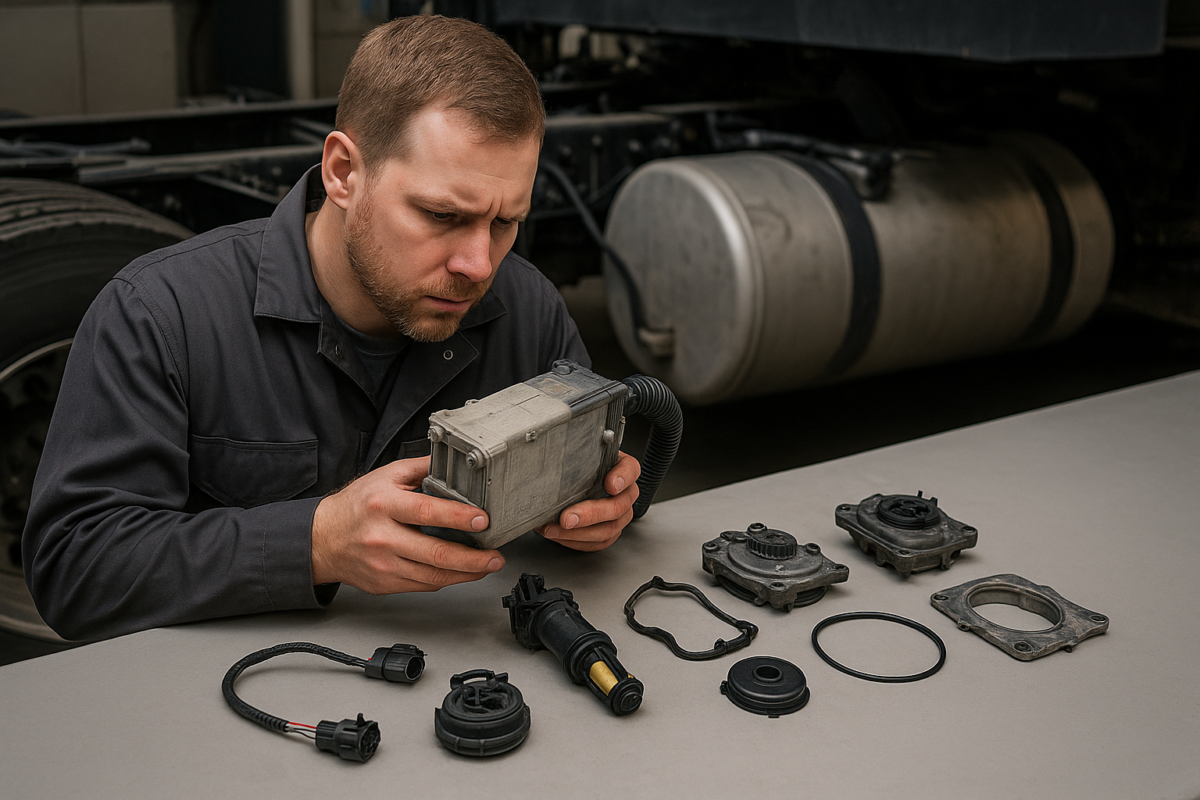
2. Weak DEF pump or clogged pump filter. The injector can only spray what the pump delivers. A pump that builds enough pressure to avoid P20E8 can still fall short at maximum commanded flow. The pump failure guide covers testing it properly.
3. Restricted or kinked line. Crystal deposits inside the line, or physical damage, choke flow between pump and injector. White crust at any fitting is the tell — see cleaning crystallized DEF.
4. Bad or diluted DEF. If the fluid is degraded, watered down, or contaminated, full flow still doesn’t reduce NOx on target — the loop maxes out chasing chemistry that isn’t there. Heat-aged fluid from a jug that sat all summer is a classic version.
5. NOx sensor error. The minority case: delivery is fine and the downstream sensor is lying. Usually accompanied by other sensor codes. Our NOx sensor guide covers it.
P249D vs. the Related Reductant Codes
Four other codes share the same plumbing and are easy to confuse with P249D. Reading them together points at the failing part faster than any one code alone:
- P20E8, reductant pressure too low: the pump cannot build pressure. If P20E8 is present with P249D, start at the pump filter and lines; the injector is being starved rather than blocked.
- P2048, injector circuit low: an electrical fault at the injector coil or wiring. P2048 with P249D usually means the injector has failed outright rather than clogged.
- P204F, reductant system performance: a general performance fault that many controllers set alongside P249D once the loop has been at its limit for a while.
- P203F, reductant level too low: a tank-level or level-sensor fault. P203F with P249D on a full tank points to a level sender rather than a delivery problem.
- P20EE / P207F, SCR NOx conversion efficiency: the downstream check that fails when too little DEF reaches the catalyst; a consequence of P249D rather than a separate cause.
The full family is mapped in the DEF trouble codes guide.
How to Diagnose It
- Check DEF quality first — it’s free. Fresh, correctly stored fluid reading 32.5% urea on a refractometer rules out the chemistry cause in thirty seconds. Cloudy fluid or crystal sediment in the tank ends the diagnosis early.
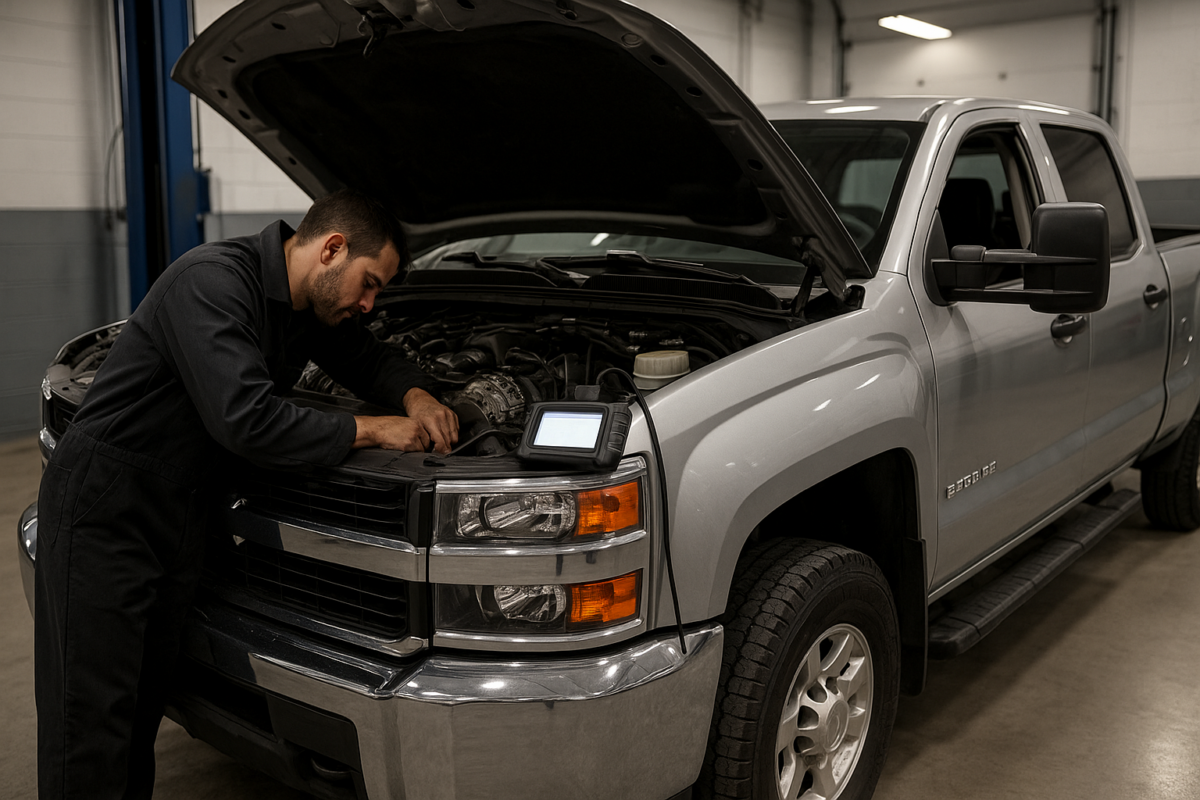
- Run the injector quantity test. Most capable scan tools command a fixed dose while you catch the spray in a measuring cup at the removed injector. Commanded 100 mL, caught 40 mL: there’s your restriction.
- Inspect the injector tip. Pull it and look. White crystal buildup at the nozzle is the most common single finding behind P249D, and it’s visible to the naked eye.
- Verify pump delivery. If the injector is clean and flow is still short, test pressure and delivery volume at the pump before buying an injector that won’t fix it.
- Only then suspect the sensor. With delivery and fluid verified good, a skewed downstream NOx sensor becomes the credible remaining cause.
How to Fix P249D
- Injector restricted (most cases): remove the injector, soak the tip in warm distilled water until the crystals dissolve, brush gently, confirm a clean cone-shaped spray on the bench, and reinstall with a new gasket. The injector cleaning guide has the procedure by platform. If the spray pattern is still ragged after cleaning, replace the injector; on Duramax trucks that is a $200 to $450 part plus an hour of labor.
- Pump delivery short: replace the pump filter first (a $25 to $80 part on most trucks), flush the lines, and retest delivery. Replace the pump module only if delivery is still short with a clean filter and clear lines.
- Fluid out of spec: drain the tank, flush with distilled water, refill with fresh DEF from a sealed container, and clear the code. Test the new fluid with a refractometer; the DEF testing guide shows what 32.5 percent looks like.
- Sensor fault: replace the downstream NOx sensor only after delivery and fluid are verified good, and use the OEM part; aftermarket NOx sensors are the most common cause of a repeat visit.
- Clear and verify: clear the code with a scan tool, then drive a full warm-up cycle with a highway section. Watch the commanded versus actual dosing values on the scan tool; if they track within a few percent, the repair is complete.
Repair Costs
Typical 2026 ranges below. Note the first row: a careful cleaning saves the injector in a large share of cases, which is why the quantity test and visual inspection come before the parts order.
Vehicle-Specific Notes: Duramax, Cummins, Power Stroke, Sprinter
GM 6.6 Duramax (LML 2011 to 2016, L5P 2017 on): the code’s home platform. The LML injector sits ahead of the SCR brick in a hot, cramped location and crystallizes readily; GM revised the injector and its gasket more than once, so a replacement part is an upgrade over an early original. The L5P moved the injector and improved the design but still sets P249D when the fluid is old or the pump filter is neglected. Chevrolet and GMC scan data label the injector the “emission reduction fluid injector” and show commanded versus actual flow directly. The Duramax DEF guide covers the platform by generation.
Ram 6.7 Cummins: the equivalent fault usually surfaces as P207F (NOx conversion efficiency) with P249D as the second code. The Cummins doser is easier to reach than the GM unit and responds well to cleaning; the pump module is the more frequent hard failure. See the Ram 6.7 DEF guide.
Ford 6.7 Power Stroke: Ford trucks more often set P20E8 or P20EE first; P249D on a Power Stroke usually accompanies a pump or reductant-line problem rather than a clogged injector. The Power Stroke DEF guide has the code map.
Mercedes Sprinter and BlueTEC vans: a small tank and a hot-mounted injector make the Sprinter prone to the same crystallization, often with limp-mode messaging that sounds more alarming than the fix. The Sprinter DEF guide covers the reset procedure.
Heavy trucks and equipment: on Class 8 tractors and off-road machines the same code appears under the OEM’s own numbering, and the diagnosis order is identical: fluid, injector, pump, sensor.
Preventing a Repeat
A cleaned or replaced injector goes right back to crystallizing if the fluid keeps depositing urea every heat cycle. The prevention list is short:
- Fresh fluid, stored cool. DEF has a shelf life, and heat shortens it. Buy from high-turnover sources and keep spare jugs out of the sun.
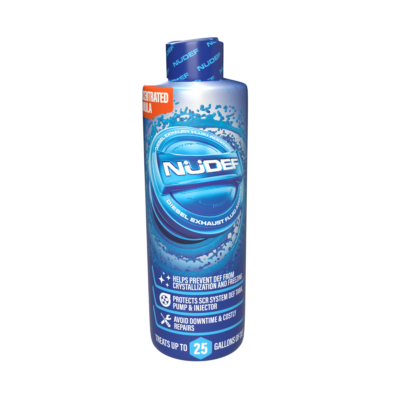
- Treat the DEF. NüDef treatment keeps urea in solution through heat cycles, which is precisely the failure mechanism at a hot-mounted injector tip. It’s the difference between cleaning an injector once and cleaning it every year.
- Fix it at the first code, not the third. A restricted injector makes the pump work harder and lets crystal debris migrate. One P249D handled promptly is cheaper than the P249D-plus-P20E8 combination six months later.
More in the reductant-code series: DEF trouble codes index · P203F · P20E8 · P204F · P2048