What You Are Testing For
Diesel exhaust fluid is simple on paper: 32.5 percent high-purity urea, 67.5 percent deionized water, made and packaged to ISO 22241. The 32.5 figure matters because it is the eutectic point, the mix that freezes at the lowest temperature (12°F) and doses predictably across the temperature range the SCR system expects. The standard allows 31.8 to 33.2 percent. Outside that band the truck’s dosing math is wrong, and the quality sensor in the tank eventually says so. Our what DEF is made of guide covers the chemistry; this one covers checking it.
Concentration is the number you can test at home. The rest of ISO 22241 (biuret, aldehydes, insoluble matter, phosphate, calcium, iron, and a dozen metals, plus alkalinity as ammonia) needs a lab. Most field problems are concentration problems anyway: fluid that evaporated in a hot tank and climbed above spec, fluid diluted with water, or fluid contaminated with something that changes its refractive index.
Three Ways to Test DEF
| Method | What it measures | Cost | Accuracy | Best for |
|---|---|---|---|---|
| Optical refractometer (DEF or Brix scale) | Urea concentration by refractive index | $15 to $40; digital $100 to $300 | About ±0.3 percent with temperature compensation | Owners, small fleets, every fill from a new source |
| Test strips | Approximate concentration; some flag contaminants | $10 to $25 per pack | Rough, ±1 to 2 percent | Quick go or no-go on a jug |
| Lab analysis (ISO 22241-2) | Full spec: urea, biuret, aldehydes, metals, alkalinity, particulates | $50 to $150 per sample | Reference grade | Bulk totes, disputes, warranty claims |
| The truck’s DEF quality sensor | Concentration by ultrasonic or conductivity reading in the tank | Built in | Good, but it reads the tank, not the jug | Ongoing monitoring; the “DEF quality poor” warning |
Taking a Sample That Means Something
Most bad readings are bad samples. Use a clean, dry container that has never held anything else; a new plastic cup is fine, a coffee mug is not. Sample from the tank if you are diagnosing the truck and from the jug or tote if you are checking a purchase; they answer different questions. Let the sample sit a few minutes to reach room temperature, because refractive index shifts with temperature and cheap refractometers without automatic temperature compensation read high on cold fluid. Do not test fluid that has been sitting open in the cup for an hour; it starts evaporating the moment it is exposed, which is the same drift you are trying to detect in the tank.
Reading the Refractometer
Calibrate first: a drop of distilled water on the prism should read zero. Wipe the prism, put two or three drops of DEF on it, close the cover, and read the line against the DEF scale (or the Brix scale if that is what you have; DEF-specific refractometers print the urea percentage directly). Clean the prism with distilled water and a soft cloth after every test; dried urea on the glass throws the next reading.
- 31.8 to 33.2 percent: in spec. Use it.
- 30 to 31.7 percent: diluted. A little water got in, or the jug was topped off with something. Usable in a pinch but expect a quality warning eventually; replace it.
- Below 30 percent: water contamination. Do not use it; drain the tank if it is already in there. Our contaminated DEF guide covers the drain decision.
- 33.3 to 35 percent: concentrated. The fluid has been evaporating, usually in a hot tank or a jug left open. It will read “quality poor” on many trucks and it deposits crystals faster. Replace it. Diluting it back by eye never lands on 32.5, because a jug cannot measure the water precisely enough.
- Above 35 percent, or cloudy, or particles visible: replace it and look for the cause.
Digital refractometers with temperature compensation remove the cold-sample error and are worth the money for a fleet testing every delivery.
Reading Test Strips and the Truck’s Own Sensor
Test strips dip into the fluid and change color against a printed scale. They are a screening tool: good for telling a fresh jug from a bad one, too coarse to tell 32.5 from 33.5. Some brands include a second pad that reacts to common contaminants. Treat a borderline strip result as a reason to pull the refractometer, not as a verdict.
The truck already runs a concentration test every time it drives. The quality sensor in the DEF header measures the fluid in the tank with an ultrasonic or conductivity method and sets the “DEF quality poor” warning when it drifts outside the band. Two things about that sensor: it reads the tank, so a fresh jug that tested fine can still trigger it if the tank was already off spec, and it can fail on its own. When the dash says poor and your refractometer says 32.5, suspect the sensor; the DEF quality poor guide and the sensors guide walk through that diagnosis.
When a Lab Test Is Worth It
A refractometer cannot see biuret (a urea byproduct from overheated storage), aldehydes, metals leached from the wrong container, or phosphate from a contaminated tote. Those poison SCR catalysts slowly and expensively. Send a sample to a lab that tests to ISO 22241-2 when: you are buying in bulk and want the supplier’s certificate confirmed; a fleet is seeing repeat SCR problems on fluid that reads 32.5; a warranty claim is in play and you need documentation; or a tote has been in the sun for a season. Expect $50 to $150 per sample and a report that lists every parameter against the standard. Our bulk DEF guide covers tote handling and what to ask a supplier for.
What the Result Tells You to Do
In spec: fill and go. Slightly diluted or slightly concentrated in a jug: do not pour it in; return it or discard it, because the tank will only make it worse. Off spec in the tank: drain and refill with fresh fluid, and then clear the warning; a partial top-off with good fluid rarely moves a bad tank back inside the band. Visible crystals or cloudiness anywhere: treat that as contamination, drain, and inspect the tank and filter, following the DEF tank cleaning guide. And after any bad result, ask where the fluid came from and how long it sat. Nine times out of ten, the answer is heat and time.
A Testing Routine for Fleets
A refractometer earns its keep on a schedule. Test every bulk delivery before it goes into the tote and log the reading with the date and the supplier’s certificate of analysis; a delivery that reads 33 on a hot day is a conversation with the supplier, not a fill. Test the tote itself monthly in summer and after any week it spent above 85°F, because a half-empty tote breathes and drifts. Test any truck that throws a quality warning before anyone touches the sensor, from the tank, and write the number on the work order; it settles the sensor-versus-fluid question in a minute. Send one sample a quarter from bulk stock to a lab so the parameters the refractometer cannot see are on record. Fleets that run this routine trace almost every SCR complaint to a fill date, which is the point.
What Testing Cannot Catch
Testing is a snapshot. Fluid that reads 32.5 at the pump starts changing the moment it is in a tank at 100°F in the sun; a truck that sits two weeks between runs can drift its own tank out of spec without anyone adding anything. A refractometer will not warn you about deposits already forming on the doser tip, and it says nothing about what next month’s reading will be. That is why fleets that test every delivery and still see crystallized dosers are not doing anything wrong at the test bench; the problem starts after the test.
Keeping Fluid In Spec Between Tests
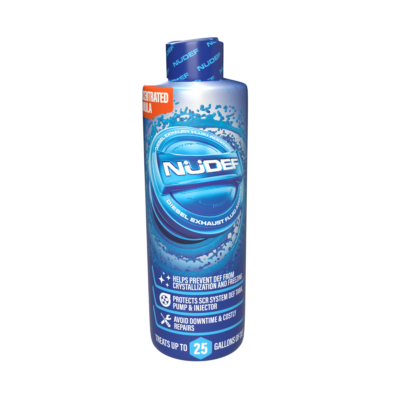
Buy fresh (busy pump lanes, sealed jugs with a date), store cool and closed, and use it before it ages; the storage guide has the temperature and shelf-life numbers. Then treat it. NüDef DEF Treatment & Stabilizer keeps urea in solution through heat, cold, and sit time, so the fluid that tested right stays right in the tank and reaches the doser as a clean liquid, with no crystals. It does not add water to diluted fluid or remove urea from concentrated fluid; it keeps good fluid good. One 8 oz bottle treats up to 25 gallons; it goes in the DEF tank, never the diesel tank.