The Sensors Living in Your DEF System
Every SCR-equipped diesel carries a small network of sensors dedicated to the DEF system, and most owners meet them only when one fails. A DEF sensor is any one of the five below; when a shop says “your DEF sensor is bad,” the first question is which one.
- Level sensor: reports tank level to the gauge and triggers the low-DEF countdown. Usually a float or ultrasonic sender inside the tank.
- Quality/concentration sensor: measures urea concentration, the sensor behind the dreaded “DEF quality poor” warning we covered in its own guide.
- Temperature sensor: tells the ECM when tank heaters need to run, covered alongside the hardware in the heater replacement guide.
- Pressure sensor: watches the dosing pump’s output; its faults surface as codes like P20E8.
- NOx sensors (upstream and downstream): the expensive pair that judges whether the whole system is working, with their own failure guide.
On many trucks the first three live in one replaceable assembly, which brings us to the part name owners search for the most.
What a “DEF Header” Is (RAM Owners, This Is Your Part)
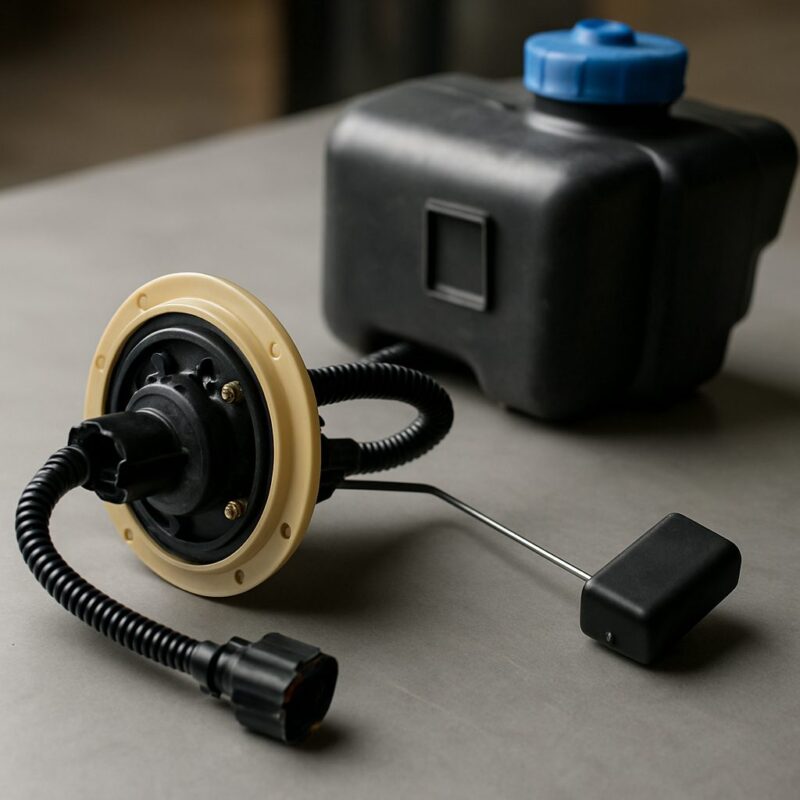
The DEF header, sometimes called the sender unit or reservoir assembly, is the combined unit that drops into the top of the DEF tank carrying the level sensor, temperature sensor, tank heater, and often the pickup line and filter in one piece. Chrysler/RAM parts language made “header” the common term, so RAM and Jeep diesel owners hunting a gauge stuck on empty or a heater code usually end up buying this one assembly.
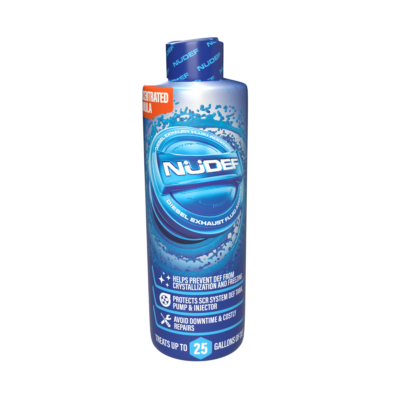
Why it matters: because the header bundles several functions, one crystallized or failed component takes the whole assembly’s readings down with it, and the fix is typically replacing the unit. Aftermarket headers run roughly $150 to $500 with dealer versions higher, plus one to two hours of labor on most platforms. Urea crystal buildup on the float and sensor surfaces is the leading killer, which is exactly the failure mode NüDef DEF Treatment, Additive & Stabilizer exists to prevent: fluid that stays in solution cannot crystallize on the parts that read it.
DEF Sensor Symptoms, Sensor by Sensor
Each sensor fails in its own recognizable way. Match the symptom before you match a part number.
- Level sensor: the gauge freezes on one reading, jumps between full and empty on the same tank, or starts a low-DEF countdown right after a fill. The truck may refuse to clear the countdown even after you add fluid because it never saw the level change.
- Quality sensor: “DEF quality poor,” “incorrect DEF detected” or “see dealer” messages after a normal fill, usually with an SCR efficiency code. Fresh certified fluid that still triggers the message points at the sensor; fluid from an old jug points at the fluid.
- Temperature sensor: heater faults in mild weather, a heater that never runs in real cold, or a frozen-tank message when the tank is plainly liquid. It often fails as part of the header.
- Pressure sensor and doser: pressure-too-low or too-high codes, dosing-performance codes, a derate that arrives with no gauge symptoms at all. Crystals in the doser line drop pressure exactly like a failed sensor does.
- NOx sensors: SCR efficiency codes, “service exhaust system” warnings and a derate countdown with a full tank and clean fluid. Upstream and downstream sensors are different part numbers and the code tells you which.
DEF Sensor Codes: Which Code Points at Which Sensor
- Level sensor / header: P203F (reductant level too low) and its neighbors P203B and P203C on GM and Ford platforms.
- Pressure sensor / doser: P20E8 (reductant pressure too low), P204F (reductant system performance) and P249D (reductant flow too low).
- Temperature sensor and heater: P205B and P205C (reductant tank temperature sensor) and the P20B9 to P20BD heater-control family covered in the heater failure guide.
- Quality sensor: P207F (reductant quality performance) and P20EE style efficiency codes when the ECM decides the fluid, or the sensor reading it, is wrong.
- NOx sensors: P20EE (SCR NOx catalyst efficiency below threshold), P2200 to P2209 for the upstream sensor circuit and P229F to P22A6 for the downstream sensor.
A code is a starting point, not a diagnosis. Every code in the level and pressure families can be produced by crystallized fluid instead of a dead sensor, which is why the diagnosis steps below come before the parts order.
Gauges and Warning Lights, Decoded
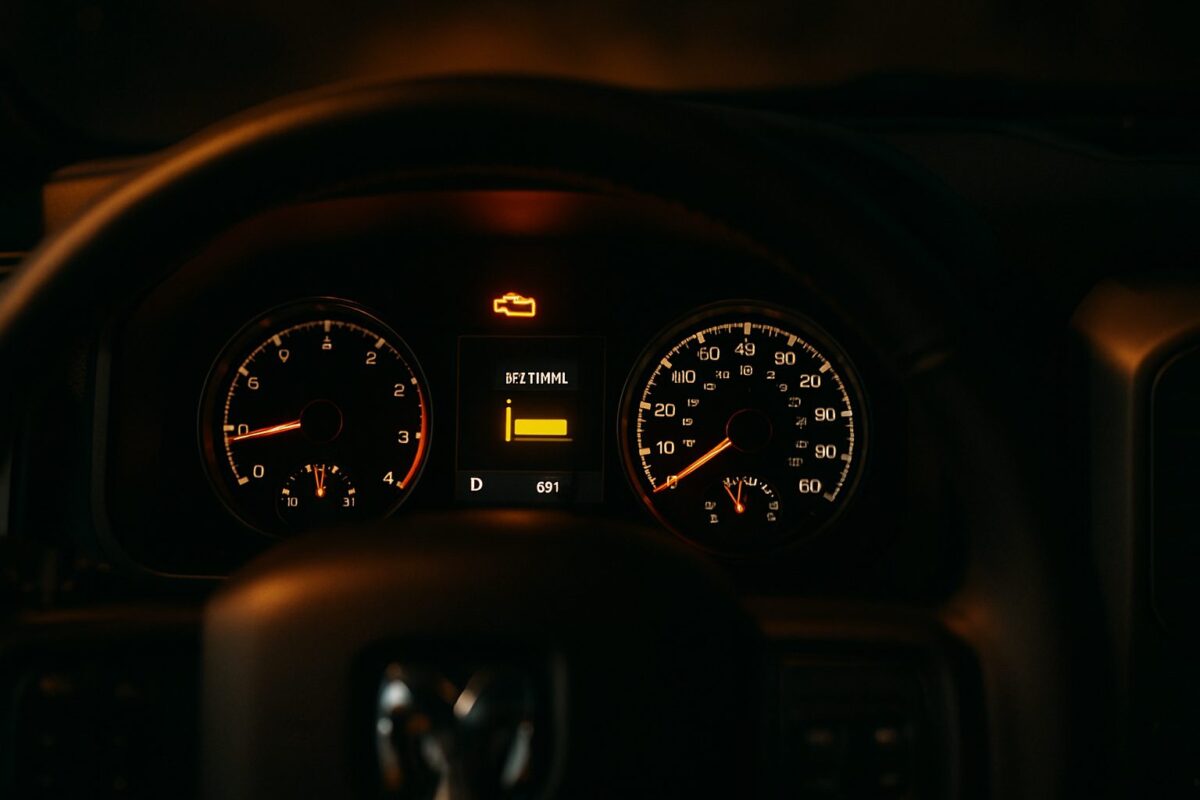
- The DEF gauge: some trucks show a real multi-bar gauge, others only a low-DEF lamp. A gauge stuck on full or empty with a tank you know is half-full is a level-sensor or header fault, and it will eventually strand the truck via a false-empty countdown even though fluid is aboard.
- Low-DEF lamp and countdown: legitimate warnings ending in derate and no-restart, the sequence we walked through in what happens when you run out. A false countdown from a bad sensor behaves identically, so read the level physically before assuming the gauge lies.
- “See dealer” DEF messages: quality or system faults the truck cannot self-clear. Pull codes before parts: the same message can come from a $30 fluid problem or a $400 sensor.
- Amber SCR/emissions lamps: shared by DEF and DPF systems, decoded side by side in the DPF and regen guide.
Diagnosing Sensor Problems Without Guessing
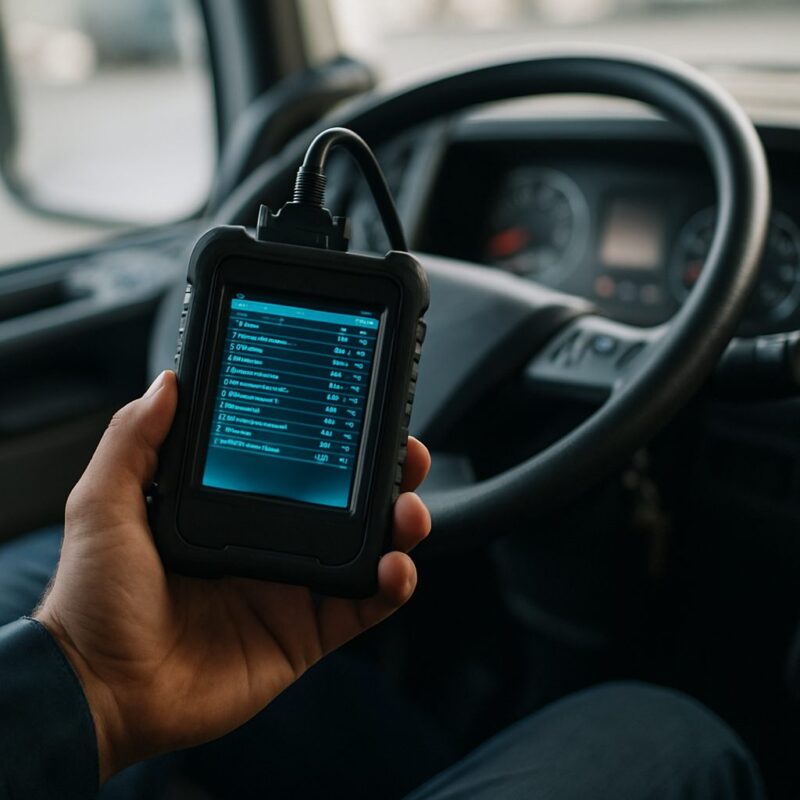
- Scan first, always. A $30 OBD reader showing live DEF data settles most arguments: level reading vs physical level, temperature plausibility, pressure at the doser. Parts-cannoning sensors without data is how a $200 fix becomes an $800 one.
- Verify the fluid before blaming hardware. Degraded or diluted DEF triggers the quality sensor honestly. A refractometer reading (32.5% target) costs little and separates fluid problems from sensor problems in seconds. What contaminated fluid looks like is in the contaminated DEF guide.
- Look for crystals at every connection. White crusty deposits on the header, doser, or lines mean the fluid has been coming out of solution; replacing sensors without fixing fluid condition just schedules the next failure.
- Heaters and sensors fail together in winter. A frozen tank with a dead heater reads like sensor chaos; the heater guide covers untangling the two, and when DEF freezes explains why a 12 degree F tank is normal, not a fault.
Can You Drive With a Bad DEF Sensor?
For a while, and the clock is already running. A failed level or quality sensor does not stop the engine on the spot; it starts the same inducement sequence an empty tank does. On most pickups that is a warning, then a distance countdown, then a speed limit of roughly 5 mph or a no-restart once the countdown reaches zero. Heavy trucks derate to 25% torque and then 5 mph on the same logic. A NOx sensor fault usually allows more miles before the derate but will not pass an emissions inspection and will not clear on its own.
So the honest answer is: you can drive to the shop, and you should not drive past it. Fill the tank with certified fluid, scan the code, and confirm whether the sensor or the fluid is lying before the countdown does the deciding for you.
Replacement Costs by Sensor (2026)
- Level sensor / DEF header assembly: $150–$500 parts, 1–2 hours labor.
- Quality sensor: $200–$500 installed on most platforms.
- Temperature sensor: often integrated with the header; standalone units $50–$150.
- Pressure sensor / doser unit: $150–$600 depending on integration.
- NOx sensors: the heavyweights at $300–$800 each, detailed in the NOx guide.
Stack those numbers and the prevention math writes itself: most of these parts die from crystallized or degraded fluid, and treating the tank with NüDef costs a few dollars per fill against a sensor bill that starts at $200. One 8 oz bottle treats up to 25 gallons.
Platform Notes: Where These Parts Hide
- RAM/Cummins: the header is the famous one, accessed from the top of the tank; RAM-specific fault patterns live in the RAM 6.7 guide. Aftermarket header support is the best of any platform.
- Ford Power Stroke: level and heater functions bundle similarly; false-level complaints cluster in cold climates, and the Ford guide maps the codes.
- GM Duramax: quality-sensor and heater faults dominate; the Duramax guide covers the emission-system-light cascade GM owners know too well.
- Semi trucks: bigger tanks, same architecture, and sensor failures cost more in downtime than parts; fleet patterns are in the semi truck guide.
Across every platform the same rule holds: the parts differ, the killer is shared. Crystallized fluid does not care what badge is on the grille.
The Five-Minute False-Alarm Check
Before any sensor purchase, run this sequence:
- 1. Look in the tank. Physical level vs gauge reading. Disagreement means sender; agreement means keep going.
- 2. Pull codes. The code family points at level, quality, pressure, or NOx territory and cuts the suspect list to one or two parts.
- 3. Test the fluid. Refractometer at 32.5%. Off-spec fluid explains quality warnings without any hardware failure.
- 4. Inspect for crystals. White deposits at the fill neck, header, or doser mean the fluid side needs fixing regardless of which sensor died.
- 5. Then buy the part. One diagnosis, one purchase, and treat the fresh fill with NüDef so the new sensor lives longer than the old one.
Keeping Sensors Alive
- Buy certified fluid and keep it fresh: the shelf-life rules protect the sensors as much as the fluid.
- Treat the tank: NüDef keeps urea in solution through heat, cold, and sit time, so floats float free, quality sensors read clean fluid, and dosers stay open. It is the difference between sensors that read the fluid and sensors entombed in it.
- Do not top off with mystery jugs: the dusty emergency jug is how contamination reaches the quality sensor; keep a treated spare instead.
- Winter discipline: let the heater cycle do its work and never chisel at a frozen tank; the header is what breaks.