
Solid vs Flashing: The Difference Is Urgency
A solid DEF lamp is information. A flashing one is a deadline. Manufacturers use the blink to mean the same thing across nearly every diesel: the system has moved past warning you and started a countdown that ends in reduced power, a speed cap, or a no-restart. How much runway you have varies by truck, but the escalation ladder is consistent:
- Solid amber lamp: low fluid or a first-stage fault. Fill the tank, and if the light stays on, get the codes read.
- Flashing lamp: the countdown is running. Low fluid ignored, or a fault the system has confirmed. Many trucks pair the blink with a mileage counter or a message like the one covered in our Service DEF System guide.
- Flashing plus a derate icon or check-engine light: final stage. Expect a speed limit (often 55 mph, then 5 mph on heavy trucks) and, on many platforms, no restart after the next shutdown.
The one thing a flashing light never means is “keep driving and hope.” The blink exists because regulators require the truck to force the issue, and it will.
The Four Reasons a DEF Light Flashes
- 1. The tank is genuinely low or empty. The most common and the cheapest. Fill with fresh certified DEF and drive; the lamp should clear within a few minutes of running. If it does not, the system logged a fault that needs the next steps. Our run-out guide covers the full empty-tank ladder.
- 2. The fluid failed a quality check. Degraded, diluted, or contaminated fluid trips the quality sensor, and many trucks announce it with a blink before the quality-poor message appears. A refractometer reading against 32.5% settles it in two minutes.
- 3. A sensor is lying. A crystallized level sender reads empty with a half-full tank and starts the same countdown. The hardware side lives in our sensors and gauges guide. Check the physical level with a flashlight before believing the gauge.
- 4. A dosing fault. Clogged injector, failed pump, or a heater that could not thaw the tank. These arrive with codes, and the trouble-code map points at the component.
By Brand: What the Blink Means on Your Truck
- Freightliner and other Detroit-powered trucks: a flashing DEF lamp starts a derate schedule that steps down to 55 mph and eventually 5 mph. Freightliner drivers searching “def light flashing” are usually already in stage two; check fluid level first, then codes. A solid lamp plus flashing check-engine means the countdown is nearly done.
- Ram/Cummins pickups: the blink pairs with a mileage countdown in the cluster. The 6.7 Cummins guide covers why these trucks crystallize more than most.
- Ford Power Stroke: flashing arrives with message-center warnings and ends at a 50 mph cap.
- GM Duramax: speed-limit ladder shown directly in the driver display, detailed in our Duramax guide.
- Ag and construction equipment: same logic, different lamps: most Tier 4 machines flash the DEF symbol, then derate to idle-only. The fix path is identical.
What to Do, in Order
- 1. Check the physical tank level. Flashlight, thirty seconds. Low or empty: fill with fresh certified fluid from a high-turnover source. Do not grab the dusty jug that lived in the bed all summer; that is how a $15 fix becomes a contamination problem.
- 2. Drive it a few minutes. After a legitimate refill, most systems self-clear within five to ten minutes of running. The countdown resets and the lamp goes out.
- 3. Still flashing? Read the codes. A $30 OBD reader turns the blink into a component name. Quality codes point at the fluid, pressure codes at the doser and pump, level codes at the sender.
- 4. Verify the fluid before buying parts. Off-spec fluid triggers most of these lamps, and a refractometer check is the cheapest diagnostic in diesel ownership.
- 5. Plan around the countdown. If the miles-remaining counter is low, do not start a trip you cannot finish. The derate does not negotiate, and neither does the tow bill.
Keeping the Light Off
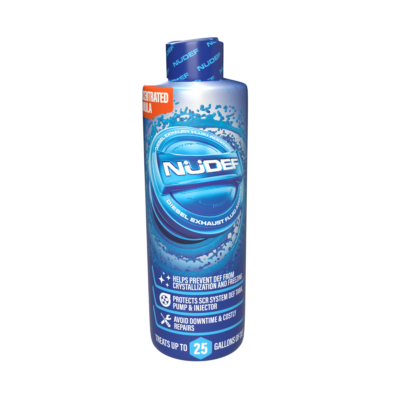
Nearly every flashing-lamp story starts with fluid that drifted out of spec or ran low without anyone noticing. The boring routine prevents both: keep the tank above a quarter, buy certified fluid from busy retailers, check date codes, and treat every fill with NüDef DEF Treatment & Stabilizer to help prevent crystallization through heat, cold, and sit time. Stable fluid keeps quality sensors happy, level floats moving, and dosers open, which is the whole cast of characters behind the blink. One 8 oz bottle treats up to 25 gallons of DEF. Order direct at nudef.com; fleets running multiple trucks can set up case pricing through the wholesale program, because a flashing lamp on one truck is an annoyance and on a fleet it is a scheduling problem.