It happens at truck stops every single day: the DEF nozzle goes into the diesel filler, or the green diesel nozzle ends up over the blue-capped DEF tank. If that is you right now, skip everything else on this page and read the next section first. The difference between a bad afternoon and a five-figure repair bill is almost entirely decided by what you do in the next five minutes.
First: Do Not Start the Engine
If the wrong fluid went into either tank and the engine has not been started, stop. Do not turn the key. Do not “just move it away from the pump.” On most trucks, turning the key to run — even without cranking — wakes the fuel-lift pump or the DEF dosing pump and starts pulling the contaminated fluid into lines and components that are expensive to replace. Put the truck in neutral and push it, or have the truck stop staff help you roll it clear.
Caught at this stage, both mistakes are recoverable with a drain and flush measured in hundreds of dollars. Every step past this point — key on, engine started, idled, driven — multiplies the bill. Call a mobile mechanic or have it towed to a shop; the tow is the cheapest insurance you will ever buy.
How the Wrong-Tank Mistake Happens
Nobody plans this, and it is more common than the embarrassed silence around it suggests. The setups that produce it:
- Side-by-side fillers. On most modern diesel pickups and many trucks, the blue DEF cap sits right next to the fuel filler behind the same door. In the dark, in the rain, or at the end of a long shift, hands go to the wrong cap.
- Unfamiliar equipment. Rental trucks, pool vehicles, and fleet swaps put drivers in front of filler layouts they have never seen. A driver who has fueled one truck a thousand times operates the next one on autopilot.
- The nozzle almost fits. DEF pump nozzles are deliberately smaller than diesel nozzles, and a DEF filler neck is designed to reject a diesel nozzle — but a determined hand, a funnel, or a jug with a spout defeats every safeguard. Most contamination events involve a 2.5-gallon DEF jug and a funnel, not the pump island.
- Jerry cans and transfer tanks. Unlabeled containers in the bed are how gasoline ends up in diesel tanks and diesel ends up in DEF tanks on job sites and farms.
The pattern matters because prevention is mostly about breaking these specific chains, which we cover at the end. First, the damage control.
DEF in the Diesel Tank: What It Does
DEF is roughly one-third urea and two-thirds deionized water. Neither belongs anywhere near a modern high-pressure common-rail fuel system. The water provides no lubrication where the fuel system depends on diesel’s lubricity, and the urea is aggressively corrosive to the steel, brass, and aluminum throughout fuel systems. Two failure tracks run at once:
- Immediate mechanical damage. The high-pressure injection pump runs at tens of thousands of PSI with tolerances measured in microns, lubricated by the fuel itself. Water-thin DEF strips that lubrication, and the pump begins wearing the moment it swallows the mix. Injectors follow. A truck that runs long enough on a DEF-diesel mix typically stalls within minutes — and by then the pump and injectors are suspect.
- Corrosion that keeps working. Urea attacks the fuel system even after the truck is parked. DEF left sitting in a tank, lines, and rail keeps corroding while you decide what to do. This is why the flush needs to happen promptly, not next week.
Amount matters less than people hope. A gallon of DEF in a half-full tank of diesel does not dilute into harmlessness; urea and water separate from fuel, sit at the bottom of the tank where the pickup is, and get drawn in first. Treat any amount as full contamination.
Step-by-Step: DEF in the Fuel Tank
- 1. Do not start it. Covered above, worth repeating. If it is running when you realize, shut it down immediately — do not drive it to the shop.
- 2. Note how much went in. The shop will want to know roughly how much DEF entered and whether the key was turned. Be honest; the diagnosis depends on it.
- 3. Tow it. Flatbed or wrecker to a diesel shop. The tow bill is trivial against the alternative.
- 4. Drain the tank completely. The shop drops or pumps out the tank, then flushes it — urea residue left behind keeps corroding.
- 5. Flush lines and replace filters. If the key was never turned, contamination usually stops at the tank. If the lift pump ran, lines, filters, and the water separator all get flushed or replaced.
- 6. If it ran: pressure-test and inspect the high-pressure side. A pump and injectors that swallowed DEF may work today and fail in a month. A good shop tests rather than guesses, and documents what it finds.
- 7. Refill with fresh diesel and monitor. First hundred miles, watch for hard starts, rough running, or a fuel-system code — early signs the high-pressure side took damage.
Caught before the key, this whole sequence is a few hundred dollars and a lost afternoon. That is the outcome to fight for.
Diesel in the DEF Tank: The Mirror Mistake
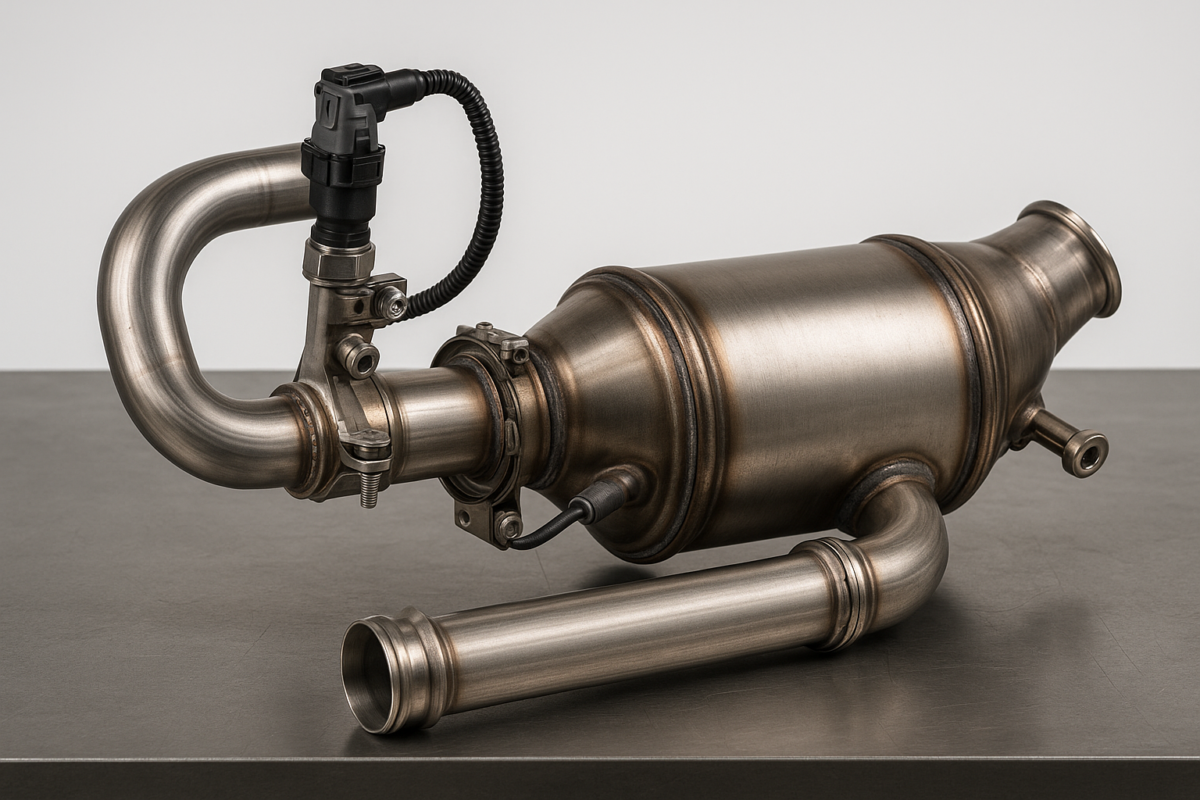
The other direction is just as expensive and gets less attention. The DEF system — tank, pump, lines, injector — is engineered for a watery urea solution and built largely from plastics and materials that diesel attacks. Fuel in the DEF tank swells and degrades seals and plastic components, coats the level and quality sensors, and gums the fine passages of the dosing pump and injector. If the truck runs and the system doses, diesel gets sprayed into the hot exhaust ahead of the SCR catalyst, where it can soot, contaminate, or overheat the catalyst itself — the single most expensive component in the aftertreatment system.
The truck will also tell on you quickly: the DEF quality sensor reads the contamination, sets a fault, and starts the same countdown-to-derate sequence as any other DEF quality failure. There is no waiting this one out; the system has to be cleaned before the countdown ends.
Step-by-Step: Diesel in the DEF Tank
- 1. Do not start the engine — same rule, same reason. The dosing pump primes with the key and pulls contaminated fluid into itself.
- 2. Do not just top it up with good DEF. Dilution does not fix fuel contamination; the diesel floats, coats, and keeps attacking components.
- 3. Drain the DEF tank completely. On many trucks the tank has a drain or the shop pulls the header unit; everything comes out.
- 4. Flush with distilled or deionized water — never tap water, whose minerals contaminate the system in their own right — then drain again. Repeat until the flush runs clean and odor-free.
- 5. Inspect pump, lines, and injector if the system ran. A dosing pump that moved diesel is suspect; seals and the injector tip need checking, and our DEF tank cleaning guide covers the deeper procedure.
- 6. Refill with fresh, in-spec DEF from a sealed container — this is the wrong moment to pour in the dusty jug from the corner of the shop. Our DEF storage and shelf-life guide covers what “fresh” actually means.
- 7. Clear codes and complete a drive cycle. The quality sensor re-tests; if contamination remains, it will tell you.
What About Gasoline?
Gasoline deserves its own warning because it shows up in both tanks and behaves worse than either fluid above. In a diesel tank, gasoline thins the fuel, strips lubricity from the pump and injectors the same way DEF’s water does, and adds a problem DEF does not: it detonates differently, and a diesel engine running a strong gas mix can suffer combustion damage on top of the fuel-system wear. Small amounts in a large tank of diesel have been survived; the honest advice is the same regardless — do not run it, drain it. In a DEF tank, gasoline attacks the plastics and seals even more aggressively than diesel does, and its vapor pressure adds a safety dimension a sealed urea system was never designed for. Same protocol: no key, full drain, distilled-water flush, fresh DEF.
The reverse case — diesel or DEF into a gasoline vehicle — follows the same logic. The specific chemistry changes, the playbook does not: the fluid is cheap, the components are not, and the engine that never runs on the mistake is the engine that survives it.
How a Shop Confirms Contamination
If you are not certain the wrong fluid actually went in — a driver thinks they might have grabbed the wrong nozzle, or a tank was topped from an unlabeled jug — a shop can answer definitively before anyone pays for a full flush:
- Fuel side: a tank sample. Drawing from the bottom of the tank shows separation immediately — DEF and water settle under diesel in a visible layer, and the sample smells of ammonia if urea is present. Gasoline contamination shows in odor and a flash-point check.
- DEF side: a refractometer. The same $20 tool used to verify DEF concentration reads wildly off-spec when fuel is in the tank, and the quality sensor’s own reading (visible on a capable scan tool) tells the same story. A visual check helps too — clean DEF is water-clear, and a fuel sheen or cloudiness is diagnostic on sight.
- The codes. If the vehicle ran, the fault history timestamps the event: fuel-system codes and rail-pressure anomalies on the diesel side, DEF-quality faults and a derate countdown on the reductant side.
Confirming first matters in the other direction, too: shops occasionally see a panicked owner pay for a fuel-system flush over a mistake that never actually happened. Five minutes with a sample jar settles it.
What It Costs: Caught Early vs. Drove It
The table above lays out the ranges we see. The pattern to internalize: the fluid is never the expensive part — the running is. Every scenario caught before the key costs hundreds. Every scenario where the truck ran costs thousands, and the worst cases — a driven truck with DEF through the injectors, or a dosed SCR catalyst — reach five figures. When a shop quotes the drain-and-flush and it feels steep, compare it to the column on the right of that table before negotiating hard.
Will Warranty or Insurance Cover It?
Straight answer: usually not warranty, sometimes insurance. Putting the wrong fluid in a tank is misfuelling, and manufacturer warranties exclude damage from improper fluids — expect the dealer to document the contamination and decline the claim. Insurance is more nuanced: some comprehensive auto and fleet policies treat misfuelling damage as a covered accidental loss, others exclude it specifically. It costs nothing to call your carrier before paying a large repair bill out of pocket — and fleets with roadside-assistance programs should check them too, since several include misfuelling response. Whatever the coverage answer, document everything: receipts showing what was purchased, photos, and the shop’s written findings.
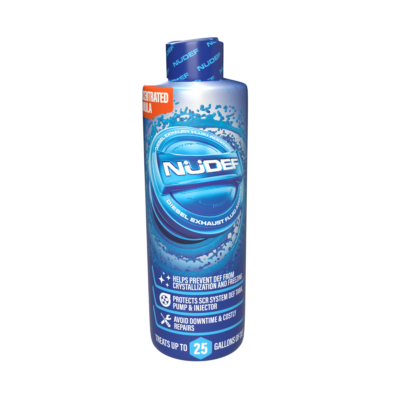
Once the flush is done and the right fluid is back where it belongs, the system deserves a layer of insurance. NüDef DEF Treatment & Stabilizer helps prevent DEF crystallization and helps protect the SCR system, DEF tank, pump and injector as everything returns to normal duty. One 8 oz bottle treats up to 25 gallons.
Preventing the Next Mix-Up
Every one of these accidents traces to a moment of autopilot, so prevention is about breaking the pattern:
- Respect the caps. Blue is DEF, green (or black) is diesel — and the caps are labeled. Make physically reading the cap the habit, especially on unfamiliar equipment.
- Kill the funnel workaround. The filler necks are designed to reject the wrong nozzle; most contamination events involve someone defeating that with a funnel or jug spout. If the nozzle does not fit, that is the system working.
- Label transfer containers. On farms and job sites, unlabeled jugs cause most cross-contamination. A strip of paint or tape costs nothing.
- Brief every new driver. Rentals, new hires, and pool-vehicle users get thirty seconds on the filler layout before they get keys. Fleets that do this stop seeing these incidents.
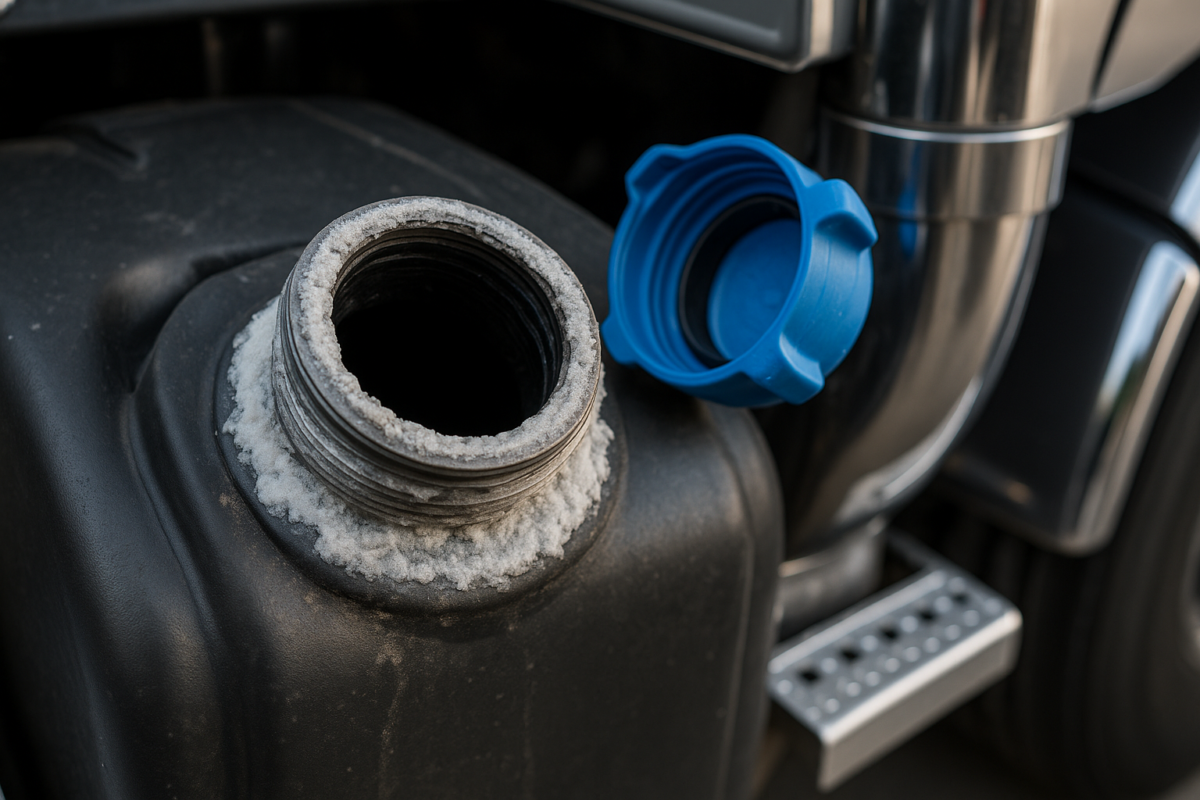
- Keep the DEF side healthy too. The wrong-tank accident is dramatic, but the slower version of the same story — degraded, crystallizing DEF quietly damaging the dosing system — adds up over time. Treat fresh, in-spec fluid with NüDef to help prevent DEF crystallization while you focus on not putting diesel in it.
One mistake at a pump does not have to become a five-figure repair. Do not start the engine, drain it properly, refill with clean fluid, and put the prevention habits in place — and the next time a driver comes to you pale and holding a DEF jug, you will know exactly what to do.