The Short Answer
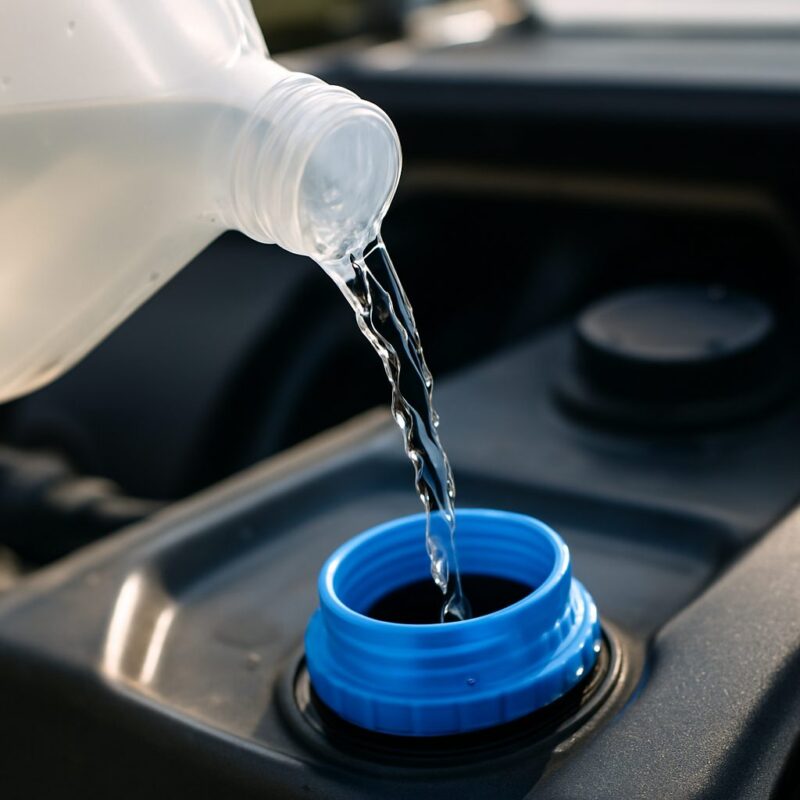
Yes, you can mix DEF brands. Every certified jug of diesel exhaust fluid sold in North America is made to the same specification, ISO 22241, so a tank topped off with a different label holds the same fluid it held before. No flush, no transition, no waiting for the tank to run low. Your truck cannot tell the brands apart because there is nothing to tell apart.
The longer answer is the useful one. DEF does differ from jug to jug, but the differences are age, storage and contamination, never the name on the label. Those are the differences that trip quality warnings and crystallize dosing systems, and they are the ones this guide shows you how to manage when two fluids meet in one tank.
Why Every Certified DEF Is the Same Fluid
DEF is a defined chemical, not a proprietary formula. ISO 22241 fixes it at 32.5 percent high-purity urea in demineralized water, with limits on metals, aldehydes and other impurities measured in parts per million. That concentration is the lowest-freezing blend of urea and water, and every SCR system on the road is calibrated to dose against it. A fluid that meets the standard behaves the same way in a pickup, a Class 8 tractor, a combine or a standby generator.
The API Diesel Exhaust Fluid Certification Program tests licensed brands against that standard and audits them off the shelf. When two certified fluids meet in a tank, the result is still 32.5 percent urea in pure water, which is why the mixing question has a one-word answer. Who makes each brand and how the labels compare is covered in our DEF brand comparison; this guide stays on what happens when you combine them.
What Actually Differs Between Brands
People searching “are all DEF fluids the same” or “are there different grades of DEF” usually want to know whether a cheaper jug will hurt the truck. The specification is the same across every certified brand. There is one grade of DEF, and there are no premium or economy formulations within the standard. What varies is the condition of the fluid by the time it reaches your tank:
- Age. DEF degrades with time and heat. Stored cool and sealed it stays in spec for about two years. A jug that spent a summer on a sun-baked dock may have months left. Every container carries a date code, and the code beats the brand name as a quality signal. Shelf-life details are in the DEF storage guide.
- Storage and dispensing. Sealed jugs with clean spouts protect purity. Bulk pumps and transfer equipment are only as clean as their upkeep, and urea solution attacks many metals, so a rusty drum pump can push compliant fluid out of spec on the way into the tank.
- Contamination. The purity limits are tight enough that a funnel that once held diesel, a splash of tap water or dust from an open container can violate them. What contaminated fluid looks like, and what it does, is in the contaminated DEF guide.
So the honest answer is that the fluid inside a fresh, certified, sealed container is functionally identical across brands. The variation lives in freshness and handling, and that is where to spend your attention.
Naming adds to the confusion. AdBlue is the European trade name for the same ISO 22241 fluid, and labels that cite DIN 70070 or AUS 32 are describing the identical 32.5 percent solution. A vehicle manual that asks for AdBlue takes any certified DEF, and mixing AdBlue-branded fluid with a North American brand is the same non-event as mixing two domestic brands.
When Brand Choice Does Matter
Brand is a distant fifth on the buying list, but it is not zero. Rank your priorities this way and the brand question answers itself:
- Certification. The API shield on the label means the fluid is audited against ISO 22241. No shield, no sale, whatever the price.
- Freshness. Read the date code and buy from a shelf or pump that turns over quickly. The dusty jug at the back has been degrading since it arrived.
- Sealed packaging over open bulk dispensing for vehicles that sip DEF slowly, because a sealed jug cannot pick up contamination on the shelf.
- Your own storage once it is yours: cool, sealed, out of the sun, used within its window.
- Brand. Pick the certified brand your supplier can keep fresh and in stock. A brand you can always get beats a brand you have to hunt for, because hunting leads to the dusty jug.
A premium label that sat in the sun for a year loses to a store brand from a high-turnover shelf. Where you buy matters more than whose sticker is on the jug.
Mixing Scenarios, One by One
- Topping off on the road. Whatever certified brand the next stop carries goes straight in on top of what is there. Check the date code and the seal, not the label.
- Switching suppliers permanently. Nothing to drain, flush or reset. The quality sensor measures concentration, and 32.5 percent reads the same from any source.
- Bulk tote plus retail jugs. Fleets running tote DEF in the yard while drivers top off from jugs on the road are mixing brands every week. It is fine as long as both sources are certified and the tote equipment is clean and turning over.
- Pump DEF plus jug DEF. Fuel-island DEF is the same certified fluid delivered through a hose. The watch item is the dispenser’s condition, not the blend. If the nozzle is crusted with white deposits, that pump is not caring for its fluid.
- A slushy tank plus fresh fluid. DEF freezes at 12 degrees F by design and thaws back into spec, so winter top-offs onto a partly frozen tank are fine with any certified brand. Freezing behavior is covered in when DEF freezes.
What Mixing Cannot Fix
Every “I mixed brands and got a warning” story we have chased down resolves to one of three real causes, and none of them is the mix.
- One fluid was already tired. Fresh DEF blended with heat-cooked DEF gives you mediocre DEF. The blend inherits the condition of the worse half. If the old fluid is past its window, use it for a drain-and-refill and start clean.
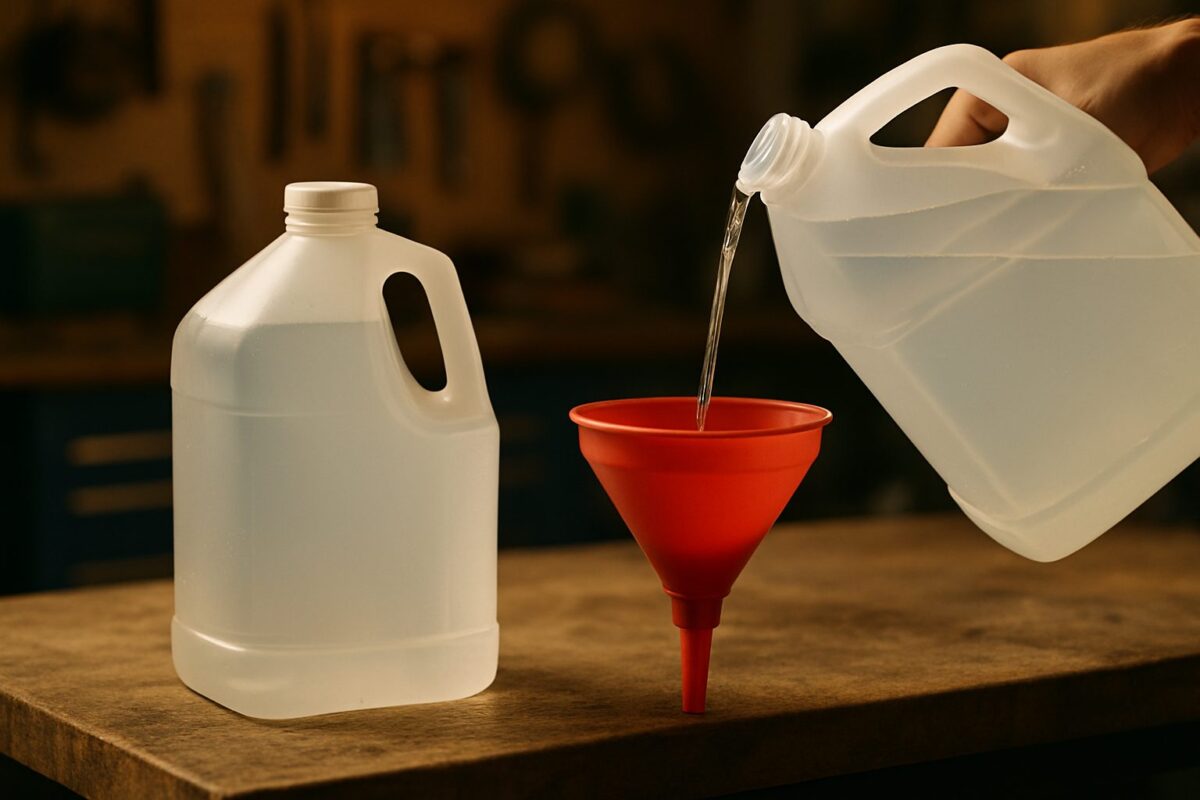
- The transfer added contamination. A diesel-tainted funnel or a garden hose contaminates both brands equally. The fix is DEF-only equipment, not a different label.
- The timing was a coincidence. Codes like P20E8 and “DEF quality poor” usually set from crystallization or a sensor that was failing before the top-off. The quality warning guide walks the diagnostic order, and the sensor guide explains which part is reading what.
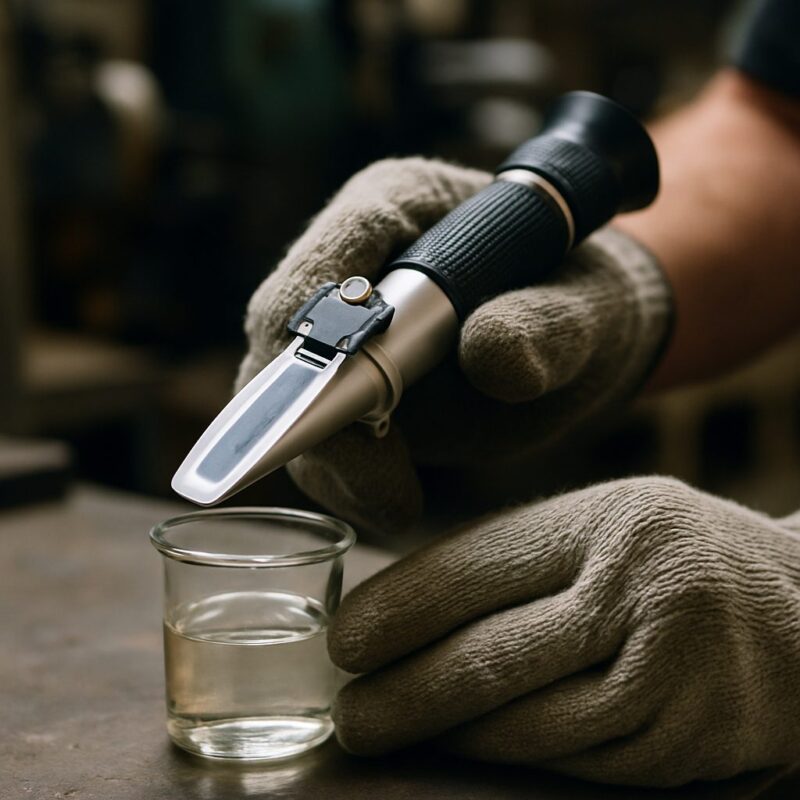
If a warning appears after a brand switch, test the fluid with a refractometer first. A reading between 31.8 and 33.2 percent clears the fluid and points you at the hardware.
What You Can and Cannot Add to DEF
Since certified brands mix freely, the next question is what else can share the tank. The list is short.
- Water, even distilled: no. It drops the concentration below 32.5 percent and trips the quality sensor.
- Coolant or antifreeze: never. Glycol poisons the SCR catalyst. Worries about freezing are answered by the tank heater, not by an additive from the coolant aisle.
- Diesel fuel: a few ounces from a mixed-up funnel can condemn a full tank. If fuel reaches the DEF tank, do not start the engine; drain and flush first.
- Agricultural urea and water: no. Feed-store urea carries biuret, formaldehyde and metals far beyond the limits, and the damage to the catalyst is invisible until the codes arrive.
- A DEF treatment made for ISO 22241 fluid: the one exception, because it works within the chemistry rather than against it.
Treating Any Brand: How NüDef Fits
ISO 22241 governs DEF up to the moment it is poured. It says nothing about the months that follow inside the tank, where heat cycles concentrate the fluid and urea crystallizes on injectors, lines and sensor surfaces. That happens to every brand equally, because it is chemistry rather than quality.
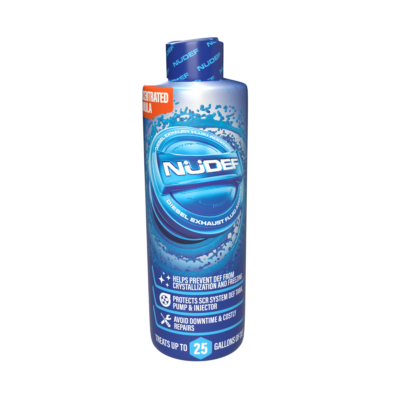
NüDef DEF Treatment, Additive & Stabilizer is brand-agnostic by design. It is a stabilizer and anti-scaling treatment that keeps urea in solution and prevents crystallization and freeze deposits in any certified fluid, whichever labels are in the tank. The dosing math is simple: one 8 oz bottle treats up to 25 gallons, about a third of an ounce per gallon. A 2.5-gallon jug takes under an ounce, a 5-gallon pickup tank about 1.6 ounces, and a 330-gallon tote about 13 bottles. Treat the fill, not the brand, and brand switches stop being a question at all.
Fleet Guidance: Bulk, Brand Consistency and Receiving Checks
Fleets sometimes standardize on one supplier out of caution about mixing. The caution is aimed at the wrong target. Bulk DEF from any certified producer blends freely with any other. What deserves the vigilance is the bulk infrastructure: dedicated stainless or HDPE transfer equipment, closed couplers, a filter on the dispensing line, and turnover fast enough that fluid never ages in the tote.
Two habits settle every brand argument on the yard. First, a refractometer check on each delivery, whatever the label, takes thirty seconds and catches an off-spec load before it reaches a truck. Second, a treated tote: dosing the tote once at delivery protects every truck that draws from it, regardless of what the drivers top off with on the road. Tote sizing, turnover and storage are covered in the bulk DEF guide, and the channels and price bands in where to buy DEF.
The Bottom Line
DEF is a standardized commodity, and that is good news. Mix brands whenever convenience calls for it. Spend your attention where it pays: certified fluid, fresh stock, clean handling, sensible storage, and a stabilizer once the fluid is yours. Do those five things and the brand on the jug becomes the least interesting fact about your DEF, which is exactly how the standard intended it. If a tank ever does run dry between brands, what happens when you run out of DEF covers the countdown and the restart.