Every SCR diesel carries a heating system for one fluid, and most owners meet it on the January morning it fails. DEF freezes at 12°F, regulations require the truck to handle that on its own, and the hardware that does the handling (tank heaters, line heaters, heated pickups) is the difference between a normal cold start and a week of derate codes. This guide explains the whole heater ecosystem: how the OEM system works, what fails and how it announces itself, and the storage-side heaters (tote, drum, and shed) that fleets and bulk buyers actually need. It is the hardware companion to our complete DEF freezing guide.
Why DEF Heaters Exist
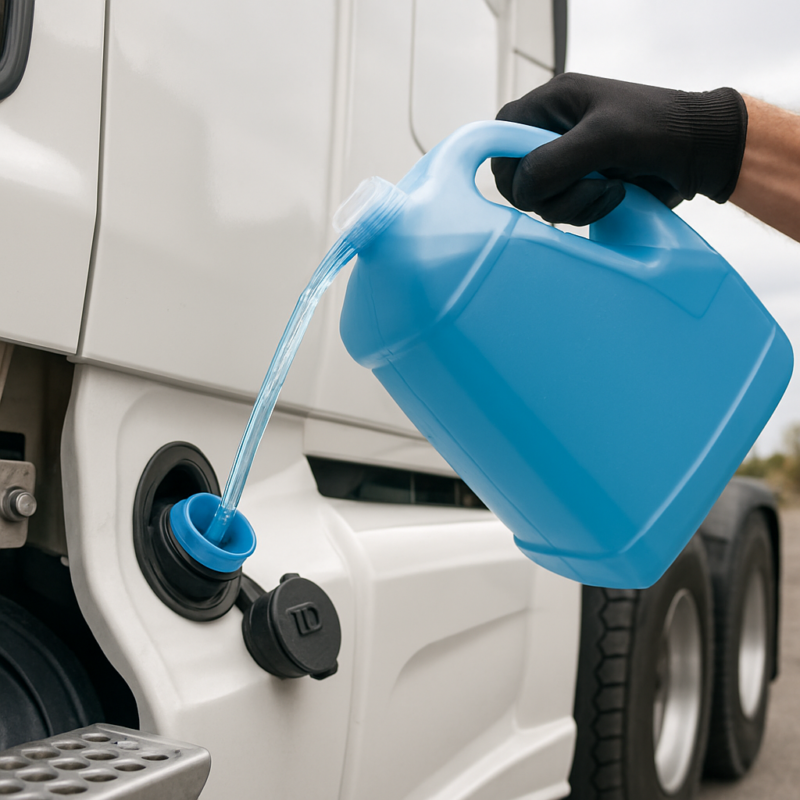
Two facts collide in winter: DEF freezes at 12°F by design (the eutectic chemistry is covered here), and emissions rules require dosing to resume promptly once a vehicle is running, frozen tank or not. The regulatory framework explicitly anticipates frozen DEF and gives the vehicle a window to restore dosing, so every manufacturer ships a thaw system rather than asking drivers to park until spring. That is the entire mission: not to keep DEF warm around the clock, but to convert a frozen or slushy supply into a dosable liquid within minutes of startup, then keep the working lines from refreezing while the vehicle operates in the cold.
The OEM System: Tank, Lines, and Pickup
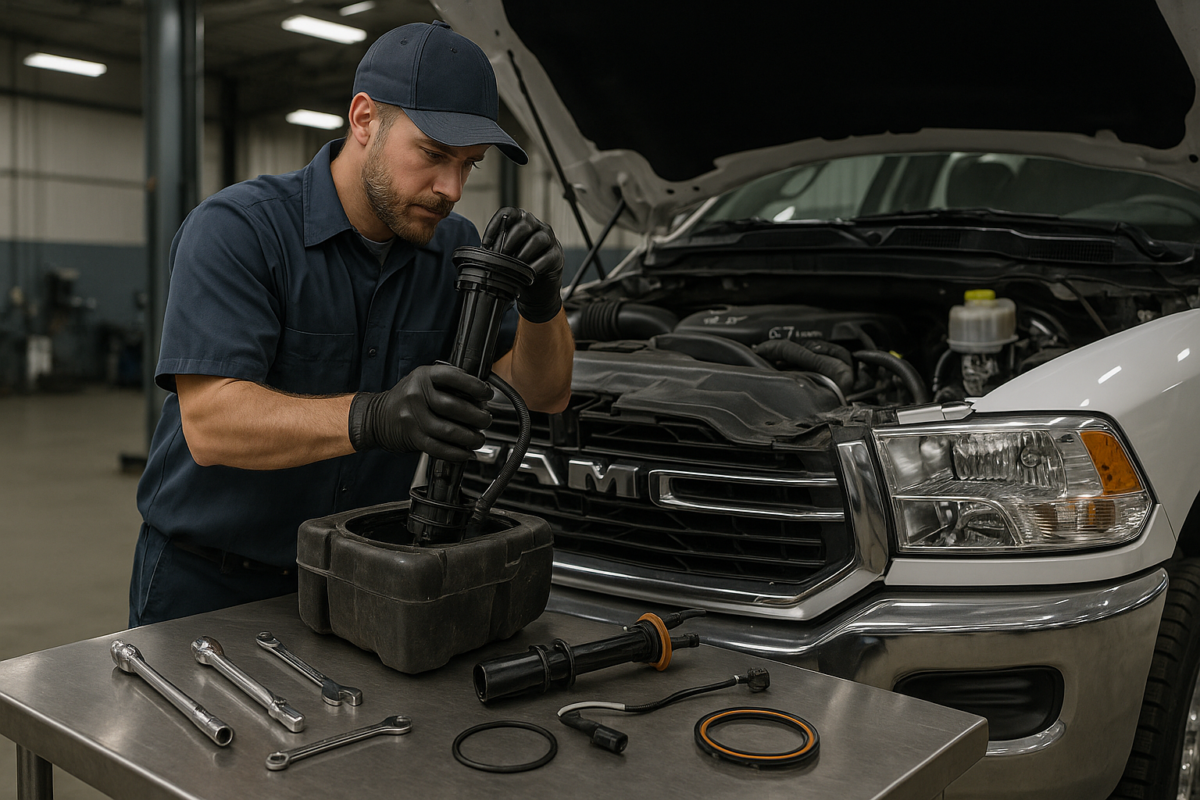
Three components do the work, and knowing them turns mystery codes into diagnoses. The tank heater is the muscle: on most heavy trucks a coolant loop runs through the DEF tank, borrowing engine heat through a control valve, so the thaw begins as soon as the engine makes warmth; many pickups and some equipment use electric elements instead. It does not thaw the whole tank at once; it melts a pocket around the pickup, which is all dosing needs. The heated pickup or header unit combines the suction tube, level and temperature sensors, and often its own heating element in one assembly dropped into the tank; when a “tank heater” fails on a pickup truck, this unit is usually the actual part. And the line heaters are resistive elements wrapped along the supply and return lines and sometimes the doser itself, because a thawed tank feeding a frozen line still doses nothing. The engine computer sequences all of it by temperature, which is why the system is invisible when healthy.
What Fails, and How It Announces Itself
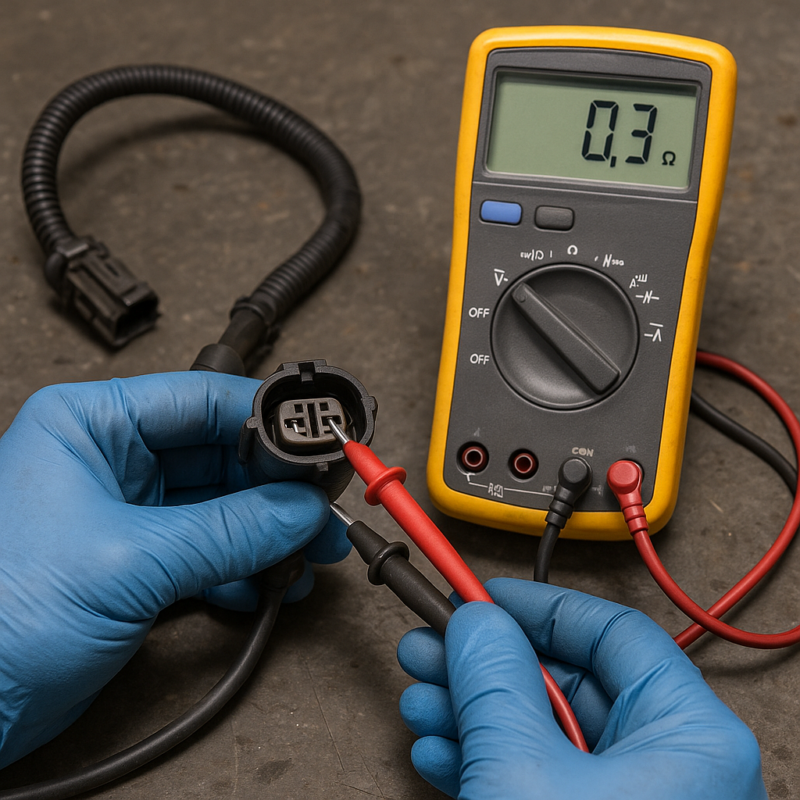
DEF heater failures cluster in familiar patterns. Line heaters fail open: they are long thin resistive elements living in vibration and salt spray, and an open circuit sets codes tied to a specific line (many platforms number them) while the rest of the system works. Relays, fuses, and connectors feed everything, corrode like everything, and are the first check on any heater code, being both the most common culprit and the cheapest. Coolant control valves stick on loop-type systems, either never opening (no thaw) or never closing (cooking the tank in July, which quietly ages the fluid). And heated pickup assemblies fail as units: element open, sensor drift, or both, which is why so many winter repairs end with one part number replacing four functions. The tell for all of it is timing: codes that appear in the first cold snap and persist after the truck is fully warm are hardware, while frozen-fluid symptoms resolve as the system thaws, a distinction our freezing guide covers from the fluid side. Repair specifics, including what these fixes cost by platform, live in our DEF heater replacement guide.
The November Test (Do This Before Winter Does)
Every heater failure discovered in January was discoverable in November. The pre-season check takes one cold morning: start the vehicle at or below freezing, let it reach operating temperature, and confirm no DEF-system codes appear and dosing resumes (a scan tool shows dosing status directly; the absence of warnings is the driver-level version). Fleets scale the same check across the yard in a week. Owners of platforms with known heater weak points (the replacement guide names them) should treat a marginal-looking connector or a previously repaired line as a preemptive replacement candidate, because the part costs the same in November and the tow does not. While you are there: verify the coolant valve area for seepage, and if the truck wintered badly last year, ask the shop to command the heaters on and confirm current draw, which catches the about-to-fail element that still passes a visual.
Tote, Drum, and Storage Heaters: The Bulk Side
Vehicle heaters protect the tank on the truck; they do nothing for the 275-gallon tote in an unheated warehouse corner. Storage heating is its own small equipment category, and buying it right matters because DEF punishes overheating as surely as freezing. The options: tote heater blankets (insulated wraps sized for 275/330 IBC totes, the workhorse choice), drum heater bands and blankets for 55-gallon storage, base or pad heaters that warm from beneath, and for permanent installations, simply heating the room, which wins on every count when the building allows it. The non-negotiable feature is thermostatic control with a low setpoint: the goal is keeping fluid a little above 12°F, not warm. DEF stored above roughly 86°F ages rapidly (the shelf-life math is in our storage guide), so an uncontrolled heater band trades a freezing problem for a degradation problem. Buy the blanket with a thermostat, set it just above freezing protection, insulate the top (heat leaves upward), and the tote rides out any winter the map above can show.
The Fleet-Scale Winter Heater Program
A yard of twenty trucks turns the November test into a program, and the program is worth writing down. One line item per truck: cold-morning warm-up verified, heater codes absent, any line previously repaired flagged for the parts shelf. One line per storage vessel: blanket thermostats verified against a real thermometer (setpoint drift is common in year-three blankets), insulation intact, fluid dated and stabilized going into the season. Spare-parts stocking follows the platform mix: the common line heaters and header units for whatever dominates the fleet, because the failure calendar clusters in the first two hard freezes and parts availability follows the same weather. An afternoon of yard checks against one January no-dose tow pays for the program.
Generators, Ag, and Off-Highway: The Machines Without a Driver
Trucks get driven, which means their heaters get powered and their fluid turns over. The harder winter cases are the machines that wait: Tier 4 Final standby generators, seasonal agricultural equipment, and construction machines parked between jobs. A standby genset’s DEF heater only works when the engine runs, so the tank spends winter at ambient, and the fluid spends it aging through freeze cycles; the machine is then expected to start, thaw, and dose perfectly during a February outage. The playbook for this class: keep the DEF tank at proper level (headspace for expansion), treat the fluid going into winter with NüDef DEF Treatment, Additive & Stabilizer (one bottle per 25 gallons), store any reserve jugs indoors, and exercise the machine under load monthly so the heater circuit and doser both prove themselves before an outage asks. Our generator DEF guide carries the standby-specific detail, and the state map says how aggressive your version of this needs to be.
Heat Is Also the Enemy: The Fluid Side of the Equation
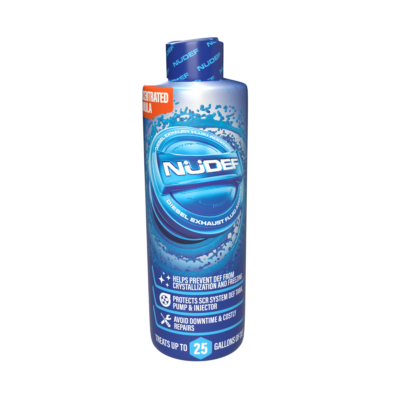
The paradox of DEF heating: the same warmth that rescues frozen fluid is, sustained, what degrades it. Repeated thermal cycling (heater on, heater off, sun on the tote, cold night) is exactly the duty that ages stored DEF and seeds the crystallization that shows up in spring dosing hardware. So the heater strategy and the fluid strategy belong together: heat minimally with thermostatic control, store out of sunlight, size storage so fluid turns over rather than wintering twice, and stabilize what will sit. NüDef DEF Treatment & Stabilizer is a DEF stabilizer and anti-scaling agent that helps prevent the crystallization and freeze-related deposits those cycles leave behind, so thawed fluid doses like fresh fluid. One 8 oz bottle treats 25 gallons. Heaters keep DEF liquid; the stabilizer keeps it usable. Winter needs both.
For a yard with totes and a dozen tanks, the arithmetic is one bottle per 25 gallons: a 275-gallon tote takes eleven bottles, a pickup tank a few ounces at each fill. Fleets buy by the case of 30 or through the wholesale program.
The Winter Checklist
- November cold-morning test on every vehicle: start below freezing, warm up, confirm no DEF codes and dosing resumes.
- Command the heaters on with a scan tool and read current draw on trucks that had heater trouble last year; replace marginal line elements and connectors now.
- Coolant control valve checked for seepage and for sticking open (a tank that runs warm in summer ages its fluid).
- Tote and drum blankets: thermostat verified against a thermometer, setpoint just above freeze protection, insulation on top.
- Fluid dated and treated going into the season: fresh DEF, stored out of sun, one bottle of NüDef DEF Treatment, Additive & Stabilizer per 25 gallons in every tank and tote that will sit through freeze-thaw cycles.
- Standby machines exercised under load monthly so heater circuits and dosers prove themselves before an outage does.
The state-by-state freeze timing is in the freezing guide; repair costs by platform are in the replacement guide.