The 6.7L Cummins in a RAM 2500 or 3500 is a workhorse, and its DEF and SCR emissions system is the part most likely to leave you stranded on the side of the highway with a warning light and a countdown. The good news is that RAM DEF faults follow a short list of usual suspects, and most are fixable once you know what you are looking at. This guide covers the warning messages, the trouble codes RAM owners actually see, what causes each one, how to run it down, what the repair runs, and how to keep it from coming back.
How the DEF/SCR System Works on the RAM 6.7
Since 2013, the 6.7 Cummins in RAM heavy-duty trucks meets NOx limits with selective catalytic reduction. A dosing pump, the Bosch Denoxtronic unit, pulls diesel exhaust fluid from a roughly five-gallon tank and pushes it under pressure to an injector mounted on the exhaust ahead of the SCR catalyst. The injector sprays a metered mist of DEF into the hot exhaust, where it flashes to ammonia and converts NOx into nitrogen and water across the catalyst. NOx sensors before and after the catalyst tell the engine controller whether the reaction is working, and a DEF quality and level sensor in the tank header watches the fluid itself.
Every one of those parts is a potential failure point, and the system is unforgiving by design. Federal emissions rules require the truck to enforce DEF compliance, so when the controller decides the system is not doing its job, it does not just log a code and move on. It warns you, then counts down, then limits the truck to a crawl until the fault is fixed. Understanding the chain from pump to injector to sensor is what lets you tell a cheap fix from an expensive one.
Knowing where the parts live helps too. On the RAM 6.7, the DEF tank sits under the bed or the cab with its fill neck near the fuel fill, and the pump and header are mounted at or in that tank. The injector threads into the exhaust upstream of the SCR catalyst, in the hot zone that drives crystallization. The upstream NOx sensor reads before the catalyst and the downstream one reads after it, and both are exposed to heat and road spray that shorten their lives. When a code points at one of these, the location tells you what you are in for: a header or pump job at the tank is different work than an injector or NOx sensor up on the exhaust.
Symptoms of DEF Problems on a RAM
RAM DEF trouble shows up through the emissions warning system, usually in this order:
- Check-engine light and a message in the driver information display.
- A “Service DEF System” or “Incorrect DEF” message, often with a distance or a starts-remaining countdown.
- Reduced power as the controller pulls fueling to protect the emissions system.
- A hard speed limit, commonly 5 mph, once the countdown runs out. The truck will not clear it until the fault is repaired and a drive cycle completes.
- No restart past the limit in some cases, where the truck enters a no-start or limited-start state after ignoring the warnings.
- Unusual DEF consumption, either burning through fluid faster than normal or barely using any because dosing has stopped.
The countdown is what makes these faults urgent. A work truck limited to 5 mph is off the job, so a RAM DEF light is worth chasing the day it appears.
DEF Warning Messages & the Derate Countdown
RAM stages its DEF warnings so you get plenty of notice. A low-fluid warning starts around a couple hundred miles of range and escalates as the tank empties, ending in a speed limit if you never refill. A system-fault warning, the “Service DEF System” type triggered by a pump, injector, sensor, or quality problem, runs its own countdown, often measured in engine starts rather than miles. Ignore that and the truck steps down to the derate. The important thing to know is that refilling the tank fixes a low-level warning, but it does nothing for a system-fault warning; those need the underlying part diagnosed and repaired before the countdown resets.
The DEF Trouble Codes RAM Owners See Most
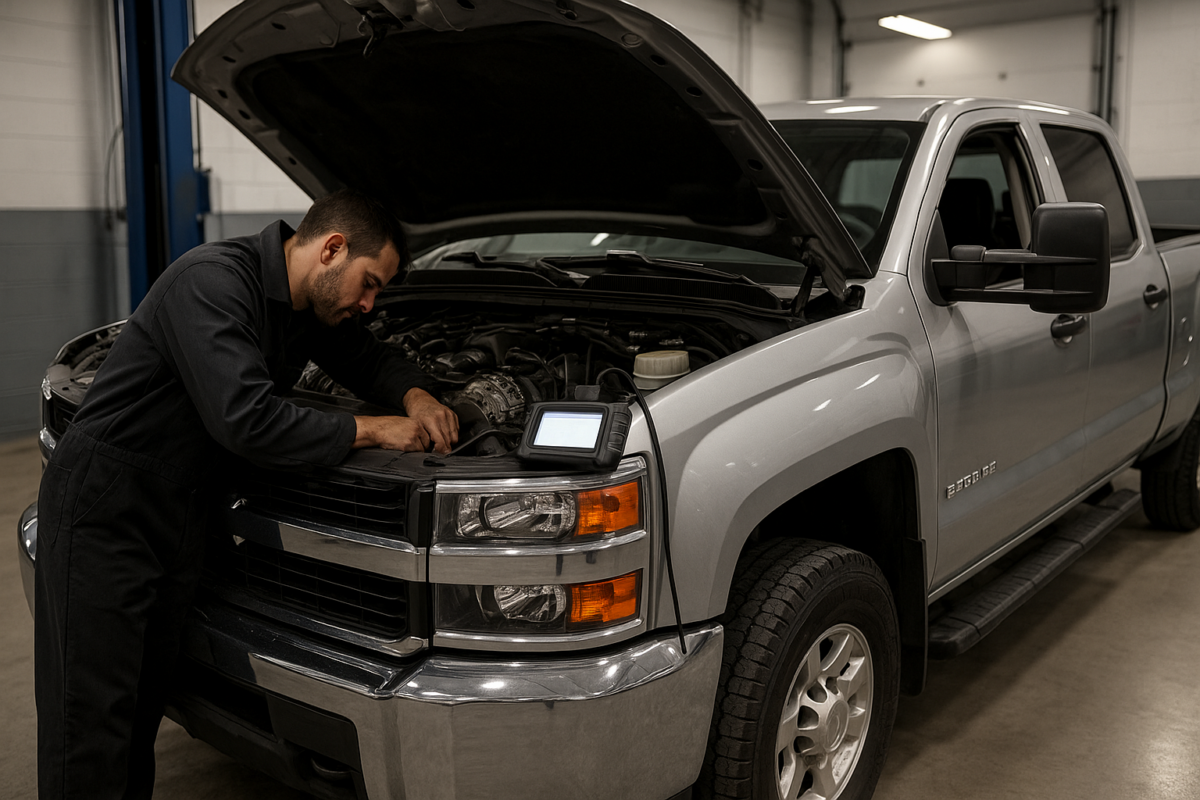
Pull the codes with a scan tool before you do anything else, because the specific code narrows the problem fast. The ones that show up most on the 6.7 Cummins:
- P20E8 — reductant pressure too low. Very common on RAM, and usually the Denoxtronic DEF pump on its way out. See our P20E8 guide.
- P204F — reductant system performance. A broad “the system is underperforming” code that a weak pump or clogged injector triggers. More in our P204F guide.
- P2048 / P2049 — reductant injector circuit low/high. The injector or its wiring, often from crystallized DEF fouling the nozzle. Details in our P2048 guide.
- P20EE (SCR NOx catalyst efficiency below threshold) and P2BAD (NOx exceedence, root cause unknown). Downstream results when dosing has stopped or a NOx sensor is lying.
- P203F — reductant level low. A simple refill, unless the tank header level sensor has failed.
The full map of how these codes relate lives in our DEF trouble codes guide. Reading the whole set before you grab a wrench keeps you from throwing parts at the truck.
What Causes DEF Problems on the 6.7 Cummins
A handful of root causes account for most RAM DEF faults:
- DEF pump failure. The Bosch Denoxtronic pump RAM uses is a common hard-part failure, showing up as pressure codes like P20E8. Age, heat, and running the tank dry all shorten its life.
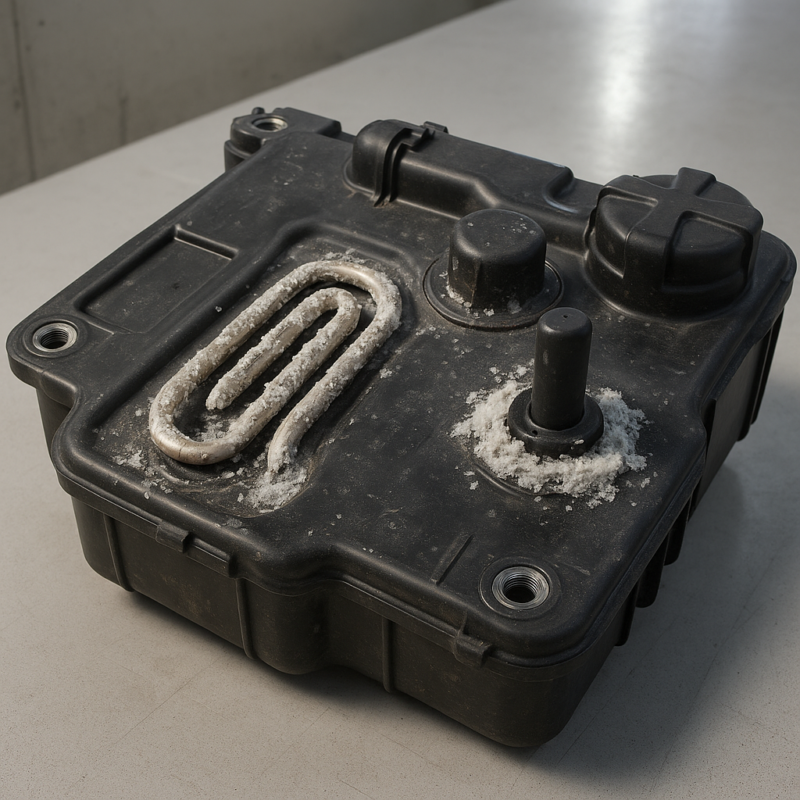
- Injector crystallization. Degraded or heat-cycled DEF forms hard urea crystals that clog the injector tip, choking dosing and setting injector or performance codes. This is where fluid quality matters most, and RAM trucks that idle heavily or run short trips are especially prone to it. Our 6.7 Cummins crystallization guide goes deep on this.
- NOx sensor failure. The upstream and downstream NOx sensors fail with age and heat, and a bad one makes the controller think the SCR is underperforming even when dosing is fine.
- Out-of-spec or contaminated DEF. Diluted, old, or contaminated fluid crystallizes faster and can trip an “incorrect DEF” quality fault. Correct DEF is 32.5% high-purity urea in deionized water.
- DEF heater or level-sensor faults. In cold climates a failed tank heater leaves the fluid frozen and undoseable; a bad header sensor misreads level or quality.
How to Diagnose a RAM DEF Problem
Work in order so you fix the cause, not just the symptom:
- 1. Scan every code and the freeze-frame data, not just the first one. A pressure code plus an injector code tells a different story than either alone.
- 2. Check DEF quality with a refractometer; it should read 32.5%. Off-spec fluid explains quality faults and repeat crystallization.
- 3. Test DEF pump pressure against spec if a pressure code is present. A pump that cannot build or hold pressure is the likely culprit.
- 4. Inspect the injector and its connector for crystallization and wiring damage. White or yellow deposits on the tip point straight at fluid quality.
- 5. Read the NOx sensor data upstream and downstream. Implausible or flatlined readings condemn a sensor.
- 6. Check the DEF heater and level sensor, especially if the truck lives in a cold climate or the level reading looks wrong.
By the end you will know whether you are looking at the pump, the injector, a sensor, the heater, or the fluid, which is the difference between a $40 refill and a four-figure repair.
How to Fix Each Problem
The repair follows the diagnosis:
- DEF pump (Denoxtronic). Replace the pump assembly for a confirmed pressure failure. Prime the new pump per the procedure and verify it builds and holds commanded pressure before you call it done.
- DEF injector. Clean it if the deposits are light and it still tests in spec, or replace it if it is seized or crystallized beyond recovery. Use a fresh seal, torque to spec, and flush the lines so old fluid does not foul the new nozzle.
- NOx sensors. Replace the failed upstream or downstream sensor with the correct part; they are not interchangeable. Route and clip the harness away from exhaust heat.
- Heater or header sensor. Repair the tank heater or replace the header for cold-weather or level and quality faults, then confirm the level and quality readings look right.
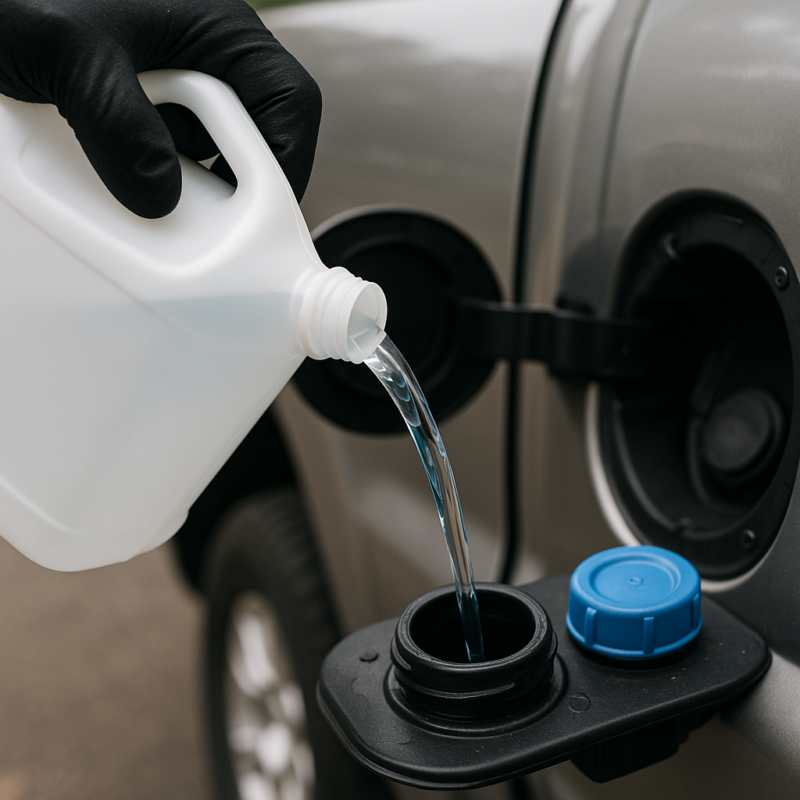
- Fluid. For any crystallization or contamination, flush the system and refill with fresh, in-spec DEF. Putting the same degraded fluid back guarantees a repeat.
After any of these, clear the codes and complete a full drive cycle so the SCR system re-tests. The derate will not lift until the monitor completes and confirms the system is dosing and reading correctly again.
What the Repairs Cost
RAM DEF repairs range from trivial to a few figures. A refill is the price of fluid. An injector cleaning with a fresh fill can come in under $200. A reductant injector runs $300–$700 in parts plus labor. A NOx sensor is typically $300–$500 installed. The big one is the DEF pump: the Denoxtronic assembly plus labor commonly lands in the $600–$1,200 range. The most expensive outcome is the avoidable one, where the underlying DEF-quality problem gets ignored, the new part crystallizes, and you pay twice.
Model-Year Notes (2013–Present)
DEF and SCR arrived on the RAM 6.7 Cummins for 2013, so any 2013-or-newer 2500, 3500, 4500, or 5500 has this system. Early trucks (2013–2018) are now old enough that pumps, injectors, and NOx sensors are reaching the end of their service life, which is why these faults cluster on higher-mileage examples. The updated high-output 6.7 introduced for 2019 carries the same basic DEF architecture with revised components. One important distinction: the 3.0L EcoDiesel in the RAM 1500 is a different engine with its own DEF system and its own quirks, so codes and part numbers do not cross over from the 6.7 Cummins. Whatever the year, the failure patterns and the fluid-quality fixes in this guide hold.
What About a DEF Delete?
Plenty of RAM owners, tired of a second pump or a countdown at the worst possible time, ask whether they should just delete the DEF system. It is worth being straight about this. Removing or defeating the SCR and DEF system on a road-going truck is a violation of the federal Clean Air Act, and enforcement has tightened hard on both the shops that perform deletes and the tuners that sell the software. A deleted truck fails emissions inspection in the states that test, cannot be legally sold as a compliant vehicle, and can carry real fines. It also voids the emissions warranty and takes a hit at resale, because a growing share of buyers and dealers will not touch a tampered emissions system.
The more useful point is that most owners reach for a delete because the system felt unreliable, and that unreliability is usually preventable. The pump, injector, and sensor failures behind the frustration are heavily driven by crystallization and poor fluid quality, which are exactly the things you can control. Keep the DEF fresh and stable and the system that felt like a liability mostly stays out of your way. That is the honest path: a healthy, legal DEF system that does its job quietly, not a delete that trades one set of problems for a legal and resale headache.
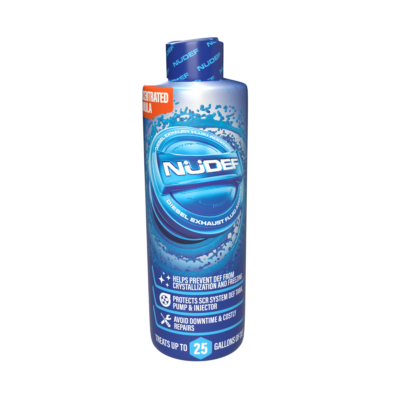
The prevention line for every code above runs through fluid condition. NüDef DEF Treatment & Stabilizer helps prevent DEF crystallization in the doser and lines, and the product page lists the specific reductant codes it helps prevent, including P20E8 and P204F. One 8 oz bottle treats up to 25 gallons.
Preventing RAM DEF Problems
Many of the expensive RAM DEF faults trace back to crystallization and fluid quality, so prevention is mostly about the DEF you run:
- Use fresh, high-purity DEF at 32.5% concentration, and avoid fluid that has been sitting open or cooking in the heat.
- Stabilize the fluid. Standard DEF breaks down over time and heat cycles, and that breakdown forms the crystals that clog injectors and foul the pump. NüDef is a DEF additive and stabilizer that helps prevent DEF crystallization and helps protect the pump and injector you would otherwise be replacing again.
- Do not run the tank dry or leave it half full for long stretches, which concentrates and crystallizes residual fluid around the pump pickup and injector.
- Keep up with the fluid in winter so a marginal heater is not the only thing standing between you and frozen, undoseable DEF.
Keep the fluid fresh and stable and most of these faults never start. Replace a pump or injector while running the same degrading DEF and you are on the clock for a repeat. Treat every refill with NüDef to help prevent new crystallization.