Updated October 2026. Every fact here comes from PACCAR’s own documents (operator’s manual, spec sheet, service bulletins, body builder manual, July 2026 release), linked where used.
PACCAR DEF System on the MX-13: How It Is Laid Out
PACCAR DEF problems on a Peterbilt or Kenworth with the MX-13 come down to four things: a plugged DEF filter in the pump, fluid the system reads as poor quality, an SCR component fault, or a low tank left too long. Each starts a derate clock, and each has a different fix.
The PACCAR aftertreatment operator’s manual lays the system out simply. DEF sits in its own tank with a level gauge on the dash. It passes through a filter inside the DEF dosing unit, which PACCAR calls the DEF module, and the module sends it to the DEF doser. The doser sprays it into the exhaust ahead of the SCR catalyst, which turns NOx into nitrogen and water vapor. The manual also lists a urea quality sensor and a DEF coolant filter.
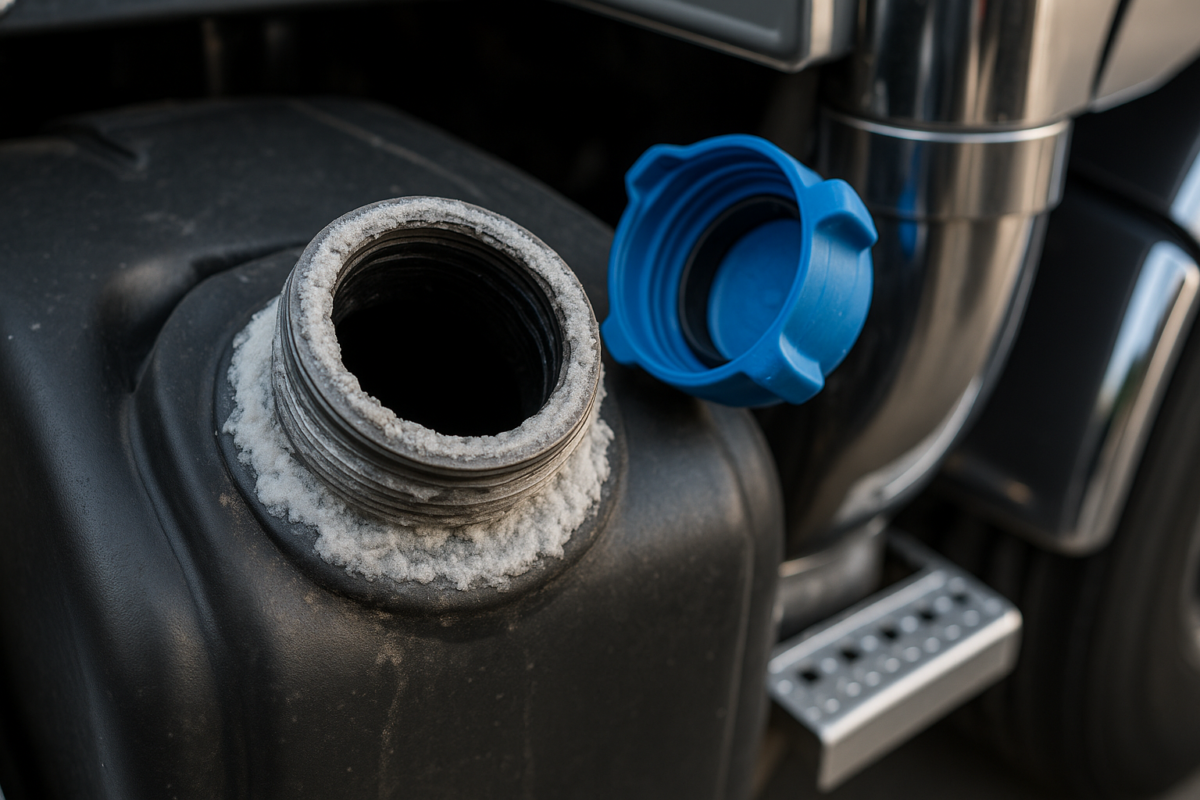
Two details matter for every owner. The system circulates DEF on battery power after shutdown, so PACCAR says to wait at least 20 minutes before disconnecting the batteries. And spilled DEF dries to a white crust that looks like a leak, so wipe spills with water as you go.
PACCAR DEF Filter: Location, Interval and Replacement
The PACCAR DEF filter is a filter element inside the DEF pump, which is mounted on the DEF tank. On trucks with the small DEF tank you reach it from underneath: remove the fasteners on the cover plate at the bottom of the tank and let the plate drop down.
Interval. The 2024 MX-13 spec sheet lists the DEF filter at 300,000 miles (480,000 km), the same as the coolant filter, and points to the engine operator’s manual for the requirements on your truck. Older engines ran shorter. PACCAR’s 2015 MX-13 EPA2010 maintenance bulletin E108 said that when DEF quality is unknown, the original white mesh filter should be changed every 100,000 miles or once a year, and the pleated paper filter that replaced it every 200,000 miles in line haul or 100,000 miles or yearly in vocational work.
The job. You need a filter kit with O-ring, a 1 13/16 inch socket, a torque wrench, lint-free cloths, a catch container and a little new DEF to lube the seals:
- Shut down and wait at least 20 minutes, then disconnect the batteries.
- Check the housing seal for white deposits. They can mean a leak, so inspect the pump threads once the housing is off; damaged threads mean a new pump.
- Remove the housing with the 1 13/16 inch socket, throw away the O-ring, then pull out the frost protection membrane and twist the old element out.
- Clean the pump and membrane groove with distilled water. The manual warns that even a little dirt can permanently damage the dosing system.
- Slide the new element in until it clicks, fit the new membrane with its bead fully in the groove, install the lubricated O-ring and torque the housing to 59 lb-ft (80 N·m).
- Reconnect the batteries, turn the key to ON to prime the pump, start the engine and check for leaks.
Read the old element first. PACCAR says to look for discolored specks or a changed smell, and if there is debris, to check the DEF tank filter and pump inlet connector too. Our DEF filter service guide compares filter designs across engine makers.
The DEF tank also has an air vent filter. Peterbilt ran a 2018 campaign, R1711, to replace pre-production vent filters on MX-11 and MX-13 trucks built between December 1, 2015 and October 25, 2016. If a truck in that build window has never had the campaign done, a service department can check its chassis number against the campaign list.
Poor DEF Quality on a PACCAR MX
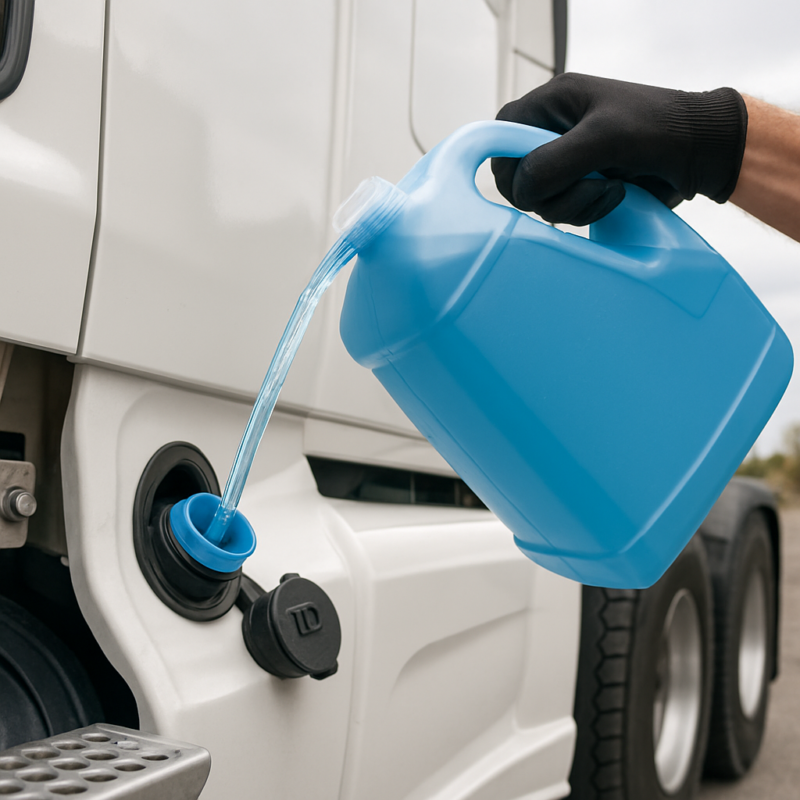
PACCAR’s manual is blunt about fluid: use only DEF that meets ISO 22241-1 (DIN 70070), and in the United States and Canada use DEF certified by the American Petroleum Institute. API describes DEF as a 32.5% solution of technically pure urea in purified water, and its certification program licenses fluids that meet the current edition of ISO 22241. The manual also says never to add water or any other fluid, and to rinse funnels with distilled water because tap water contaminates DEF.
The system checks quality under normal operating temperatures with the truck moving at 5 mph or more, so a quality fault usually shows up on the road. When the check fails, the dash shows the DEF light with a “Poor DEF Quality” notification and the check engine light. PACCAR’s instruction for that condition is that the tank must be drained, flushed and refilled with new or known-good DEF.
Test the tank before anyone condemns a sensor. If a refractometer reads in spec and the code stays, suspect the sensor or wiring. Our DEF testing guide shows how to read the number, and the DEF sensor guide covers the level, temperature and quality sensors part by part.
DEF Light and Derate Stages on Peterbilt and Kenworth
The DEF warning light sits next to or below the DEF gauge. It shows white when the tank is approaching low, red for stage 1 of a low-level, poor-quality or SCR fault condition, and flashing red for stages 2 through 4. A red light with a full gauge means quality or a component; the notification says which. Our DEF light flashing guide covers the lamp logic across brands.
The 2024 manual, written before the 2026 software change, prints these schedules in its quick reference tables:
| Stage | Poor DEF quality (manual as printed) | SCR system fault (manual as printed) | Low DEF level |
|---|---|---|---|
| 1 | Detected: light only | Detected: light only | Low DEF: light only |
| 2 | 1 hour after: 25% derate | 1 hour after: 25% derate | Tank almost empty: 25% derate |
| 3 | 3 hours after: 40% derate | 4 hours after: 40% derate | Tank empty: 40% derate |
| 4 | After 3 hours plus a key cycle, refuel or 1-hour stop: 40% derate and 5 mph | After 4 hours plus a key cycle, refuel or 1-hour stop: 40% derate and 5 mph | Tank empty plus a key cycle, refuel or 1-hour stop: 40% derate and 5 mph |
Emergency vehicles are exempt. If the light is already flashing, the engine derate guide explains what each stage feels like from the seat.
The July 2026 PACCAR DEF Software Update
The 5 mph final stage is the part of that table that has changed. The EPA issued guidance asking engine makers to rework DEF inducements that could cut a truck to as low as five miles per hour, and to offer software updates for trucks already on the road. On July 7, 2026, PACCAR announced updated MX-11 and MX-13 software for Peterbilt and Kenworth. The final inducement speed limit goes from 5 mph to 25 mph, and the time before that final limit for component or fluid-quality problems goes from 4 hours to 160 hours.
Trucks built after July 20, 2026 get the software at the factory. Trucks built after 2018 can get it at a Peterbilt or Kenworth service department. PACCAR’s release notes that emissions repairs are still required. The update buys time to reach a shop; the fault still needs fixing.
PACCAR DEF Codes by SPN
MX engines report aftertreatment faults as J1939 SPN and FMI pairs. The SPN names the part, the FMI the kind of failure. The names below are the standard J1939 descriptions from a J1939 SPN and FMI reference on file with NHTSA. Our DEF trouble codes hub explains the format, and each code below has its own page.
| SPN | J1939 name | First check on an MX truck | Can the fluid be the cause? |
|---|---|---|---|
| 1761 | Aftertreatment 1 DEF Tank Volume | Gauge reading, level sensor and its connector | Low level, or a level sensor fault |
| 3031 | Aftertreatment 1 DEF Tank Temperature 1 | Sensor circuit in the tank header | No, electrical |
| 3361 | Aftertreatment 1 DEF Dosing Unit 1 | Wiring and connector at the doser | Usually electrical; look for crust at the doser too |
| 3364 | Aftertreatment 1 DEF Tank Quality | Refractometer test of the tank | Yes, off-spec fluid |
| 4334 | Aftertreatment 1 DEF Doser 1 Absolute Pressure | DEF filter in the pump, lines, doser | Yes, through a plugged filter |
| 4364 | Aftertreatment 1 SCR Conversion Efficiency | Fluid quality, dosing, NOx sensors | Yes, poor fluid is one cause |
| 5246 | Aftertreatment SCR Operator Inducement Severity | The fault that started the inducement | Depends on that fault |
The pages for SPN 4334 FMI 18, SPN 3361 FMI 4, SPN 4364 and SPN 5246 walk through each one. Nothing poured into the tank repairs a wire, a heater or a sensor.
DEF Tank Sizes and Storage on PACCAR Trucks
PACCAR sizes the DEF tank to the engine, the fuel capacity and the DEF-to-fuel ratio. The Peterbilt heavy-duty body builder manual (Revision D, September 2025, Table 3-27) lists five tanks: small 10.2 gallons, medium 16.1, large 20.1, medium aero 13.9 and large aero 17.9. Our DEF tank capacity chart puts those next to other trucks.
PACCAR’s maintenance bulletin E108 for the EPA2010 MX-13 says to fill the DEF tank before it drops below 25% of full. The operator’s manual’s storage guidance is the other half: DEF keeps best between 23°F and 77°F in sealed containers out of direct sunlight, where the minimum expected shelf life is 18 months, and the manual says shelf life drops by about 6 months for every 9°F above 77°F. It does not recommend leaving DEF stored in the vehicle tank for more than 6 months, and for a parked truck it suggests plugging the tank vent to seal the fluid off from the air.
Crystals, Heat and the DEF Filter
Over time DEF can crystallize in the tank, the lines, the pump and the doser. Heat speeds it up, and sitting time lets urea come out of solution. Our DEF crystallization guide covers how they form.
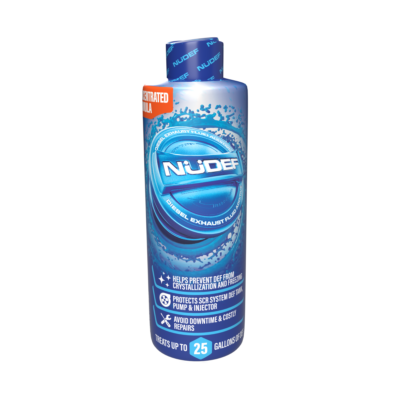
That is the condition NüDef DEF Treatment, Additive & Stabilizer is made for. Its label says it helps prevent crystallization, and the sell sheet adds that it helps prevent freezing. It also helps protect the SCR tank, pump and injector. The dose comes from the label: one measured dose per 2.5 gallons of DEF, one 8 oz bottle treats 25 gallons, add it at every refill and do not exceed the dose. It goes into certified DEF that meets ISO 22241 or carries the API mark, and it does not replace that fluid. PACCAR’s manual tells owners to put nothing but ISO 22241-1 DEF in the tank, so if your truck is still under PACCAR warranty, read the warranty terms in your own manual before you add any treatment. NüDef cannot bring back fluid that has already gone off spec or repair a failed sensor or pump. Fix the part, drain bad fluid, then treat the fresh fill.
A full 20.1-gallon large tank takes about eight doses; a 10.2-gallon small tank about four. Order direct from nudef.com by the bottle or the case of 30.
A PACCAR DEF Checklist for Owner-Operators and Fleets
- Every fill: ISO 22241 or API-certified DEF only, a clean cap and nozzle, and a dose of NüDef per 2.5 gallons.
- Before 25%: top up before the gauge drops below a quarter, as PACCAR’s bulletin recommends.
- Shutdown: wait 20 minutes before cutting battery power so the system can finish circulating DEF.
- Filter: change the DEF pump filter on the interval in your engine operator’s manual, and sooner on a truck that fuels from unknown sources.
- Light on: read the notification, pull the SPN, and test the fluid before replacing a sensor.
- Software: ask whether the July 2026 DEF update is on the truck.
- Parked trucks: do not leave DEF in the tank more than 6 months; drain and refill a truck that sat.
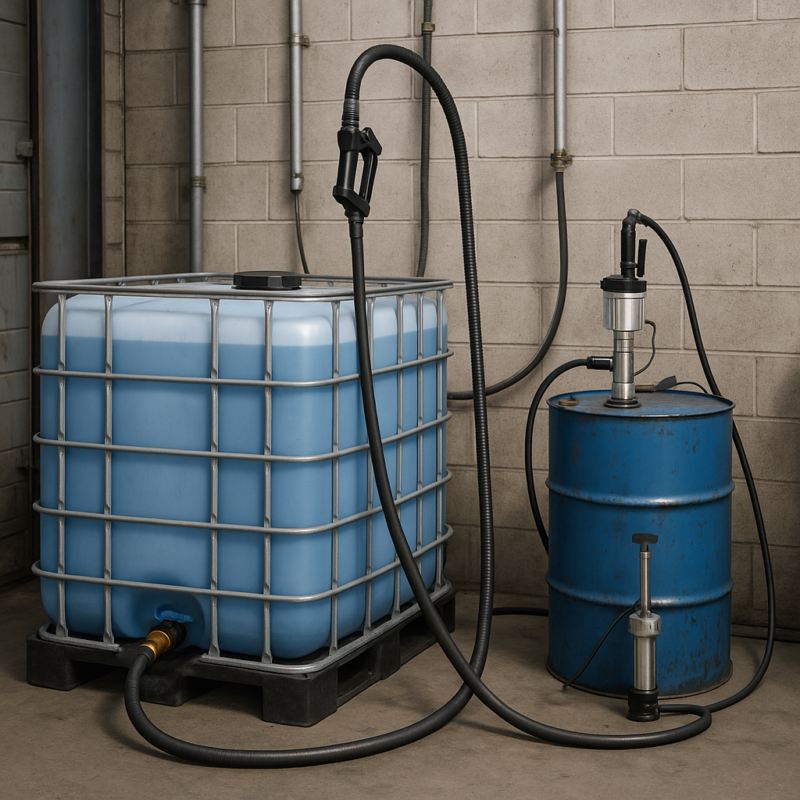
Fleets running a mix of Peterbilt, Kenworth and other makes can dose bulk storage so every tractor is treated at the island. The NüDef wholesale program covers case and volume orders, and our Freightliner Cascadia DEF guide and Cummins X15 DEF guide cover the other engines in a mixed yard.