What SPN 4094 and SPN 4364 Mean
Heavy trucks report SCR faults as SAE J1939 codes: an SPN that names the component or condition, and an FMI that says what kind of fault it is. Two of those codes tend to travel together on Cummins, PACCAR, Detroit and Navistar engines, and both point at the same question: is the SCR system cleaning up NOx the way it should?
SPN 4094 is “NOx limits exceeded due to insufficient reagent quality.” Reagent is the J1939 word for DEF. The engine controller has decided that tailpipe NOx is too high and that the fluid is the most likely reason. It usually shows with FMI 31 (condition exists), and some engines report FMI 18 or FMI 1 instead.
SPN 4364 is “Aftertreatment 1 SCR Conversion Efficiency.” The controller compares NOx going into the SCR catalyst with NOx coming out, and the conversion rate has fallen below its threshold. FMI 18 means below normal at the moderately severe level. FMI 17 is the least severe level and FMI 1 the most severe.
Put simply, SPN 4364 says the catalyst is not converting enough NOx. SPN 4094 says the controller thinks the fluid is why. The light-duty equivalent on pickups is P20EE, covered on our P20EE page. Both codes sit in the SCR family on our DEF trouble codes hub, and your OEM service information has the final word on test values for your engine.
How the truck reaches these codes
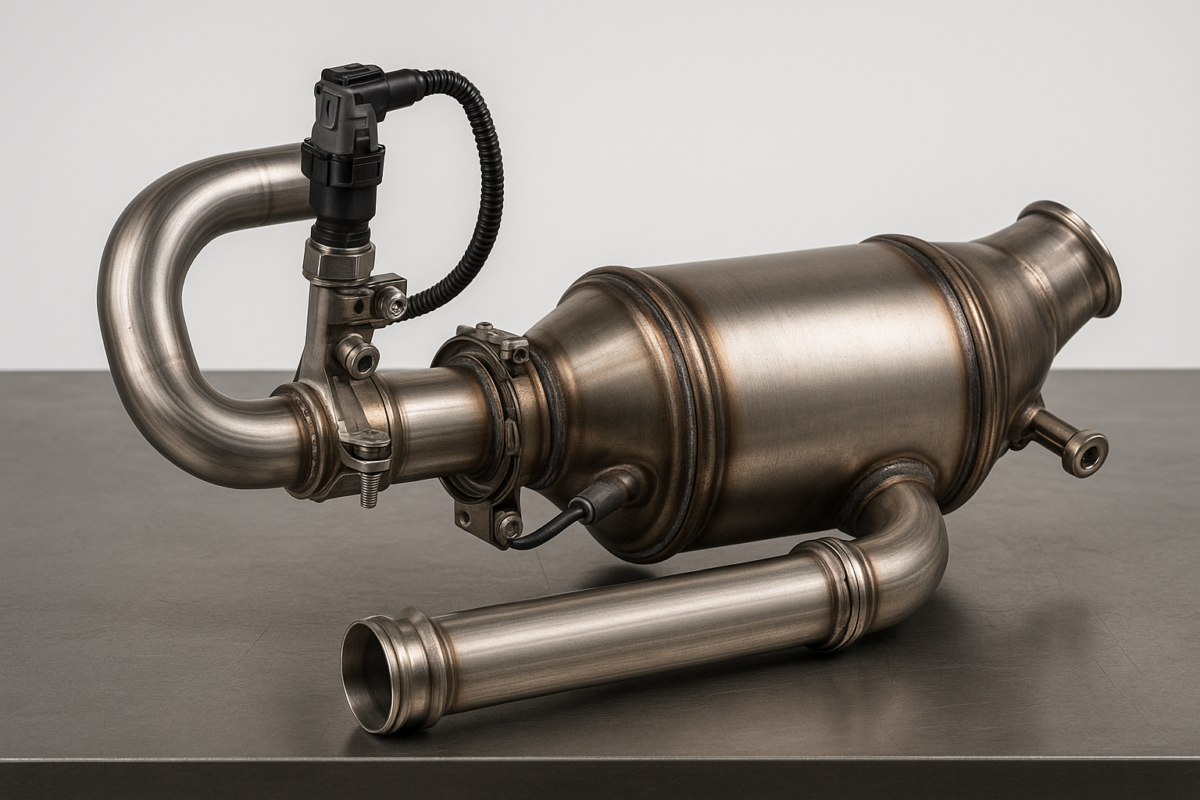
The SCR system runs a closed loop. The aftertreatment controller doses DEF into the exhaust ahead of the catalyst, reads the inlet NOx sensor and the outlet NOx sensor, and calculates conversion efficiency. When the outlet number stays too high for long enough under the right conditions, it logs an efficiency fault. On engines with a DEF quality sensor in the tank header, a bad quality reading can move the blame straight to the fluid and set SPN 4094. On engines without one, the controller infers quality from how the catalyst responds to dosing.
Either way, these codes start an inducement clock. Leave them long enough and the truck steps through derate stages, reported as SPN 5246, the inducement code.
Reading the two codes together
The combination tells you where to start. SPN 4364 on its own is an open question: fluid, dosing, sensors or catalyst could all be behind it. SPN 4094 with it, or a DEF quality code such as SPN 3364 in the same snapshot, moves the fluid to the top of the list. Pressure or dosing codes in the same list point at the delivery side first. A NOx sensor code in the list means the efficiency number itself may be wrong.
Write down the FMI, the occurrence count and the freeze frame before anyone clears anything. The freeze frame shows exhaust temperature, load and DEF tank temperature when the fault set. Low exhaust temperature on a truck that idles all day points at a different story than a fault set at highway load in July. Codes that return within one drive after a fluid change point away from the fluid.
Why Poor DEF Quality Is the First Suspect
ISO 22241 sets DEF at 32.5 percent urea in deionized water, with an allowed range of 31.8 to 33.2 percent. The SCR catalyst is calibrated for that strength. When the fluid drifts outside it, the controller doses the wrong amount of ammonia for the NOx in the exhaust and conversion drops. That is exactly the condition both codes describe.
DEF goes off spec in a few common ways:
- Dilution. Water gets into the tank or the jug: rain at an open fill, a rinse that was never drained, or tap water added by mistake. Weak fluid reads low.
- Concentration and breakdown. DEF stored hot, or sitting in a tank through a summer, loses water and breaks down over time. Old fluid in partial jugs is a regular suspect.
- Contamination. Diesel, coolant, washer fluid, or dirt from a funnel or nozzle used for something else. Metals and minerals from the wrong container are a problem for the catalyst as well as the reading.
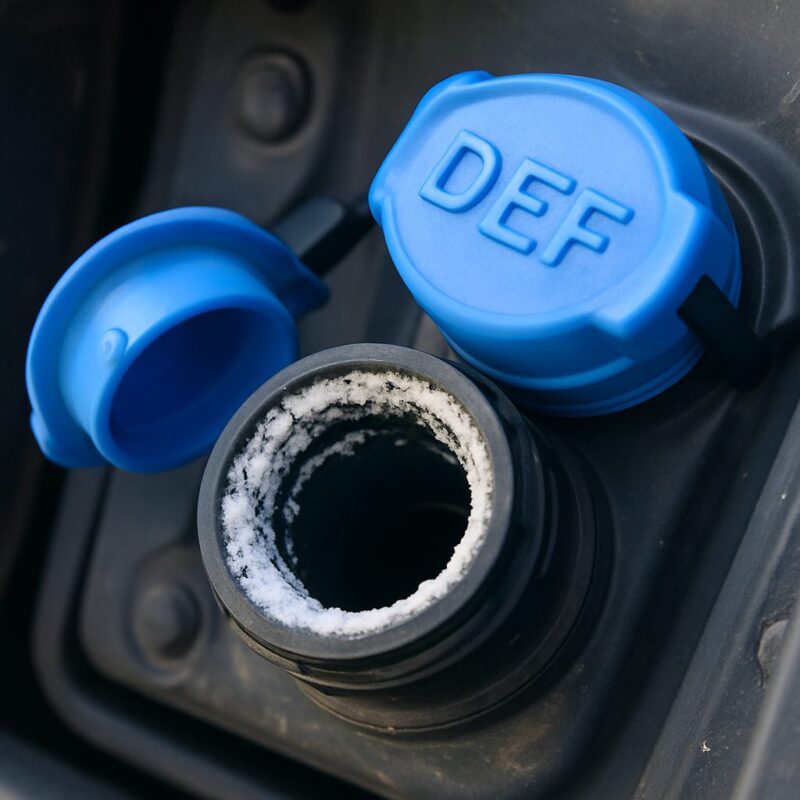
- Crystals. Urea that comes out of solution coats the quality sensor face, the filter and the dosing valve tip. The fluid in the tank can test fine while crystals choke the delivery side.
Fluid is also the cheapest thing on the list to check and the cheapest to correct. A NOx sensor or a catalyst costs far more than a drain and refill. Our DEF quality poor warning guide covers the dash message that often arrives with these codes.
Other Causes: NOx Sensors, Dosing and the Catalyst
Good fluid alone may not clear these codes. The efficiency calculation depends on several parts working at once, and any of them can make conversion look low.
- NOx sensors. A drifting inlet or outlet sensor feeds the controller bad numbers, and the math says the catalyst is failing when it is not. Sensor faults often log their own codes, such as SPN 3226 for the outlet sensor. Our NOx sensor guide covers testing and replacement.
- Dosing problems. A dosing valve partly blocked by crystals, low DEF pressure, a clogged supply filter or a weak pump all mean less ammonia reaches the catalyst than the controller commanded. Look for companion codes like SPN 4334 FMI 18, low DEF pressure, or SPN 3361, the dosing unit.
- Exhaust leaks. A leak ahead of a NOx sensor lets outside air dilute the sample and skews the reading.
- A tired or contaminated catalyst. Catalysts age, and they can be damaged by oil or coolant from an engine problem, by heavy face plugging, or by repeated exposure to bad fluid. Our SCR catalyst replacement guide explains when that is the real answer.
- Software. Some engines have calibration updates that change how efficiency is judged. Ask the dealer whether one exists before you buy hard parts.
Test the DEF First
Pull a sample from the tank, not from the jug you bought last week. A refractometer made for DEF reads urea concentration in seconds. In spec reads land between 31.8 and 33.2 percent. Our DEF testing guide walks through refractometers, strips and lab analysis.
Look at the sample too. Cloudy fluid, a yellow tint, a smell of fuel, floating debris or crystals at the bottom of the cup all mean the fluid has to go, whatever the refractometer says. Check the fill neck and the area around the dosing valve for white crust while you are there.
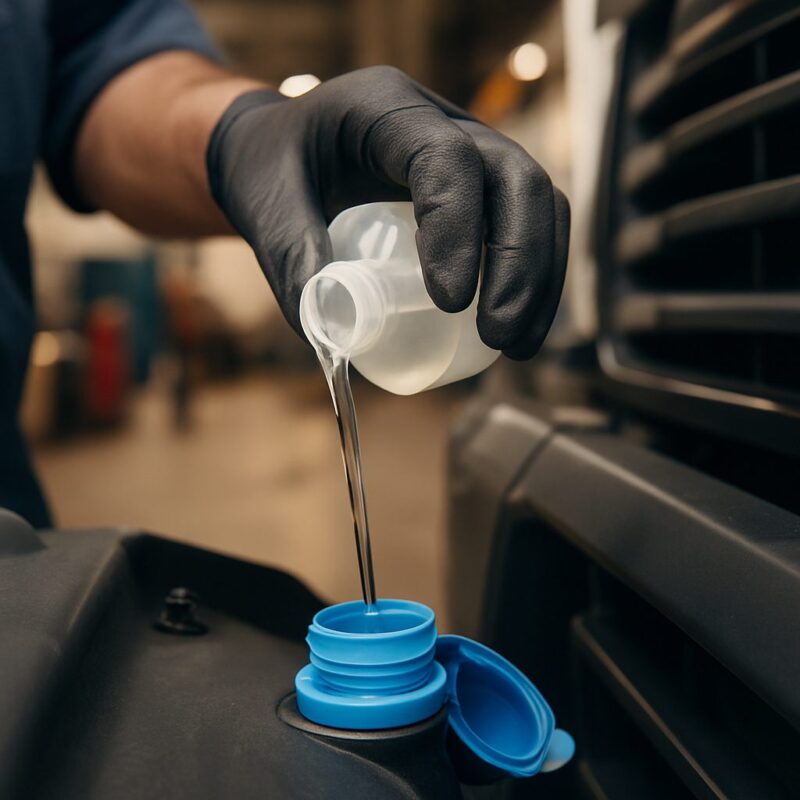
If the reading is off, drain the tank, flush it with fresh DEF, replace the supply filter and refill with fresh fluid from a sealed container. Then run the forced SCR performance test or the drive cycle your service tool calls for, and see whether conversion recovers.
Fix Order: Cheapest Cause First
- Read every code. Note companion codes for pressure, dosing, heaters and NOx sensors. They often point at the real cause.
- Test the fluid. Replace it if it is off spec, contaminated or old.
- Inspect the dosing side. Check the filter, the dosing valve tip and the lines for crystals.
- Check DEF pressure and dosing quantity with the OEM test in your service tool.
- Compare the NOx sensors. With the engine at idle and no dosing, inlet and outlet readings should be close to each other.
- Look for exhaust leaks ahead of each sensor.
- Only then consider the catalyst.
Clearing the codes without a repair just restarts the inducement clock. Most engines need the fault to pass its monitor before the derate steps back down.
What the Repair Can Cost
Fresh DEF and a filter are the low end. A NOx sensor, a dosing valve or a DEF supply module costs much more once dealer labor is added. A catalyst replacement on a Class 8 truck can run into the thousands, before downtime. That spread is the reason to rule out fluid first and to keep fluid from becoming the problem.
Prevention: Keep the Fluid in Spec
- Buy API-certified DEF from a source with steady turnover and keep containers sealed.
- Store DEF out of direct sun and heat, and use older stock first.
- Use a dedicated, clean funnel or nozzle. Never rinse DEF equipment with tap water.
- Test bulk deliveries with a refractometer and keep the reading with the delivery ticket.
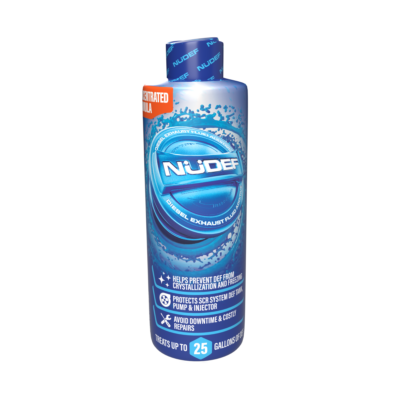
- Treat at every fill. NüDef DEF Treatment, Additive & Stabilizer helps prevent crystallization and helps prevent freezing, and it protects the SCR system DEF tank, pump and injector. One 8 oz bottle treats 25 gallons.
NüDef does not fix a NOx sensor, a catalyst or a wiring fault, and it will not bring fluid that is already off spec back into range. What it does is help keep the crystal and freeze related causes from starting. A single bottle costs $19.99, about 80 cents per gallon of DEF treated. A case of 30 at $509.99 brings it to $17.00 a bottle. Fleets can set up case pricing or standing orders through our wholesale program, and the full Class 8 picture is in our DEF for semi trucks guide. Order NüDef direct to help avoid downtime and costly repairs.