
Updated November 2026. Every density, weight and conversion figure on this page comes from the ISO 22241 property tables, a DEF safety data sheet, or the NIST conversion tables, and each one is linked where it is used. The weights in the chart are worked out from those figures.
How Much Does a Gallon of DEF Weigh?
A US gallon of diesel exhaust fluid weighs about 9.1 pounds (about 4.1 kilograms). The exact figure runs from 9.07 to 9.12 pounds per gallon at 68°F, because ISO 22241-1 allows the fluid a narrow density window of 1.087 to 1.093 grams per cubic centimeter at 20°C. One DEF producer’s safety data sheet prints it as 9.0909 lbs per US gallon, or 4.13 kg per 3.785 liters at 20°C (68°F), which sits right in the middle of that window.
That number matters more than it looks. A pickup owner carrying a few jugs in the bed can round it to nine pounds and move on. A shop stacking pallets on a mezzanine, a contractor hauling a tote on a trailer, or anyone sizing a stand for a bulk tank needs the real figure, multiplied out, before the load goes on. The sections below show where the number comes from, a weight chart from one gallon to a thousand, and what the weight means for hauling, storing and checking the fluid.
The ISO 22241 Density Range
ISO 22241 is the standard that defines diesel exhaust fluid, called AUS 32 in the standard. The American Petroleum Institute describes DEF as a 32.5% solution of technically pure urea in purified water, and API licenses its DEF certification mark only to marketers whose fluid meets the current edition of ISO 22241. The standard’s property table, as reproduced by fuel suppliers that publish their ISO 22241 specification sheets, sets these limits for the three numbers that track concentration:
- Urea content: 31.8 to 33.2 percent by mass
- Density at 20°C: 1.0870 to 1.0930 g/cm³, tested by ISO 12185
- Refractive index at 20°C: 1.3814 to 1.3843
Density and urea content move together. More urea in the same volume of water makes the fluid heavier, so the low end of the density range lines up with fluid near 31.8 percent urea and the high end with fluid near 33.2 percent. That tight band is why weight per gallon barely changes from one jug of certified DEF to the next. If you want the full list of what the standard covers, from biuret and aldehydes to trace metals, the DEF requirements guide walks through it line by line, and what DEF is made of covers the urea and the water.
DEF Weight Chart by Volume
To turn density into pounds per gallon, multiply grams per cubic centimeter (the same as kilograms per liter) by the liters in a gallon, then divide by the kilograms in a pound. The NIST conversion tables put a US gallon at 3.785412 liters and a pound at 0.4535924 kilograms. Run the ISO limits through those factors and a gallon of DEF weighs 4.115 to 4.137 kg, or 9.071 to 9.122 lb. The chart scales that range up. Weights are for the fluid alone at 68°F; containers, pallets and pumps add their own weight on top.
| Volume of DEF | Liters | Weight at 1.087 g/cm³ | Weight at 1.093 g/cm³ | Round figure |
|---|---|---|---|---|
| 1 gallon | 3.8 L | 9.07 lb | 9.12 lb | About 9.1 lb |
| 2.5 gallons | 9.5 L | 22.7 lb | 22.8 lb | About 23 lb |
| 5 gallons | 18.9 L | 45.4 lb | 45.6 lb | About 45 lb |
| 10 gallons | 37.9 L | 90.7 lb | 91.2 lb | About 91 lb |
| 25 gallons | 94.6 L | 226.8 lb | 228.0 lb | About 227 lb |
| 55 gallons | 208.2 L | 498.9 lb | 501.7 lb | About 500 lb |
| 100 gallons | 378.5 L | 907.1 lb | 912.2 lb | About 910 lb |
| 250 gallons | 946.4 L | 2,267.9 lb | 2,280.4 lb | About 2,275 lb |
| 500 gallons | 1,892.7 L | 4,535.7 lb | 4,560.8 lb | About 4,550 lb |
| 1,000 gallons | 3,785.4 L | 9,071.5 lb | 9,121.5 lb | About 9,100 lb |
For a quick figure in the yard, multiply gallons by 9.1. The answer lands within a fraction of a percent of the chart for any certified fluid. For metric work, a liter of DEF weighs 1.087 to 1.093 kilograms, so a thousand liters is a little under 1.1 metric tons.
Why DEF Is Heavier Than Water
Plain water is the reference everybody carries in their head. The USGS water density table lists water at 0.99802 g/cm³ at 70°F (21°C), which works out to about 8.33 pounds per US gallon with the NIST factors. DEF at 1.087 to 1.093 g/cm³ is roughly 9 to 10 percent denser than that, so every gallon carries about three quarters of a pound more than the same gallon of water.
The extra weight is the dissolved urea. About a third of the fluid by mass is urea and the rest is purified water. That also explains why DEF can leave crust behind. When the water evaporates from a drip on a filler neck or a jug thread, the urea stays as a white solid. The same thing happens slowly inside a tank or an open container that breathes through heat cycles, which is the crystallization problem covered in the DEF crystallization guide.
Temperature and the 68°F Reference
ISO 22241 states density at 20°C (68°F) for a reason: every liquid changes density with temperature. The USGS table shows it for water, which goes from 1.00000 g/cm³ at 39.2°F (4°C) to 0.99802 g/cm³ at 70°F. DEF behaves the same way. A gallon drawn on a cold morning weighs a touch more than a gallon drawn on a hot afternoon, because the same fluid takes up less room when it is cold.
For hauling and storage math the difference is small enough to ignore; using 9.1 pounds per gallon covers it. Temperature matters a great deal more when you test the fluid. A hydrometer or density meter reading taken on warm fluid will read low against the ISO table unless the instrument corrects to 20°C. Read the reading against the right temperature before you call a batch weak.
Hauling DEF: Payload and Paperwork
Weight is the first thing to check before DEF rides anywhere. A case of 2.5-gallon jugs, a few 5-gallon pails or a full tote adds up fast, and the fluid weight alone does not include the plastic, the pallet or a transfer pump. A 100-gallon tank in a pickup bed puts about 910 pounds of fluid over the rear axle before the tank itself is counted. Compare the chart figure plus the container weight against the payload rating on your door jamb sticker and the rating on the trailer, and strap the load for its full weight, since liquid in a partly full tank surges under braking.
The paperwork side is simpler. The DEF safety data sheet lists diesel exhaust fluid as not regulated for transport under DOT, IMDG, IATA or Canada’s TDG rules. Your own vehicle weight limits and load securement rules still apply. If you move DEF in bulk and fill equipment in the field, the DEF transfer tank guide covers tank sizes and pumps, and the bulk DEF guide covers totes and dispensers. Operations that buy treatment for a large fleet of trucks or machines can set up an account through the NüDef wholesale program.
Storing DEF: Floors, Shelves and Containers
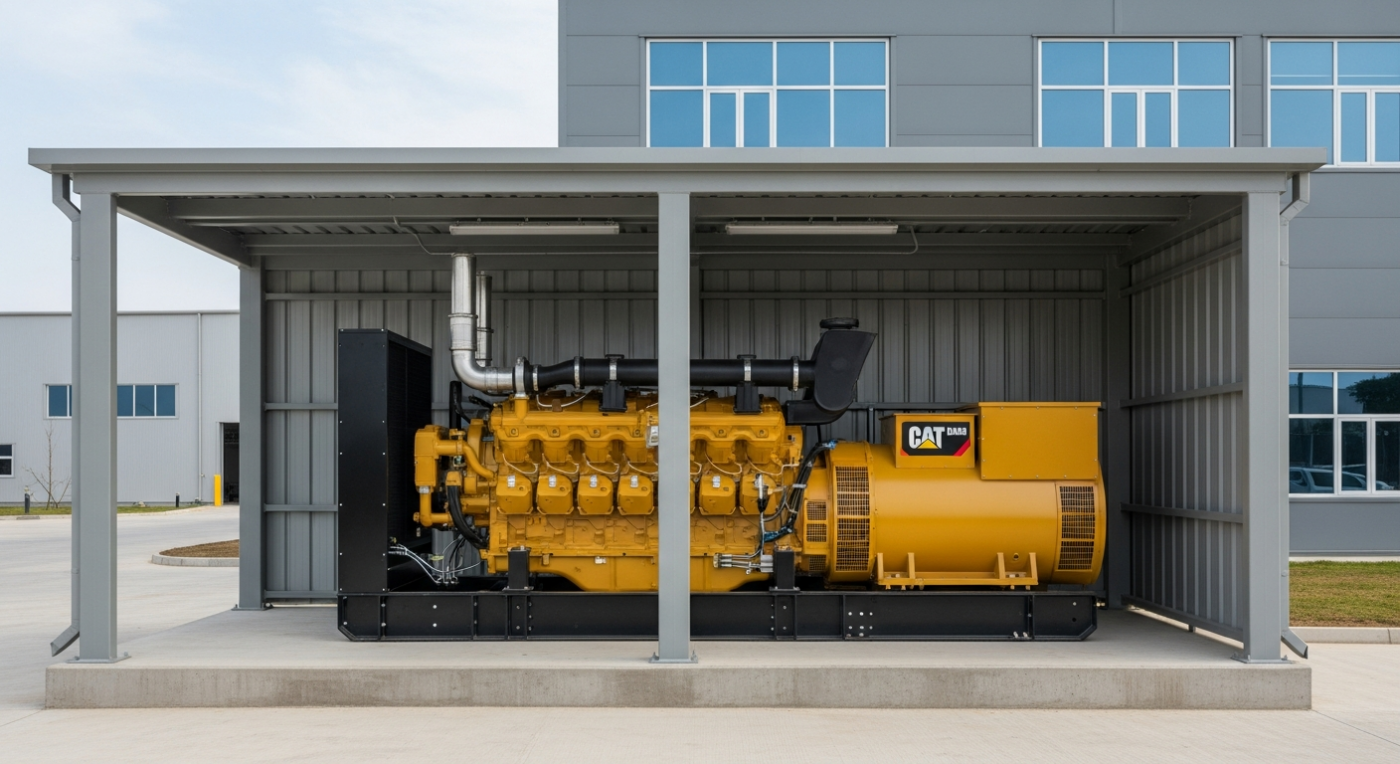
Weight sets where DEF can sit. Shelving and mezzanines carry a rated load, and a few pallets of jugs or a full bulk container can go past it. One engine maker’s DEF quality bulletin mentions 1,000-gallon bulk dispensers; by the chart, a full one holds about 9,100 pounds of fluid, which belongs on a slab or a pad sized for it. Check the rating of any rack, stand or floor before the first load goes on, and leave room for a forklift or pallet jack to reach the container.
The container material matters as much as its location. That same DEF quality and maintenance bulletin, which cites ISO 22241-3 for handling and storage, recommends containers of polyethylene, polypropylene or Grade 316 stainless steel. It lists materials that can corrode with long DEF contact: carbon steel, zinc-coated carbon steel and mild iron; copper, copper alloys, zinc and lead; solder containing lead, silver, zinc or copper; aluminum alloys; magnesium alloys; and plastics or metals coated with nickel. Metal picked up from the wrong fitting ends up in the fluid. The bulletin also says to keep DEF out of direct sunlight and to shade intermediate bulk containers in warm weather to limit water evaporation and conversion to ammonia. The DEF storage guide covers temperatures and how long fluid keeps.
Using Weight and Density to Check DEF
Because density tracks urea content, it doubles as a quality check. An instrument maker’s DEF testing note gives the same ISO acceptance range of 1.087 to 1.093 g/cm³ at 20°C and reads a low result as under-concentrated fluid, which means less urea reaching the catalyst. Rain water in an open jug, rinse water left in a funnel or a tank topped off with the wrong fluid all pull the number down.
A density meter is a shop or lab tool. In the field most people use a DEF refractometer, which reads refractive index, the third ISO number that tracks urea content. Either way, compare the reading at the right temperature against the ISO limits above. The DEF testing guide covers refractometers, test strips and lab analysis, and the contaminated DEF guide explains what to do when a batch fails.
Treating the Fill
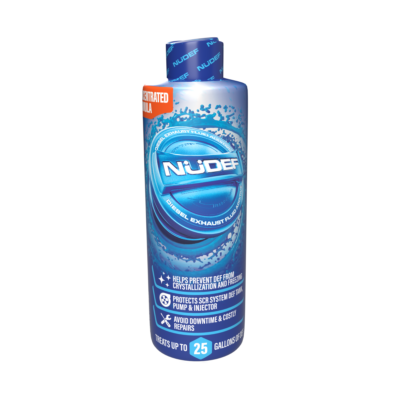
Every gallon in the chart above spends days or weeks sitting in a jug, a tote or a vehicle tank before it is injected. In that time it warms and cools, and water leaves the top of the fluid while the urea stays behind. That is the condition NüDef DEF Treatment, Additive & Stabilizer is made for: it helps prevent crystallization in the DEF you treat. Use it with DEF certified to ISO 22241 or carrying the API mark, never in place of it.
The weight chart and the bottle line up neatly. One 8 oz bottle of NüDef treats 25 gallons, the same 25 gallons that weigh about 227 pounds on the chart. Add one 8 oz dose per 25 gal fill at every refill, and do not exceed the dose on the label. Store the bottle in a ventilated room between 41°F and 86°F, out of sunlight. Order NüDef direct, and see how to add DEF for a clean fill from jug to tank.