What SPN 3361 Covers
SPN 3361 is the SAE J1939 number for “Aftertreatment 1 Diesel Exhaust Fluid Dosing Unit.” It is the part that meters DEF into the exhaust: the dosing valve (often called the doser or DEF injector) and, depending on the engine, the control circuit that drives it. Cummins, Detroit, Navistar and other heavy-duty engine makers report doser faults under this SPN.
The doser is a solenoid valve. The aftertreatment control module sends it a voltage in short pulses, the valve opens, and pressurized DEF from the supply module sprays into the exhaust ahead of the SCR catalyst. The module watches the circuit while it does this. If the voltage, current or valve response is not what it expects, it logs SPN 3361 with a failure mode identifier (FMI) that describes the problem.
What the driver notices
An FMI 4 on the doser circuit usually starts with a check engine or emissions lamp and a DEF warning message. The truck drives normally at first. Because the module cannot dose, NOx at the tailpipe climbs, and SCR efficiency codes often follow within a few drive cycles. If the fault stays active, the inducement schedule begins: warnings first, then torque or speed limits according to the engine maker’s strategy. Some drivers first notice the problem as a DEF lamp that will not go out after a fill, which sends them looking for a fluid problem that does not exist.
Heavy trucks use these SPN and FMI pairs where a pickup would show a P-code. Our DEF trouble codes hub covers the pickup codes and explains how to read any SPN and FMI pair.
FMI 4 vs FMI 7 and the Other FMIs
The FMI is the important half of this code, because it decides whether you reach for a multimeter or a wrench.
- FMI 4: voltage below normal, or shorted to low source. The module sees a voltage on the doser circuit that is too low, which usually means a wire shorted to ground, a damaged connector or a failed coil.
- FMI 3: voltage above normal, or shorted to high source. A wire shorted to a power source or an open ground.
- FMI 5: current below normal, or open circuit. A broken wire, an unplugged connector or an open coil.
- FMI 6: current above normal, or grounded circuit.
- FMI 7: mechanical system not responding or out of adjustment. The electrical side checks out, but the valve does not behave as commanded. This is where a doser stuck by crystals shows up.
FMI 4 is an electrical code. It is not caused by the fluid. That is worth saying plainly, because it keeps the diagnosis on the right track. The test values and pin numbers for your engine come from the OEM service information, which always has the final word.
Electrical vs Mechanical Causes
Electrical causes (FMI 4, 3, 5, 6)
- Chafed harness. The doser harness runs near the exhaust and across the frame. Heat, vibration and clamps that let go wear through insulation, and a bare wire touching the frame gives you FMI 4.
- Corroded or melted connector. The doser connector sits close to hot exhaust. Heat cycles crack seals, water gets in, and pins corrode. Dried DEF around a connector speeds that up, because DEF residue is corrosive to some metals.
- Failed doser coil. The solenoid winding can short internally after years of heat soak.
- Control module output. Rare, and the last thing to suspect after the harness and the doser test good.
Mechanical causes (FMI 7)
- Crystal buildup in or around the valve, which stops it from opening or seating.
- Restricted spray holes that change flow so the module sees the wrong response.
- Supply problems such as low pressure from the supply module, which often logs a pressure code too. See our SPN 4334 FMI 18 guide.
Crystal-Stuck Dosers
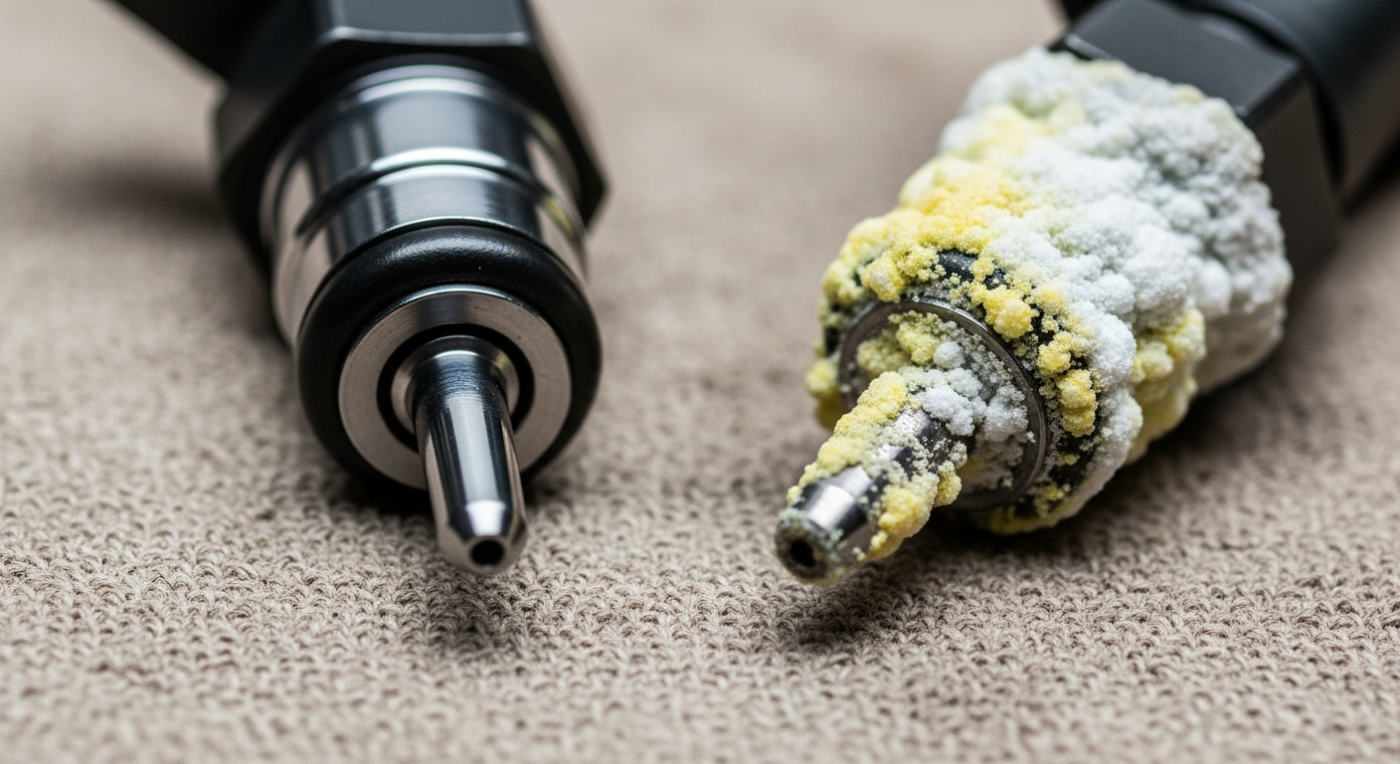
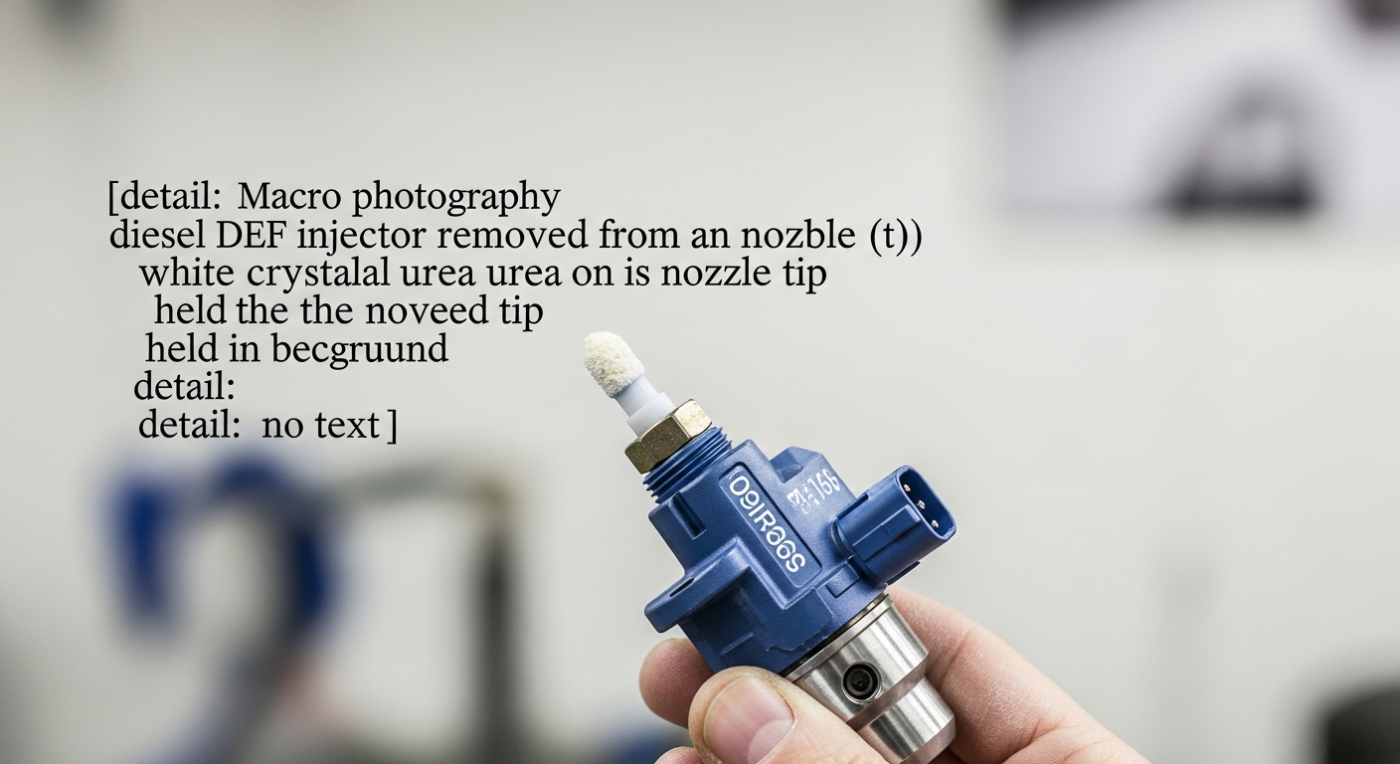
A doser lives in a hard spot. It sits on the exhaust, it sees heat soak after every shutdown, and any DEF left at the tip can dry. When DEF dries, water leaves and urea stays behind as white or yellowish crystal. Over time that crust builds at the tip and around the mounting boss, and it can work into the valve.
A crystal-bound doser usually sets a mechanical or flow-related code (FMI 7, pressure codes or SCR efficiency codes) rather than FMI 4. It can still matter to an FMI 4 diagnosis, though. Crust around the connector and harness holds moisture against pins and wires, and that corrosion can lead to the electrical faults above. Our DEF doser valve guide covers when a crusted doser can be cleaned and when it should be replaced, and our DEF injector cleaning guide walks the cleaning steps. Our DEF crystallization guide explains why crystals form in the first place.
To spot it, pull the heat shield and look at the tip and the mounting boss with a light. A clean doser shows bare metal and a clear spray hole. A problem doser shows white crust, yellow-brown varnish or a crystal cone over the tip. Check the gasket and the exhaust boss too, since deposits there can wick back toward the connector. If you find heavy crust, ask why it formed: fluid that sat too long or got too hot, frequent short trips, long idle periods, or a supply-side problem that leaves the doser dribbling.
A Test Sequence for SPN 3361 FMI 4
- Record every active and inactive code. A doser code that arrives with pressure codes or an inducement code such as SPN 5246 tells a different story than a doser code alone.
- Inspect the harness from the module to the doser. Look for melted loom, rubbed-through insulation, missing clamps and any spot where the harness touches the exhaust or the frame.
- Unplug and inspect the doser connector. Look for green or white corrosion, pushed-back pins and cracked seals. Clean or repair per the OEM procedure.
- Measure the doser coil resistance and check the circuit for shorts to ground, using the values and pin-out from the service information.
- Check voltage at the connector during a commanded dosing test with the OEM service tool.
- Clear the code and run the OEM dosing test. If FMI 4 returns with a good harness and a good coil reading, follow the OEM procedure for module checks.
- Look at the doser tip while it is accessible. If you see crust, deal with it now so a mechanical fault does not follow the electrical repair.
What the Repair Usually Involves
An FMI 4 repair is often a harness section, a connector or a pigtail, which is modest parts money plus labor. A doser replacement costs more, and access on some chassis means removing heat shields or other aftertreatment parts. A control module is the expensive outlier. At dealer labor rates, a doser job with diagnosis and the aftertreatment reset can run well into four figures, and an inducement stage adds downtime on top.
Testing the circuit before ordering parts is the cheapest step in the whole job. A new doser plugged into a shorted harness sets the same code the next time the module drives it.
SPN 3361 on Common Heavy-Duty Engines
The SPN is the same across makers, but layouts differ. On Cummins X15 trucks the doser sits on the decomposition section ahead of the SCR catalyst, and the same doser shows up in our Cummins X15 DEF problems guide. Detroit DD13, DD15 and DD16 trucks place it in the aftertreatment assembly ahead of the SCR. Navistar and other engines follow the same idea with their own harness routing. Use the chassis wiring diagram for your truck, because harness routing is where most FMI 4 faults live. The 18-wheeler DEF problems guide covers the broader Class 8 picture.
Prevention
You cannot treat your way out of a chafed wire. Harness clamps, heat shields and connector seals are mechanical problems with mechanical fixes. Inspect them at every PM, replace missing clamps, and keep the connector area clean and dry.
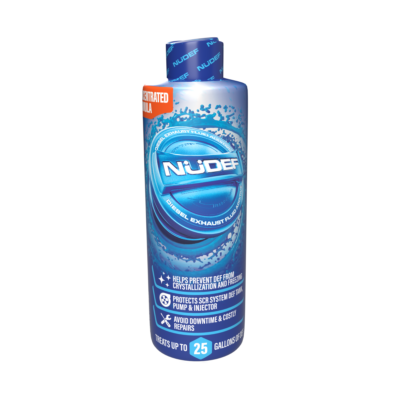
The fluid side is where prevention pays off for the mechanical faults and for the crust that corrodes connectors. Fresh, sealed DEF stored out of the heat keeps urea in solution. NüDef DEF Treatment, Additive & Stabilizer helps prevent DEF from crystallization and freezing, and it protects the SCR system DEF tank, pump and injector. NüDef does not repair wiring, a failed coil or a control module, and it does not clear codes. It helps prevent the crystal buildup that sticks dosers and fouls the area around them, which helps fleets avoid downtime and costly repairs.
One 8 oz bottle treats 25 gallons, added at each refill. A case of 30 runs $17.00 a bottle, and fleets can set up standing orders through our wholesale program. You can also order NüDef direct.