What SPN 4334 Measures
SPN 4334 is the SAE J1939 number for “Aftertreatment 1 Diesel Exhaust Fluid Doser Absolute Pressure.” It is the pressure the DEF supply module builds and holds in the line that feeds the dosing valve. The aftertreatment control module watches that number every second the system is dosing.
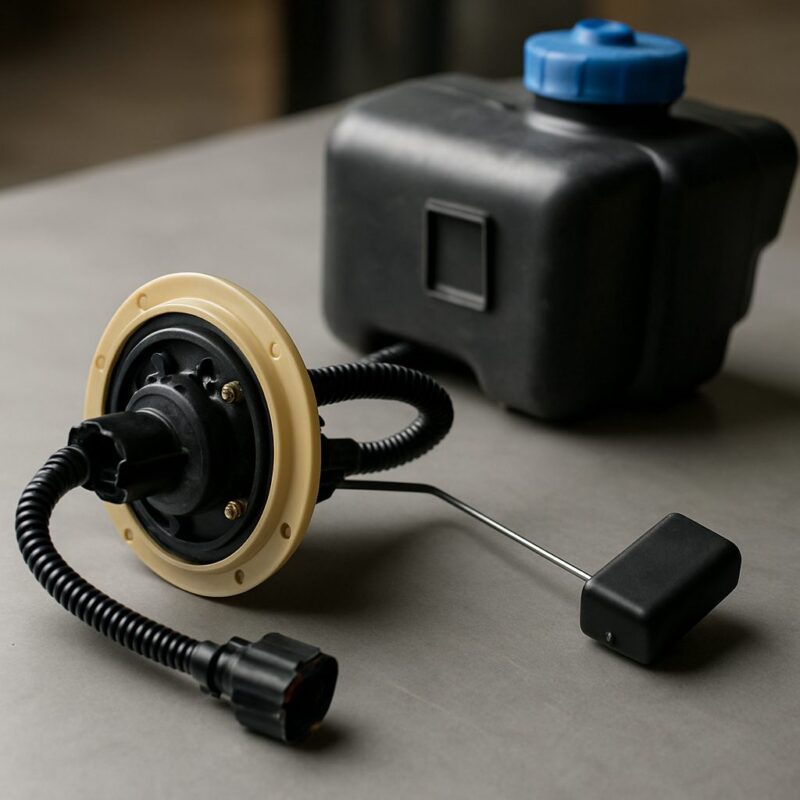
The supply module (some makers call it the DEF pump or dosing unit) pulls fluid from the tank through a pickup and a filter, pressurizes it, and pushes it down a heated line to the doser on the exhaust. A pressure sensor, usually built into the supply module, reports back. When the system primes at startup, pressure has to rise to a target and stay there. When the doser opens, pressure dips a little and recovers. When the engine shuts down, many systems purge the line back to the tank so nothing freezes in it.
If the reported pressure does not match what the module expects for that moment, it sets SPN 4334 with a failure mode identifier (FMI) that says which way it is off. Heavy trucks report DEF faults this way instead of the P-codes a pickup shows. Our DEF trouble codes hub explains how SPN and FMI numbers fit together.
FMI 18 vs FMI 7, and the High-Pressure Codes
The SPN tells you the part of the system. The FMI tells you the kind of fault. With SPN 4334 you will see a few common pairs:
- FMI 18: data valid but below normal operating range, moderately severe. The sensor is working and reporting a believable number. The number is just too low. This is the classic low DEF pressure code.
- FMI 7: mechanical system not responding or out of adjustment. The module commanded a pressure change and did not see the response it expected. Think pump that will not build pressure, a valve that will not move, or a prime that never completes.
- FMI 16 and FMI 0: above normal, moderately severe and most severe. Pressure is too high, which usually points downstream: a restricted doser, a pinched or frozen line, or a blocked return path.
- FMI 3 and FMI 4: voltage high or low on the sensor circuit. These are wiring or sensor faults, and the fix is electrical.
FMI 18 is the one most fleets search for, and it is the one where the fluid and the filter deserve the first look. The exact test values for your engine come from the OEM service information, which always has the final word.
Causes of Low DEF Pressure, Cheapest First
Low pressure means fluid is not reaching the pump freely, the pump is not doing its job, or fluid is escaping somewhere before the doser. Work the list in this order, because the first items cost almost nothing to check.
Low or empty tank
A tank near empty, or a truck parked on a steep grade, can let the pickup draw air. Air compresses, so pressure never builds. Top off and recheck before anything else.
Clogged supply module filter
The DEF filter sits in the suction path inside the supply module. When it loads up with crystallized urea or tank debris, the pump starves and pressure falls. A restricted filter is one of the most common causes of SPN 4334 FMI 18 on Class 8 trucks. Our DEF filter service guide covers locations and the swap.
Crystals in the pickup, lines or doser
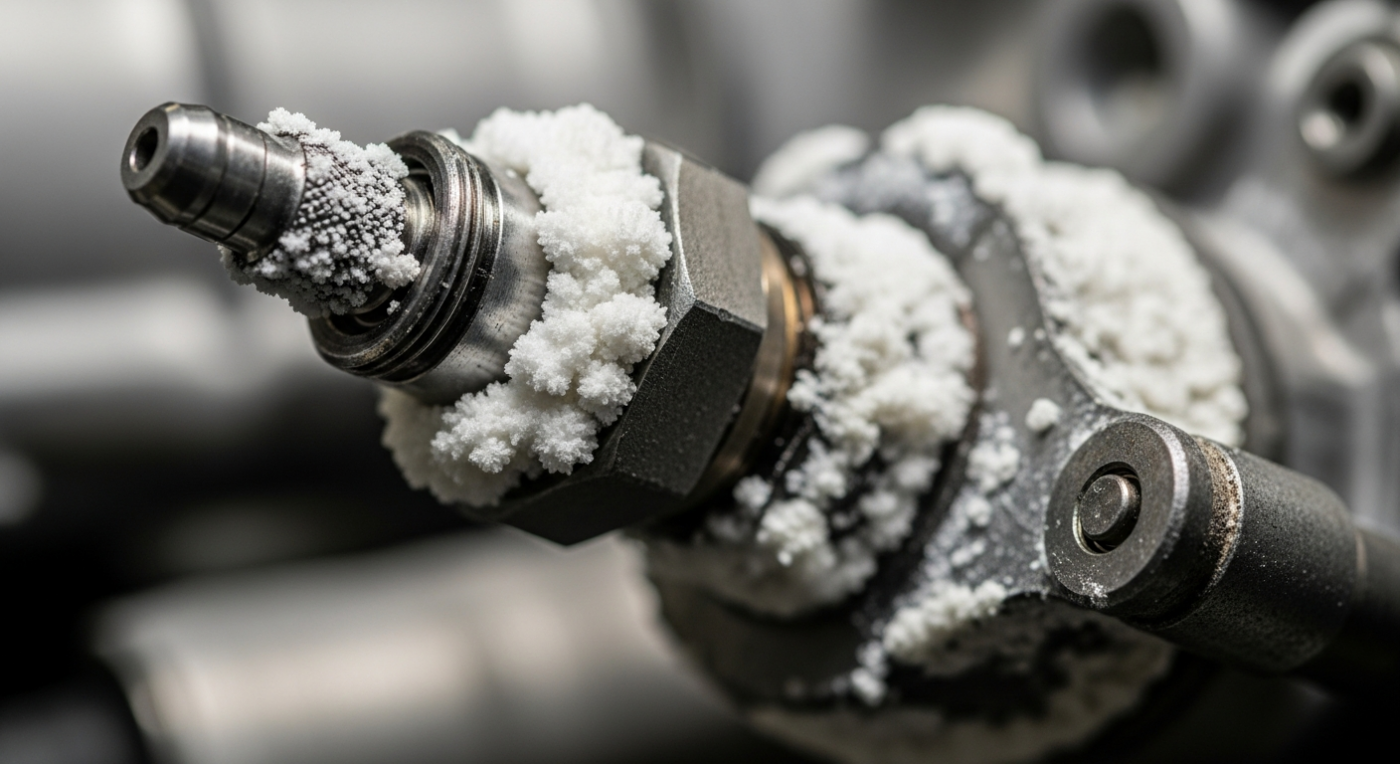
DEF that sits hot, evaporates or freezes and thaws repeatedly drops urea out as white crystal. Those crystals collect where flow is tight: the tank pickup screen, line fittings and the doser tip. A partial blockage on the suction side shows up as low pressure. Our DEF crystallization guide explains where crystals come from.
Air leaks and damaged lines
A cracked suction line, a loose quick connector or a rubbed-through hose lets the pump pull air. Look for white crust at connectors. Crust is dried DEF, and it marks a leak.
A weak pump or supply module
Supply modules wear. Brushes, diaphragms and internal valves fail, and some fail only when hot or cold. If the filter is new, the lines are tight and the fluid is good, the module is the next suspect. Our DEF pump failure guide covers the tests.
Pressure sensor or wiring
A sensor that reads low will set the same code with good pressure in the line. That is why the test sequence below compares the reading against a mechanical gauge when the OEM procedure allows it.
Where the Pressure Sensor Lives on Cummins, Detroit and PACCAR
On most heavy trucks the DEF pressure sensor is part of the supply module, not a separate part on the line. That matters for diagnosis, because a sensor fault and a pump fault can both lead to replacing the same assembly.
- Cummins X15 and ISX: the supply module mounts on the frame rail near the DEF tank, or on the tank itself, depending on chassis. The pressure sensor is inside the module. The DEF filter is serviced at the module as well.
- Detroit DD13, DD15 and DD16: the supply module sits near the tank on the frame. On a Freightliner Cascadia, the filter cap is on the module housing. Our Cascadia DEF problems guide walks the layout.
- PACCAR MX-11 and MX-13: the module is mounted near the tank on Kenworth and Peterbilt chassis, with the same filter-in-module arrangement.
Mount points change with model year and spec. Confirm the location in the service literature for your VIN before you start pulling covers.
A Test Sequence That Avoids Throwing Parts at It
- Read every active and inactive code. SPN 4334 often travels with a level code (SPN 1761), a dosing code (SPN 3361) or an inducement code (SPN 5246). The companion code often names the real cause.
- Check the fluid. Confirm the tank level, then test concentration with a refractometer. Fluid outside 31.8 to 33.2 percent urea is out of spec under ISO 22241. Our DEF testing guide shows how.
- Inspect for crust. Look at the tank header, the supply module, every connector and the doser connection. White deposits mark leaks and crystal buildup.
- Change the DEF filter. Inspect the old one. Crystals on the element tell you the fluid or storage needs attention too.
- Run the OEM pump or dosing test. Most service tools have a DEF system pressure test or a doser quantity test. Watch pressure build and hold.
- Check the doser. A doser that leaks or sticks open can drag pressure down. A crystal-caked tip can do the opposite and set a high-pressure code. Our DEF doser valve guide and injector cleaning guide cover both.
- Only then condemn the supply module. If the filter is new, the lines hold, the fluid is in spec and the test still fails, the module is the likely part.
What a Repair Usually Involves
The cost spread on this code is wide because the cause list is wide. A filter and a fresh tank of DEF are routine maintenance items. A line or connector repair is modest parts money plus labor. A supply module replacement is the expensive end, and it can run into the thousands at dealer labor rates once diagnosis and the aftertreatment reset are included. Downtime often costs more than the part, especially if the truck reaches an inducement stage before the repair.
That spread is the reason to test in order. Shops that skip the filter and fluid checks sometimes replace a supply module on a truck whose real problem was a crystal-blocked filter, and the code returns because the crystals came back.
Keeping Low DEF Pressure From Coming Back
Most of the preventable causes trace back to the condition of the fluid. Fresh, sealed, in-spec DEF that is stored out of the heat keeps urea in solution. Fluid that cooks in a hot yard, sits in an open jug or freezes and thaws repeatedly is the fluid that leaves crystals in filters and lines.
- Buy DEF you will use within a reasonable time and keep containers sealed and shaded.
- Change the DEF filter on the engine maker’s interval, and sooner if you see crystals on the old element.
- Walk around the supply module and doser at every PM and wipe off crust so new leaks are easy to spot.
- Treat the tank at every refill. NüDef DEF Treatment, Additive & Stabilizer helps prevent DEF from crystallization and freezing, and it protects the SCR system DEF tank, pump and injector. One 8 oz bottle treats 25 gallons, about 80 cents per gallon of DEF treated at single-bottle pricing.
NüDef does not repair a failed pump, a cracked line or a bad sensor. It helps prevent the crystal buildup that restricts filters, pickups and dosers in the first place, which helps fleets avoid downtime and costly repairs. For multi-truck operations, a case of 30 works out to $17.00 a bottle, and our wholesale program handles standing orders. You can order NüDef direct and have it on the shelf before the next PM.