What Is AdBlue?
AdBlue is a brand name for diesel exhaust fluid — the same 32.5% urea, 67.5% deionized water solution that every modern diesel with an SCR system consumes. The name is a registered trademark of the German Association of the Automotive Industry (VDA), and it became the everyday word for DEF across Europe the way “Kleenex” became the word for tissue. Chemically, AdBlue and DEF are governed by the same standard: ISO 22241, which fixes the urea concentration, purity limits, and handling requirements down to the parts-per-million level.
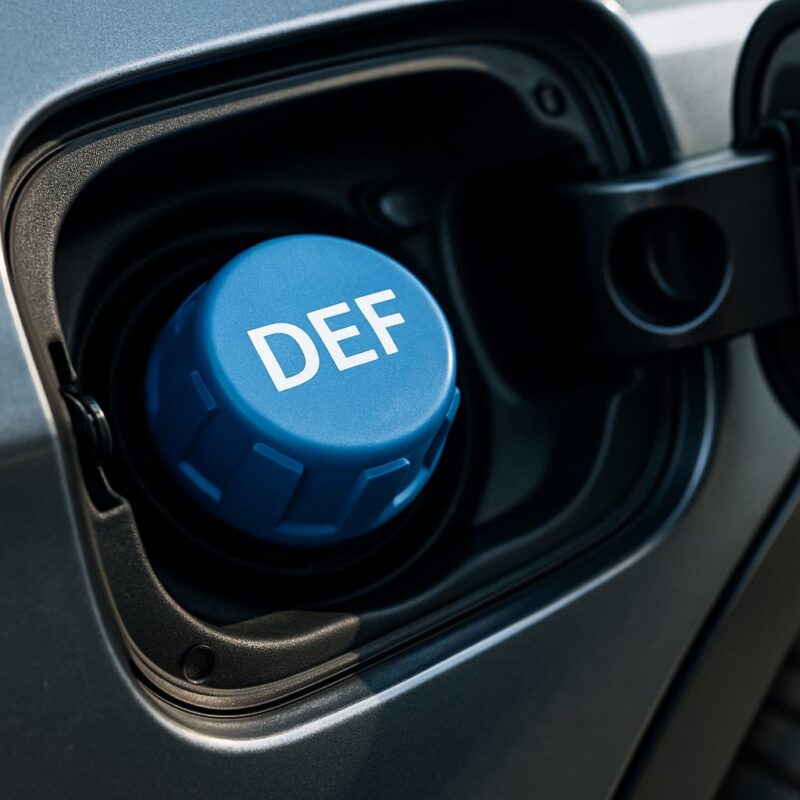
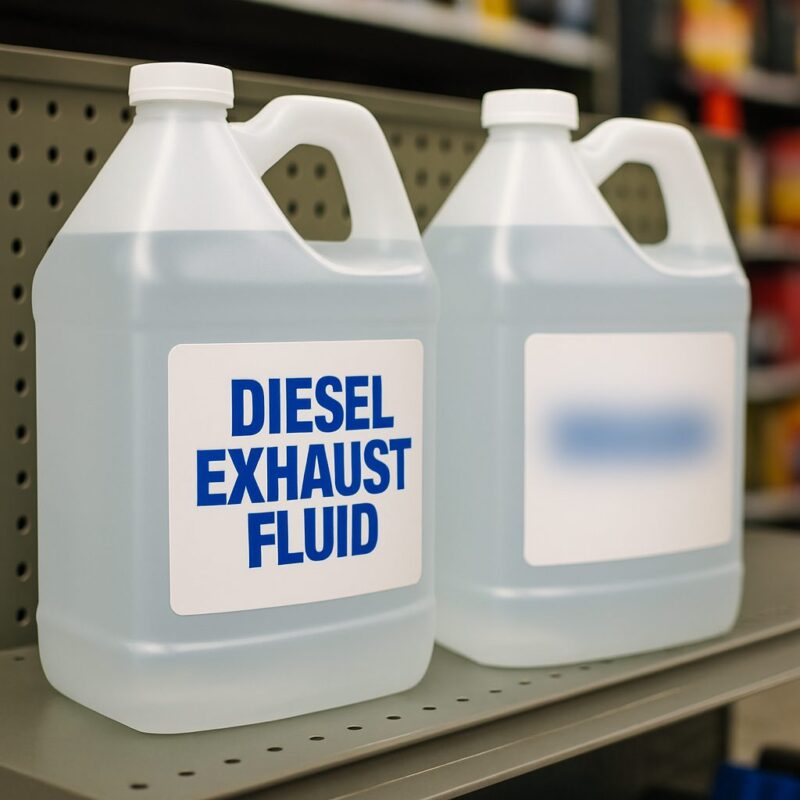
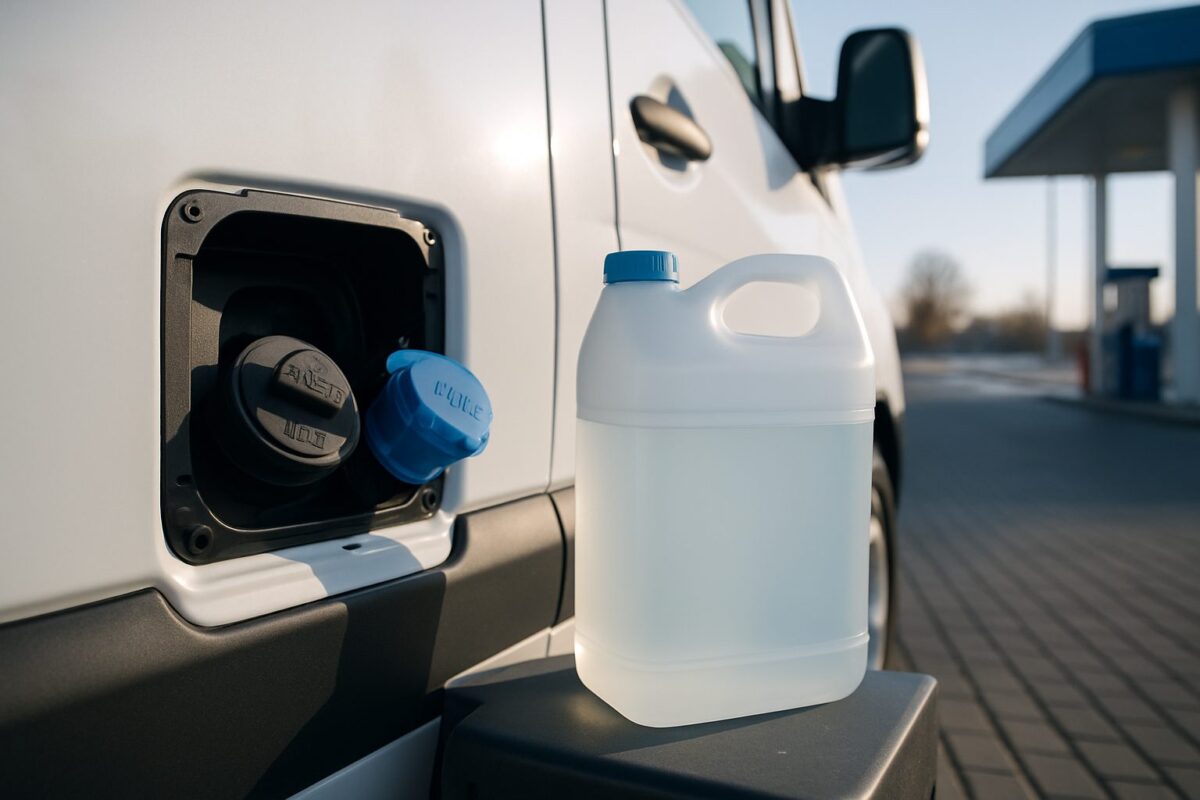
So when your Mercedes Sprinter, BMW, Audi, or VW manual says “refill AdBlue” and the parts store shelf says “DEF,” you are looking at two names for one fluid. If the jug meets ISO 22241 (and in North America, carries API certification), it belongs in the tank — whichever name is on the label.
Why Europe Says AdBlue and America Says DEF
Europe adopted SCR emissions systems early on passenger diesels — diesel cars were half the European market by the mid-2000s, and Euro 4/5/6 standards pushed urea injection into everyday vehicles years before it reached American driveways. The VDA licensed the AdBlue trademark to producers who met the spec, so the brand name spread with the technology and stuck.
The United States took the opposite path: SCR arrived on heavy trucks first, with the EPA 2010 emissions standards, and the industry standardized on the generic term “diesel exhaust fluid.” Same chemistry, different marketing history. That is why the AdBlue name shows up in the U.S. mostly around European vehicles — Sprinter vans, European luxury diesels, and imported equipment — while everything else on the road says DEF. We cover the full regulatory timeline in what year DEF started.
The Chemistry Behind the Name: ISO 22241
ISO 22241 is worth understanding because it is what makes the AdBlue-vs-DEF question moot. The standard specifies:
- Urea concentration: 31.8–33.2% (nominal 32.5%). That number is not arbitrary — 32.5% is the eutectic point, the exact mixture with the lowest possible freezing temperature (12°F / −11°C). Richer or leaner mixes freeze sooner and dose incorrectly.
- Automotive-grade urea only. Fertilizer urea contains formaldehyde and other impurities that poison SCR catalysts — it is chemically similar and absolutely not substitutable.
- Strict impurity ceilings for metals like calcium, iron, copper, zinc, and phosphate — measured in parts per million, because trace metals accumulate in the catalyst and permanently reduce its efficiency.
- Deionized water only. Tap water’s minerals alone can push the fluid out of spec.
- Handling rules: dedicated containers and dispensing equipment, because DEF picks up contamination from any surface that has held other fluids.
Every certified jug — AdBlue-branded or DEF-branded — meets this identical spec. The full ingredient story is in what DEF is made of.
Are AdBlue and DEF Interchangeable?
Yes — provided both meet ISO 22241. Your Sprinter runs fine on American DEF from a hardware store, and a Kenworth runs fine on a jug labeled AdBlue. The vehicle cannot tell the difference because there is none. The things that actually matter are the same things that always matter with DEF:
- Certification. Look for ISO 22241 on the label — the API certification mark is the common US signal. Off-spec fluid is the fastest route to fouled injectors and a poisoned SCR catalyst.
- Freshness and storage. DEF degrades with heat and time. Stored at 75°F it lasts about two years; at 95°F, closer to six months. A dusty jug that baked in a warehouse or truck bed is a worse choice than any brand question.
- Container condition. Sealed and dedicated. DEF that has touched fuel, oil, or a dirty funnel is contaminated regardless of what the label said.
Brand-to-brand mixing follows the same logic — we tested that question separately in can you mix DEF brands. Short version: certified fluid mixes with certified fluid, and the brand on the jug matters far less than how the fluid was stored.
Vehicles Where You’ll See the AdBlue Name
In North America, the AdBlue label follows European drivetrains. Where you will meet it, and what each system expects:
- Mercedes-Benz & Sprinter vans: the dash literally warns “Check AdBlue,” with a start-countdown (often 1,000 miles) once the level runs low. Tanks run roughly 6–8 gallons; consumption is typically a gallon every 1,500–3,000 miles depending on load. Sprinter owners get a dedicated deep-dive in our Sprinter DEF problems guide.
- BMW diesels (335d, X5 xDrive35d and successors): two-tank systems on some models — an active tank and a passive reserve — which confuses DIY refills; the fill point is what matters.
- Audi / VW TDI models: post-2015 TDIs dose aggressively, and their compact injectors are notably deposit-sensitive.
- Land Rover / Jaguar / other European diesels: same SCR architecture, same warnings, same refill rules.
- Imported ag and construction equipment: European-built tractors and machines often ship with AdBlue-labeled tanks and manuals; any certified DEF serves them.
The dosing systems behave exactly like any American SCR setup — same tank heaters, same NOx sensors, same injector, same failure modes. A Sprinter counting down “AdBlue range” is doing precisely what a Ram warns about with DEF countdown limits, and the recovery steps are the same.
The Quality Question Matters More Than the Name
Whether the jug says AdBlue or DEF, the fluid in your tank is two-thirds water — and it crystallizes, degrades in heat, and grows deposits in injectors and lines the same way everywhere in the world. European SCR systems are, if anything, less tolerant of deposits: passenger-car dosing hardware is smaller and tighter than heavy-truck equipment, injector orifices are finer, and replacement parts carry European-brand pricing. A crystallized dosing valve on a Sprinter is routinely a four-figure repair once diagnostics and labor land.
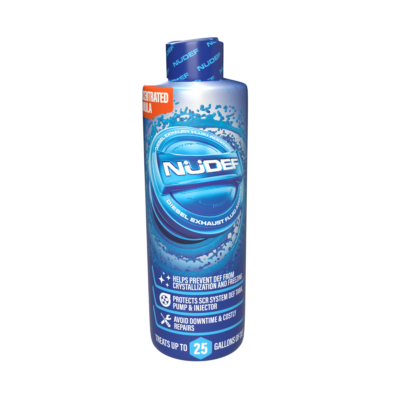
That is exactly the problem NüDef treats. NüDef DEF Treatment & Stabilizer works in any ISO 22241 fluid — AdBlue-branded or DEF-branded — stabilizing the fluid against heat degradation and keeping urea crystals from building up in the injector, lines, and tank. One 8 oz bottle treats up to 25 gallons of DEF, and it is the same dose whether it goes into a Sprinter’s 6-gallon tank or a semi’s 23-gallon tank (fleet math in our semi truck DEF guide). If deposits have already formed, start with how to clean a DEF injector.
Storage and Handling: Same Rules, Any Label
- Keep it cool. Ideal storage is 12°F–86°F; above 86°F, shelf life falls fast. Never store jugs in a hot vehicle or in direct sun.
- Keep it sealed. DEF absorbs airborne contamination and evaporates water, drifting off-spec in open containers.
- Freezing is harmless — mostly. The fluid freezes at 12°F and thaws back to full potency; the risks are burst containers (it expands ~7%) and cold-weather system faults, which our freeze guide and DEF heater guide cover in detail.
- Dedicated equipment only. A funnel that has seen motor oil disqualifies itself. Contamination is cumulative and invisible.
Buying AdBlue in the US (Hint: Just Buy DEF)
If your European vehicle asks for AdBlue, buy certified DEF — paying an import premium for the AdBlue label buys you nothing chemically. Every channel that sells DEF works: auto parts stores, big-box retailers, dealerships, and bulk suppliers. We broke down real prices per gallon by channel in how much DEF costs and where to find it in where to buy DEF fluid — typical spread runs from under $3/gallon at bulk pumps to $8+ for single jugs at convenience retail, and the dealership “AdBlue” line item can run multiples of that for identical fluid.
Then protect whatever you buy: order NüDef direct and treat the fluid from the first fill. It is the cheapest insurance an SCR diesel can carry — European or American badge alike.