Updated November 2026. Specifications and shelf-life figures below come from ISO 22241, the American Petroleum Institute and engine maker guidance.
Mixing Old and New DEF: The Short Answer
Mixing old and new DEF is safe when the old fluid is still in spec. Diesel exhaust fluid from every certified jug, pump and tote is made to the same recipe: a 32.5 percent solution of urea in purified water, held to the quality limits of ISO 22241. Pouring fresh certified DEF on top of a tank that is half full of fluid bought last month is normal, and it is how the system is designed to be used. Engine maker MTU’s DEF handling guidance tells operators to refill the DEF tank every time they refuel, which means almost every fill in service is a top-off.
The trouble starts when the old fluid has gone off spec. Fresh DEF dilutes a problem and does not remove it. Diesel, dirt, tap water or a crust of crystals in the old fluid stays in the tank after you top off, and the new fluid now carries it too. So the real question behind mixing old and new DEF is how to tell whether the fluid already in the tank or the jug is still good.
What Changes as DEF Gets Old
DEF ages in two ways. The first is chemical. With heat and time, a small part of the urea reacts with the water and forms ammonia and carbon dioxide. MTU’s guidance notes that this breakdown does not hurt DEF quality in storage and that the only change expected is a rise in alkalinity from the ammonia. ISO 22241 puts a ceiling on that alkalinity, listed in supplier specification sheets as 0.2 percent as ammonia, so fluid that sat hot for too long can drift past the limit even though it still looks clear.
The second way is physical. Water evaporates from DEF whenever the container breathes: an open jug, a loose cap, a vented tank cycling between a hot afternoon and a cold night. Every bit of water that leaves pushes the urea concentration up. ISO 22241-1 sets the urea content of DEF between 31.8 and 33.2 percent by mass, around the 32.5 percent target, and the SCR system’s quality sensor and dosing logic are built around that band. MTU’s guidance describes fluid above 50 percent concentration as a tank that generally has crystallized urea in it already,.
Freezing is not one of the ways DEF ages. DEF freezes at about 12°F, and MTU states that when frozen 32.5 percent DEF thaws, it leaves no solids behind and its effectiveness is unchanged. A jug that froze in the truck bed over a cold night is fine once it thaws. What matters for a frozen tank is space: the API DEF storage and handling fact sheet warns that DEF can expand by up to 7 percent when it freezes, so do not overfill right before a hard freeze.
Shelf Life: How Old Is Too Old
Storage temperature decides how long DEF stays good. The API fact sheet prints the shelf-life table from ISO 22241, which gives the minimum shelf life at a constant storage temperature:
| Constant storage temperature | Minimum shelf life | What it means for a top-off |
|---|---|---|
| 50°F (10°C) or below | 36 months | Jugs kept in a cool shop or basement are safe to pour for years |
| 77°F (25°C) or below | 18 months | Typical indoor storage; use the oldest stock first |
| 86°F (30°C) or below | 12 months | A warm garage or a shaded tote; check the fill date |
| 95°F (35°C) or below | 6 months | A truck bed, toolbox or sunny yard in summer |
| Above 95°F (35°C) | Test before use | Do not top off with it until a test shows it is in spec |
The table explains most bad top-offs. A jug that rode in a toolbox through a hot summer can be past its life in months, while the same jug kept in a cool shop is good for years. The API sheet also tells owners to rotate stock and use older stock first, and to use or replace any emergency DEF they carry according to the storage guidelines. Our DEF shelf life chart goes deeper on reading the date codes on jugs and totes.
When Topping Off Old DEF Is Safe
Topping off is the right call in the situations most owners face. The DEF already in the tank came from a sealed, certified container, the truck has been driven regularly, and the fluid has been through normal weather. The new fluid carries the same urea concentration, so the blend stays inside the ISO band. Brand does not matter either: every API-certified DEF meets the same standard, which is why our guide on mixing DEF brands reaches the same answer for brands as this one does for age.
A few practical habits keep a top-off clean. Wipe the filler cap and neck before you open it so dust and old crust fall outside the tank. Use a pour spout or nozzle that touches only DEF, since the API fact sheet tells owners to use dedicated dispensing equipment and avoid funnels or pitchers used for other fluids. Cap a half-used jug tightly, because an open jug loses water and gains dust while it waits for the next fill.
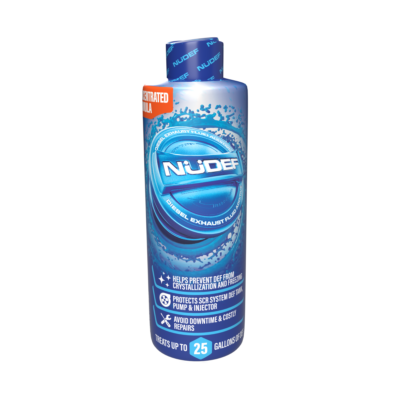
The fill itself is the moment to treat the fluid. NüDef DEF Treatment, Additive & Stabilizer goes into the DEF tank at every refill, and the label says it helps prevent crystallization and helps protect the SCR tank, pump and injector. Because it goes in with each fill, every gallon that enters the tank arrives treated, and a tank that is topped off with treated fluid fill after fill stays treated. The label dose is one 8 oz bottle per 25 gallon fill at every refill; do not exceed it.
When Not to Top Off
Hold the jug and check the tank first in any of these cases:
- Something other than DEF may have gone in. Diesel, coolant, washer fluid or tap water in the DEF tank is contamination, and adding fresh DEF spreads it through more fluid. The API fact sheet warns that tap water can carry contaminants that are harmful to SCR systems. Our wrong-tank guide covers what to do first.
- The old fluid sat hot for a long time. A truck or a jug that spent a summer above 95°F falls in the “test before use” row of the shelf-life table.
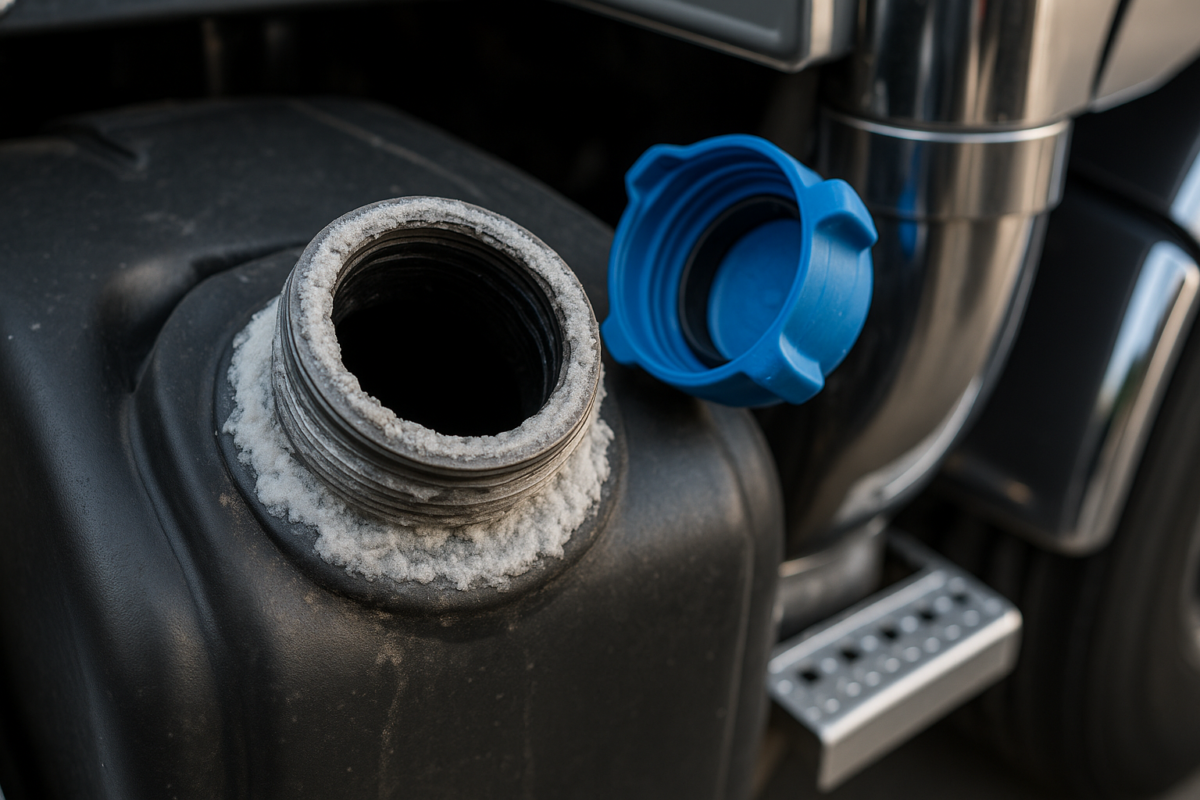
- You see crystals, a skin or sediment. White crust on the cap is normal. Crystals floating in the jug, a film on the surface or grit on the bottom mean the fluid has lost water or picked up dirt.
- A sharp ammonia smell from a jug that sat hot. A faint odor is normal as DEF ages; a strong one is a reason to test.
- The truck is already setting DEF quality codes. Topping off may push the reading back inside the band for a while, but whatever caused the code is still there. Start with the contaminated DEF guide.
- The container is unknown. A jug with no label, a tote that held another product, or a container someone refilled by hand. The API sheet tells owners not to reuse containers from other products for DEF without thorough cleaning, because cross-contamination affects DEF quality.
How to Check Old DEF Before You Mix It
The quick check is a look and a sniff. Pour a little into a clean, clear cup. Good DEF is clear and colorless with only a faint ammonia smell. Anything cloudy, tinted, oily or gritty should stay out of the tank.
The real check is concentration. MTU’s guidance says a refractometer is the preferred tool for checking the urea concentration of DEF, and a DEF refractometer reads directly in percent urea. Compare the reading with the ISO 22241-1 band of 31.8 to 33.2 percent. Fluid inside the band can be mixed with new DEF. Fluid above it has lost water, and fluid below it has been diluted. Both are off spec, and neither should be blended in to make up the difference. Our guide on how to test DEF fluid walks through the refractometer, test strips and what each reading means.
For a fleet buying in bulk, the supplier paperwork does the first part of this check. The API fact sheet tells buyers to make sure their supplier provides a Certificate of Analysis (or Quality) with every shipment covering all of the quality characteristics ISO 22241 requires.
What to Do With Old DEF That Fails
Fluid that fails the check does not go in the truck, and topping it off with fresh DEF does not bring it back. If the bad fluid is still in a jug, set it aside and dispose of it the way your local rules require; our guide on disposing of old and expired DEF covers the options. If it is already in the tank, the tank needs to be drained and the system checked before fresh fluid goes in, and the contaminated DEF guide walks through the symptoms and the service steps. When the tank is clean, refill with sealed, certified DEF and treat that first fill.
Jugs, Totes and Bulk Tanks
Mixing old and new DEF happens on a bigger scale every time a tote or a bulk tank is refilled before it runs empty. The same rules apply, with more fluid at stake. The API fact sheet tells bulk users to use dedicated storage tanks for DEF, to rotate stock so older fluid is used first, and to consider a closed-loop transfer system to keep airborne dirt out. MTU’s guidance recommends a vacuum and pressure vent that opens and closes with changes in pressure, which limits water evaporation and keeps the concentration steady over time. When a dedicated tank has to switch from another product, the API sheet calls for a thorough rinse with distilled or deionized water or on-spec DEF, and never tap water.
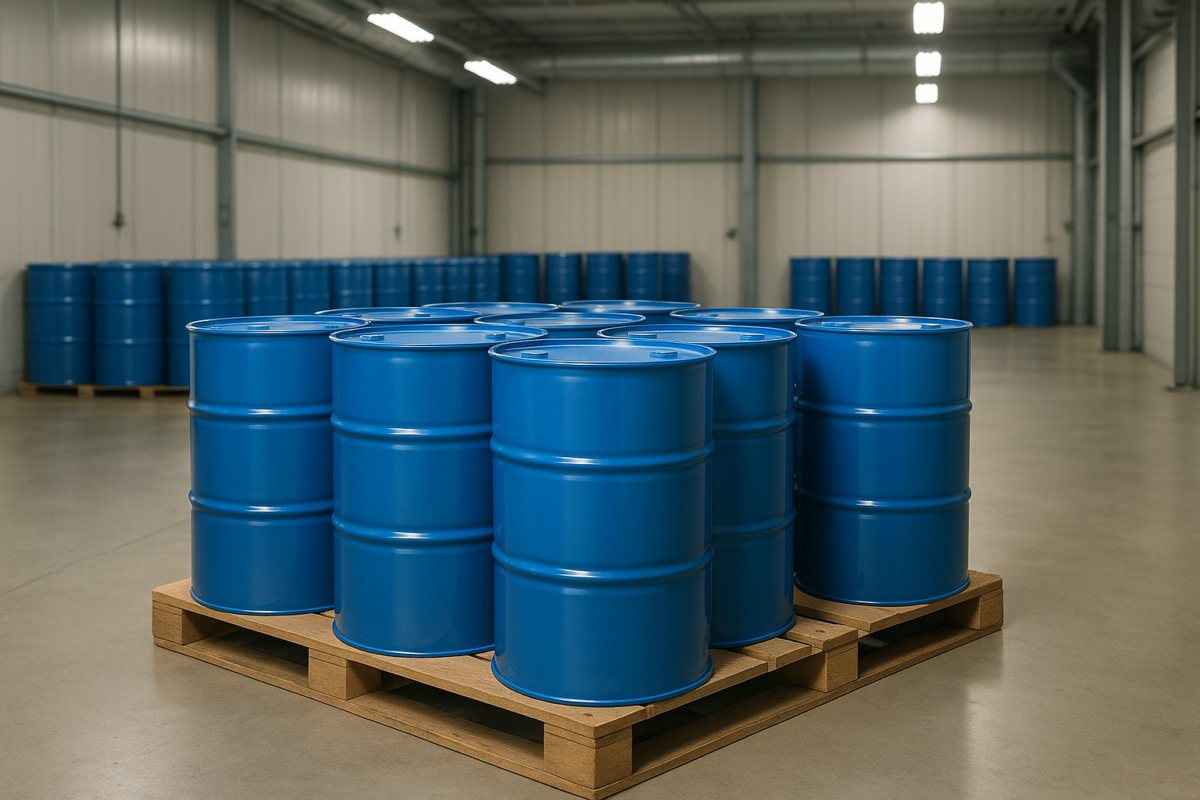
A tote that sits in a hot yard ages on the warm rows of the shelf-life table, so the fluid at the bottom of a slow-moving tote may be older and warmer than anything you would accept in a jug. Fleets and equipment yards that treat bulk fluid can buy NüDef by the case, and the NüDef wholesale program covers larger volumes. Our DEF heaters guide covers the tank and tote heaters that keep winter storage liquid.
Keeping the Blend Clear Between Fills
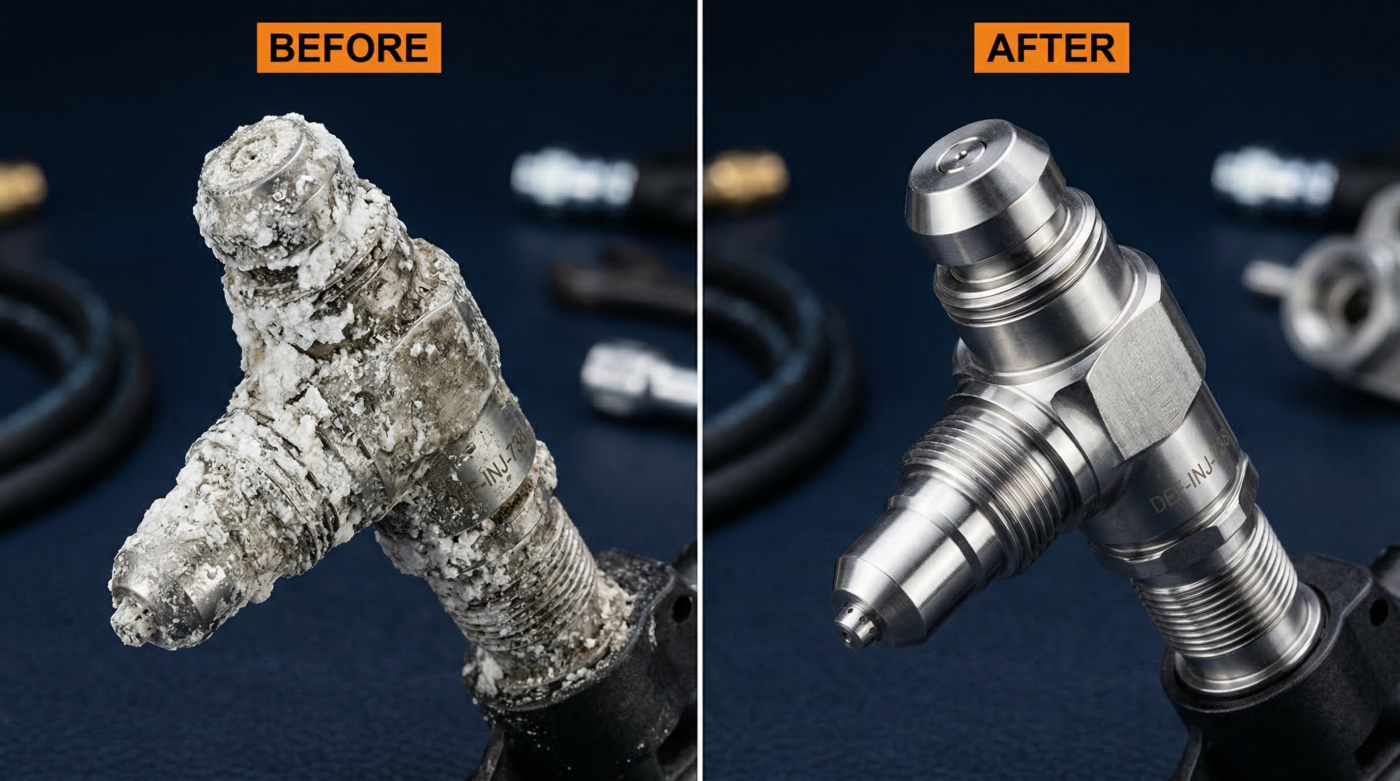
Most tanks are never empty. A small pickup DEF tank topped off a jug at a time holds some older fluid at every fill, through heat cycles that drive water off and leave urea behind on the filler neck, the level sensor and the pickup screen. That is where crystals start, and that is the condition NüDef DEF Treatment, Additive & Stabilizer is made for. It is a DEF stabilizer and anti-scaling agent that helps prevent crystallization and helps protect the SCR tank, pump and injector. It is used with ISO 22241 or API-certified DEF and never in place of it, and it cannot rescue fluid that is already off spec.
The label dose is one 8 oz bottle per 25 gallon fill, added to the DEF tank at every refill. Do not exceed it. If you are weighing whether an additive belongs in your routine at all, our guide on what a DEF additive does explains when one earns its place. When you are ready, order NüDef direct and treat the next fill.