Why DEF Tanks Get Contaminated: The Three Root Causes
DEF is a precision-engineered chemistry: 32.5% high-purity urea dissolved in 67.5% deionized water, manufactured to the ISO 22241 specification. Every part of that specification matters. The urea concentration controls injection metering accuracy. The water purity prevents catalyst poisoning. The pH window keeps the SCR substrate stable across thousands of dosing cycles. Modern SCR systems were engineered with the assumption that what comes out of the tank matches the ISO 22241 specification exactly.
When DEF doesn’t match that specification, for any reason, the SCR system starts to fail. Sometimes that failure is fast and obvious (a P207F immediately after a bad refill). Sometimes it’s slow and cumulative (recurring P20EE codes that come back six weeks after every filter replacement). The path from clean tank to contaminated tank usually runs through one of three root causes.
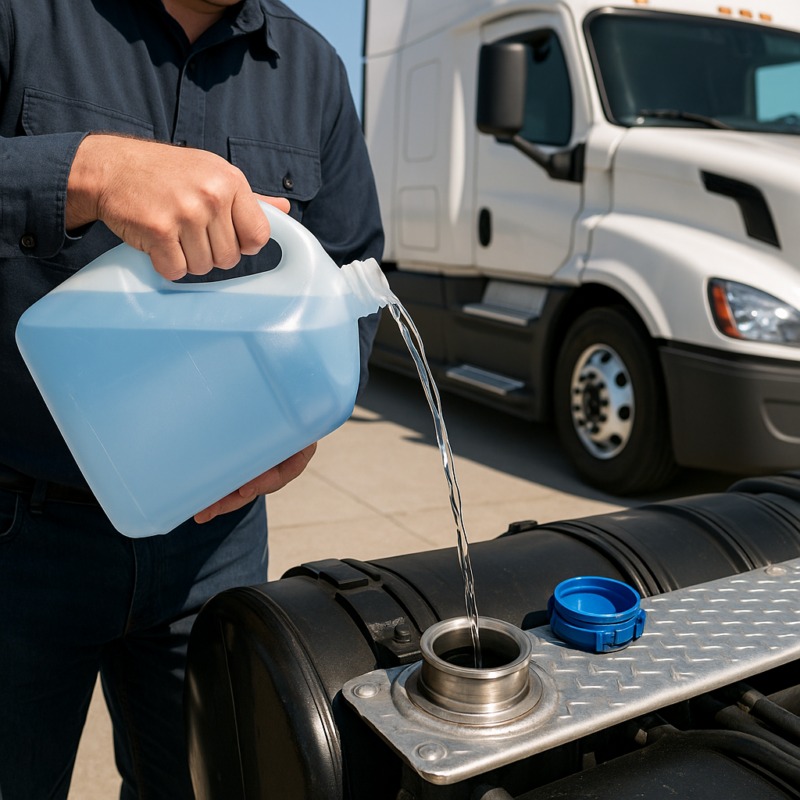
Root cause 1: Off-spec DEF refills. The single most common contamination source. Bulk DEF sourced from low-quality suppliers, DEF dispensed from a tank that itself was contaminated, DEF that’s been heat-cycled past its shelf life, or, worst case, DEF that’s been diluted, adulterated, or substituted with non-ISO-22241 fluid. Off-spec refills introduce out-of-tolerance urea concentration, ionic contaminants (sodium, calcium, magnesium, iron), or organic contaminants that the SCR catalyst can’t tolerate. Once a single off-spec refill mixes with your existing tank inventory, the entire tank is contaminated until it’s drained and cleaned.
Root cause 2: Dirt, dust, and debris ingress through the fill neck. Every time the DEF cap comes off, the tank is briefly open to the environment. On a construction site, agricultural field, or dirt-road jobsite, that environment includes airborne particulate, brake dust, and organic debris. Most fill nozzles aren’t filtered. If a customer is using a transfer container that itself has accumulated dust on the rim, that dust goes straight into the DEF tank. Over months and years, tanks accumulate sediment at the bottom: a fine grit that doesn’t dissolve, gradually clogs the inlet filter, and grinds against the level sensor and supply line.
Root cause 3: Biological growth and chemical degradation over time. DEF is hostile to most microbial life, but not all. Tanks that sit for extended periods (standby generators, seasonal agricultural equipment, fleet vehicles in long-term storage) can develop biological films along the tank walls. Combine that with heat cycling (DEF sitting in a tank that hits 100°F+ in summer and freezes in winter), and the urea slowly breaks down into ammonia and biuret. Biuret is the precursor compound for the crystalline deposits that eventually clog injectors and poison the SCR catalyst. A tank that’s never been cleaned in 5 years of service has almost certainly accumulated some level of biuret residue along the walls and at the bottom.
Most contaminated tanks aren’t the result of a single catastrophic event. They’re the result of years of small contamination events compounding. By the time you start seeing recurring fault codes, the contamination has usually been building for a long time. That’s why this is a maintenance problem, not just a repair problem.
Signs Your DEF Tank Needs Cleaning
DEF tank contamination is one of the most under-diagnosed problems in modern diesel maintenance. Most shops treat the symptom (clogged filter, dead injector, fault code) and ignore the upstream cause. Here are the seven signs that point at the tank itself.
Sign 1: Persistent low-quality DEF codes that come back after refills. P207F (Reductant Quality Performance), P204F (Reductant System Performance) and P20EE (SCR NOx Catalyst Efficiency Below Threshold, Bank 1) are the classic codes that follow bad fluid, as SAE J2012 defines them. If you’re seeing these codes consistently, even after refilling with fresh DEF from a known-good source, the contamination is in the tank, not in the new fluid. Fresh DEF mixes with the residual contaminated DEF still in the tank, and the resulting blend is still out-of-spec.
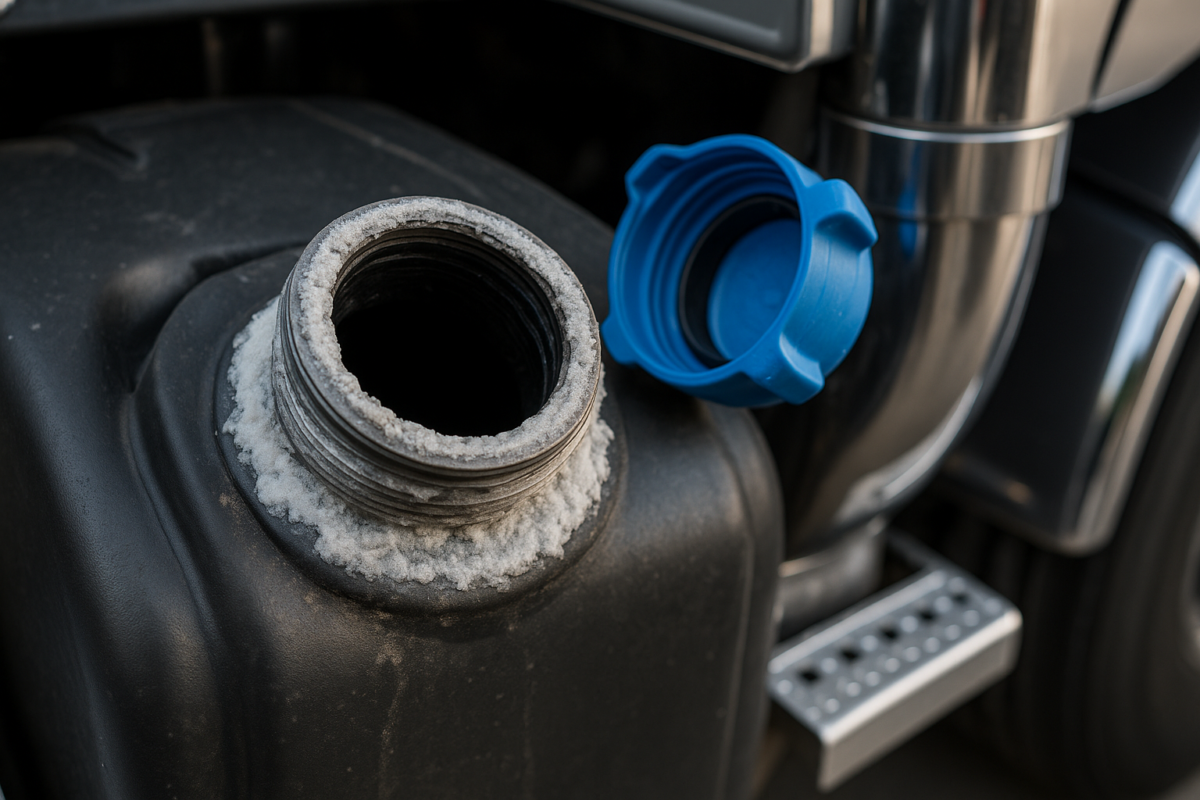
Sign 2: White crystalline buildup visible at the fill neck or cap. Pop the DEF cap and shine a light into the fill neck. If you see white, chalky, crystalline deposits ringing the opening or coating the underside of the cap, that’s urea crystallization: biuret and related compounds that have precipitated out of solution. Some buildup is normal on older vehicles, but heavy crystallization at the fill neck almost always correlates with heavier crystallization downstream at the injector.
Sign 3: Foul ammonia smell when the cap is opened. Fresh DEF has almost no odor, a faint ammonia smell at most. A contaminated DEF tank that’s been degrading biologically or chemically will smell strongly of ammonia when you open the cap. If it smells like a kennel or a stale fish tank, the urea has been breaking down inside the tank for a long time.
Sign 4: Visible sediment, particulate, or discoloration when refilling. Fresh DEF is water-clear with no suspended solids. If you pull a sample from your tank and see yellow, brown, or grey discoloration, suspended particulate floating in the fluid, or sediment that settles to the bottom of a clear container, the tank is contaminated. Sediment at the bottom of a sample bottle is one of the most reliable diagnostic signals.
Sign 5: Recurring DEF filter clogging. The DEF filter is meant to last the OEM service interval. If you’re replacing it far more often than that, the filter is doing its job, catching contaminants that shouldn’t be in the system. The contaminants are coming from somewhere upstream, and the tank is the obvious suspect.
Sign 6: DEF level sensor giving erratic readings. The DEF level sensor sits inside the tank. Sediment, biological film, or crystalline buildup on the sensor housing can cause it to report incorrect fluid levels, showing empty when the tank is half full, or jumping between readings on rough roads. Sensor replacement won’t fix this if the underlying tank is contaminated; the new sensor will foul out the same way.
Sign 7: DEF pump making unusual noise or struggling to prime. DEF pumps are engineered to move clean fluid. When the pump pickup screen gets coated in sediment or biological film, the pump works harder to draw fluid, the priming cycle takes longer than normal, and you may hear a high-pitched whine or grinding noise during operation. A struggling pump is often the last warning sign before catastrophic pump failure, usually a $1,200 to $3,500 repair on its own.
If you’re seeing two or more of these signs, the tank needs cleaning. If you’re seeing four or more, you’re probably looking at tank cleaning plus downstream component replacement (filter, injector, possibly the pump).
Clean vs Replace: When the Tank Is Beyond Saving
Cleaning is the right answer for most contaminated DEF tanks. Replacement is the right answer for a smaller subset of cases where the tank itself has structural problems. Knowing when to commit to each path saves both money and the frustration of cleaning a tank that was going to need replacement anyway.
Cleaning is the right answer when:
- The tank is structurally sound: no cracks, no impact damage, no degradation of the plastic walls
- Contamination is from off-spec DEF or sediment buildup, not from external chemical contamination
- The DEF level sensor and supply line fittings are still functional after cleaning
- The tank has been in service less than 8–10 years on a typical commercial duty cycle
- The cost of cleaning ($25–$50 DIY or $200–$450 dealer) is dramatically less than tank replacement ($600–$2,400 depending on platform)
Replacement is the right answer when:
- The tank has visible cracks, weld damage, or impact deformation
- The tank has been contaminated with fuel, hydraulic fluid, oil, washer fluid, or other foreign liquids (chemical contamination embeds into the plastic and can’t be flushed out)
- The DEF level sensor or heater element built into the tank has failed and is integrated into the tank body
- The internal baffles or pickup tubes have broken loose inside the tank
- The tank is approaching end-of-service on a long-life heavy-duty platform where preventive replacement makes sense alongside other planned maintenance
Chemical contamination is the most overlooked replacement trigger. If a well-meaning operator topped off the DEF tank with windshield washer fluid by mistake (it happens; both are blue, both are in similar bottles), the alcohol and surfactant in washer fluid bond into the plastic tank walls and leach out into fresh DEF for years afterward. No flush procedure removes it. The tank must be replaced.
Step-by-Step DEF Tank Cleaning Procedure
This is the general procedure for DEF tank cleaning on most modern diesel platforms. Platform-specific variations are covered in the next section. Allow 2–4 hours for a thorough cleaning, plus drying time. You’ll need: a clean DEF-safe transfer container or drain pan rated for at least your tank capacity, distilled water (2–3× tank capacity), a clean lint-free shop towel, a flashlight or inspection mirror, optional DEF-safe tank cleaning solution, and fresh ISO 22241 DEF for refilling.
Step 1: Park on level ground and let the system cool. The DEF system runs at elevated temperature during purge cycles and dosing. Wait at least 30 minutes after shutdown before opening the tank. Make sure the truck is on level ground so residual fluid drains completely from the pickup tube.
Step 2: Drain the existing DEF completely. Locate the DEF tank drain plug (varies by platform; see the next section). Open it and drain the existing DEF into a clean transfer container. Do not reuse this DEF under any circumstances. Even if it looks clean, the entire reason you’re cleaning the tank is that something in the existing fluid is contaminated. Dispose of the drained DEF properly. Never pour it on the ground, into a storm drain, or down a shop sink. Most diesel dealerships and oil change shops accept drained DEF for proper disposal at no cost.
Step 3: Visual inspection of the tank interior. Once the tank is drained, use a flashlight to inspect the interior through the fill neck. Look for: sediment at the bottom of the tank, white crystalline deposits on the walls or around the pickup tube, biological film (slimy yellow or green coating) along the upper walls, and visible damage to internal components. Take photos for documentation. If you see fuel, oil, or other foreign liquid contamination, stop the cleaning procedure. This tank needs replacement, not flushing.
Step 4: Distilled water flush, first pass. Fill the tank approximately one-third full with distilled water. Do not use tap water. Do not use bottled spring water. Do not use deionized water from a hardware store unless the label specifically certifies ISO 22241 compatibility. Tap water and spring water contain dissolved minerals (calcium, magnesium, sodium, iron) that will poison the SCR catalyst downstream just as effectively as off-spec DEF. Distilled water (the kind sold for steam irons and CPAP machines) is the only safe option.
Slosh the water inside the tank by gently rocking the vehicle or, on platforms where the tank is removable, by handling the tank itself. Don’t shake violently. You can damage internal baffles and sensors. The goal is to suspend any sediment and break up any film along the walls.
Step 5: Drain the first flush completely. Open the drain plug again and let the rinse water drain. Inspect the drained fluid. If it’s heavily discolored, contains sediment, or smells strongly of ammonia, the contamination was significant. Plan on a second and possibly third flush. If the drained fluid is mostly clear, one more flush is usually adequate.
Step 6: Optional DEF-safe tank cleaning solution. For heavily contaminated tanks, a commercial DEF-safe tank cleaner can be used between flushes. These products are formulated to dissolve biuret deposits, biological films, and mineral residue without leaving anything behind that would damage the SCR catalyst. Critical: use only products explicitly labeled “DEF tank safe” or “ISO 22241 compatible.” Do not use brake cleaner, carburetor cleaner, diesel fuel system cleaner, or any general-purpose automotive degreaser. Most of these contain surfactants, hydrocarbons, or solvents that destroy SCR catalysts on contact.
If you’re not certain a cleaning solution is DEF-safe, skip it. Two or three distilled water flushes will clean any tank that’s actually cleanable, just with more rinse cycles.
Step 7: Distilled water flush, second pass. Fill the tank halfway with distilled water, slosh, drain. The drained water should be visibly cleaner than the first flush. If it’s still significantly discolored, run a third flush.
Step 8: Final inspection and drying. After the final flush, inspect the tank interior once more. The walls should be clean and free of visible deposits. Wipe accessible surfaces with a lint-free shop towel. Never use paper towels or rags that shed fibers into the tank. Leave the tank open and allow it to air-dry for 4–8 hours. On colder days or in humid environments, gently warming the tank to no more than 90–95°F (with a heat gun on low or a shop space heater nearby, never direct contact) speeds drying. Never use compressed air to dry the tank. Most shop air supplies carry oil contamination.
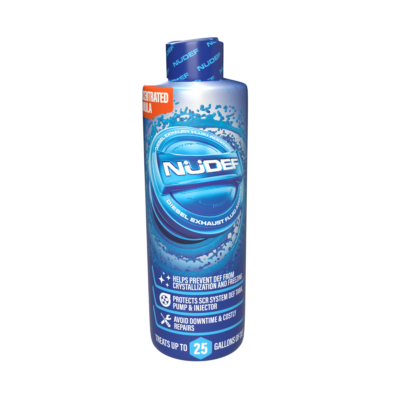
Step 9: Reinstall drain plug and refill with fresh ISO 22241 DEF. Reseat the drain plug with a fresh O-ring or gasket if the platform uses one. Refill with fresh DEF from a known-good supplier: sealed bottles or a freshly opened bulk supply. Do not refill from the same bulk DEF supply that may have caused the original contamination. This is also the right time to add NüDef DEF Treatment, Additive & Stabilizer to the fresh DEF, one 8 oz bottle per 25 gallons. It helps prevent crystallization in the fluid, and a clean tank is the best place to start.
Step 10: Clear codes, run a regen cycle, and monitor. Clear any stored DEF-quality codes with a scan tool. Drive the vehicle long enough to trigger a DEF dosing cycle and verify no new codes appear. Monitor closely for the next 500–1,000 miles. If codes return quickly, the cleaning didn’t fully resolve the contamination, and the next step is either professional service or tank replacement.
Platform-Specific Variations
The general procedure works across most platforms, but tank access, drain location, and disassembly requirements vary significantly. Here are the key differences for the most common diesel platforms.
6.7L Cummins (Ram 2500/3500, 2010–present). Tank is typically under the bed on the driver’s side, accessible by lowering it from below. 5-gallon capacity on most years; 7.5-gallon on heavy-duty configurations. Drain plug at the bottom of the tank. Tank includes an integrated level sensor and heater element, both reusable after cleaning as long as they aren’t damaged. Allow 2 hours for the full procedure including bed removal on some configurations.
6.6L Duramax (Chevrolet/GMC 2500/3500, 2010–present). Tank is mounted along the frame rail, typically passenger side. 5-gallon capacity. Access through the wheel well on most configurations, with no major disassembly required. Drain plug at the bottom. The DEF heater on Duramax is more sensitive to cleaning chemicals than other platforms. Stick to distilled water flushes only on this platform unless you’re 100% certain of cleaner compatibility.
6.7L Power Stroke (Ford F-250/F-350, 2011–present). Tank is mounted under the bed, passenger side. 5-gallon capacity on standard configurations; some F-450/F-550 configurations carry 7.5 gallons. Drain plug at the bottom of the tank. Access is typically straightforward without major disassembly. Ford updated the tank design in 2017. Earlier generations are more prone to fill-neck crystallization buildup.
Class 8 OTR semi (Detroit DD15, Cummins ISX/X15, Volvo D13/D16, PACCAR MX-13, Cat C13/C15 vocational). Frame-mounted DEF tank typically located behind the cab on the driver’s side. 15–25 gallon capacity is standard, with 30-gallon tanks on long-haul configurations. Drain plug accessible from below; the tank itself is usually a separate component that can be removed from the truck for thorough cleaning on heavily contaminated cases. Class 8 cleaning typically takes 3–4 hours; plan on at least 30 gallons of distilled water for thorough flushing.
Agricultural Tier 4 Final equipment (John Deere, Case IH, New Holland, Kubota, AGCO). DEF tank locations vary dramatically by manufacturer and equipment type. Combines, tractors, and self-propelled sprayers usually have 20–30 gallon DEF tanks integrated into the chassis. Access often requires removing service panels or hood sections. Drain plugs are usually present but sometimes buried behind shielding. Ag tanks are particularly prone to dust contamination given the operating environment, so cleaning is more frequently needed on ag equipment than on highway trucks of comparable age.
Standby diesel generators (mission-critical and prime power). Generator DEF tanks range from 5 gallons on small standby units to 100+ gallons on industrial prime power installations. Tanks are usually external mounted alongside the generator enclosure with full access. Drain procedures are similar to vehicle tanks, but disposal volumes are larger, so plan for waste DEF disposal logistics on bigger units. Generators are also more prone to biological contamination because they sit idle for months between runs; for a generator that hasn’t been started in 6+ months, plan on a full clean-and-refresh of the DEF charge as part of every annual service.
Mistakes That Destroy SCR Catalysts
A well-intentioned tank cleaning can ruin an SCR catalyst. Here are the seven mistakes that most often turn a cleanable tank into a destroyed downstream system.
Mistake 1: Using hot water. Hot water seems intuitive. It dissolves urea deposits faster, accelerates the cleaning process, and feels more “thorough.” But hot water (anything above about 100°F) accelerates urea decomposition into ammonia and biuret. You’ll dissolve the visible deposits in the tank, then those deposits will redeposit downstream as biuret crystals on the injector and SCR substrate as the hot fluid passes through the system. The tank looks clean. The catalyst is destroyed. Use room-temperature distilled water only.
Mistake 2: Using tap water. Repeated for emphasis because it is a common and destructive mistake. Tap water contains dissolved minerals (calcium, magnesium, sodium, iron) at concentrations measured in hundreds of parts per million. ISO 22241 DEF specifies maximum mineral content in single-digit parts per million. Using tap water to flush a DEF tank introduces orders of magnitude more mineral contamination than was probably there to begin with. Those minerals deposit on the SCR catalyst surface, deactivate the active catalyst sites, and gradually reduce SCR efficiency over thousands of operating hours. The catalyst can’t be cleaned in service. It has to be replaced. Use distilled water only.
Mistake 3: Using soap, detergent, or dish soap. Surfactants are the worst possible chemical to introduce into an SCR system. They reduce surface tension on the catalyst substrate, coat the active catalyst sites with an organic film, and produce ammonia-surfactant complexes that aren’t supposed to exist anywhere in an SCR system. A single tank flush with dish soap will permanently degrade catalyst efficiency on most modern SCR systems. Never use any soap product in a DEF tank: not Dawn, not Simple Green, not any “biodegradable” or “non-toxic” cleaner. Plain distilled water only.
Mistake 4: Using diesel fuel additive cleaners. Diesel fuel additive cleaners, including the major retail brands, are formulated for the fuel system, not the DEF system. They contain hydrocarbons, detergents, and corrosion inhibitors designed to interact with the fuel pump, injectors, and fuel tank. None of those components have any analog in the DEF system, and the chemistry that’s helpful for the fuel side is destructive on the DEF side. If a product is sold as a “diesel system cleaner” without explicit DEF compatibility labeling, it isn’t a DEF cleaner. Keep them separated.
Mistake 5: Using brake cleaner, carburetor cleaner, or general degreaser. Aerosol cleaners are aggressive solvents engineered to cut through grease, oil, and tar. They contain chlorinated solvents, alcohols, and surfactants that destroy SCR catalysts on contact. Never spray any aerosol cleaner into a DEF tank. Even residual cleaner fumes from working nearby on the engine can contaminate a tank if the cap is off, so close the cap whenever you’re spraying anything in the engine bay.
Mistake 6: Using compressed shop air to dry the tank. Most shop air supplies carry trace oil from the compressor, water from inadequate dryers, and rust particles from the air lines. Blowing shop air into a freshly cleaned DEF tank reintroduces all of those contaminants. If you need to accelerate drying, use clean towels, gentle warm-air convection from a space heater nearby (not pointed directly into the tank), or simply more drying time.
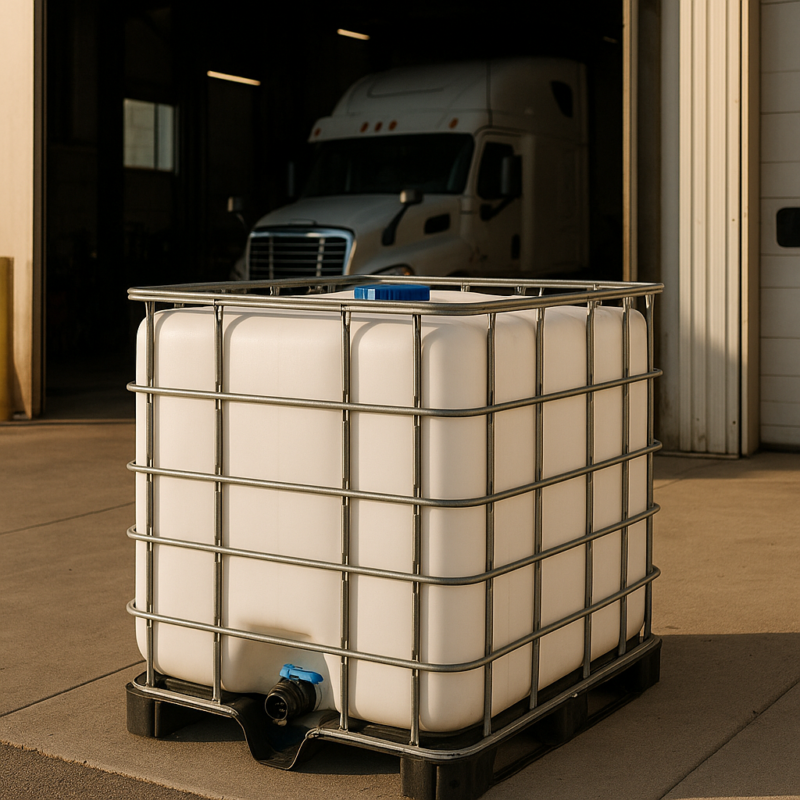
Mistake 7: Refilling with DEF from the same bulk supply that caused the contamination. If the original contamination came from a bad batch of bulk DEF, refilling from that same supply puts you right back where you started. After cleaning the tank, refill with fresh DEF from sealed manufacturer bottles or a known-good bulk supply. This is also the right time to verify your DEF supply chain. Many fleets discover during a contamination investigation that their bulk DEF tote has been compromised and needs its own cleaning or replacement.
DIY vs Dealer Service: Cost and Risk Comparison
DEF tank cleaning is one of the more approachable DEF service procedures for capable owner-operators and fleet maintenance shops. It’s also one of the most commonly outsourced procedures because the consequences of getting it wrong are expensive. Here’s the honest cost and risk comparison.
| Platform | DIY Cost | DIY Duration | DIY Difficulty | Dealer Service Cost |
|---|---|---|---|---|
| 6.7 Cummins pickup | $25–$40 | 2 hours | Moderate | $225–$375 |
| 6.6 Duramax pickup | $25–$40 | 1.5 hours | Easy | $200–$325 |
| 6.7 Power Stroke pickup | $25–$45 | 2 hours | Moderate | $235–$395 |
| Class 8 (Detroit DD15) | $40–$70 | 3–4 hours | Moderate-Hard | $325–$450 |
| Class 8 (Cat C13/C15) | $40–$70 | 3–4 hours | Moderate-Hard | $350–$475 |
| Class 8 (Volvo D13/D16) | $40–$70 | 3 hours | Moderate | $300–$425 |
| Ag Tier 4 (combine/tractor) | $50–$80 | 3–5 hours | Hard | $375–$650 |
| Standby generator (5–25 gal) | $35–$60 | 2–3 hours | Easy-Moderate | $275–$525 |
When DIY makes sense: You have access to the tank (no major disassembly required), you’ve done basic diesel maintenance before, you have the proper supplies (distilled water, clean transfer container, scan tool for code clearing), and you’re comfortable with the consequences if something goes wrong. The cost savings are real, typically $200 to $400 per tank cleaning, and the procedure isn’t fundamentally difficult.
When dealer service makes sense: The platform requires significant disassembly to access the tank, you’re already paying for an SCR diagnostic that will need professional follow-up regardless, the truck is under warranty and DIY work could void coverage, or the contamination is severe enough that you suspect downstream component replacement is also needed. For fleets running their own maintenance shops, the math usually favors training a senior tech on the procedure and bringing it in-house. Fleet-scale tank cleaning frequency makes the training investment pay back quickly.
The hidden cost of getting it wrong: If a botched tank cleaning damages the SCR catalyst (most commonly from using tap water, hot water, or non-DEF-safe cleaners), the catalyst replacement runs $2,400–$6,500 on pickup platforms and $4,500–$12,000 on Class 8 platforms. That’s the real risk on DIY work: the downstream component damage if something goes wrong, which outweighs the labor cost saved. Follow the procedure exactly or pay a professional. Don’t improvise.
Prevention: How to Stop Contamination Before It Starts
Cleaning a contaminated DEF tank is reactive maintenance. Prevention is dramatically cheaper and dramatically easier, but it requires sustained discipline across the fueling, storage, and treatment workflow. Five practices catch the vast majority of preventable contamination.
Practice 1: Source DEF from quality suppliers only. Not all DEF is created equal, even when it’s labeled ISO 22241 compliant. Buy from established manufacturers and reputable distributors. Be skeptical of bulk DEF at significantly below-market pricing. That pricing usually reflects something compromised in the supply chain. For fleet operations, qualify your DEF supplier the same way you qualify any other critical fluid supplier: review their QA process, request batch certifications, and audit their facilities if you’re committing to a long-term contract.
Practice 2: Keep fill nozzles, transfer containers, and bulk tank fittings clean. Wipe down DEF nozzles before every use. Store transfer containers indoors when not in service. Cover bulk DEF totes with dedicated DEF-only covers between fillings. Never use a DEF transfer container for any other fluid, ever. Even fuel residue traces are enough to compromise a tank refill. Label DEF equipment clearly and keep it physically separated from fuel equipment.
Practice 3: Store DEF in sealed containers in temperature-controlled environments. DEF degrades faster at elevated temperatures. Sustained storage above 86°F (30°C) accelerates urea breakdown; storage above 95°F accelerates it dramatically. Keep DEF in shaded storage, ideally indoors, in sealed containers that prevent both heat exposure and dust ingress. Never store DEF in containers that previously held any other liquid.
Practice 4: Use NüDef stabilizer chemistry to slow crystallization in the tank. One source of in-tank deposits on long-service tanks is the DEF itself. As it ages and concentrates, urea and breakdown products such as biuret can come out of solution and build up as deposits. NüDef DEF Treatment, Additive & Stabilizer helps prevent crystallization and helps protect the SCR system, DEF tank, pump and injector. Add it to the fresh DEF after a tank cleaning and at every refill.
Practice 5: Inspect the DEF tank visually at every major service interval. Most fleets never look inside the DEF tank between catastrophic failures. Build a quick visual inspection into your standard service workflow: pop the cap, shine a light into the fill neck, check for crystallization at the opening, pull a sample if anything looks off. Catching contamination early, when the tank is dirty but downstream components are still clean, saves the entire cost of the downstream cascade.
For fleets running DEF-burning equipment at scale, prevention is the cheaper side of the ledger: treating DEF costs far less than a tank cleaning, and far less again than an SCR catalyst.
For fleet wholesale pricing, call (855) 300-0031 or email info@nudef.com. For individual diesel owners and small fleets, visit nudef.com to order direct.
For deeper dives on related DEF maintenance topics, see our complete library: