Updated October 2026. Written for the owner or fleet tech who searched “additive def” and wants a straight answer: what one is, what it does, and when it is worth adding.
What “Additive for DEF” Means
An additive for DEF is a treatment you add to diesel exhaust fluid, the 32.5 percent urea solution that feeds the SCR system on a modern diesel. It is not a fuel additive, and it does not go in the fuel tank. It goes in the DEF tank, or in the jug before you pour, at a measured dose.
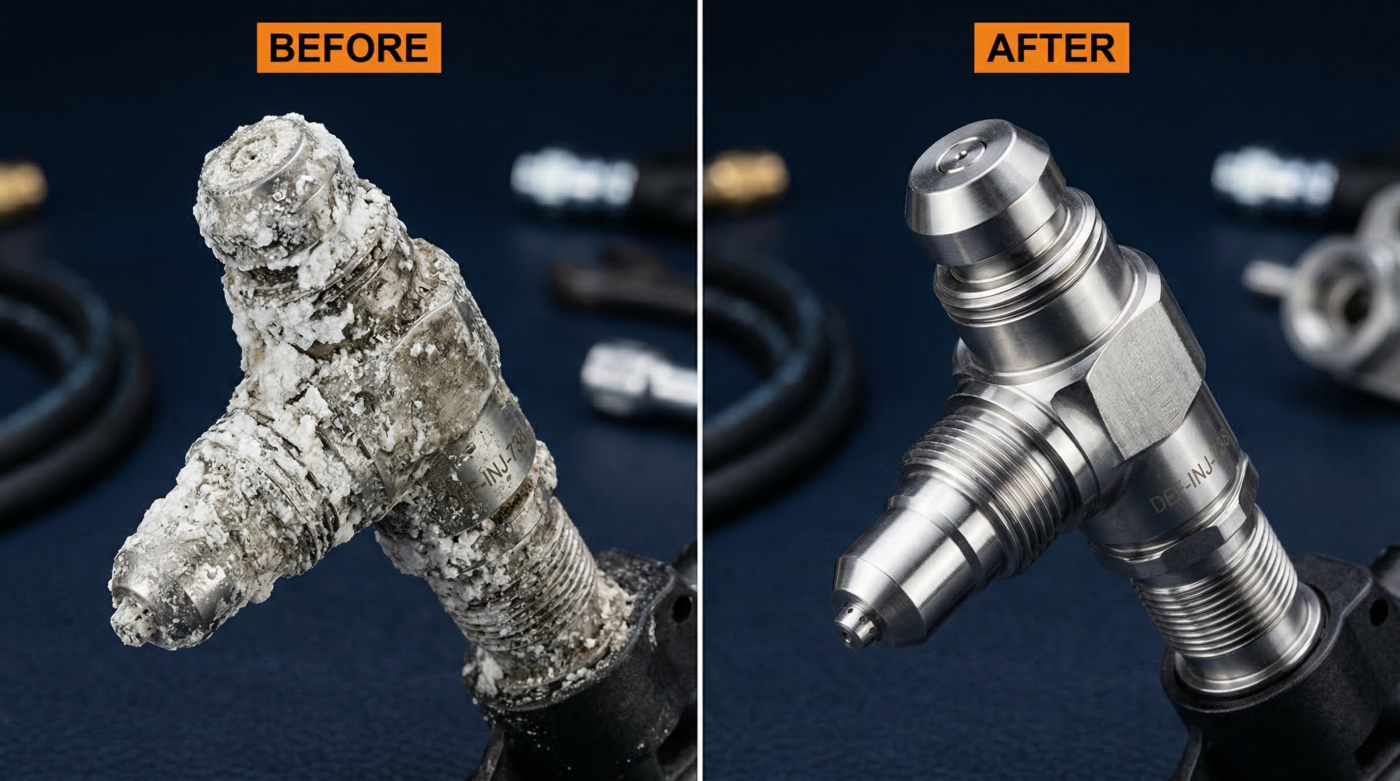
The reason the category exists is simple. DEF is water and urea, and urea comes out of solution when the water leaves. Every time DEF sits in a hot tank, dries on a dosing injector tip, or evaporates in a half-used jug, urea crystals form. Those crystals are what clog filters, foul pumps, coat injector tips and set the quality codes that put a truck into derate. A DEF additive is made to keep the urea dissolved so that does not happen as fast.
There is one more thing to clear up, because the search term gets used two ways. Some people searching “additive def” mean a DEF additive, which is this page. Others mean “is there an additive in my DEF already,” and the answer there is no. DEF made to ISO 22241 contains urea and deionized water and nothing else. Anything you add is your choice, at your dose.
What a DEF Additive Does, and What It Does Not
A DEF stabilizer does three things, and it is worth being exact about them because the market is full of louder claims.
- Helps prevent crystallization. The chemistry keeps urea in solution longer as water evaporates, so fewer crystals form in the tank, the lines, the pump and at the injector tip. This is the whole point of the product.
- Helps prevent freezing-related deposits. DEF freezes at 12°F. The heater thaws it, but the freeze and thaw cycles leave deposits behind. Treated fluid comes through those cycles with less residue.
- Protects the parts the fluid touches. Tank, pump and injector see less crystal buildup, which is the single most common cause of a DEF pump replacement on an older truck.
Here is what it does not do. It does not fix a failed heater, a dead NOx sensor, a bad level sensor or a worn pump. It does not clear a fault code that a failed part set. It does not turn off-spec DEF back into good DEF. If your truck already has a code, scan it first, read the DEF trouble codes guide, fix the part, then treat the fresh fill so the next failure comes later. The does DEF additive work post goes deeper on the evidence and on why some products disappoint.
When to Use an Additive for DEF: Five Situations
You do not need a DEF additive if you buy sealed jugs, use the whole jug the day you open it, run the truck every day in mild weather and never let the tank sit. Almost nobody runs a diesel that way. These are the five situations where treating the fluid earns its keep.
1. The truck or machine sits
Standby generators, seasonal farm equipment, boats, RVs and work trucks that park for weeks are the classic case. The DEF in the tank does not move, the water slowly leaves, and the crystals form in the pickup and the lines where you cannot see them. The RV crystallization guide covers the storage side in detail.
2. Hot climates and hot engine bays
DEF should be stored between 41°F and 86°F. A DEF tank under a cab in Texas in August is not stored that way. Heat speeds up evaporation at every exposed surface, which is why the Sunbelt is where crystal-related DEF repairs cluster.
3. Freeze and thaw cycles
Every winter morning the tank heater thaws a slug of frozen DEF. Every cycle leaves a little residue. By March the deposits are measurable. See when DEF freezes for the temperatures by state.
4. Partial jugs and bulk storage
A 2.5-gallon jug with a loose cap in the bed of a pickup is a crystal factory. So is a bulk tote that gets drawn down over months. Treating the fluid when you pour it, or when you fill the tote, protects what sits there. The DEF storage guide explains how fast untreated fluid drifts.
5. A history of crystal-related repairs
If you have already paid for a DEF pump, an injector cleaning or a tank drop because of white deposits, the fluid is telling you something. Treating every fill from here on is cheaper than the next pump.
How to Dose a DEF Additive
Dosing is where most people get a DEF additive wrong, in both directions. Too little and you have paid for nothing. Too much and you have changed the fluid more than the label allows. The rule with NüDef DEF Treatment, Additive & Stabilizer is one dose per 2.5 gallons of DEF, which works out to one 8 oz bottle per 25 gallons. Add it at every refill, and never exceed the dose.
The practical way to do it:
- Jug fill. Add one dose to the 2.5-gallon jug, cap it, tip it twice, then pour. The additive mixes on the way in.
- Pump fill at a truck stop. Add the dose to the DEF tank first, then fill. The incoming fluid mixes it.
- Bulk tote. Treat the tote when it is filled, at the same ratio, so every gallon drawn from it is already treated.
- Partial tank. Dose for the DEF you are adding, not for the whole tank. A 5-gallon top-off gets two doses.
The dosing guide has the math for odd tank sizes. If you are not sure, under-dose. The label dose is the ceiling.
What to Check Before You Add Anything
An additive for DEF protects good fluid. It cannot rescue bad fluid, so check the fluid first.
- Is the DEF in spec? A refractometer reads urea concentration in seconds; 32.5 percent is the target. The DEF testing guide walks through it. Fluid that reads high has already lost water and crystals are on the way. Fluid that reads low has been diluted.
- Is it clean? Cloudy, yellow or gritty DEF is contaminated DEF. Drain it. Do not treat it.
- Is there a code? A reductant quality, pressure or heater code means a diagnosis comes before a treatment. Treating the fluid will not clear it.
- Is the jug sealed? Certified DEF carries the API mark and a sealed cap. Start from that, then treat it.
DEF Additive vs Diesel Fuel Additives
These get confused constantly, and the confusion is expensive. A diesel fuel additive (anti-gel, cetane booster, injector cleaner, biocide) goes in the fuel tank and works on the fuel. It must never go in the DEF tank. Even a trace of fuel or oil in DEF can foul the SCR catalyst, which is a four-figure repair on a pickup and five figures on a Class 8 truck.
A DEF additive goes only in the DEF tank and works only on the DEF. Keep the bottles on different shelves, and keep the blue-capped DEF filler for DEF and treated DEF only. If you want the longer version of the distinction, including the “conditioner” label some brands use, read DEF conditioner vs DEF additive.
What the Rules Say About DEF Additives
No standard tests or approves DEF additives. ISO 22241 defines DEF itself, the API certification program licenses DEF that meets it, and the EPA sets how an engine responds to an SCR fault. None of them say anything about additives one way or the other, except that API’s storage guidance advises against adding aftermarket products to DEF, and many owner’s manuals say the same.
Read that plainly. Treated DEF is not ISO 22241 fluid, because it now contains something the standard does not list. If you use a treatment, use one made for DEF, use it at the label dose, and check your own warranty terms before you decide. The DEF requirements guide lays out each rule with its source.
How NüDef Fits
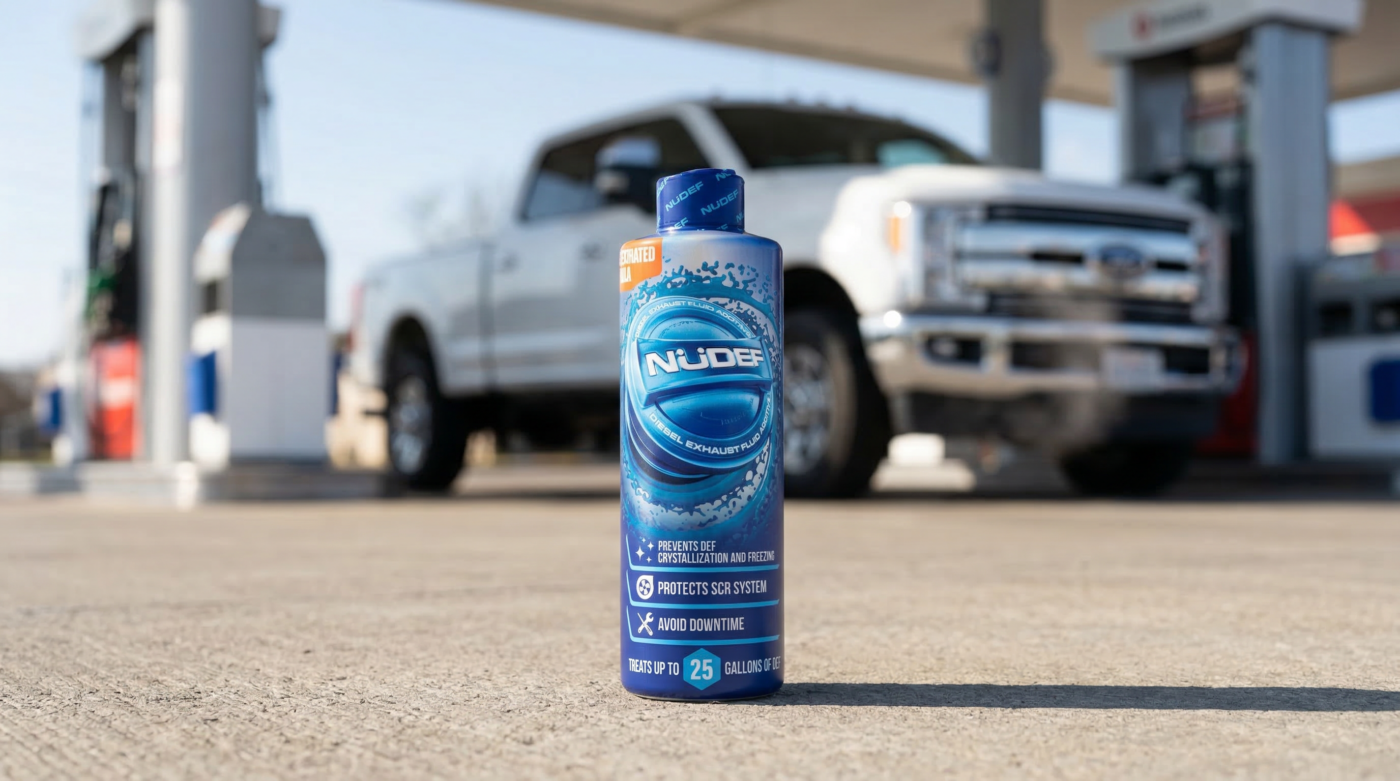
NüDef DEF Treatment, Additive & Stabilizer is a single-purpose additive for DEF. It is made for use with certified DEF, and it is added to the DEF, never used instead of it. What it does comes straight from the bottle: it helps prevent crystallization, helps prevent freezing-related deposits, and protects the SCR tank, pump and injector that the fluid touches. One 8 oz bottle treats 25 gallons, one dose per 2.5-gallon fill, added at every refill.
It costs $19.99 for a single bottle, $37.99 for two, $109.99 for a six-pack and $509.99 for a case of 30. It is proudly made in the USA and ships direct from nudef.com. Fleets that buy by the case can read the bulk program page. If you are comparing it with other products, the best DEF additive guide puts them side by side.
The short version of this whole page: if your DEF sits, bakes, freezes or waits in a half-used jug, treat it at the label dose and it will crystallize less. If your truck already has a code, fix the part first. Then treat the fresh fill.