If you are searching for a DEF crystal cleaner, you already have the white crust: on the injector, around the tank neck, inside the dosing lines, or caked on a sensor that just threw a quality code. This guide covers what actually dissolves DEF crystals, which products are worth money and which are repackaged water, the procedures for each place crystals form, and the uncomfortable truth the cleaner aisle does not advertise: cleaning is the tax you pay for untreated DEF, and prevention costs a fraction of the repair you are currently pricing.
What DEF Crystals Actually Are
DEF is 32.5% urea in purified water. Whenever the water leaves (heat, evaporation, a weeping seal, spray drying on a hot injector tip), the urea stays behind and crystallizes into the hard white or tan deposits every diesel owner eventually meets. On its way out of solution it can also convert into tougher byproducts (biuret, cyanuric acid) that laugh at a casual rinse, which is why baked-on injector deposits fight back harder than the powdery crust at a tank neck. The full chemistry, and why hot climates and stored equipment get it worst, is in our DEF crystallization guide. What matters for cleaning is simple: fresh crystals are water-soluble, aged and heat-baked deposits progressively less so.
What Actually Dissolves DEF Crystals
Here is the secret the product listings bury: urea dissolves in water. Warm distilled water is the correct first-line cleaner for the majority of DEF crystal situations, and it is what most bottled “DEF crystal removers” substantially are, with surfactants to help penetration and a margin to help the price. That is also why the right technique matters more than the right bottle: time and gentle heat do the dissolving. Where dedicated cleaners earn their keep is the stubborn tier: aged deposits with biuret and cyanuric acid content need either repeated warm-water soaking or a formulated solvent, and heavily crusted dosing components sometimes need ultrasonic cleaning or replacement no matter what liquid you pour.
Two things should never touch a DEF system, whatever the internet says. Vinegar and other acids attack the stainless and plastics the system is built from and leave residues the SCR catalyst was never designed to meet. And nothing goes in the DEF tank to “dissolve crystals in service” except products actually engineered for ISO 22241 chemistry; pouring a random solvent into the tank trades a crust problem for a catalyst problem.
Cleaning by Location: Where the Crystals Are
- Tank neck and cap: the easy one. Wipe with warm distilled water, dry, done. Powder here is cosmetic but is also an early warning that fluid is aging in the tank.
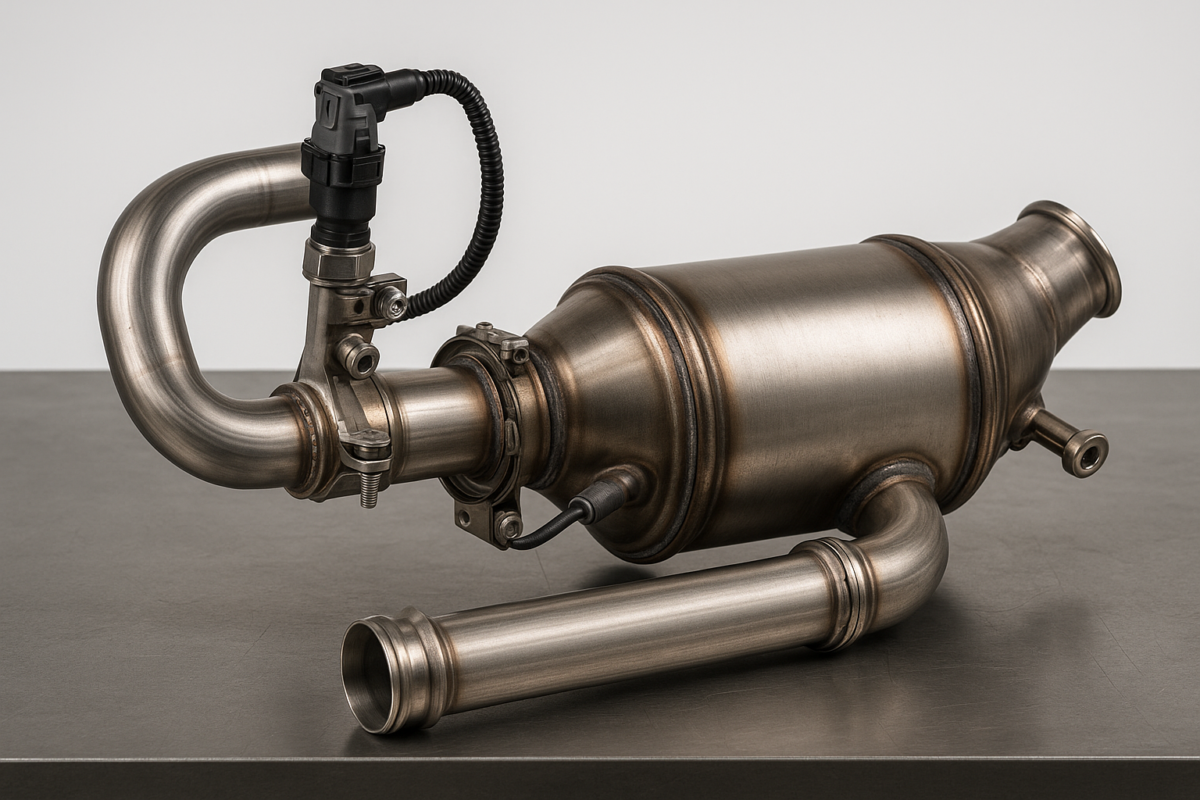
- DEF injector / doser tip: the expensive one. Crystals on the tip distort the spray pattern, trigger codes like P20E8 and P202E, and eventually block dosing entirely. Removal, soak, and inspection beats poking at it in place; the full walkthrough is our DEF injector cleaning guide.
- Inside the tank: needed when fluid was left to age or contamination got in. Drain, rinse with distilled water only, refill fresh; the procedure and the mistakes to skip are in the tank cleaning guide and the step-by-step version.
- Lines, pump, and sensor: flush accessible runs with distilled water; crusted quality sensors often read wrong permanently and are replacement items more often than cleaning victories.
- SCR catalyst face: past the point where consumer cleaners operate. Heavy crystallization downstream is a service-bay job, and our SCR replacement guide covers when cleaning stops being the answer.
The umbrella how-to, covering diagnosis before disassembly, is our crystallized DEF cleaning guide, the most-read page on this site for a reason.
The Universal Soak Procedure
Nearly every DEF crystal job reduces to the same five steps, whatever the part. One: disconnect and remove the crusted component where practical; cleaning in place wastes cleaner and hides half the deposit. Two: soak in warm (not boiling) distilled water for 20-30 minutes; a slow cooker on low or a pan of stove-warmed water works, around 120-140°F. Heat roughly doubles how fast urea goes back into solution, and boiling adds nothing but risk to plastics and seals. Three: agitate gently with a soft nylon brush; never metal picks or wire brushes on injector tips and sensor faces, which score the surfaces crystals love to re-seed on. Four: repeat. Aged deposits release in layers, and the second soak routinely removes what the first loosened. Five: rinse with fresh distilled water, dry completely, and reinstall with new gaskets; a reused crush washer on a doser is a leak that will crystallize into next month’s project. Budget an afternoon the first time; the procedure gets faster every time, which is its own argument for making sure there is no next time.
The “DEF Additive Cleaner” Question
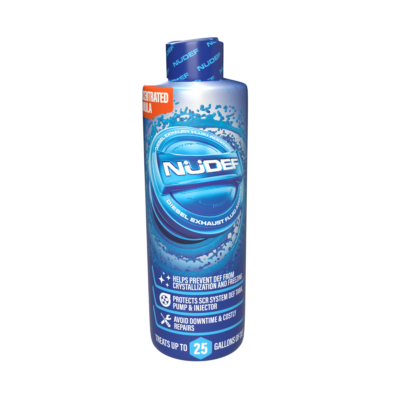
A large share of readers land here searching for a DEF additive cleaner: something to pour into the tank that scrubs the system from the inside. It is worth being precise about what chemistry can and cannot do from the tank. Fluid in the tank only touches the tank, the pickup, the pump, and the lines up to the injector; it meters through the doser in tiny pulses and never washes over the exhaust-side deposits that cause most codes. So an in-tank product can legitimately do two things: condition the fluid itself (keep urea in solution, protect against heat and storage degradation) and keep the wetted path from seeding new crystals. That is stabilization, it is real, and it is what NüDef does. What no pour-in product can honestly do is dissolve the baked crust already sitting on an injector tip or a mixer downstream of the dosing point. If a label promises that, the chemistry is writing checks the plumbing cannot cash. Buy the additive for prevention and the distilled water for removal, and both purchases will do exactly what they claim.
Shopping for a Cleaner: What Is Worth Buying
If you want a product on the shelf for cleanup days, judge it on three questions. Does it state compatibility with SCR system materials (stainless, EPDM, HDPE)? Does it disclose what it is (water-based with surfactants is honest and effective for fresh deposits; solvent chemistry should say so and say why)? And does it make in-tank claims? A bottle promising to dissolve system-wide crystals from inside the tank while you drive deserves skepticism: dosing systems meter fluid in tiny pulses, and a cleaner that never reaches the crust cannot clean it. For most owners, the winning kit is unglamorous: a gallon of distilled water, gentle heat, patience, and replacement gaskets for whatever you open. Spend the money you save on the prevention side, where it multiplies.
The Part Nobody Searches Until Later: Prevention
Every crystal you just cleaned came from untreated DEF doing what untreated DEF does: shedding water and letting urea fall out of solution at hot surfaces and slow spots. A DEF stabilizer changes that chemistry before the crust forms. NüDef treats any ISO 22241 fluid to keep urea in solution through heat cycles and storage, which is precisely the gap between the spec (which governs the fluid at purchase) and your driveway (where it lives for months). One 8 oz bottle treats up to 25 gallons of DEF, it works with every brand on the shelf, and it costs less than a single replacement doser gasket kit, let alone the injector. You can order it directly from us. The cleaner fixes last summer; the stabilizer cancels next summer.
The Cost Math: Cleaning vs Replacement vs Prevention
Numbers make the strategy obvious. Distilled water costs a couple of dollars; a formulated cleaner ten to twenty-five. The parts the crystals attack cost real money: DEF injectors commonly run $150-450 plus labor depending on platform, dosing pumps $300-900, quality sensors $200-500, and an SCR catalyst assembly on a pickup lands anywhere from $1,500 to $7,000, with heavy-truck systems above that. Meanwhile a season of stabilized DEF costs less than the shop’s diagnostic fee. The pattern we see in reader emails and fleet accounts alike: the first crystallization event costs a weekend and some distilled water, the second costs an injector, and the third costs faith in the whole emissions system right around the time a used-truck listing gets written. Exiting the cycle at step one is the entire economic argument for prevention, and the fleet ROI breakdown runs the same math at ten-truck scale.
Equipment That Sits: The Repeat-Offender Class
Crystal cleanup is disproportionately a stored-equipment problem. Daily-driven trucks turn their DEF over before it degrades; the machines that grow crust are the ones that wait: RVs and motorhomes parked between trips (our RV DEF guide exists because of them), standby generators holding the same tank of DEF across seasons (covered in the generator DEF guide), seasonal agricultural equipment, boats, and work trucks that winter in a yard. For this class, the cleaning procedures above are recurring appointments unless the fluid is managed: buy DEF in sizes you will actually consume, store it sealed and cool per the storage guide, stabilize what sits in the machine, and start the season with a walkaround of the dosing hardware rather than a surprise in June. Owners who adopt that routine report the most boring possible outcome, which in emissions systems is the goal.
When Cleaning Is Not Enough
Know the exits before you spend a weekend soaking parts. An injector that still patterns badly after a proper soak is a replacement part. A quality sensor that reads wrong with verified-fresh fluid is a replacement part. Repeated crystallization within weeks of a full clean means the source problem is upstream: aging fluid, a heat-soaked mounting location, or a dosing fault overspraying, and cleaning harder will not outrun it. And persistent codes after a thorough clean deserve the diagnostic sequence in our trouble-code guide rather than another bottle of anything.
The honest arc of this guide: cleaners exist because crystals formed, and crystals form because untreated DEF degrades. NüDef DEF Treatment & Stabilizer prevents the deposits this whole article is about, which is why prevention costs a fraction of the cleanup cycle. One 8 oz bottle treats up to 25 gallons.
The Bottom Line
The best DEF crystal cleaner for fresh deposits is warm distilled water and technique; formulated cleaners earn their price on aged, baked-on deposits and convenience; acids and improvised solvents are never welcome anywhere near an SCR system. Clean by location using the guides linked above, replace what cleaning cannot save, and then close the loop: stabilized DEF does not leave crystals to clean. That last sentence is the whole business case for NüDef, and it is the reason the cleaning guides on this site keep getting shorter to write.