
What SPN 3363 FMI 5 Means
SAE J1939 names SPN 3363 “Aftertreatment 1 Diesel Exhaust Fluid Tank Heater.” FMI 5 means “current below normal or open circuit.” Put together, the control module switched on the tank heater circuit and saw little or no current flow. Something in that circuit is open.
What “tank heater” means depends on the truck. On many heavy trucks, including Cummins ISX and X15 and Detroit installations, the DEF tank is warmed by engine coolant. A solenoid coolant control valve opens to send hot coolant through a coil inside the tank, and that valve circuit reports under SPN 3363. Other trucks use an electric heater element in the tank header. Check your service information to see which type yours has, because the test is different.
The code shows up most often in the first cold weeks of the season. The heater sat unused all summer, the first freezing morning asks it to work, and a weak coil or corroded connector finally shows itself. Our DEF trouble codes hub explains how SPN and FMI pairs are read, and your OEM service information has the final word on test values.
Coolant valve or electric heater: why it matters
On a coolant-heated tank, the heater only works when the engine is warm. The module opens the valve once coolant is up to temperature, hot coolant flows through the coil in the tank, and the DEF thaws from the inside out. An open valve coil means the valve never opens, so the tank stays cold no matter how long the engine runs. A valve stuck open does the opposite in summer and can overheat stored DEF, which speeds up breakdown of the fluid.
An electric heater draws battery power through a relay or a module output. It can start warming the tank before the coolant is hot, which helps on short trips. Its weak points are the element, the relay or fuse, and the connector at the tank header. FMI 5 on either system means the module saw an open circuit, so the first checks are the same: connectors, wiring and coil or element resistance.
FMI 5 and the Other Heater FMIs
The SPN tells you the component. The FMI tells you what kind of fault the module saw.
- FMI 5, current below normal or open circuit: an open valve coil or heater element, a broken wire, a pulled terminal or a corroded connector.
- FMI 3, voltage above normal or shorted high: the circuit is shorted to a power source.
- FMI 4, voltage below normal or shorted low: the circuit is shorted to ground.
- FMI 6, current above normal or grounded circuit: the coil or element is drawing too much current, often from an internal short.
- FMI 7, mechanical system not responding: the circuit checks out electrically, but the tank is not warming as expected. On coolant-heated tanks that often means a stuck valve or a coolant flow problem.
FMI 3 through 6 are electrical. FMI 7 is the one where the valve, coolant flow or the tank itself is the suspect.
Related Codes: SPN 3031 and SPN 1761
Two other tank codes tend to travel with heater faults in cold weather.
SPN 3031, Aftertreatment 1 DEF Tank Temperature. The temperature sensor in the tank header tells the module when to heat. If it reads wrong, the heater may not be commanded on at all, or the module may flag the heater for not warming a tank it cannot measure. FMI 4 and FMI 18 versions of this code are common searches. Test the sensor before condemning the heater.
SPN 1761, Aftertreatment 1 DEF Tank Level. A level sender stuck in frozen fluid can read wrong until the tank thaws. A level code that clears itself once the truck warms up points at freezing, not at a failed sender.
Our DEF sensor guide covers the level, temperature and quality sensors in the tank header and how each one fails.
What Happens If You Ignore It
DEF freezes at 12°F (-11°C). A properly designed tank is built to survive freezing, so the freeze itself does not crack it. The problem is dosing. Without heat, the system cannot thaw enough fluid to supply the pump. The module logs the heater fault, then supply and dosing faults follow, and the inducement schedule starts. Our SPN 5246 FMI 15 guide covers how that derate ladder works.
A starved pump on a cold morning can also set SPN 3362, the dosing unit input line fault, covered in our SPN 3362 FMI 31 guide. If both codes appear together below freezing, fix the heater first.
Causes, Cheapest First
1. Connector corrosion
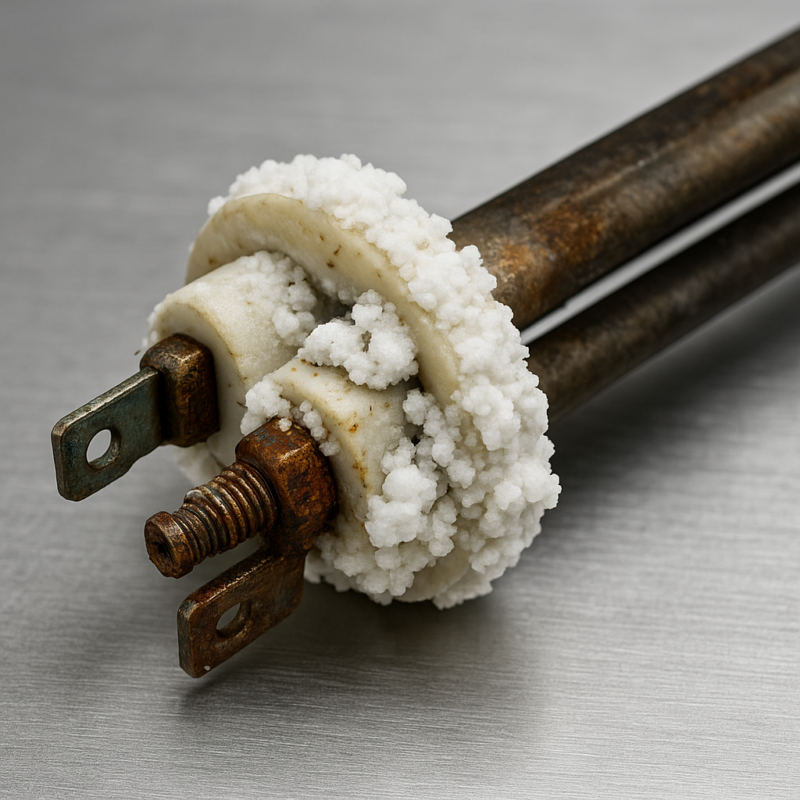
The tank header and valve connectors live under the truck in road spray, salt and DEF residue. Green or white corrosion on a terminal raises resistance until the circuit reads open. Unplug, inspect, clean and reseat. Look for white crust around the header, because DEF that seeps out dries to crystals and attacks connectors.
2. Damaged wiring
Chafed harness sections near frame rails, brackets and the exhaust are common opens. Follow the harness from the module to the valve or header and look for rubbed-through insulation.
3. Fuses and relays
On trucks with electric heaters, a blown fuse or failed relay kills the circuit. Check them early. They are cheap and quick.
4. An open valve coil or heater element
Measure the coil or element resistance with the connector unplugged and compare it to the OEM spec. An open reading confirms the part. On coolant systems the valve is usually serviced alone. Electric heaters are often part of the tank header assembly, so check the parts catalog for your VIN.
5. Coolant flow problems (FMI 7)
Low coolant, air in the coolant lines to the tank, a kinked hose or a valve stuck closed all leave the tank cold with a healthy circuit. Bleed the system per the service manual after any coolant work.
Test Sequence
- Record everything. Active and inactive codes, FMIs, counts and the outside temperature when the code set.
- Confirm the heater type. Coolant valve or electric element. The test path differs.
- Inspect connectors and harness. Clean corrosion, reseat terminals and repair chafed wires before buying parts.
- Check fuses and relays on electric systems.
- Measure resistance of the valve coil or heater element against spec.
- Command the heater with a service tool and confirm the valve clicks or the current draw matches spec.
- Check the tank temperature reading against an infrared thermometer on the tank, to rule out SPN 3031 as the real cause.
- On coolant systems, confirm the coolant hoses at the tank get hot with the valve commanded open.
Our DEF heater failure guide covers the light-duty heater codes and the same test logic on pickups.
Repair Cost
Most SPN 3363 FMI 5 repairs are cheap. Cleaning a connector or splicing a wire is mostly labor. A coolant control valve is a moderate part. An electric heater that is built into the tank header assembly costs the most and can run into the thousands on a Class 8 truck once dealer labor is added. Test before you order the assembly.
Freeze-Season Prep
The best time to find a heater fault is before the first hard freeze.
- Check the circuits in the fall. Command the heater with a service tool during a PM and read stored codes even when no lamp is on.
- Inspect connectors at the tank header and coolant valve while you are under the truck.
- Keep the coolant full and bled. A coolant-heated tank is only as warm as the coolant that reaches it.
- Store spare DEF indoors and out of the cab heat. Jugs that freeze and thaw repeatedly can drift out of spec. Our guide to when DEF freezes covers the numbers.
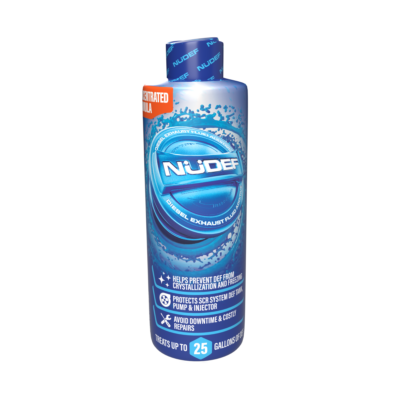
- Treat at every fill. NüDef DEF Treatment, Additive & Stabilizer helps prevent DEF from crystallization and freezing.
Where NüDef Fits
NüDef does not fix a heater circuit, a valve coil or a wire, and it does not clear codes. A heater fault needs a meter and a repair. What NüDef does is protect the fluid side. When a heater is weak or slow, DEF in the tank, lines and pickup goes through more freeze and thaw cycles, and that is when crystals form and block the pickup, filter and dosing valve. NüDef helps prevent crystallization and helps prevent freezing, which protects the SCR system DEF tank, pump and injector and helps you avoid downtime and costly repairs.
One 8 oz bottle of NüDef treats 25 gallons. Add it at every refill and do not exceed the label dose. A single bottle is $19.99, about 80 cents per gallon of DEF treated. Fleets running a case of 30 pay $17.00 a bottle, and our wholesale program handles standing orders before the cold sets in.