
What P249E Means
SAE J2012 defines P249E as “Closed Loop Reductant Injection Control At Limit, Flow Too High.” It is a feedback code from the SCR system on diesel pickups and vans, most often seen on Ford Power Stroke and GM Duramax trucks.
The SCR system doses DEF into the exhaust ahead of the catalyst. A NOx sensor after the catalyst reports what is left, and the engine computer trims the dose up or down to hit its target. That is the closed loop. P249E sets when the computer has trimmed dosing all the way down to its lower limit and the feedback still says too much reductant is reaching the exhaust. The loop has run out of room to correct.
The code does not name a failed part. It tells you the system is behaving as if it has more DEF, or stronger DEF, than it asked for. Your job is to find out why. As with every DEF code, your OEM service information has the final word on test values, and our DEF trouble codes hub maps where P249E sits in the SCR family.
Symptoms
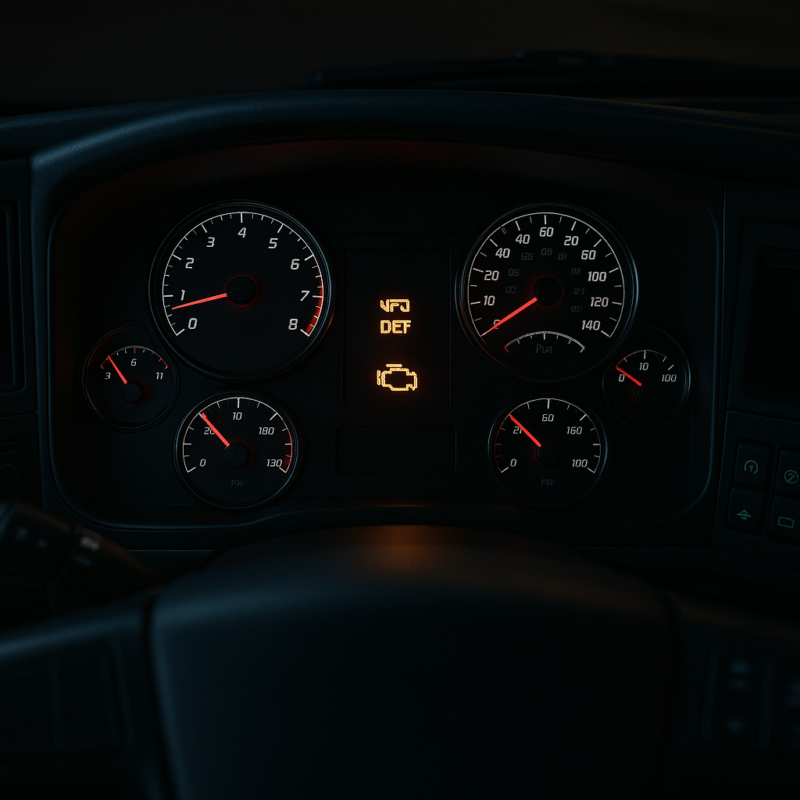
- Check engine light, often with no change in how the truck drives at first.
- A DEF or emissions message on the dash if the fault persists.
- Heavier white crust around the DEF injector or the exhaust pipe near it.
- Companion codes for SCR efficiency, NOx sensors or DEF quality.
- Eventually, a derate warning and a countdown if the code stays active.
How the loop judges flow
The computer never measures DEF flow directly. It knows how long it held the injector open and at what pressure, and it calculates how much fluid that should have delivered. Then it watches the outlet NOx sensor. If NOx falls further than the calculated dose explains, or the sensor picks up ammonia that slipped past the catalyst, the computer concludes too much reductant is arriving and trims the dose down. Repeat that over enough drives and the trim hits its floor. That is the moment P249E sets.
This is why the fluid matters so much. The calculation assumes 32.5 percent urea. Fluid that is stronger than that delivers more urea per spray than the math expects, and the loop reads it as overdosing even when the injector is perfect.
P249E vs P249D
The two codes are mirror images. P249D is “Flow Too Low”: the computer has pushed dosing to its upper limit and the exhaust still is not getting enough reductant. P249D usually points at a restriction: a crystal-blocked injector, low DEF pressure, a clogged filter or a pump that cannot keep up.
P249E is “Flow Too High”: dosing is at its lower limit and there is still too much reductant. P249E points at extra fluid, stronger fluid, or bad data. The repairs overlap because the same injector, fluid and sensors sit in both loops, but the order you check them in is different.
If both codes appear on the same truck at different times, suspect something intermittent: an injector that sticks open some of the time, a connector that comes and goes, or a NOx sensor that drifts.
What Causes P249E
Work through the causes from cheapest to most expensive.
- Concentrated or off spec DEF. ISO 22241 sets DEF at 32.5 percent urea, within 31.8 to 33.2 percent. DEF that sat in heat loses water and gets stronger. Every spray then delivers more urea than the computer planned, and the loop trims to its limit.
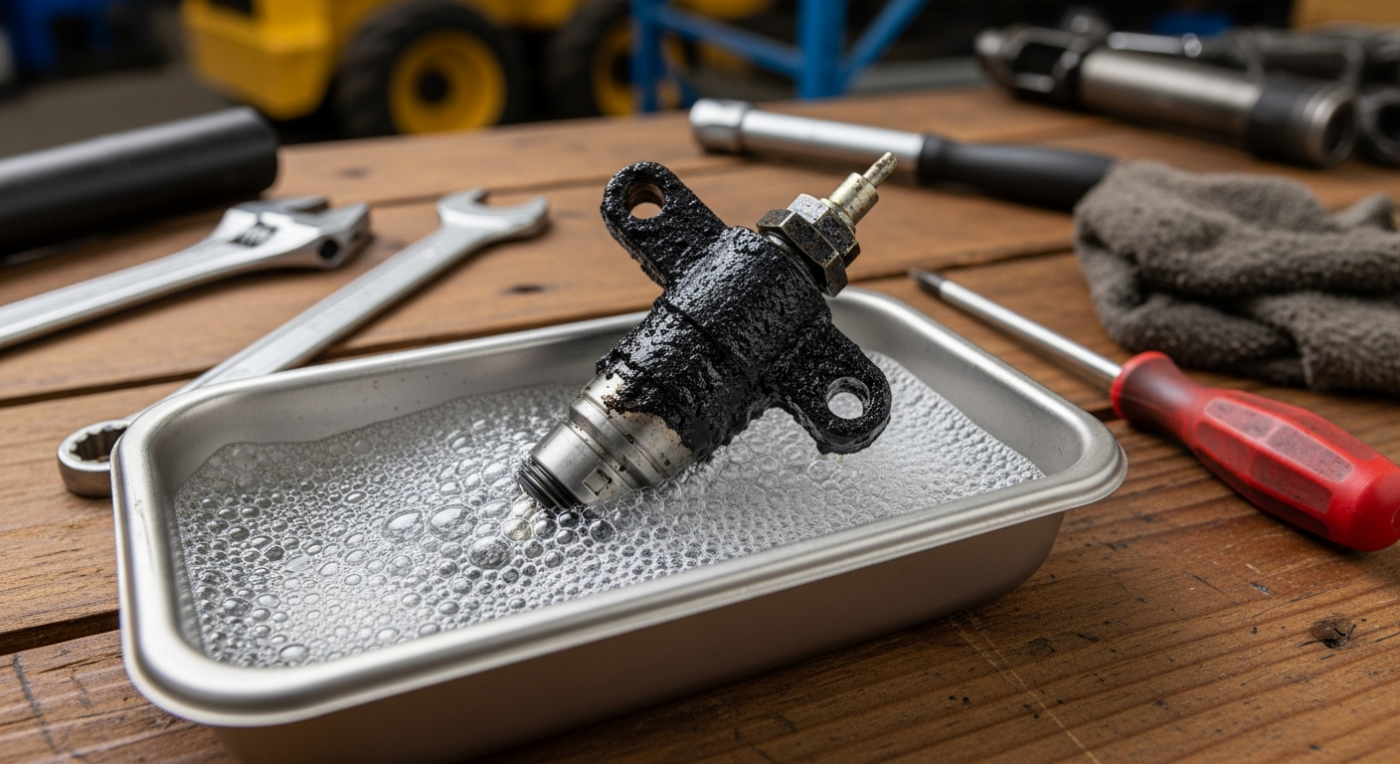
- A leaking or sticking injector. An injector that does not seat fully keeps dribbling DEF after it is commanded closed. Crystals on the tip can hold it partly open, and heavy white deposits at the injector are a clue. Our DEF doser valve guide covers how the injector works and fails.
- NOx sensor error. Outlet NOx sensors can respond to ammonia slipping through the catalyst. A sensor that reads wrong, or ammonia slip from overdosing, can make the computer think it is putting in too much.
- Exhaust leaks near a sensor that skew the reading.
- Software. Some trucks have calibration updates for SCR dosing logic. Ask the dealer before buying parts.
P249E on Ford Power Stroke and GM Duramax
Ford 6.7 Power Stroke
On the 6.7 Power Stroke, P249E tends to show up alongside SCR efficiency and DEF quality codes. The DEF injector sits in the exhaust downpipe area where it sees heavy heat, and deposits there are common on trucks that idle a lot or run short trips. Pull the injector and look at the tip and the mounting boss before condemning anything else. Our Ford Power Stroke DEF problems guide covers the related codes on that platform.
GM Duramax
On the Duramax, P249E and P249D both appear in the SCR code family, and GM service information includes dosing quantity and injector tests in the scan tool. Fluid concentration and injector condition are the first checks. Our Duramax DEF problems guide has the broader list of what fails on those trucks.
Other platforms
Ram trucks with the 6.7 Cummins and some vans also use the closed loop reductant codes. The logic is the same: the computer reached its dosing limit and the feedback still disagrees. Use your platform’s service procedure for the dosing test.
Can You Keep Driving With P249E?
For a short time, usually yes. P249E on its own rarely changes how the truck drives on day one. The risk is what follows. If the fault stays active, the truck moves into the emissions warning sequence, and most pickups and vans eventually show a countdown and a speed limit. Our engine derate guide explains how those stages work.
A leaking injector also keeps wetting the exhaust with DEF, and that builds deposits in the pipe and on the catalyst face over time. Book the diagnosis soon rather than clearing the code and hoping.
How to Fix P249E, in Order
- Record the codes. Save the freeze frame and note every companion code before clearing anything.
- Test the fluid. Draw a sample from the tank and read it with a DEF refractometer. A reading above 33.2 percent means the fluid is too strong. Drain, refill with fresh API-certified DEF, and retest. Our DEF testing guide shows how.
- Inspect the injector. Look for crust, wetness or a dribble pattern on the tip and in the pipe. Run the scan tool’s injector or dosing quantity test if your platform has one.
- Check DEF pressure against the OEM spec. Pressure that stays high after shutdown can point at a return line or an injector that will not seal.
- Compare the NOx sensors. With no dosing, upstream and downstream readings should track closely. A sensor that reads far off is suspect.
- Check for exhaust leaks ahead of the outlet sensor.
- Ask about software before buying a catalyst or a second sensor.
After the repair, clear the code and drive long enough at highway temperature for the SCR monitor to run. A code that returns on the next drive means the real cause is still there.
What P249E Costs to Fix
The range is wide. Fresh fluid and an injector cleaning cost little. A new DEF injector, a NOx sensor or a pump assembly costs much more once dealer labor is added, and a catalyst is the top of the list. That spread is why the fluid test comes first. Our NOx sensor guide covers what a sensor replacement involves.
Diagnosis time is part of the bill. A shop that tests the fluid and inspects the injector first can often rule out the expensive parts in under an hour. A shop that starts by swapping sensors can spend more and still miss a strong batch of DEF or a dribbling injector. Ask for the refractometer reading and the injector test results in writing.
Keeping P249E From Coming Back
Most of the cheap causes trace back to the fluid and to deposits. The steps that help:
- Buy API-certified DEF with a recent fill date, and keep jugs sealed and out of the sun.
- Do not leave half-empty jugs riding in a hot truck bed for months.
- Keep the fill neck clean and close the cap after every fill.
- Look at the injector area at oil changes for white crust.
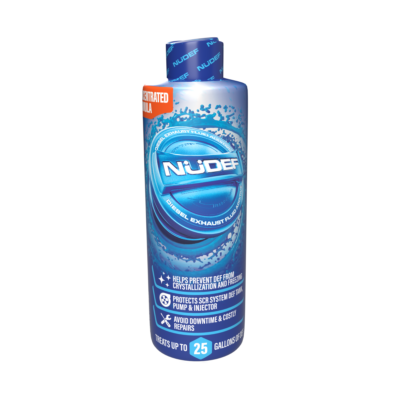
- Treat at every fill with NüDef DEF Treatment, Additive & Stabilizer. It helps prevent crystallization and helps prevent freezing, and it protects the SCR system DEF tank, pump and injector.
NüDef does not repair a leaking injector or a bad sensor, and it does not clear P249E. It helps keep crystals from forming on the injector tip and in the lines, which are among the deposit causes behind both P249E and P249D. One 8 oz bottle treats 25 gallons, and at $19.99 a bottle that is about 80 cents per gallon of DEF. If your truck has also logged a quality code, our P207F guide covers that one. Order NüDef direct and treat the next fill to help avoid downtime and costly repairs.