Updated November 2026. The failure mechanisms below come from SAE technical papers, truck makers’ owner’s manuals and published DEF handling guidance, each linked where it is used.
What SCR System Failure Means
SCR system failure is any fault that stops the selective catalytic reduction system from turning NOx into nitrogen and water: a DEF pump that cannot build pressure, a doser plugged with urea crystals, deposits in the mixer, off-spec fluid, or a catalyst that no longer converts. Most of these failures start with the fluid. DEF that has lost water, picked up dirt or been diluted leaves solids where the system needs a clean spray, and the truck sees the result as low pressure, low flow, poor quality or low efficiency. The dash shows a DEF or emissions warning first, and a derate follows if the fault stays. The good news is that the fluid side is the part an owner controls.
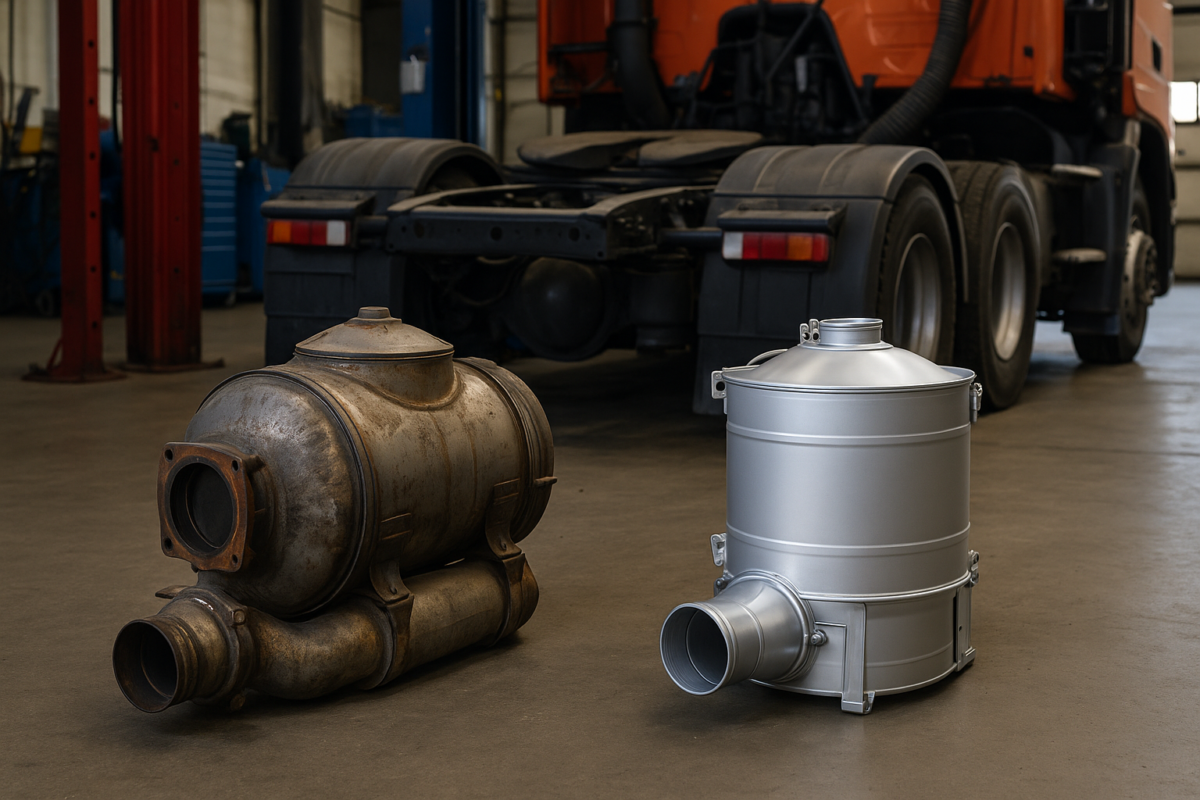
The system has two halves. The DEF side stores and meters the fluid: tank, header with level and quality sensor, heater, filter, pump, lines and the doser (injector). The exhaust side does the chemistry: the decomposition tube and mixer where the spray turns to ammonia, the SCR catalyst, and the NOx sensors that grade the result. A failure on either half sets codes, and the code tells you which half to look at. For the code list, start at the DEF trouble codes hub; for how the chemistry works, see what SCR is.
The Parts That Fail, Front to Back
The table follows the fluid from the tank to the tailpipe. The code descriptions are the generic definitions most diesel pickups and many heavy trucks use; your truck maker’s service information has the exact wording and test steps for your engine.
| Part | What goes wrong | Common code or warning | Where the fluid comes in |
|---|---|---|---|
| Tank and header | Crystals on the pickup and filler neck, failed heater, sensor fault | DEF quality or level warning | Old or concentrated fluid crystallizes on the header parts |
| Filter and pump | Plugged filter, pump cannot build pressure | P20E8 reductant pressure too low | Dirt and crystals load the filter and pump inlet |
| Lines and doser | Crystal or deposit blockage at the tip, no spray | P218F reductant no flow detected; P204F reductant system performance | Fluid left in hot lines and tips dries to solids |
| Fluid quality | Wrong concentration or contamination | P207F reductant quality performance; SPN 3364 FMI 1 | Diluted, contaminated or degraded DEF |
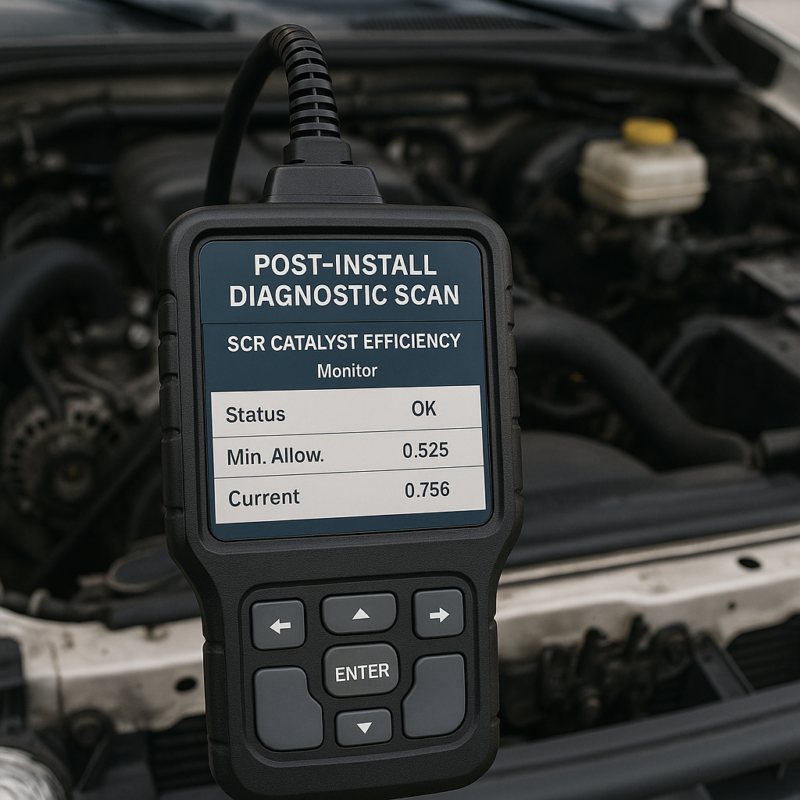
| Mixer and catalyst | Urea deposits, poisoned or worn catalyst | P20EE SCR NOx catalyst efficiency below threshold | Deposits and trapped contaminants cut conversion |
| NOx sensors | Electrical or sensing fault | Sensor circuit codes | None: a sensor fault is a parts and wiring problem |
Read the last row twice. A NOx sensor with a broken heater circuit, a chafed harness or a failed module is an electrical repair, and no fluid or additive changes that. The NOx sensor guide covers that diagnosis. Everything above it in the table is where the condition of the DEF decides whether the part lives or dies.
How DEF Crystals Start the Chain
DEF is 32.5 percent urea in deionized water. That ratio was picked because it is the eutectic point of urea and water, the mix with the lowest freezing point, 12°F, according to a DEF producer’s technical paper on heating and cooling. The same paper makes the point that matters for SCR failure: solid DEF cannot form above 12°F unless the urea concentration has gone up, and that happens when water evaporates out of equipment that is not airtight. Once the fluid is richer than 32.5 percent, urea salts out as it cools and settles where it can.
Where it settles is the problem. Inside the tank the crystals land on the header: the pickup screen, the level and quality sensor, the heater. In the lines and at the doser, a film of fluid left after shutdown dries in the heat of the exhaust and leaves a white crust on the tip. A partly blocked tip sprays a poor pattern; a fully blocked one sprays nothing, and the pump sees pressure it cannot relieve or flow it cannot make. That is how one batch of tired fluid turns into a pressure code, a flow code and then an efficiency code on the same truck. The DEF crystallization guide breaks down the root causes and repair tiers in detail.
Trucks that sit, run short trips or idle for long periods are the most exposed. The fluid in the tank ages through heat cycles between fills, and the system rarely runs long enough at temperature to keep the doser tip clean. Seasonal equipment, standby generators and work trucks parked over winter fit that pattern.
Urea Deposits in the Doser, Mixer and Exhaust
Downstream of the doser, a second kind of solid forms. The spray has to turn into ammonia gas before it reaches the catalyst, and an SAE lab study of urea deposit formation found that incomplete decomposition of injected urea can leave solid deposits in the aftertreatment system. The doser, the design of the decomposition tube and the operating conditions all affect whether they form. As those deposits heat, the urea changes: between 130 and 190°C it becomes a mix of urea, biuret and cyanuric acid, and above 200°C it turns quickly to cyanuric acid. The study reports that these deposits can raise engine back pressure and degrade NOx reduction.
An earlier SAE study of urea deposits in medium and heavy-duty trucks looked at wall temperature, injection rate and mixer design as drivers. It describes deposits as a waste of reductant that can hurt engine operation, emissions performance and DEF economy, along with back pressure and material deterioration. In plain shop terms: a crusted mixer chokes the exhaust, eats DEF that never reaches the catalyst, and lets NOx through, which is what an efficiency code reports.
Contaminated or Diluted DEF
The fastest route to SCR system failure is bad fluid. Ford’s F-650 owner’s manual puts it directly: selective catalytic reduction systems are sensitive to contamination of the diesel exhaust fluid, and dilution of the fluid leads to a DEF system fault that ends with the vehicle only operating in idle-only mode. The same manual says “Do not dilute diesel exhaust fluid with water or any other liquid,” and Mazda’s owner’s manual warns that diluted DEF could cause a problem with the SCR system or damage it.
Concentration matters in both directions. A laboratory instrument maker’s DEF testing guide notes that under-concentrated fluid leads to failed NOx reduction, while over-concentrated fluid risks solid deposits that damage the SCR system. Contamination adds a third path. Construction Equipment’s DEF purity guide says less than one teaspoon of many common elements is enough to bring a 5,000-gallon tank of DEF off spec, that even tap water can do it, that trace contaminants get trapped inside the catalyst, and that contaminants can clog spray nozzles and plug the pump and injection system over time. A DEF distributor’s quality page lists premature catalyst deactivation among the risks and says fluid that is any color but clear may carry mineral contamination.
The contaminants come in through handling: dirt around the cap, reused jugs, funnels and containers that held something else. Volvo Construction Equipment’s DEF tips say to clean the area around the tank and cap before opening it, because dirt falls in and washes down with the fluid, and to keep DEF in dedicated containers. The contaminated DEF guide covers the drain, rinse and refill when it has already happened.
Symptoms and the Derate Ladder
SCR system failure shows up in a fairly fixed order. First a DEF or emissions message and a lamp, often with a pressure, flow or quality code stored. Ford’s manual says the DEF light comes on and fault messages appear when the system becomes contaminated or inoperative. If the fault stays, the engine computer starts counting toward a derate. Some owners also notice DEF use climbing with no change in work, which fits the SAE finding that deposits waste reductant, or a white crust on the doser when it comes out.
How hard the derate hits depends on the truck and its software. DieselNet’s summary of EPA’s August 2025 DEF guidance describes a stepped approach for heavy-duty trucks: a warning only for 650 miles or 10 hours, then a 15 percent torque cut, a 30 percent cut at 4,200 miles or 80 hours, and a 25 mph limit at 8,400 miles or 160 hours. The older guidance allowed a severe derate to 5 mph after 4 hours. EPA asked manufacturers to update software on existing trucks, so which schedule your truck follows depends on whether that update has been applied. Either way, a stored SCR fault is a clock running. The engine derate guide explains what the truck is doing at each step.
Finding the Failed Part
Work from the code to the part, and test the fluid early because it is the cheapest thing to rule out. Volvo CE recommends a digital refractometer for checking urea concentration. If the reading is off or the fluid is cloudy or colored, deal with the fluid before buying parts, or the new part will meet the same fluid.
A pressure code points at the filter, pump and lines; the DEF pump failure guide and the P20E8 code page walk through it. A no-flow or system-performance code usually means the doser; see the doser valve guide and how to clean a DEF injector. A filter that has not been changed on schedule is worth checking at the same time, per the DEF filter service guide. An efficiency code with good fluid, a clean doser and healthy sensors leads to the mixer and catalyst, covered in SCR catalyst replacement. Heater and sensor circuit codes are electrical: repair the circuit, then clear the code with a scan tool.
Preventing SCR System Failure
Most of the failures above trace back to fluid that crystallized, dried out or got dirty. Prevention is a short routine:
- Buy certified DEF in sealed containers and store it shaded and closed. Ford’s manual calls for storage out of direct sunlight between 23°F and 68°F.
- Wipe the cap and filler neck before opening, and never reuse a jug or a funnel that held another fluid.
- Never stretch DEF with water. Top off only with certified DEF.
- Check concentration with a refractometer when a quality warning appears or the fluid has sat a long time.
- Treat every fill with a DEF stabilizer to help prevent crystallization.
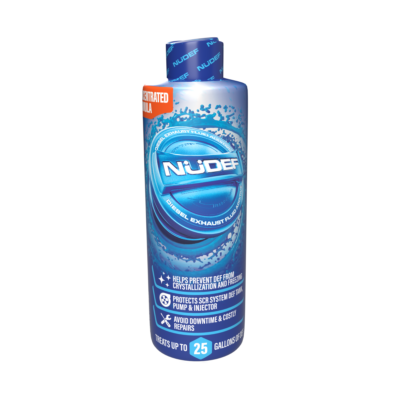
That last step is where NüDef DEF Treatment, Additive & Stabilizer fits. Its label says it helps prevent DEF crystallization, protects the SCR tank, pump and injector, and helps avoid downtime and costly repairs; the sell sheet adds that it helps prevent freezing. One 8 oz bottle treats 25 gallons of DEF. Add it at every refill and do not exceed the label dose. It goes into ISO 22241 or API-certified DEF and never replaces it, and it is a preventive treatment: it does not repair a failed pump, a plugged doser or a bad sensor. On a truck that has had a crystal-related failure, fix the part, refill with fresh fluid, and treat from that fill on. Order NüDef direct.
Fleets that fill from totes or bulk tanks should treat the bulk supply, because every truck on the lot draws from it. NüDef sells by the case of 30 bottles, and the wholesale program covers larger volumes. The SCR maintenance guide lays out a service schedule by component, and the DEF shelf life guide covers how long stored fluid stays good.