Updated November 2026. The material lists below come from Cummins Emission Solutions’ DEF quality bulletin, a storage tank maker’s summary of ISO 22241-3, an engine maker’s DEF storage guide and a DEF producer’s ISO 22241-1 specification sheet. Each one is linked where it is used.
Is a Stainless Steel DEF Tank the Right Choice?
Yes. Stainless steel is one of the few metals the DEF handling standard and the engine makers name for storing diesel exhaust fluid. ISO 22241-3, the part of the DEF standard that covers handling, transportation and storage, lists stainless steel 304 and 316 as examples of recommended materials and carbon steel as not recommended, according to a storage tank maker’s summary of the standard. Cummins Emission Solutions’ DEF quality and maintenance bulletin recommends containers made of polyethylene, polypropylene or stainless steel (Grade 316). An engine maker’s DEF storage guide says the same thing in one line: always store DEF in high density polyethylene (HDPE) or stainless steel tanks.
So the choice for a shop, farm or yard tank comes down to stainless or the right plastic. Plain steel, galvanized steel, aluminum and anything with copper or brass in the wetted path are the materials to keep away from the fluid. The rest of this page explains why, which stainless grade to ask for, and what to check on the pump, hose and fittings, because a stainless tank with a brass fitting still puts metal into the DEF.
DEF Storage Materials: What the Sources List
The chart puts the published guidance side by side. “Use” means at least one source below names the material for DEF storage or contact; “avoid” means a source lists it as a material that corrodes or is not recommended.
| Material | Verdict | Where it shows up in a DEF setup | Source |
|---|---|---|---|
| Stainless steel 316 | Use | Tanks, fittings, pump wetted parts | Cummins bulletin; ISO 22241-3 summary |
| Stainless steel 304 | Use | Tanks and fittings | ISO 22241-3 summary |
| High density polyethylene (HDPE) | Use | Totes, jugs, plastic tanks | Engine maker storage guide; Cummins bulletin (polyethylene) |
| Polypropylene | Use | Containers, some fittings | Cummins bulletin |
| Carbon steel, zinc-coated (galvanized) carbon steel, mild iron | Avoid | Old fuel tanks, black pipe, galvanized fittings | Cummins bulletin; ISO 22241-3 summary (carbon steel) |
| Copper, copper alloys (brass), zinc, lead | Avoid | Brass valves, nozzles, hose barbs | Cummins bulletin |
| Solder containing lead, silver, zinc or copper | Avoid | Soldered joints and repairs | Cummins bulletin |
| Aluminum alloys | Avoid | Aluminum tanks, pump housings, funnels | Cummins bulletin |
| Magnesium and magnesium alloys | Avoid | Some cast housings | Cummins bulletin |
| Plastics or metals coated with nickel | Avoid | Plated fittings and hardware | Cummins bulletin |
The Cummins bulletin words its avoid list carefully: some materials “may corrode if contact with DEF occurs for an extended period of time.” A storage tank is exactly that kind of contact. The fluid can sit against the walls for weeks, which is why the material matters more for a tank than for a funnel used once.
What ISO 22241-3 Covers
The ISO 22241 standard comes in parts. Part 1 sets the quality of the fluid itself, and Part 3 is titled Handling, Transportation and Storage of Diesel Exhaust Fluid; the Cummins bulletin lists both as references. When a tank, tote or dispenser is sold for DEF, Part 3 is the document that speaks to what it should be made of.
The tank maker’s summary makes one more point worth knowing before you buy. The standard names some materials as recommended and some as not recommended, and it allows equipment manufacturers to test other materials beyond those two lists to determine compatibility. That is why you will see tanks in materials the lists do not name, sold with the maker’s own compatibility testing behind them. If a seller cannot tell you what the wetted parts are made of and whether they suit DEF, treat that as a reason to keep shopping. The DEF requirements guide covers the rest of ISO 22241 and the API certification mark on the jug.
Why the Wrong Metal Matters: The Metal Limits in DEF
DEF is urea dissolved in demineralized water, and the quality standard limits how much dissolved metal it may carry. A DEF producer’s ISO 22241-1 specification sheet lists the limits: copper, zinc, chromium and nickel at 0.2 ppm maximum each, and iron, aluminum, calcium, magnesium, sodium and potassium at 0.5 ppm maximum each, with urea held between 31.8 and 33.2 percent.
Those are tiny numbers. Fluid that left the plant inside the limits can pick up metal from whatever it is stored in, pumped through or poured from. Several of the metals on the Cummins avoid list (copper, zinc, aluminum, iron in mild and carbon steel) are the same metals with a cap in the specification. A tank or fitting that slowly gives up metal into the fluid works against the limits the fluid was made to meet. The engine maker’s storage guide gives the easiest field check for one of them: DEF reacts with copper, and if copper is used on a connection, the DEF quickly turns blue.
Metal is one route to bad fluid; dirt, fuel, oil and detergent are the others. The contaminated DEF guide covers the symptoms and what to do when the fluid in a truck is already off, and the DEF testing guide explains how to check a batch with a refractometer.
304 or 316 Stainless Steel?
Both grades appear in the guidance. The ISO 22241-3 summary gives stainless steel 304 and 316 as examples of recommended materials, and the Cummins bulletin names Grade 316 for containers used to transport and store DEF. If you are buying new and want the grade that every source on this page names, ask for 316. If you already own a 304 tank built for DEF, it is on the recommended list in the standard’s summary.
What matters as much as the grade is that the whole wetted path matches. Ask the seller three things: the grade of the shell, the grade of every fitting and valve that touches fluid, and what the pump’s wetted parts and seals are made of. A stainless steel DEF tank fitted with a brass ball valve or a galvanized nipple puts copper or zinc back into the fluid at the outlet, which defeats the reason you paid for stainless.
A used stainless tank is a fair buy only when you know what it held. A tank that carried fuel, oil, coolant or a cleaning chemical needs to be cleaned the way the next sections describe before DEF goes in. If you cannot confirm what it held, do not put DEF in it.
Plastic Tanks: Polyethylene and Polypropylene
Most of the DEF people handle never touches metal at all. Jugs and totes are plastic, and the Cummins bulletin lists polyethylene and polypropylene beside 316 stainless as recommended container materials. The engine maker’s guide pairs HDPE with stainless as the two tank choices. Either material is on the list; pick by where the tank will live and what the rest of your setup is made of.
Plastic has its own care points in the bulletin. Some DEF containers include a paper seal under the cap, and that seal degrades over time and contributes to contamination, so opened containers need regular inspection. The bulletin also lists plastics coated with nickel among the materials to avoid. For pumps, nozzles and transfer tank setups that sit between the tote and the truck, the DEF transfer tank guide covers sizes and keeping the fluid clean in transit, and the bulk DEF guide walks through totes, drums and dispensers for fleets.
Fittings, Pumps and Hoses: Where Copper Sneaks In
When a tank is the right material and the DEF still goes bad, look at the hardware. The Cummins avoid list reads like a parts bin: brass (a copper alloy) valves and hose barbs, galvanized pipe nipples, soldered joints with lead, silver, zinc or copper in the solder, aluminum pump housings, and nickel-plated hardware. Any of these can sit in the flow path of a tank that is itself stainless or HDPE.
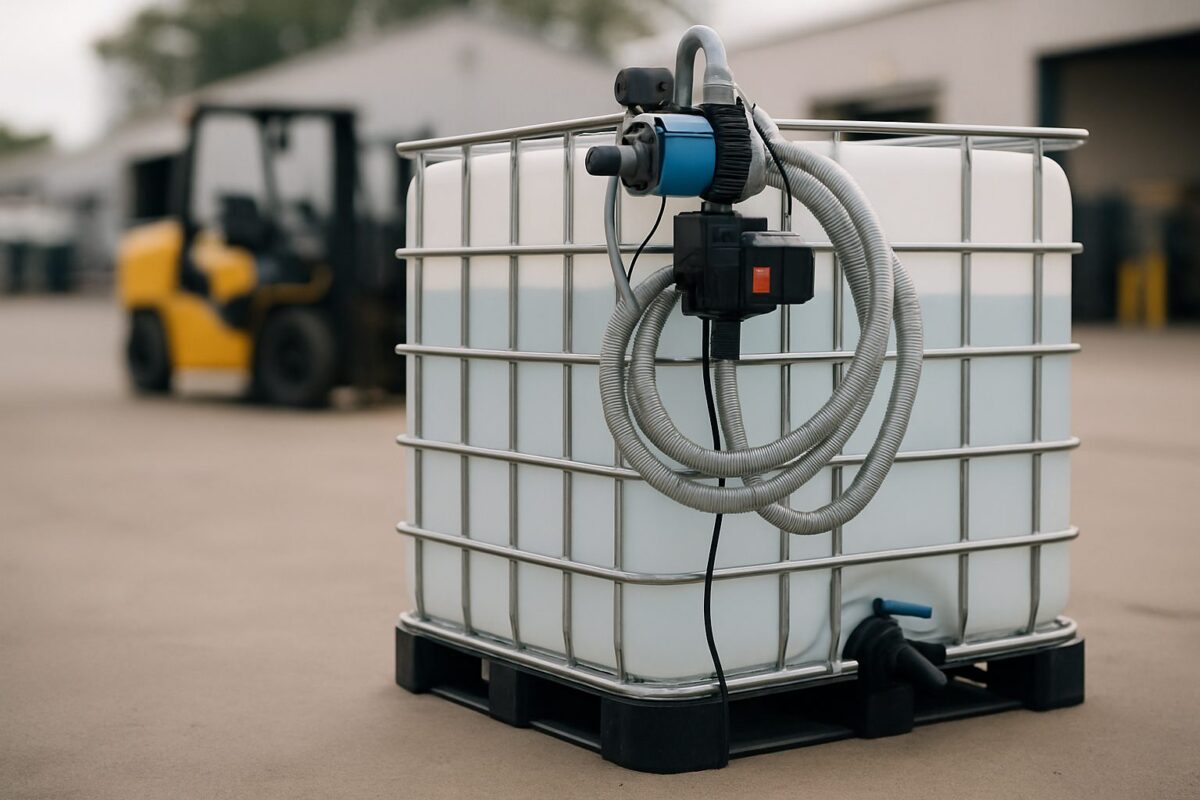
Walk the path from the fill cap to the nozzle and name the material of each part. Swap brass and galvanized pieces for stainless or a compatible plastic. Use only funnels, jugs and pitchers that are kept for DEF, because the Cummins bulletin requires that anything contacting DEF be free of oil, fuel, dust, detergents and other chemicals. The engine maker’s guide puts it simply: make sure even connections use the appropriate materials, like stainless steel. If a blue tint shows up in the fluid, find the copper.
Where the Tank Sits: Temperature and Sunlight
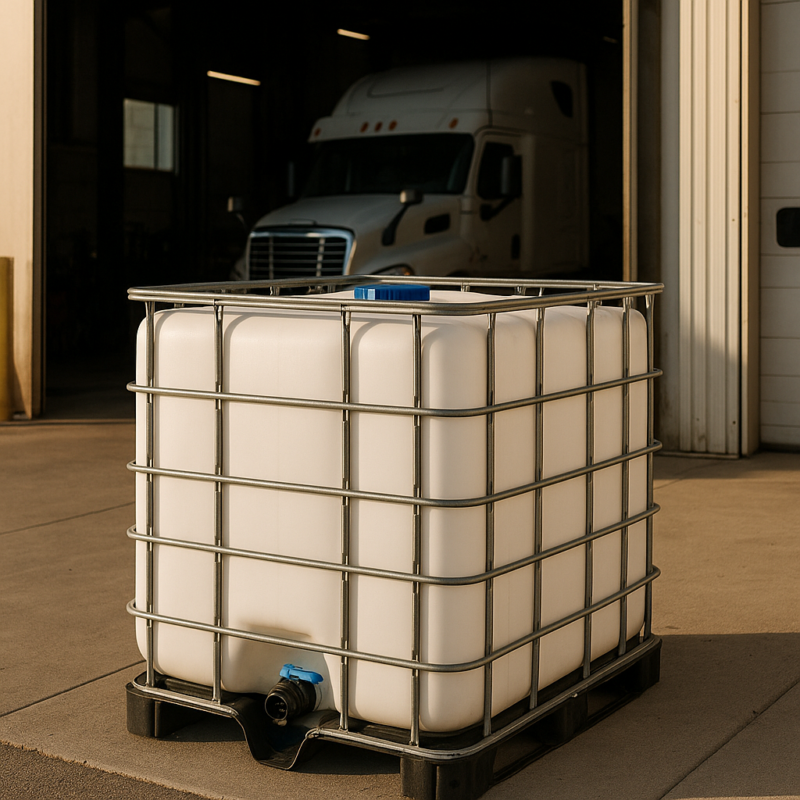
Material keeps metal out of the fluid. Location decides how long the fluid stays good. The Cummins bulletin says DEF stored between 10°F and 90°F remains stable for at least one year, that DEF freezes at 12°F, and that direct sunlight should be avoided. It adds that intermediate bulk containers (totes) do not have the climate control that 1,000-gallon bulk dispensers have, so in cold weather totes belong in a storage unit, and in warm weather they belong in the shade to avoid water evaporation and conversion to ammonia.
The engine maker’s guide gives the ISO 22241 storage range as 12°F to 86°F, notes that prolonged storage above 25°C (77°F) should be avoided, and puts shelf life at a minimum of one year in most U.S. areas, longer when the fluid is kept cooler. A stainless steel tank in full sun on a south wall loses on the second point no matter how good the steel is. The DEF shelf life guide covers storage time and temperature in more depth.
Cleaning a New or Reused Tank Before the First Fill
The Cummins bulletin is specific about cleaning. Containers, funnels and other equipment that will contact or store DEF should be cleaned before use: wash thoroughly and rinse with distilled water. If distilled water is not available, rinse with tap water, then rinse with DEF. The bulletin also says to clean any surface immediately if a material contacts DEF, and to remove crystallized DEF during periodic inspections.
Before the first fill of a new tank, follow that sequence and let the last rinse drain completely. On a tank that is already in service, inspect the fill neck and vent for crystals and dirt, and keep the cap closed between fills. For the step-by-step on a tank that already has residue or the wrong fluid in it, use the DEF tank cleaning guide, and if diesel went into the DEF side, the wrong-tank guide covers what to do first.
Clean Storage, Then Treat Every Fill
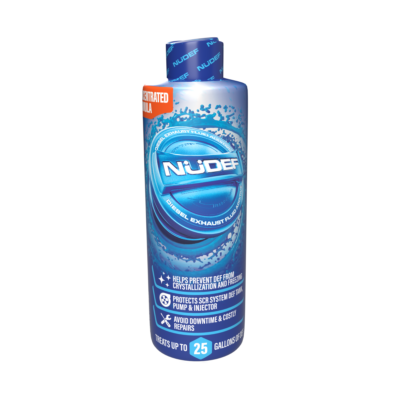
A stainless steel DEF tank, compatible fittings and a cool, shaded spot give you fluid that is still in spec when it reaches the truck. From there the fluid goes into the vehicle tank, where it sits through heat cycles between fills and where crystals form on the filler neck, the pump and the injector. That is the job NüDef DEF Treatment, Additive & Stabilizer is made for. The label says it helps prevent crystallization and protects the SCR tank, pump and injector. One 8 oz bottle treats 25 gallons of DEF. Add it at every refill, add it only to the DEF tank or a DEF container, and do not exceed the dose. Use it with ISO 22241 or API-certified DEF, never in place of it.
Fleets that fill from a stainless tank or a tote can buy NüDef by the case of 30 bottles, and the wholesale program covers larger volumes. For a single truck or a farm tank, order NüDef direct and keep a bottle beside the dispenser so every fill gets treated. The DEF crystallization guide explains where crystals form and what they cost once they do.