What a DEF Transfer Tank Is
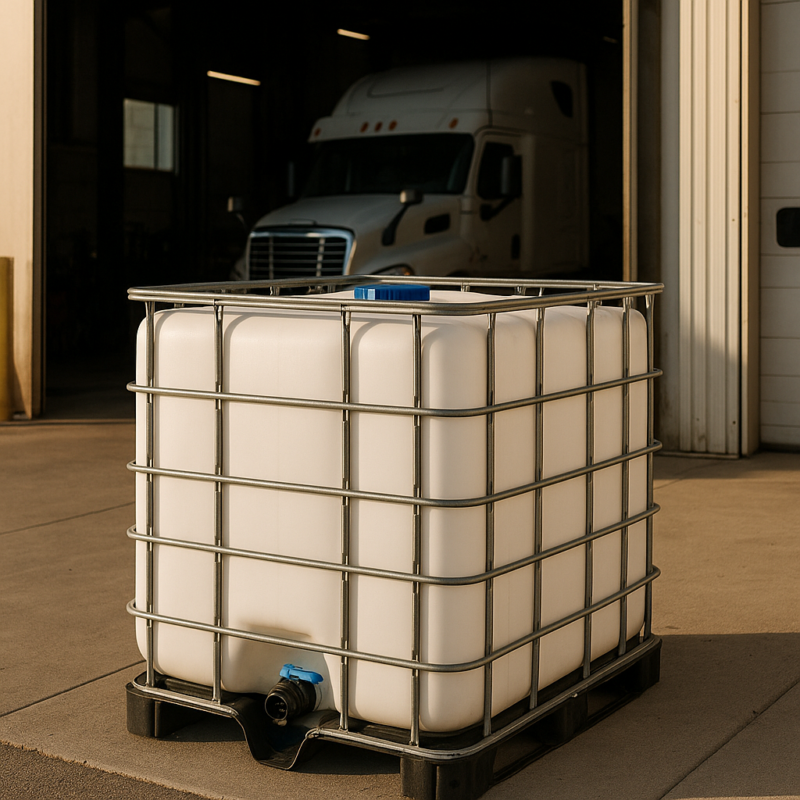
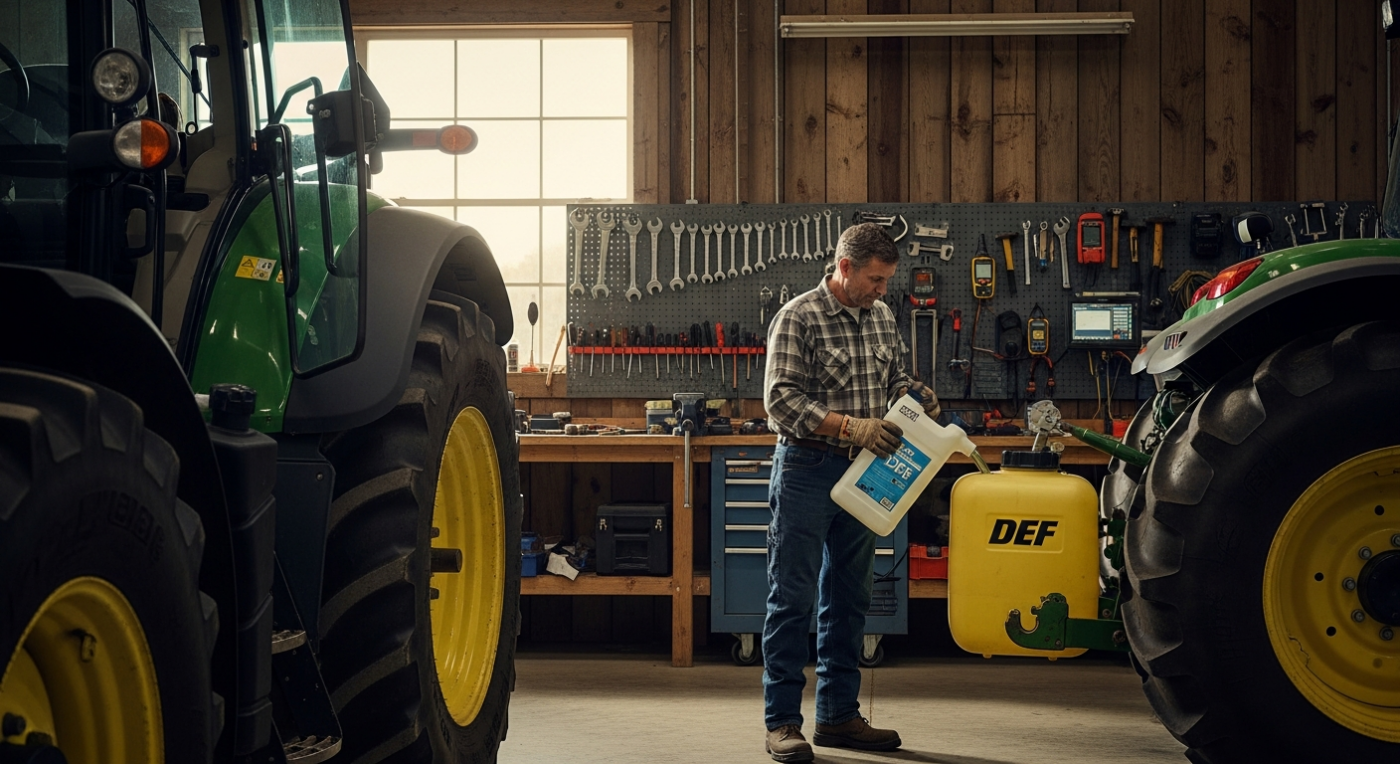
A DEF transfer tank is a dedicated container that carries diesel exhaust fluid to the equipment instead of driving the equipment to the DEF. It rides in a pickup bed, on a service truck, on a skid, or on a trailer. It has its own pump, hose and nozzle, and it holds nothing but DEF.
Three kinds of operations end up with one. Farms that run Tier 4 tractors, combines and sprayers miles from the shop. Construction crews with excavators, loaders and generators that never leave the job site. Fleets and owner-operators who would rather buy bulk DEF at a lower price and carry it than pay pump price at every stop.
The tank itself is simple. The hard part is keeping the fluid inside it on spec. DEF is 32.5 percent urea in deionized water, and the ISO 22241 specification holds it to tight purity limits. A transfer tank that sits in the sun, picks up dust through a loose cap, or shares a hose with something else can ruin a load of DEF before it ever reaches a tank.
Sizes and Who Needs Which
Pick the size by how much DEF you burn between refills of the transfer tank, not by how much the truck can carry. DEF that sits too long degrades, so a tank that is too big costs you fluid.
- Combo fuel and DEF tanks. An L-shaped or rectangular bed tank with a diesel side and a small DEF compartment. It suits a pickup that tops off a few machines a week.
- Standalone bed tanks, roughly 30 to 100 gallons. The usual choice for a farm or a contractor feeding several Tier 4 machines. Remember the weight: DEF runs about 9.1 pounds per gallon, so 100 gallons is roughly 900 pounds before the tank and pump.
- Skid and trailer tanks, 100 gallons and up. For crews that fuel an entire spread of equipment each day. At this size the tank behaves like a small bulk system, and the bulk storage rules apply.
Not sure how many gallons you go through? Our guide to what a DEF tank is and how long a fill lasts covers tank sizes on the vehicles themselves. For a yard or shop setup with totes and dispensers, see the bulk DEF guide.
Materials and Why DEF Eats Some Metals
DEF is mildly corrosive to a long list of common metals, and the metal that dissolves ends up in your SCR catalyst. ISO 22241 limits metals such as copper, zinc, iron and aluminum to a fraction of a part per million. A tank or fitting made of the wrong material can push a load of DEF past those limits on its own.
Materials that work with DEF:
- High-density polyethylene (HDPE) and polypropylene, the most common tank materials.
- Stainless steel, 304 or 316 grade, for tanks, fittings and pump housings.
- Seals and hoses rated for DEF service. EPDM and FKM compounds are common choices.
Materials to keep away from DEF:
- Carbon steel and anything galvanized.
- Aluminum.
- Copper and brass, including brass fittings on an old fuel pump.
- Any tank, hose or nozzle that has ever held fuel, oil, coolant or water treatment.
The last point matters most on a used tank. A rinse does not make a former fuel tank safe for DEF. Buy a tank built and labeled for DEF.
Pumps, Hoses and Nozzles That Keep DEF Clean
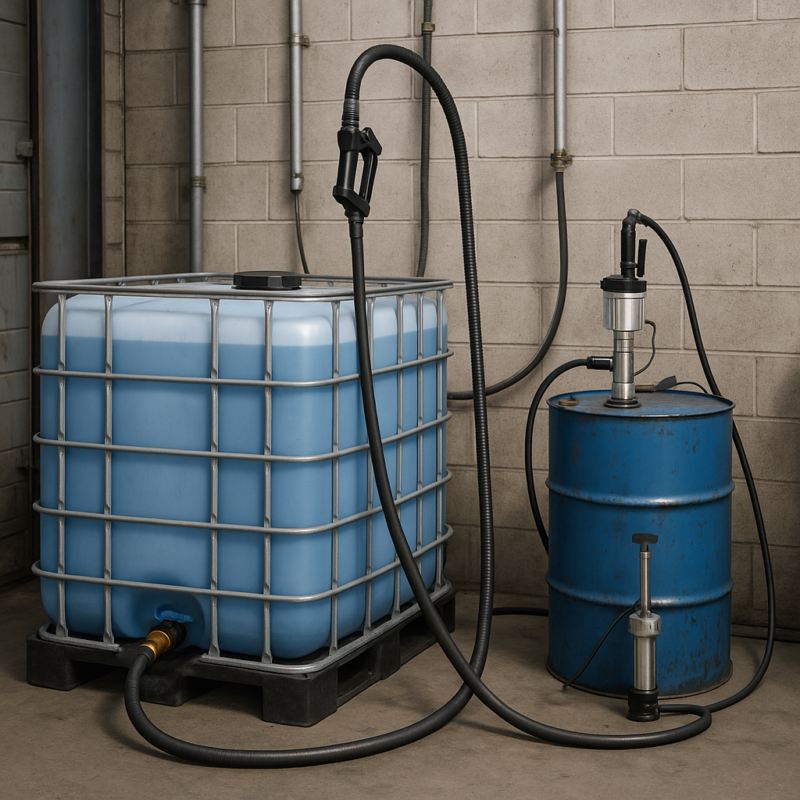
Most DEF transfer setups use a 12-volt pump wired to the truck, a hose on a reel, and an automatic shutoff nozzle. Every wetted part has to be DEF compatible, which rules out a converted fuel pump.
- Dedicated equipment only. The American Petroleum Institute's DEF storage guidance says to use dedicated dispensing equipment and to keep funnels, pitchers and hoses used for other fluids away from DEF.
- Cap the nozzle. A nozzle that rides uncapped in the bed collects dust, chaff and road grit, and all of it goes into the next machine.
- Closed transfer where you can. A sealed fill from the supply tote to the transfer tank keeps airborne dirt out. API recommends a closed-loop system for exactly that reason.
- Filter on the outlet. An inline filter rated for DEF catches particles before they reach a machine's DEF tank and its pump screen.
Heat, Sun and Cold: Storage Risk on a Truck Bed
A transfer tank is a storage tank that lives outside. That is the biggest risk to the fluid in it.
Heat shortens shelf life. API publishes shelf life by constant storage temperature: 36 months at 50°F or below, 18 months at 77°F, 12 months at 86°F, and 6 months at 95°F. Above 95°F, API says to test before use. A black bed tank in July can run well past 95°F inside, so summer DEF in a transfer tank should be used in weeks, not months. Shade the tank, park in shade, and choose a light-colored tank where you can. Our DEF shelf-life guide covers the full temperature picture.
Cold freezes it. DEF freezes at 12°F and expands up to 7 percent when it freezes, according to API. Leave headspace in the tank and do not top it off to the brim before a cold night. Frozen DEF that thaws is usable as long as nothing got into it, but a tank cracked by expansion is not. See how to keep DEF from freezing for winter handling.
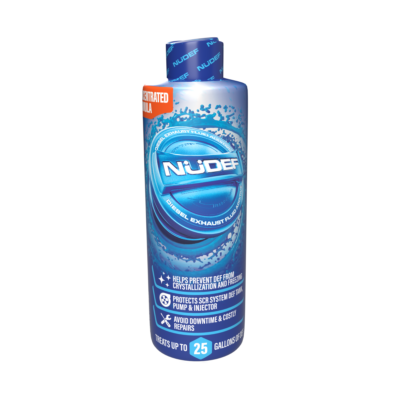
Treat what you store. This is where NüDef earns its spot on a transfer truck. NüDef DEF Treatment, Additive & Stabilizer helps prevent crystallization and helps prevent freezing. Dose the transfer tank when you fill it: one 8 oz bottle treats 25 gallons, so a 50-gallon fill takes two bottles. It is added to certified DEF and never replaces it.
Filling, Cleaning and Turnover
- Start with certified DEF. Buy fluid that carries the API certification mark, and ask your supplier for a certificate of analysis on bulk loads.
- Rotate. Run the transfer tank down and refill it rather than topping off old fluid with new. Use older stock first.
- Clean with the right water. When the tank needs cleaning, rinse with distilled or deionized water, then with on-spec DEF. Never use tap water. Its minerals are exactly what ISO 22241 limits.
- Inspect the cap and vent. A cracked cap or missing vent filter lets in dust and moisture every time the truck moves.
- Test when in doubt. A refractometer reading tells you whether the fluid is still near 32.5 percent urea. Here is how to test DEF.
Fluid that tests off spec or looks cloudy does not go into a machine. Drain it and start over. The contaminated DEF guide covers what bad fluid does to an SCR system.
Common Transfer Tank Mistakes
- Buying too much tank. A 100-gallon tank that takes three months to empty in summer is a slow way to cook DEF. Size for a few weeks of use.
- Sharing the pump. One pump for fuel and DEF guarantees cross-contamination. Two fluids means two pumps, two hoses and two nozzles.
- Leaving the nozzle in the dirt. In a field or on a job site, a dropped nozzle picks up soil and fertilizer dust. Wipe it, cap it, and hang it.
- Filling to the top before a freeze. Expansion has to go somewhere. Leave headspace from late fall on.
- Skipping treatment on stored fluid. The DEF in a transfer tank is stored DEF, even though it moves every day. Dose it at fill with NüDef to help prevent crystals in the hose, the nozzle and the next machine's tank.
What It Costs to Run One
Tank and pump prices vary widely by size and material, so get quotes for the setup you need. The running cost is easier to pin down. Bulk DEF bought by the tote usually costs less per gallon than jugs or pump DEF, and the treatment adds a predictable amount on top.
NüDef treats 25 gallons per bottle. At the single-bottle price of $19.99 that is 80 cents per gallon of DEF. In a case of 30 at $509.99, it drops to 68 cents per gallon and covers 750 gallons. A farm or crew moving a few hundred gallons a season can treat all of it for a few hundred dollars. That costs far less than a DEF injector or pump replacement.
Running a fleet or a large operation? Ask about wholesale and bulk pricing. For equipment-specific guidance, see DEF treatment for agricultural equipment and DEF maintenance for construction equipment.