Updated November 2026. The fill steps and cautions below come from the truck makers’ own owner’s manuals, and the dosing comes from the NüDef label. Where a manual gives a rule for one truck only, this page says which truck.
How to Add DEF, Step by Step
Adding DEF takes about two minutes once you know where the filler is and when to stop. The short version for a pickup or a semi:
- Park on level ground and shut the engine off. A level truck gives the gauge an honest reading afterward.
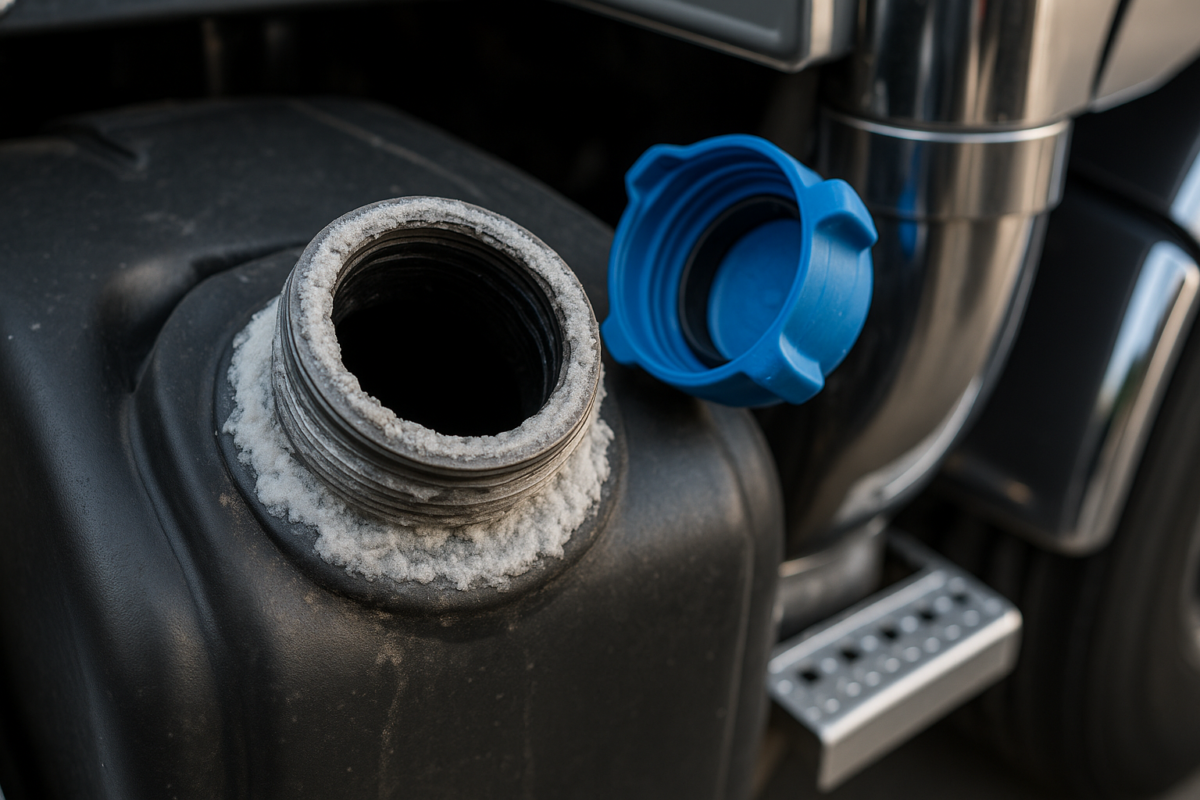
- Find the DEF filler and open it. Ram’s owner’s manual puts the DEF cap on the driver’s side of the truck or inside the fuel door. Read the cap before you pour anything. DEF goes in its own tank and never in the diesel tank.
- Wipe the neck. Dust and grit around the filler drop straight into the tank when the cap comes off.
- Fill from a pump nozzle or a container with a spout. A DEF pump nozzle shuts off on its own when the tank is full. A jug with a sealed spout stops flowing when the tank is full.
- Stop at the first sign of full. Ram’s manual says to stop filling right away if DEF stops flowing from the bottle, splashes out of the filler neck, or the pump nozzle clicks off.
- Put the cap back on and wipe up any spill with water.
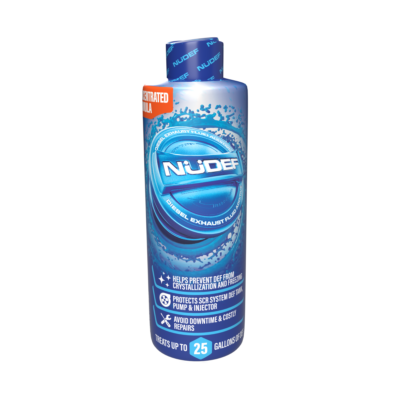
- Treat the fill. If you use NüDef DEF Treatment, Additive & Stabilizer, add it at every refill: one 8 oz bottle treats 25 gallons.
The rest of this guide covers each step in more detail, plus the two mistakes that turn a cheap fill into a shop bill: overfilling and pouring DEF into the wrong tank.
Where the DEF Filler Is
On light-duty and heavy-duty pickups the DEF filler sits close to the diesel filler. Ram’s manual for the 2020 Ram 2500 describes the DEF tank cap as located on the driver’s side of the vehicle or in the fuel door, depending on the truck. Other makers place it in different spots, and on heavy trucks the DEF tank has its own filler away from the fuel cap, so check the label on the cap and the owner’s manual for yours.
If you are not sure which cap is which, stop and look it up in the owner’s manual before you pour. The few seconds it takes are worth it, because the DEF-in-the-fuel-tank mistake is expensive and the fix starts with not starting the engine. Our DEF tank explainer shows what sits behind that filler: the tank, the level and quality sensors, the heater and the pump pickup.
Which DEF to Add
Add only diesel exhaust fluid that is certified. Ford’s medium-duty owner’s manual says to use only DEF certified by the American Petroleum Institute (API), and the industry standard behind that certification is ISO 22241. Look for the API certification mark on the jug or on the pump.
Nothing else goes in the DEF tank. Ram’s manual warns that even small amounts of hydrocarbons, such as diesel, gasoline or fuel additives, can contaminate the whole DEF system. That rules out plain water, washer fluid, coolant and any fuel treatment. It also rules out tools that have touched those fluids: Ram says any container, funnel or nozzle you use for DEF should be new or used only for DEF.
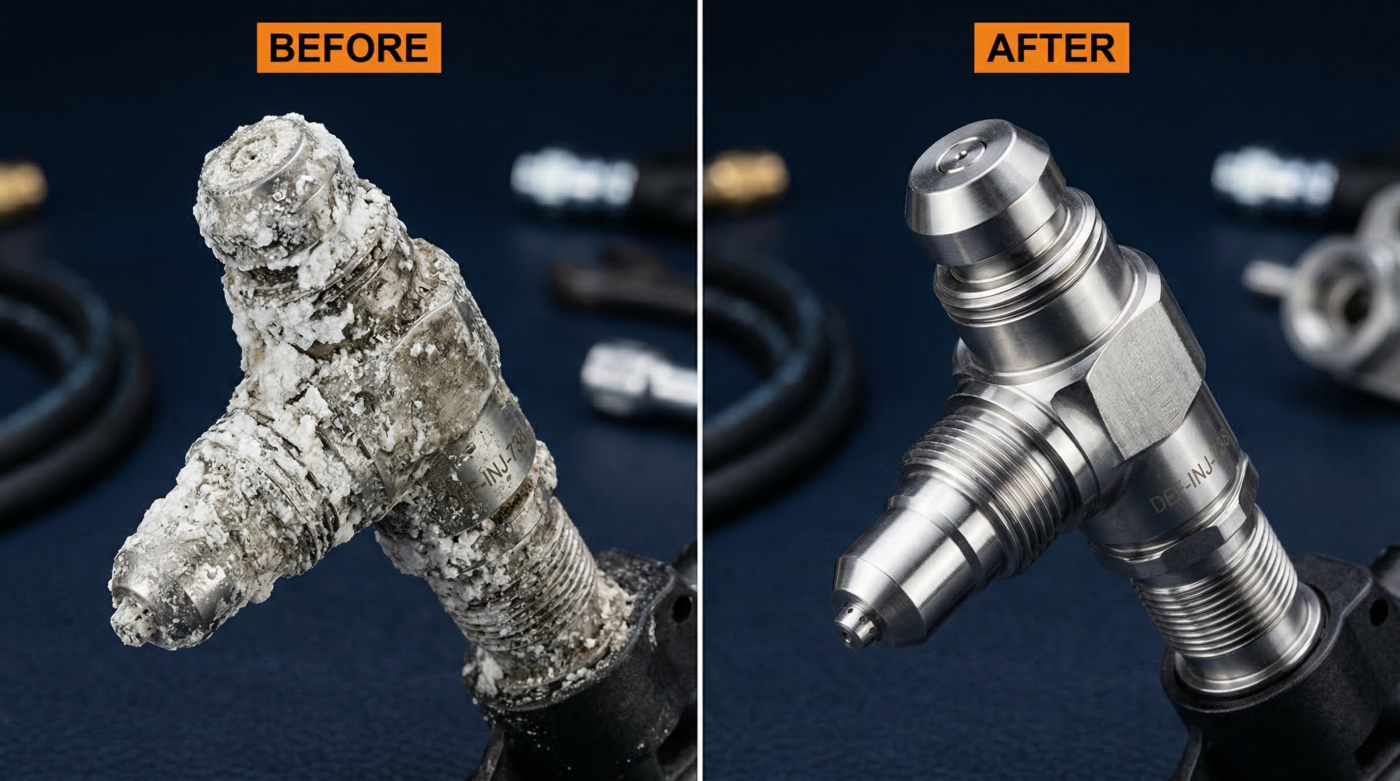
Condition matters too. DEF can crystallize over time in the tank, the jug and the lines, and heat speeds that up, so a jug that has ridden in a hot truck bed all summer is a poor candidate for your tank. Our DEF requirements guide covers what the certification marks mean and how to read a jug before you buy it.
Adding DEF From a Pump or a Jug
At a pump. Where the diesel island has a DEF nozzle, Ford’s manual says to use the DEF nozzle the same way as a fuel nozzle, and that it shuts off automatically when the tank is full. Do not squeeze in more after the click. That is the “topping off” Ram’s manual tells owners to avoid.
From a jug. Ford’s manual lays out the method for a DEF container with a spout:
- Take the cap off the container, fit the spout and tighten it until you feel strong resistance.
- Remove the DEF tank filler cap.
- Insert the spout until its seal seats on the filler neck, then tip the container to pour. When the tank is full, the fluid stops flowing on its own.
- Return the container upright before you pull the spout out.
- Replace the DEF tank cap. Leftover fluid can be kept, and the spout can be rinsed with clean water and reused.
An open funnel and a jug with the spout lost work in a pinch, but they are the usual way dirt and overfills happen. If you buy DEF often, compare the two channels in our pump vs jugs guide.
| Step | What to do | Why | Source |
|---|---|---|---|
| Before you pour | Find the DEF cap; Ram puts it on the driver’s side or in the fuel door | DEF in the fuel tank can damage the fuel pump and injectors | Ram 2500 owner’s manual |
| Fluid | Use API-certified DEF only | Ford does not cover repairs caused by uncertified fluid | Ford owner’s manual |
| Tools | Container, funnel or nozzle new or used only for DEF | Small amounts of fuel or additives contaminate the system | Ram 2500 owner’s manual |
| Pump fill | Let the nozzle click off and stop | Topping off can set a fault and skew the level reading | Ford and Ram owner’s manuals |
| Jug fill | Seat the spout seal; stop when flow stops | The sealed spout stops when the tank is full | Ford owner’s manual |
| Spills | Wipe up with water and a damp cloth | Both manuals say to clean spills right away | Ford and Ram owner’s manuals |
| Treatment | One 8 oz bottle treats 25 gallons, added at every refill | Helps prevent crystallization in treated DEF | NüDef label |
How Much DEF to Add
Add as much as the tank will take without forcing it. Tank sizes vary a lot by truck, so check your own number on the DEF tank capacity chart before you buy jugs for a long trip. The tank is almost never bone dry when the low warning comes on, so expect to add less than the full capacity.
Ram’s manual notes that the DEF gauge can take up to five seconds to update after you add a gallon or more. Give it that time with the key on before deciding the fill did not register. If the truck has already started limiting power because the tank ran empty, add a real quantity of DEF; a splash from the bottom of an old jug may not be enough for the level sensor. Our guide to what happens if you run out of DEF fluid covers the restart steps after an empty tank.
A habit that keeps you out of trouble: add DEF at a regular point, such as every other fuel stop when towing, instead of waiting for the warning. A tank that is topped up on a schedule never reaches the derate stages, and you can buy fresh fluid on your terms.
Do Not Overfill the DEF Tank
The fill stops for a reason. Ram’s manual says it plainly: do not overfill, because an overfilled tank that freezes could be damaged. The same manual says not to top off the tank, because overfilling can turn on the malfunction indicator lamp, set a fault code and cause inaccurate level readings.
That means three practical rules. Stop when the pump nozzle clicks off. Stop when a sealed spout stops flowing. Do not shake, tilt or reseat the jug to squeeze in more. If DEF splashes out of the neck, you are already past full: stop, wipe it up with water and put the cap back on.
DEF in the Fuel Tank and Other Fill Mistakes
The expensive mistake is pouring DEF into the diesel tank. Ram’s manual says not to start the engine if DEF has been added to the fuel tank, because it can severely damage the engine, including the fuel pump and injectors. Ford’s manual says DEF in the fuel tank can cause engine damage. If it has happened, leave the key off and have the fuel tank drained before the engine runs. Our DEF in the diesel tank guide walks through what to do next, and it also covers the reverse mistake of diesel in the DEF tank.
The other common fill mistakes are quieter but add up:
- A dirty funnel or nozzle. Anything that has touched fuel, oil or additives brings hydrocarbons into the tank.
- Old or open jugs. DEF that sat open or baked in the heat may be off spec before it reaches your tank. Our contaminated DEF guide covers the symptoms.
- Water or anything else as a stand-in. Ram’s manual says to add only DEF to the DEF tank.
- Leaving spills. Ford says to wipe spills on painted surfaces with water and a damp cloth, and Ram says to clean spills right away with water and soak up the residue.
Adding DEF in Cold Weather
DEF begins to freeze at 12°F (-11°C), per both Ram’s and Ford’s manuals, and trucks built for cold climates have an automatic DEF heating system so the SCR system keeps working below that temperature. You can add DEF in winter the normal way. Two things change.
First, the gauge may lag. Ram’s manual says that below 12°F the DEF gauge may not update right away after a fill, because the line heater may need some run time, and in very cold weather it can take several drives. Do not add more because the gauge has not moved yet; that is how winter overfills happen. Second, leave room in the tank. A tank filled to the neck in January is the overfilled tank the manual warns can be damaged when it freezes. Our guide to when DEF freezes covers storage and thawing.
After You Add DEF: Gauge, Warnings and Derates
On a healthy truck the low-DEF warning clears once the gauge reads the new level. If the truck had already started derating, follow the restart steps in the run-out guide linked above. If the tank is full and the warnings stay, the problem is not the fluid level, and adding more will not help. That is a sensor, heater or pump question, and our DEF warning light guide explains which lamp means what.
How hard the truck pushes you to add DEF has also changed. EPA’s DEF page says these derates could limit a vehicle to as low as five miles per hour. EPA’s August 11, 2025 guidance gave manufacturers a gentler schedule they may adopt for in-use heavy-duty trucks: a 15 percent torque derate 650 miles or 10 hours after the fault is confirmed, 30 percent at 4,200 miles or 80 hours, and a 25 mph limit at 8,400 miles or 160 hours. The guidance is voluntary, so your truck may still run its original schedule until its software is updated. The easy answer is the same either way: add DEF when the first warning shows.
Treat the DEF as You Add It
The fill is the one moment you have every tank of DEF open in front of you, so it is the moment to treat it. NüDef DEF Treatment, Additive & Stabilizer is a DEF stabilizer and anti-scaling agent. Per its label it helps prevent crystallization. The dose is simple: one 8 oz bottle treats 25 gallons. Add one 8 oz dose per 25 gallon fill to the DEF container before you pour it, or straight into the DEF tank, at every refill, and do not exceed the recommended dose. A full 25-gallon semi tank takes the whole bottle.
It is used with API or ISO 22241 certified DEF and never replaces it. It cannot rescue fluid that is already off spec or fix a failed sensor or pump. Running several trucks or a yard tank? Fleets and contractors can ask about our wholesale program. For one truck, order direct from nudef.com and keep a bottle in the door pocket with the spout. The dosing guide has the full chart.