
Updated November 2026. The specifications and storage figures below come from the American Petroleum Institute, the ISO 22241 storage table as API and fluid suppliers publish it, and a Chrysler service bulletin for Ram diesels, each linked where it is used.
Best DEF Fluid: The Short Answer
The best DEF fluid is certified DEF that is still fresh when it reaches your tank. Every jug, pump and tote sold as diesel exhaust fluid is supposed to be the same thing: a 32.5% solution of technically pure urea in purified water, made to the ISO 22241 purity standard. The American Petroleum Institute runs a voluntary program that licenses marketers whose fluid meets the latest edition of that standard to print the API Diesel Exhaust Fluid Certification Mark, and it tests licensed fluids it buys in the marketplace. That mark is the first thing to look for.
After that, the differences between two bottles of certified DEF come down to what happened to the fluid after it left the plant: how long it sat, how hot it got, whether the container was sealed, and what it was poured through. A certified jug that spent a summer on a sunny loading dock can be worse fluid than a fresh one from the pump island. So the useful question is “which DEF is in the best condition”, and the rest of this guide is how to tell.
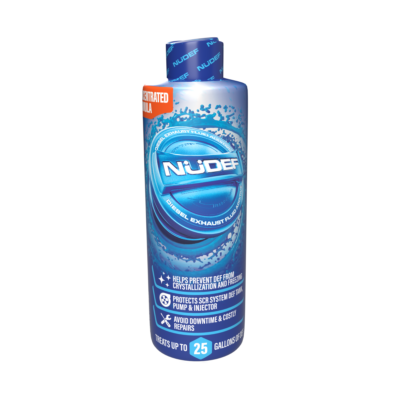
Once you have good fluid, keep it good. NüDef DEF Treatment, Additive & Stabilizer is added to certified DEF and helps prevent crystallization in the tank, the jug and the lines. One 8 oz bottle treats 25 gallons.
Step One: Buy Certified DEF
ISO 22241 sets tight limits. A typical certified supplier data sheet, such as this API-certified fluid data sheet, shows the ISO 22241-1 range for urea content as 31.8% to 33.2%, with the target at 32.5%. The same sheet lists ceilings for insoluble matter, aldehydes, phosphates and metals such as calcium, iron, copper, zinc, chromium, nickel, aluminum, magnesium, sodium and potassium, most of them under one part per million. Those limits exist because the SCR catalyst and the dosing parts upstream of it are sensitive to minerals and dirt that ordinary water or low-grade urea would carry.
Look for the API certification mark on the jug, the box or the pump, and if it is missing, ask the seller for proof. API keeps a licensee directory you can search by brand. For bulk deliveries, API’s storage and handling fact sheet tells buyers to ask for a Certificate of Analysis with every shipment that covers all the quality characteristics ISO 22241 requires. Our DEF requirements guide goes deeper on the standard and the marks.
Once a fluid carries the mark, the name on the label matters far less than most buyers think. If you want to see how the big names stack up against each other, the DEF brand comparison walks through them one by one, and can you mix DEF brands answers the follow-up question.
Step Two: Buy Fresh DEF
DEF does not last forever, and heat is what shortens its life. API’s storage and handling fact sheet reproduces the shelf-life table from ISO 22241-3: at a constant storage temperature of 50°F (10°C) or below, DEF keeps for 36 months. At 77°F (25°C) the figure drops to 18 months, at 86°F (30°C) to 12 months, and at 95°F (35°C) to six. Above 95°F the guidance is to test the fluid before use. The note under the same table in the certified supplier data sheet linked above adds that prolonged storage above 86°F should be avoided.
| Constant storage temperature | Shelf life | What it means for buying |
|---|---|---|
| 50°F (10°C) or below | 36 months | Cool warehouse stock is the safest buy |
| 77°F (25°C) or below | 18 months | Typical indoor store shelf |
| 86°F (30°C) or below | 12 months | Warm stockroom or southern summer |
| 95°F (35°C) or below | 6 months | Hot storage: buy only recent stock |
| Above 95°F (35°C) | Test before use | Sun-baked jugs or a hot truck bed |
Those are constant temperatures, and real storage swings. A jug that sat outside through July spent part of every day well above 95°F, so treat it as the bottom row. Chrysler’s service bulletin on DEF fills for Ram diesels warns that DEF exposed to high temperatures for long periods can have its urea concentration degrade to the point that it becomes less effective at reducing NOx, which can light the check engine lamp and set codes.
In practice: buy from a seller who moves a lot of DEF, check the jug for a fill or batch date, and pass on jugs stacked in direct sun. Store what you buy out of sunlight and use the oldest stock first, which is exactly what API’s fact sheet tells bulk users to do. The DEF shelf-life guide covers storage in more detail.
Step Three: Pick the Right Package for How You Use It
The same certified fluid comes three ways, and each has a different freshness and contamination risk. Jugs (usually 2.5 gallons) are sealed until you open them, which keeps dirt out, but you rarely know how long they sat or how hot the stockroom got. Pump DEF at a fuel island comes out of a bulk tank that turns over quickly where diesel traffic is heavy, so it is often the freshest fluid you can buy, provided the nozzle is clean and capped. Bulk totes and drums suit shops and farms that burn a lot of DEF, and they put storage in your hands, good or bad.
A pickup owner who fills a 5-gallon tank a few times a year is usually best served by a couple of recent jugs or the pump. A truck that fills every few days does fine at the pump. A yard that fuels its own equipment does best with a dedicated tote, sized so it empties well inside the shelf-life window for the temperatures it sees. Our pump vs jugs guide compares the first two in detail, where to buy DEF lists the channels, and the bulk DEF guide covers totes, drums and pumps for fleets.
Fleets that keep DEF in a tote should treat the bulk supply when it is filled, since every vehicle tank is drawn from it. NüDef sells the case of 30 bottles for that job, and the wholesale program covers larger volumes.
Step Four: Check It Before It Goes In
You can verify that DEF is in spec in a minute. A DEF refractometer reads urea concentration, and the certified data sheet cited above gives the ISO 22241-1 range for refractive index at 20°C as 1.3814 to 1.3843, which corresponds to the 31.8% to 33.2% urea window. Chrysler’s bulletin says the same thing in plain terms: DEF urea concentration should be at 32.5%, and a refractometer is the tool to check it. A reading low in the range points to dilution or degraded fluid; a high reading points to evaporation, the kind that happens in a vented container left in the heat.
Also look before you pour. Floating debris, a cracked or unsealed cap, or white crust around the spout of a jug you have not opened yet are reasons to set it aside. The DEF testing guide explains refractometers, test strips and lab analysis, and the contaminated DEF guide covers what to do when a tank has already taken bad fluid.
Handling: How Good DEF Turns Bad
Most bad DEF started out fine and was ruined between the jug and the tank. API’s fact sheet lists the habits that do it: dispensing through dirty equipment, reusing containers from other products without thorough cleaning, sharing funnels, pitchers and hoses with other fluids, and rinsing tanks or equipment with tap water, which can carry contaminants that harm SCR systems. Its advice is dedicated dispensing equipment cleaned with distilled or de-ionized water and rinsed with DEF.
Material matters too. Chrysler’s bulletin warns that containers, pumps or plumbing with iron, non-stainless steel, aluminum or brass will corrode quickly when used to store or transfer DEF, and that the corrosion can plug the onboard DEF filter. Use the original jug or a container made for DEF. The same bulletin says never to top off the tank after a normal fill, because the tank has an air space designed for the fluid to expand into, and filling it can damage the tank.
Cold Weather and the Best DEF
DEF freezes. Chrysler’s bulletin gives the point as 12°F (-11°C) and notes that the vehicle system is designed to operate in that environment. API’s fact sheet adds that DEF can expand by up to 7% when frozen, so a container filled to the brim and left outside can split. Leave headroom in any container you store outside, and keep jugs in a heated space through a cold snap when you can. Sitting fluid that freezes and thaws in the lines is also where crystals and deposits start. The DEF freezing guide covers what happens in your state.
Keep Good DEF Good: Treat It
Buying certified, fresh fluid gets the best DEF into the tank. What happens next is heat, cold and sitting time. Urea comes out of solution, crystals form on the filler neck, the header unit, the pump and the injector, and the deposits block flow. That is the job NüDef DEF Treatment, Additive & Stabilizer is made for. It is a DEF stabilizer and anti-scaling agent that helps prevent crystallization and freezing in treated fluid and helps protect the SCR system, DEF tank, pump and injector.
Use it with API or ISO 22241 certified DEF, never instead of it: it works with every certified DEF brand and cannot rescue fluid that is already off spec. Dosing follows the label. One dose treats 2.5 gallons of DEF, and one 8 oz bottle holds ten doses and treats 25 gallons. Add it at every refill, add it only to the DEF tank or a DEF container, and do not exceed the dose. A 2.5-gallon jug takes one dose, a 5-gallon pickup fill takes two, and a 25-gallon semi tank takes the bottle. The dosing guide breaks it down by vehicle, and you can order NüDef direct.
Best DEF Fluid Checklist
- Look for the API Diesel Exhaust Fluid Certification Mark, or confirm the brand in API’s licensee directory.
- Buy from a seller with steady turnover and check for a fill or batch date.
- Skip jugs that have been sitting in sun or heat; above 95°F the guidance is to test before use.
- Choose the package that matches how fast you use it: jugs, pump or a tote sized to empty well within its shelf life.
- Check suspect fluid with a refractometer: the target is 32.5% urea.
- Pour through clean, dedicated equipment, never through funnels used for other fluids.
- Do not top off past a normal fill, and leave room in containers for expansion in the cold.
- Treat every fill with NüDef, one dose per 2.5 gallons, to help prevent crystallization.