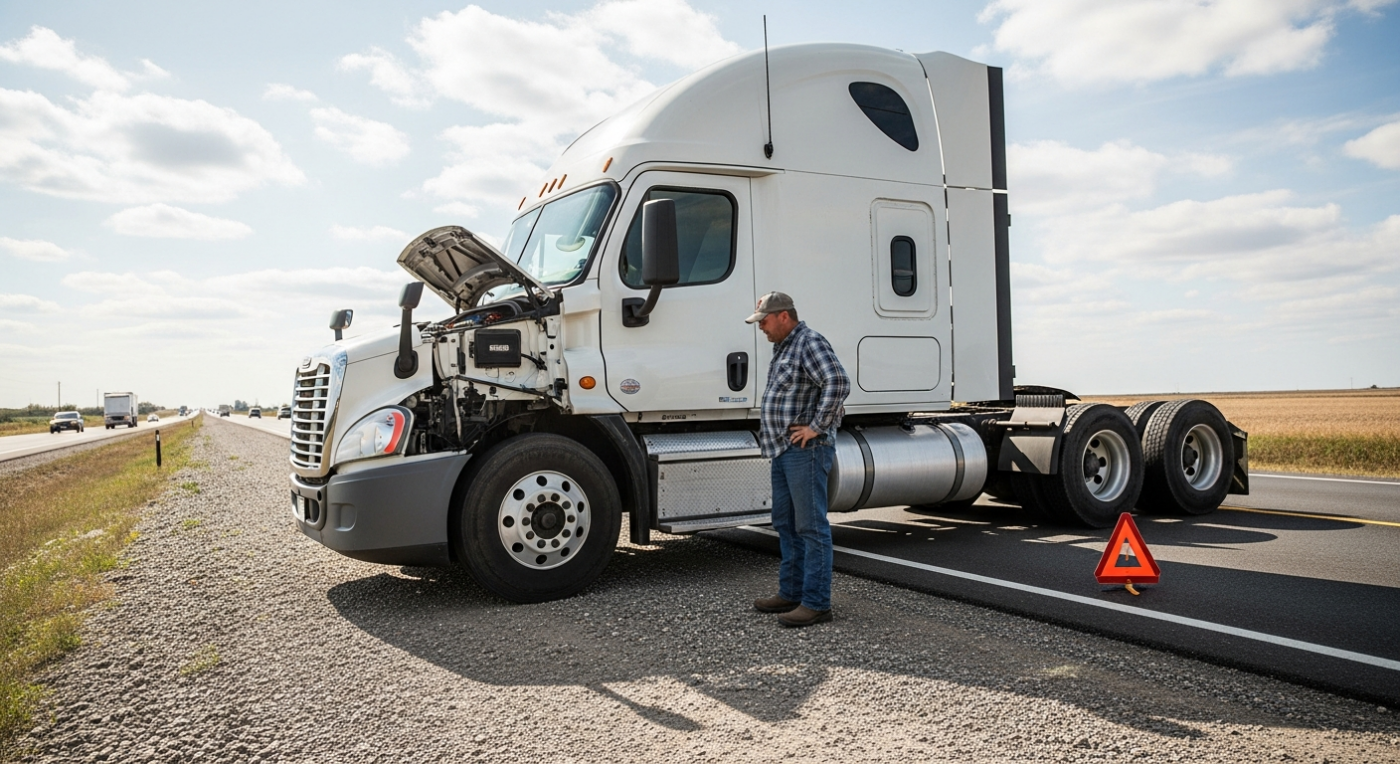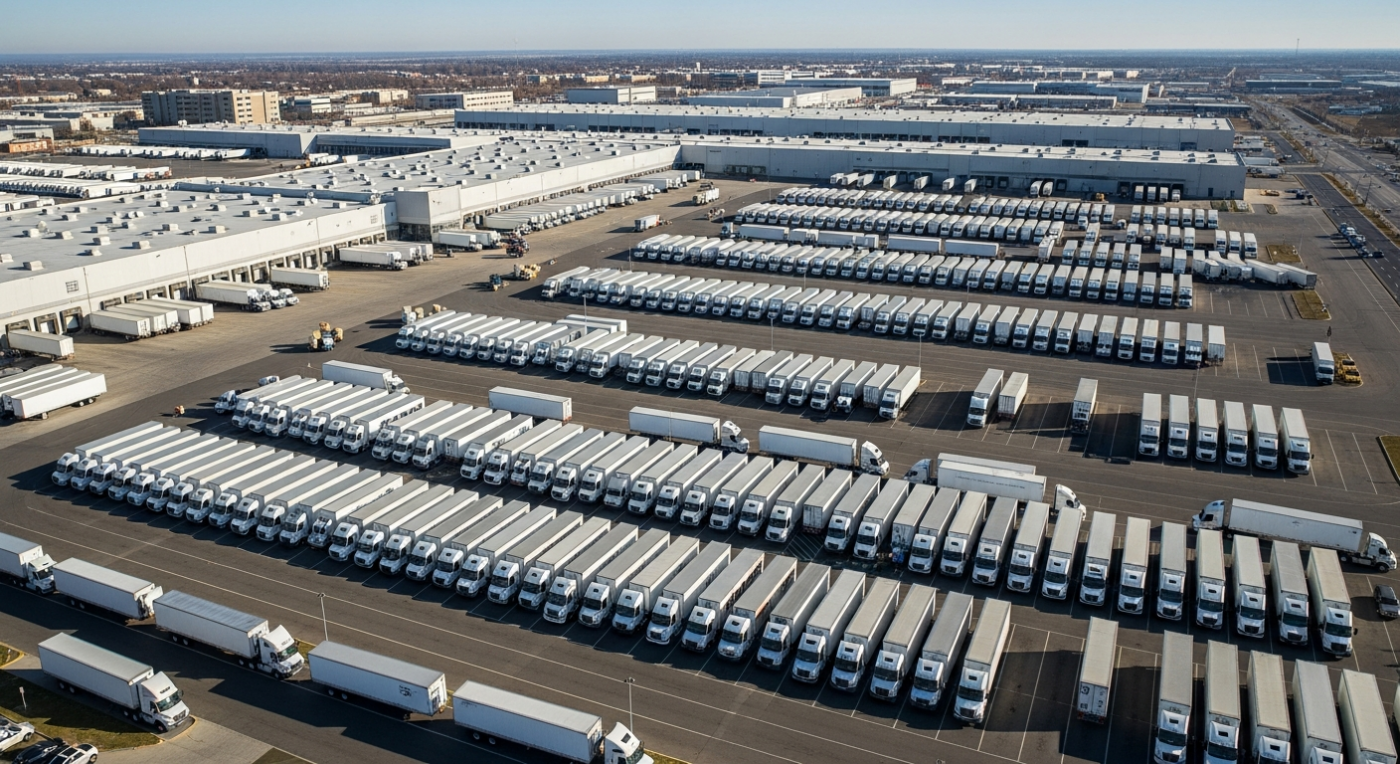
An 18-wheeler sitting in a DEF-related breakdown costs $800 to $1,500 per day in lost revenue before the repair bill. The repair itself, whether SCR injector replacement, catalyst cleaning, or worse, runs $3,000 to $8,000. For owner-operators running their own loads and for fleet managers operating 25 or 250 trucks, DEF system failures are one of the most financially damaging maintenance events in Class 8 operation.
The frustrating part is that most DEF failures are preventable. Here is why they happen in 18-wheelers specifically, what the fault code progression looks like, and how a DEF additive program eliminates most of that exposure.
Why Class 8 Trucks Are Most Vulnerable to DEF Failures
Class 8 trucks run DEF through their SCR systems at consumption rates of 6 to 12 gallons per fill, two to three times what a pickup truck requires. More DEF consumption means more injection events, and more injection events means faster crystallization accumulation at the dosing injector nozzle where DEF evaporates after each dose.
Temperature cycling compounds the problem. Interstate trucks move through climate zones, transition between loaded highway runs and overnight parking, and idle for extended periods in conditions that create temperature swings the DEF system was not designed to handle continuously. Each temperature transition accelerates the evaporation-crystallization cycle at the injector.
Duty cycle intensity is the third factor. A Class 8 truck climbing grades at gross vehicle weight puts the SCR system under peak demand just when DEF quality matters most. Any variation in DEF concentration or dosing precision at high load produces measurable catalyst efficiency loss, which triggers P20EE and P204F fault codes.
Most Common DEF Problems in Semi Trucks
DEF problems in 18-wheelers fall into three categories based on where in the system the failure occurs:
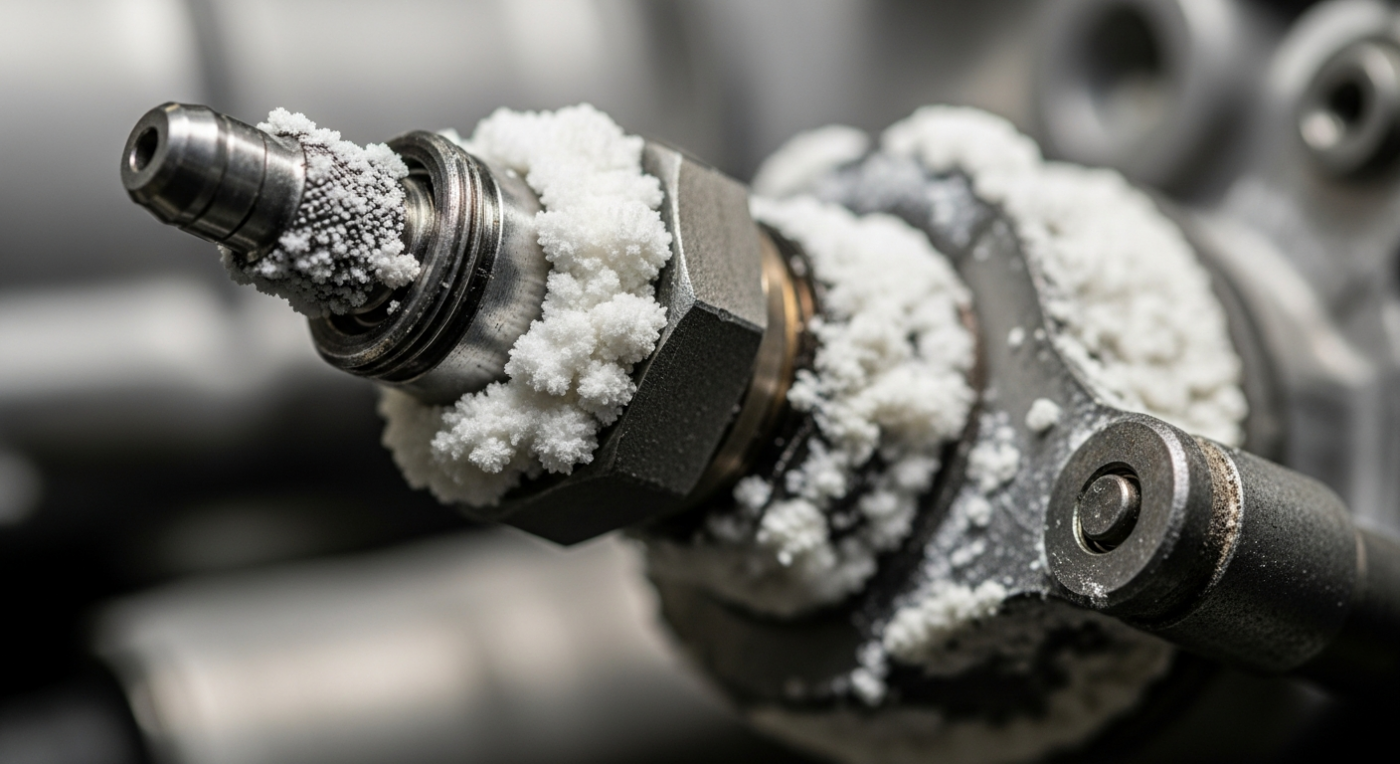
Dosing injector crystallization is the most common and accounts for the majority of P20EF and P207F fault codes. Urea crystals build up at the injector nozzle, restricting fluid flow and causing inconsistent dosing. Early-stage crystallization responds to aggressive treatment: drain the DEF tank, refill with fresh DEF, add a double dose of NüDef, and run the system through several injection cycles. Late-stage crystallization requires physical injector cleaning or replacement.
SCR catalyst fouling causes P20EE codes and typically follows untreated dosing problems. When the injector is delivering inconsistent doses, the catalyst receives DEF at non-optimal concentrations over time. Catalyst fouling repair is significantly more expensive than injector work and in some cases requires catalyst replacement at $2,000 to $4,500.
Quality sensor contamination triggers P207F codes and can result from either genuine DEF quality issues or from crystallization particles that reach the sensor. This fault code often appears before the more serious injector or catalyst codes and is your earliest warning of a developing DEF system problem.
What a DEF Failure Costs Per Event
The total cost of a DEF failure in a Class 8 truck has three components that most fleet managers undercount:
Direct repair cost: $800 to $8,000 depending on what failed and how long the fault code was ignored. Injector replacement alone is $1,100 to $2,300. Catalyst involvement pushes the total to $3,000 to $8,000.
Downtime cost: A DEF fault that forces a truck off the road costs the average OTR owner-operator $800 to $1,500 per day in lost revenue. For a 1.5-day average repair, that is $1,200 to $2,250 in lost income on top of the repair bill.
Cascade cost: A truck that derate-limps to a repair facility in Stage 2 derate typically arrives with more catalyst damage than one towed in at first fault. The decision to continue operating through early derates often converts a $1,500 repair into a $5,000 repair.
The Engine Derate and Shutdown Sequence
Every modern Class 8 diesel truck engine control module enforces a fault code response sequence that escalates from warning to derate to shutdown over multiple drive cycles. Understanding the sequence changes how drivers respond to early warnings:
Stage 1 (Warning): First fault code occurrence, no power derate. Amber warning light. This is the window to address the issue at minimal cost. Most drivers continue driving through Stage 1 without stopping.
Stage 2 (Derate): Second or third consecutive fault cycle. Engine power reduced 25 to 40%. Road speed derate to 55 mph. This is when catalyst damage typically begins. Repair costs at this stage are 2 to 4 times higher than Stage 1.
Stage 3 (Severe Derate): Persistent fault cycles. Road speed limited to 5 mph. At this point the truck is functionally inoperable on the highway and requires tow-in.
Stage 4 (No Restart): Engine will not restart after shutdown. This stage is reached on some platforms after extended Stage 3 operation. Recovery typically requires ECM reset at a dealer.
How to Prevent DEF System Failures in Your Fleet
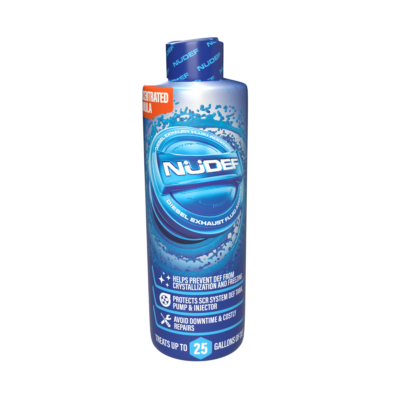
DEF crystallization is chemistry. It can be interrupted at the molecular level before it becomes a mechanical problem. NüDef stabilizes the urea in DEF solution and inhibits crystal nucleation on dosing system surfaces, preventing the accumulation that leads to injector restriction and sensor contamination.
The prevention protocol is simple: one bottle of NüDef per DEF fill, added to the DEF tank before adding fresh DEF. Each bottle treats 25 gallons. The additive mixes throughout the tank and is present in the DEF throughout every injection event, providing continuous protection at the injector nozzle where crystallization initiates.
For trucks with existing fault code history, use a recovery protocol: drain the DEF tank completely, refill with fresh ISO 22241 DEF, add two bottles of NüDef, and run the vehicle through at least three full injection cycles before checking for fault code resolution.
Dosing Protocol and Fleet Implementation
Standard dosing for 18-wheelers: one bottle of NüDef per DEF fill regardless of fill quantity. A typical Class 8 truck adds DEF every 3,000 to 5,000 miles, approximately every 1 to 2 weeks under normal interstate operation.
Fleet implementation options:
- Per-vehicle treatment: Store NüDef at the fuel island or DEF pump. Train drivers to add one bottle every DEF fill. This works well for owner-operator fleets and smaller operations where driver compliance is high.
- Bulk tank treatment: For depots with centralized bulk DEF storage, add NüDef at the rate of one case (30 bottles) per 750 gallons. Every truck that fills from the tank is automatically treated without per-vehicle action.
- Mobile DEF delivery: If you use a mobile DEF service for fleet fills, coordinate with the service to add NüDef at each delivery.
Fleet wholesale accounts are available for Class 8 operations. Contact NüDef for fleet pricing and account setup.