
Updated November 2026. Every condition, threshold and repair step on this page comes from General Motors service bulletins published through NHTSA, and each one is linked where it is used.
P20EE on a Duramax means the engine computer measured the SCR catalyst removing less NOx than it should. GM’s bulletins name it “Nitrogen Oxides Catalytic Converter Efficiency Below Threshold.” On the 6.6L LML, LGH and L5P and on the 3.0L LM2, GM points technicians first at NOx sensor readings, exhaust leaks, DEF injector flow and the DEF itself. Replacing the catalyst comes last, and GM calls it a very rare repair. This guide walks through each cause in the order a good shop checks them, and covers what bad or crystallized DEF has to do with the code. For the other emissions codes, see our DEF trouble codes guide, and for the code on other engines, our general P20EE page.
What P20EE Means on a Duramax
The Duramax SCR system sprays diesel exhaust fluid into the exhaust ahead of the SCR catalyst. Exhaust heat turns the urea into ammonia, and the catalyst uses it to break NOx down. A NOx sensor ahead of the catalyst (NOx 1) and one after it (NOx 2) tell the engine control module how much NOx goes in and how much comes out. When the difference is too small for too long, the ECM sets P20EE and turns on the check engine light.
GM gives technicians a simple yardstick. In its diagnostic tip PIP5007F for LML and LGH trucks, a healthy system reads roughly 70 percent less NOx downstream than upstream. GM’s example: upstream near 100 ppm while NOx sensor 2 reads around 30 ppm or less. During a DPF regeneration the catalyst is too hot to work well, so the two readings sit close together, and NOx 2 can read up to 30% higher than NOx 1 in some cases.
One detail in that bulletin explains a lot of confusing P20EE cases: the NOx sensor cannot tell NOx from ammonia. If DEF slips past the catalyst, NOx 2 reads high and the system looks like it is failing to clean the exhaust, even when the real issue is too much reductant on the catalyst or a sensor that has gone bad.
Which Duramax Engines Set P20EE
GM has written P20EE bulletins for every Duramax with SCR. The chart lists each engine, the trucks the bulletins cover, and the cause each bulletin addresses.
| Engine (RPO) | Trucks in the bulletin | What the bulletin addresses | Bulletin |
|---|---|---|---|
| 6.6L Duramax (LML, LGH) | 2011 to 2016 Silverado and Sierra HD; 2010 to 2016 Express and Savana | “Exhaust Fluid Quality Poor” message, DEF testing, NOx sensor comparison | PIP5007F |
| 6.6L Duramax (L5P) | 2017 Silverado and Sierra HD | When P20EE runs, ammonia overload, injector flow and DEF testing | PIP5452 |
| 6.6L Duramax (L5P) | 2022 Silverado and Sierra 2500HD and 3500HD | NOx sensor learns on new trucks under 10,000 miles | 22-NA-069 |
| 6.6L Duramax (L5P) | 2017 to 2024 Silverado and Sierra HD | Exhaust leaks | 23-NA-061 |
| 3.0L Duramax (LM2) | 2020 to 2022 Silverado and Sierra 1500; 2021 to 2023 Tahoe, Suburban, Yukon and Escalade | Exhaust leaks that let oxygen in and throw off the NOx sensors | 22-NA-168 |
| 5.2L (4HK1, RPO L1B) | 2022 to 2024 Chevrolet 4500HD to 5500XD low cab forward | DEF control unit software recalibration | 24-NA-097 |
The last row is a Chevrolet medium-duty truck with a 5.2L engine, listed because owners search for it under the same code. Its bulletin words the code as “Diesel Exhaust Fluid (DEF) System NOx Trap Low Efficiency.”
When the P20EE Test Runs (and When It Will Not)
P20EE is a self-test, and the ECM only runs it under set conditions. GM spelled them out for the L5P in PIP5452:
- Engine coolant above 70°C (158°F).
- Both NOx sensors warmed up.
- Exhaust temperature above 225°C (437°F).
- No DPF regeneration in progress, stationary or driving.
- Outside temperature above -7°C (20°F).
This matters twice. A truck that idles a lot or makes short winter trips may not run the test for days, so the light can come on long after the cause started. And after a repair, clearing the code proves nothing until the test has run again. GM’s companion bulletin PIP5453 asks technicians to drive at least 20 miles in those conditions before judging a fix. GM also says a passing P20EE result is significant evidence that the aftertreatment hardware works, and that an intermittent failure of the injector or catalyst is highly unlikely after a pass.
How DEF Problems Set P20EE on a Duramax
The catalyst can only convert NOx with the right amount of good reductant. DEF trouble shows up three ways in GM’s bulletins.
Poor or contaminated fluid. On LML and LGH trucks the dash can show “Exhaust Fluid Quality Poor.” Per PIP5007F, that message means the ECM detected a drop in SCR NOx reduction efficiency, and with no other code stored, GM sends the technician to the P20EE and P207F diagnostic. GM also warns that the message does not always mean the fluid is bad, and tells dealers to test the DEF with a fluid tester before draining it. Watered-down, old or dirty DEF gives the catalyst less to work with, which is exactly what P20EE measures. Our guide on how to test DEF fluid covers the tester GM’s procedure calls for.
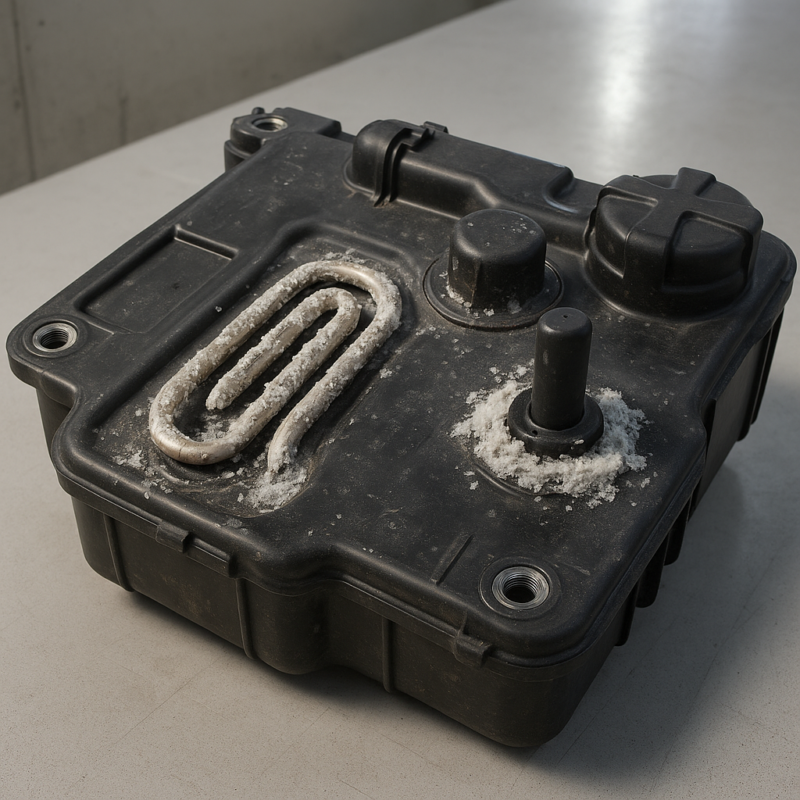
Crystallized DEF at the injector. GM’s procedures assume the DEF injector has been flow tested and sprays three distinct plumes. When DEF dries, it leaves urea crystals, and crystals on the injector tip or in the lines change that spray. A weak or lopsided spray under-doses the catalyst. The flow-related codes that often travel with P20EE, P249D and P249E (reductant flow too low and too high), are covered in our P249D guide.
Too much reductant. GM’s L5P bulletin says a temporary ammonia overload from certain drive cycles can set P20EE falsely, and that no hardware should be replaced in that case. The fix GM gives is a two-step DPF regeneration followed by the P20EE drive cycle.
Other Causes GM Lists for P20EE
Several of GM’s P20EE bulletins have nothing to do with the fluid. Rule these out before blaming the DEF or the catalyst.
NOx sensor learns on a new truck. Bulletin 22-NA-069 covers 2022 Silverado and Sierra HD trucks with the L5P that set P11D5 or P20EE under 10,000 miles. GM traced it to unusual NOx sensor learn values, possibly from a new truck driven through changing altitude and humidity. If it is the first time and those are the only codes, the dealer resets both NOx sensor learns with GM’s scan tool and runs the Reductant System Malfunction Warning service bay test. No parts are needed when the test passes.
Exhaust leaks. For the L5P from 2017 to 2024, bulletin 23-NA-061 lists P20EE among codes an exhaust leak can cause, along with exhaust odor and whistling or ticking noises under exhaust brake. For the 3.0L LM2, 22-NA-168 explains why: a leak lets oxygen into the exhaust and makes the NOx sensors read wrong. GM describes both a smoke test and a soapy-water pressure test for finding the leak.
A failing or poisoned NOx sensor. PIP5007F notes that a faulty NOx 2 sensor can read stuck higher than NOx 1. On a road test, both sensors should drop to zero while coasting after a hard acceleration. If NOx 2 does not follow NOx 1 down, either that sensor is faulty or the system is saturated with DEF, which is why GM runs the check during or right after a regeneration.
Aftermarket parts and fuel. GM lists air intake parts, performance tuners, grille covers and exhaust changes as things that can hurt DEF system performance. The LML bulletin PIP5007C adds fuel with sulfur above 15 ppm, which a service regeneration purges.
Software. On the 2022 to 2024 medium-duty 4500HD to 5500XD with the 5.2L engine, bulletin 24-NA-097 says the cause may be software, and the fix is reprogramming the DEF control unit with the latest calibration.
How to Diagnose P20EE on a Duramax, Step by Step
This is the order GM’s bulletins lay out. A shop with a GM-capable scan tool handles most of it, but knowing the sequence keeps you from paying for parts you do not need.
- Read every code. Fix circuit codes, NOx sensor codes and exhaust leak codes first. P20EE is often the result of another fault.
- Check the exhaust for leaks with a smoke test or a soapy-water pressure test.
- Compare NOx 1 and NOx 2 on a highway road test with the system hot. Downstream should read about 70 percent below upstream and move in the same direction.
- Run a service regeneration, then the P20EE drive cycle. On the L5P, GM says to cycle the ignition off for at least three minutes after opening and closing the driver’s door between the two steps.
- Flow test the DEF injector if P20EE fails again, checking for three clean spray plumes.
- Test the DEF itself if the injector flows to spec. Replace fluid only when it tests bad.
- Consider the catalyst last. If it is replaced, GM requires a service regeneration and the reductant quality test before the truck goes back to the owner.
What Not to Replace First
The SCR catalyst and the NOx sensors are the expensive parts, and they are the ones people reach for when the light comes on. GM’s own words argue for patience. In the LML bulletins, GM says that when everything else checks out, SCR replacement “may be required but is a very rare occurrence.” In the L5P bulletin, GM says hardware should not be replaced when an ammonia overload set the code. And on new 2022 trucks, a NOx sensor reset fixes it with no parts at all. If a shop quotes a catalyst before it has checked for leaks, flow tested the injector and tested the fluid, ask why. For the bigger picture on what kills the system, see SCR system failure, DEF crystals and prevention, and our Duramax DEF problems guide for the rest of the Duramax DEF system.
Keeping DEF From Becoming the Cause
You cannot prevent a sensor learn error or a cracked exhaust gasket with what you put in the tank. You can keep the DEF side of P20EE from starting. The habits are plain:
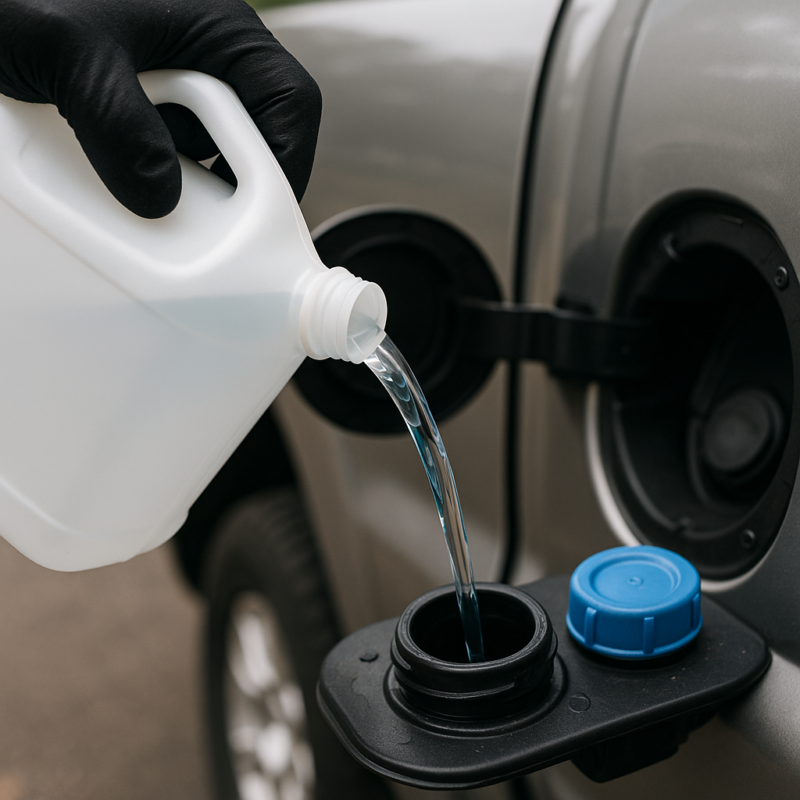
- Buy sealed, certified DEF and keep jugs capped, out of the sun and off a dirty floor.
- Use a clean funnel that never touches fuel, oil or coolant.
- Treat the DEF at every refill so it is less likely to crystallize in the tank, pump, lines and injector.
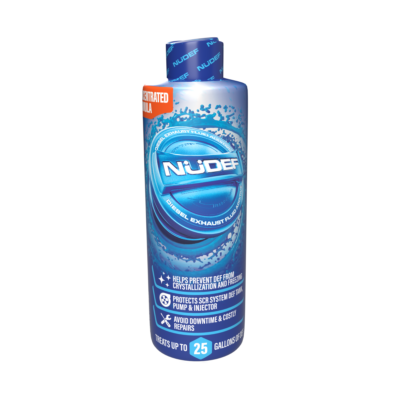
That last step is what NüDef DEF Treatment, Additive & Stabilizer is for. It is a DEF stabilizer that helps prevent crystallization and helps protect the SCR system, DEF tank, pump and injector. NüDef’s product page lists P20EE among the fault codes it helps prevent, and the way it does that is through the fluid: clean, uncrystallized DEF reaching an injector that sprays the way GM’s test expects. One 8 oz bottle treats 25 gallons of DEF. Add it at every refill, never exceed the dose on the label, and use it with certified DEF. It will not repair a NOx sensor, an exhaust leak or a calibration, so diagnose an active P20EE first, then treat the fresh fill to keep crystals from coming back.
Keep a bottle with the truck so the next fill gets treated. Order NüDef direct and treat every fill from here on.