
The Cascadia DEF System at a Glance
The Freightliner Cascadia runs either a Detroit engine (DD13, DD15 or DD16) or a Cummins X15. Both use selective catalytic reduction to cut NOx, and both depend on the same chain of DEF parts. On Detroit-powered trucks the DPF, the oxidation catalyst and the SCR catalyst share one aftertreatment housing. On X15 trucks the layout differs by spec, but the DEF side works the same way.
The chain runs like this. The DEF tank holds the fluid. A header unit on top of the tank carries the level sensor, the temperature sensor, the quality sensor and the tank heater. A supply module pulls fluid through a filter, pressurizes it and pushes it down heated lines to the dosing valve. The dosing valve sprays DEF into the exhaust ahead of the SCR catalyst, and NOx sensors before and after the catalyst tell the aftertreatment control module whether the reaction is working.
Almost every Cascadia DEF complaint traces back to one of three things: the filter, the sensors in the header, or the fluid itself. Our 18-wheeler DEF problems guide covers the Class 8 picture across brands. This page stays on the Cascadia.
DEF Filter: Location, Interval and Replacement
The Freightliner DEF filter lives in the supply module, in the suction path between the tank pickup and the pump. On most Cascadias you reach it by removing a cap on the supply module housing. Everything the dosing valve sprays has already passed through it. That is the point of the filter: the dosing valve has tiny spray orifices, and one grain of crystallized urea or tank debris is enough to disturb the spray pattern.
Replacement intervals come from the engine maintenance manual, not from a forum. Detroit and Cummins both publish a DEF filter interval, and many fleets simply change it at a scheduled PM so it never gets skipped. Change it sooner when the truck shows DEF pressure codes, dosing faults, or white crust around the supply module.
The job itself is simple. Park on level ground and let the system cool. Clean around the cap before you open it so road dirt does not fall in. Remove the old element, inspect the O-ring and the housing, install the new element dry and torque the cap to spec. Never reuse a filter, and never rinse one with tap water and put it back.
Look at the old filter before it goes in the trash. White crystals on the element mean urea came out of solution somewhere upstream: fluid that sat too long, got too hot, or was concentrated by evaporation. A new filter fixes the symptom. It does not fix the fluid. Our DEF filter service guide walks through the filter architectures in more detail.
Level and Quality Sensors
The header unit is a commonly replaced part of the Cascadia DEF system, and it is often replaced for the wrong reason. It reads three things: how much DEF is in the tank, how warm it is, and how close it is to the 32.5 percent urea concentration the system expects. The quality reading comes from a sensor that measures the fluid with sound or conductivity.
Those readings go wrong in predictable ways. Crystals coating the sensor face throw off the quality reading. Diluted fluid (water got in) or concentrated fluid (the tank cooked in summer heat) reads out of spec because it is out of spec. Air in the line, a damaged float, or a connector full of corrosion sends a level or temperature fault. Our DEF sensor guide covers each sensor type and what fails on it.
Test the fluid before you buy the sensor. A refractometer reading takes ten seconds and costs nothing once you own the tool. If the fluid reads in spec and the code persists, the sensor or wiring is the likely cause. If the fluid reads out of spec, drain it, refill with fresh DEF and see whether the code returns. Our DEF testing guide shows how to read the result.
There is also a regulatory change worth knowing. In March 2026 the EPA issued guidance allowing manufacturers to replace urea quality sensors with NOx sensor based monitoring, and to install approved software updates on existing engines without it counting as tampering. Ask your dealer whether an update exists for your engine before replacing a quality sensor for the third time.
When the DEF Light Blinks on a Cascadia
A solid DEF lamp is a heads-up. A blinking DEF lamp on a Freightliner usually means the truck has started its inducement schedule, the stepped power and speed limits the EPA requires when the DEF system is empty, contaminated or not working. Our DEF light flashing guide covers the lamp logic by brand.
The confusing case is a light on with a full tank. Level is not the problem then. The usual causes are a quality reading out of range (bad fluid or a coated sensor), a heater circuit fault in cold weather, a level sensor that is stuck, or a communication fault between the header and the module. Pull the codes before you add fluid you do not need.
The derate itself changed recently. After the EPA revised its DEF inducement guidance in August 2025, Daimler Truck North America began rolling out a software update in February 2026 to roughly 330,000 in-service trucks, covering DD15 engines from model years 2021 to 2025 and DD13 engines from 2022 to 2025. The update raises the final inducement speed limit and gives operators more time to fix component faults before the final stage. If your Cascadia has not been to a dealer since early 2026, ask whether the update has been applied.
Common DEF Codes on a Cascadia
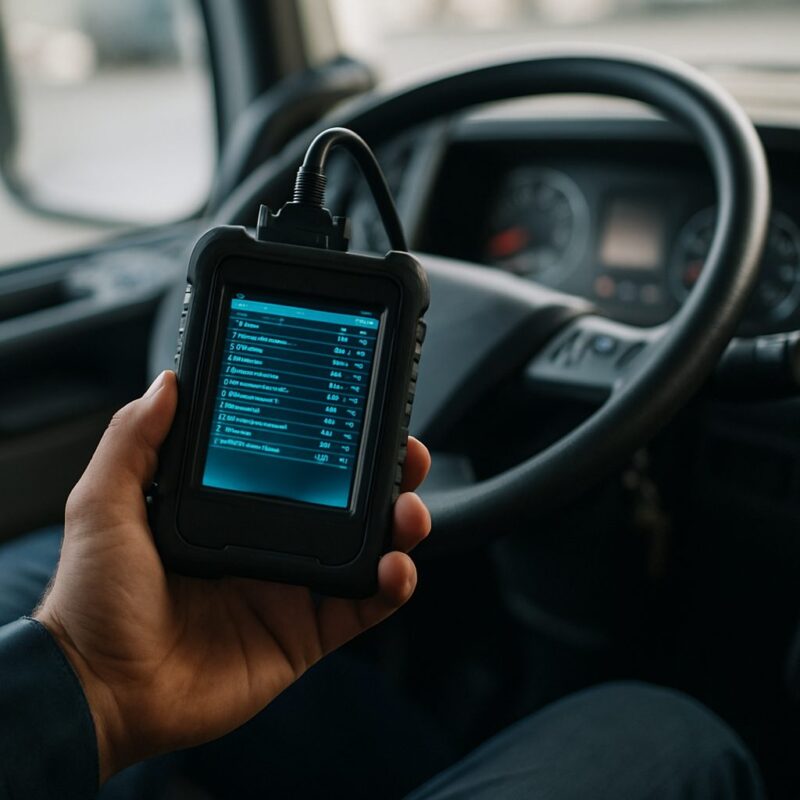
Heavy trucks report DEF faults as J1939 SPN and FMI pairs rather than the P-codes a pickup shows. The SPN says which component, and the FMI says what kind of fault. The families below cover most of what a Cascadia shop sees. Our DEF trouble codes hub explains how to read them.
- DEF level (SPN 1761): low fluid, or a level sensor that reads wrong.
- DEF quality (SPN 3364): fluid out of concentration, contaminated, or a sensor that cannot read it.
- DEF pressure (SPN 4334): a clogged filter, a weak supply module, a restricted line, or crystals at the dosing valve.
- Dosing valve circuit (SPN 3361): wiring, connector or valve faults.
- SCR efficiency (SPN 4364): the catalyst is not converting enough NOx, often because dosing is off or the fluid is poor.
Electrical faults need a meter and a wiring diagram. Fluid faults need fresh, in-spec DEF and a clean system. Do not let a shop replace parts until someone has tested the fluid.
Winter on a Cascadia
DEF freezes at 12°F. The Cascadia handles that with a heated tank and heated lines, and the system is designed to thaw enough fluid to dose shortly after startup. Frozen DEF does not damage the tank. What hurts in winter is a heater circuit that fails, slow thawing on short trips, and fluid that freezes and thaws repeatedly in a jug or tote and drifts out of spec.
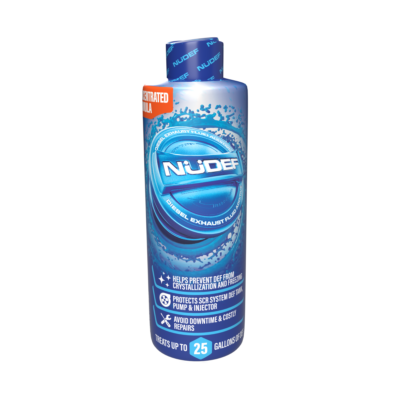
Keep jugs out of the cab heat and out of the open bed in a deep freeze. If the truck throws heater codes when the temperature drops, check the heater circuit first; our DEF heater failure guide covers the tests. NüDef DEF Treatment, Additive & Stabilizer helps prevent freezing and helps prevent crystallization through freeze and thaw cycles. That helps protect the filter you just changed.
A DEF Maintenance Schedule for Cascadia Fleets
- Every fill: clean cap, clean nozzle, no open jugs. Dose the tank with NüDef at one dose per 2.5 gallons.
- Weekly walkaround: look for white crust at the fill neck, the supply module and the dosing valve connector.
- Every bulk delivery: test with a refractometer and log the reading against the supplier certificate.
- Scheduled PM: change the DEF filter on the manual’s interval, inspect the header connector, and read stored codes even if no lamp is on.
- Before the cold: check heater circuits, and treat bulk tanks and totes to help prevent crystallization in stored fluid.
A Class 8 truck burns DEF at roughly 2 to 3 percent of its diesel. A tractor running 100,000 miles a year at 6.5 mpg goes through about 15,400 gallons of diesel and roughly 300 to 450 gallons of DEF. At one 8 oz bottle per 25 gallons, that is about 12 to 18 bottles a year. A case of 30 at $509.99 works out to $17 a bottle, which is small next to the cost of a dosing valve or supply module replacement. Fleets that want case pricing or a standing order can use our wholesale program, and our fleet DEF program guide covers dosing a bulk tank so every truck is treated at the island. More on fleet DEF use is in our DEF for semi trucks guide.