
Updated for the 2026-27 winter. Start with our complete guide to when DEF freezes in your state (month-by-month NOAA map), then the companion DEF heater guide for tank, line, and tote-heater hardware. This page is the prevention playbook that ties them together.
The winter brings with it unique challenges for diesel vehicle operators, especially when it comes to keeping essential Diesel Exhaust Fluid (DEF) from freezing.
With DEF freezing at approximately 12°F (-11°C), it’s important to take proactive measures to protect and maintain your vehicle’s emissions system performance. The consequences aren’t worth cutting corners!
Why Is Winter Harsh on DEF?
DEF plays a key role in reducing harmful NOx emissions that can occur with diesel engines. But that same high water content makes it susceptible to freezing in cold temperatures, potentially impacting your vehicle’s Selective Catalytic Reduction (SCR) system.
Like other liquids, when DEF freezes it expands. This can put added stress on your DEF tank and system components, as well as delay emission reduction processes. At a minimum, it can affect overall vehicle performance during critical warm-up phases. At worst, it can lead to costly damage to your vehicle’s systems.
What is the Best Solution for DEF Freeze Prevention?
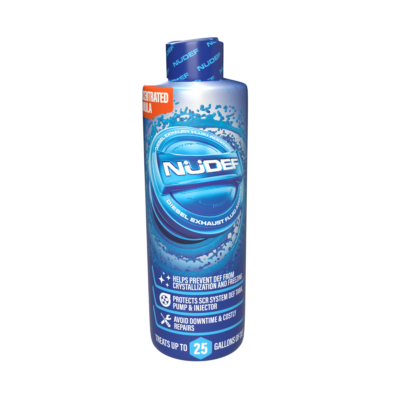
Using NüDef Diesel Exhaust Fluid Additive & Stabilizer is one of the best ways to protect against freezing temperatures. This premium formula helps keep DEF in its optimal state – even during harsh winter conditions, so your emissions system operates efficiently year-round.
Insulating your DEF tank provides additional protection from extreme cold. DEF heaters and tote heating systems are technological solutions designed to keep your DEF liquified during freezing conditions – preventing any potential freezing issues.
Don’t forget about proper storage! To preserve quality, keep DEF in high-density polyethylene (HDPE) containers in temperature-controlled environments whenever possible, away from direct sunlight.
Winter-Ready Best Practices
For vehicles regularly operated in cold climates, make sure to implement a comprehensive winterization approach for your DEF system. This can include checking that your vehicle’s SCR heating system functions correctly and using quality DEF products like NüDef that provide superior performance in challenging conditions.
By implementing these preventive measures and using premium products like NüDef, you can ensure your diesel engine performs optimally throughout winter while maintaining compliance with emissions standards.
DEF Winter Storage: How to Protect DEF in Seasonal Vehicles
Freezing is only part of the winter DEF challenge. DEF winter storage is a separate problem that affects any diesel vehicle, boat, RV, or piece of equipment that sits parked through the cold months. When DEF sits static in a tank from November through March or April, water slowly evaporates from the fluid even in a sealed system. The urea concentration rises, and by spring the DEF that was fresh in the fall has concentrated beyond ISO 22241 specification. That concentrated fluid crystallizes on the dosing injector and supply lines, producing fault codes on the first startup of the season.
The DEF winter storage protocol is straightforward. Before parking for the season, fill the DEF tank to capacity — a full tank has less air space and therefore less evaporation surface. Add NüDef at the correct dose for the tank volume. Start the engine and run it for ten minutes to circulate treated DEF through the supply lines, pump, and dosing injector. Then shut down normally. The NüDef stabilizer maintains the urea in stable solution through the months of static storage and freeze-thaw cycles that follow.
For vehicles stored longer than three months, starting the engine once a month and running it to operating temperature for fifteen minutes keeps DEF circulating and prevents the static crystallization that accumulates in idle systems. This monthly cycle combined with NüDef-treated fluid is the most effective DEF winter storage strategy available. When spring arrives, top off the DEF tank with fresh treated fluid and the vehicle will start without crystallization-related fault codes. If you discover DEF has already crystallized during winter storage, follow the DEF tank cleaning process before adding fresh fluid.
FAQ about How to Keep DEF from Freezing
Will DEF be ruined if it freezes?
No, DEF retains its quality and effectiveness once thawed. However, repeated freezing and thawing cycles may impact long-term stability.
At what temperature does DEF freeze?
DEF typically begins to freeze at around 12°F (-11°C) due to its high water content.
How can I tell if my DEF is beginning to freeze?
Your vehicle may display warning lights or decreased performance, indicating potential DEF system issues related to freezing.
At What Temperature Does DEF Freeze?
Diesel exhaust fluid freezes at about 12°F (-11°C). The freeze point of the 32.5% urea / 67.5% deionized-water mix is the same for every brand because it’s fixed by the ISO 22241 standard. The urea and water freeze and thaw together, so a frozen tank doesn’t change the fluid’s concentration or ruin it — once it thaws, properly stored DEF is still good to use.
Modern diesels are built for this. SCR systems use heated DEF tanks and heated supply lines that thaw the fluid within minutes of a cold start, and the truck won’t derate simply because the DEF was frozen at startup. The real cold-weather damage comes from repeated freeze-thaw cycling and from urea crystallizing at the injector tip — which is exactly where a stabilizing additive earns its keep. NüDef helps keep DEF stable through winter temperature swings and resists the crystal buildup that cold cycling accelerates.
Quick cold-weather facts:
- DEF freeze point: ~12°F (-11°C), identical across brands (ISO 22241).
- Freezing does not spoil DEF — it’s usable once thawed.
- Never add anti-gel, diesel, or any unapproved chemical to DEF to lower its freeze point; it will damage the SCR system.
- Store DEF between 23–77°F (-5 to 25°C), out of direct sunlight, for the longest shelf life.