What P207F Means
SAE J2012 defines P207F as “Reductant Quality Performance.” In plain terms, the engine computer has decided that the DEF in the system is not doing its job. Either the fluid is the wrong strength, or the SCR catalyst is converting less NOx than good DEF should allow, and the computer blames the fluid.
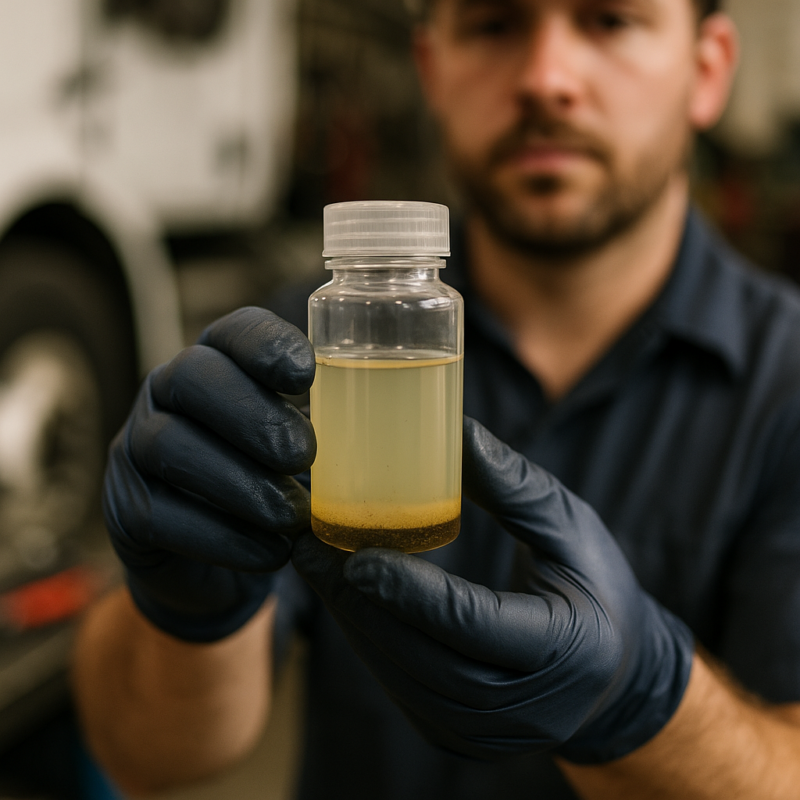
DEF is supposed to be 32.5 percent high-purity urea in deionized water. ISO 22241 allows a range of 31.8 to 33.2 percent. Fluid outside that window carries the wrong amount of ammonia into the catalyst. Too weak and NOx gets through. Too strong and the system can overdose and form deposits. Either way the controller sees a result it does not expect and sets P207F.
P207F is a light-duty P-code. You will see it on Ford Power Stroke, Ram Cummins and GM Duramax pickups, plus diesel vans and SUVs. Heavy trucks report the same problem as J1939 SPN and FMI pairs. Our DEF trouble codes hub maps the full code family. This page goes deeper on P207F alone.
How the Truck Decides DEF Is Bad
The controller judges DEF quality in one of two ways, and knowing which one your truck uses changes how you diagnose the code.
Direct measurement
Many trucks carry a DEF quality sensor in the tank header, next to the level and temperature sensors. It reads urea concentration directly, usually with an ultrasonic signal. If the reading falls outside the allowed window for long enough, P207F sets. On these trucks the code usually means what it says: the fluid in the tank is off spec, or the sensor face is coated and reading wrong.
Inferred quality
Other trucks infer quality from NOx sensors. The controller doses DEF, then compares the NOx reading ahead of the catalyst with the reading after it. If conversion stays low with dosing working as commanded, it concludes the fluid is weak. That method is why P207F can show up with perfectly good DEF in the tank. A restricted injector, a drifting NOx sensor or an exhaust leak ahead of a sensor can all make good fluid look bad.
Some trucks use both methods. Your OEM service information tells you which strategy your engine runs and what the pass and fail values are. Our DEF sensor guide explains each sensor in the chain.
Causes of P207F, Cheapest First
Work the list in this order. The first three cost almost nothing to check.
- Diluted DEF. Water in the tank lowers the urea content. Rain through an open cap, a rinsed funnel, or someone topping off with water to clear a low-level light will all do it.
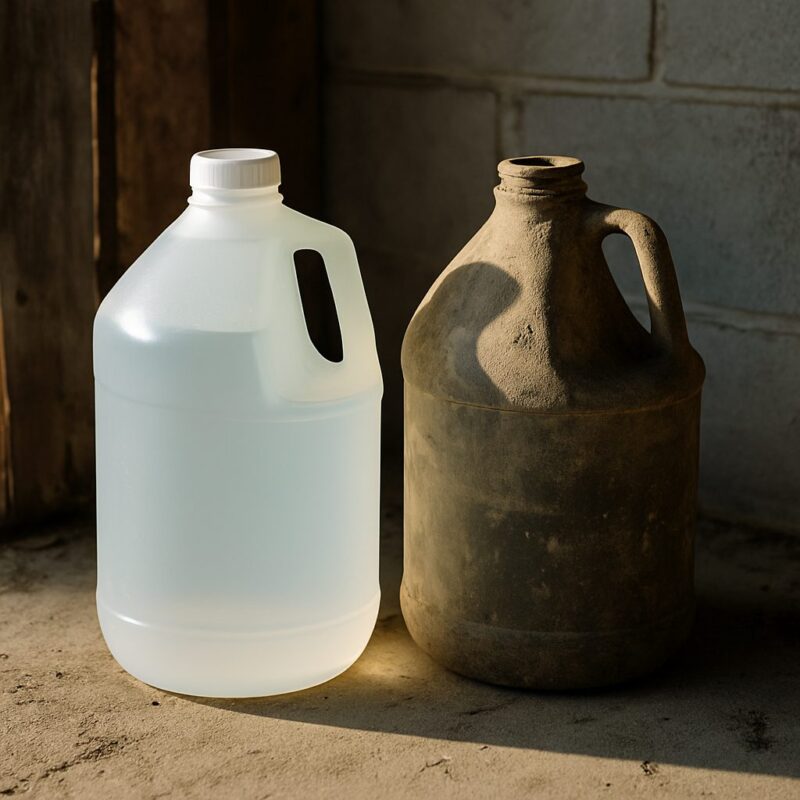
- Old or heat-damaged DEF. Urea breaks down over time, and heat speeds that up. A jug that rode in a hot truck bed all summer may test out of spec before it ever reaches the tank. Our DEF storage guide covers the temperature limits.
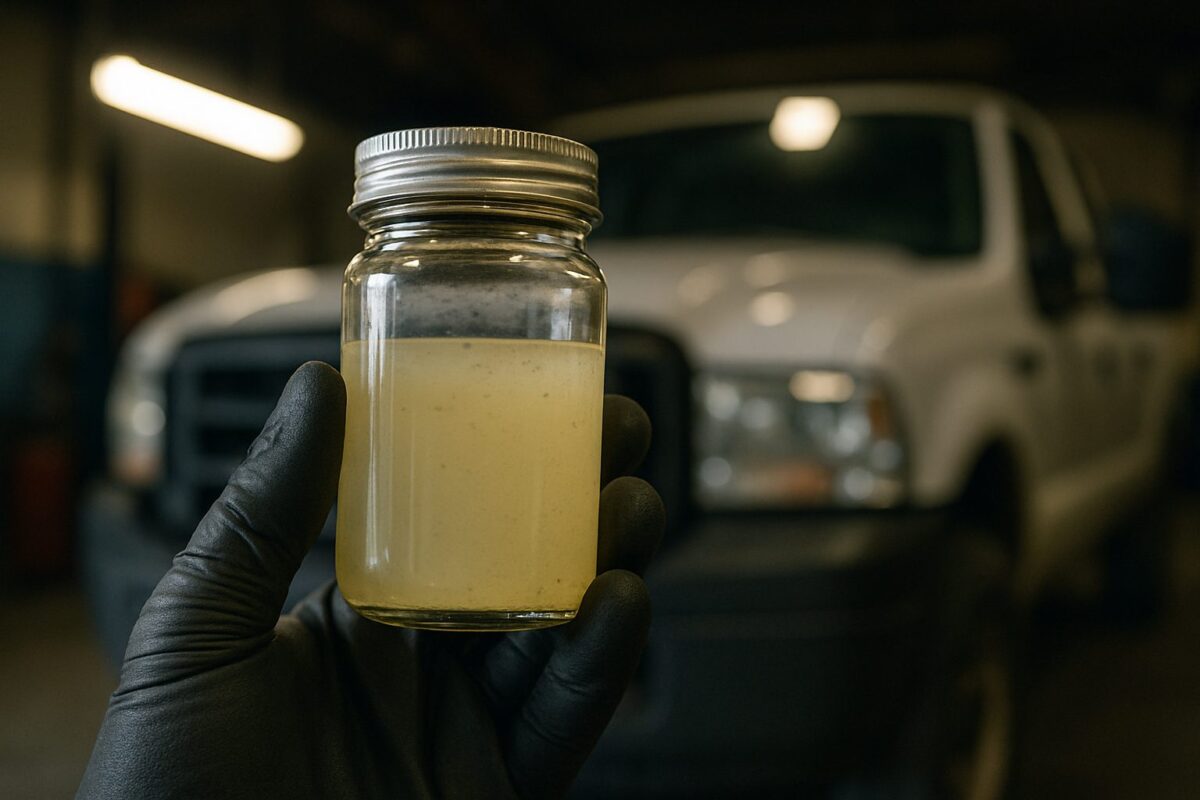
- Concentrated DEF. Evaporation from a vented tank or an open container pushes urea content up. The fluid can read too strong and start dropping crystals.
- Contamination. Diesel, coolant, washer fluid or dirty containers change how the fluid reads and how it reacts. See contaminated DEF symptoms for what each contaminant looks like.
- Crystals on the quality sensor. Urea crystals on the sensor face throw off the reading even when the bulk fluid is fine.
- A failing quality sensor or wiring. Less common than bad fluid, and more expensive to fix.
- Dosing and NOx sensor faults. On inferred-quality trucks, anything that cuts conversion can set P207F.
Symptoms and Companion Codes
P207F rarely arrives with a change in how the truck drives. The first sign is a check engine light, often with a DEF message on the cluster such as “DEF quality poor” or “Service DEF system.” Our DEF quality poor warning guide covers what those messages mean on each brand.
If the fault stays active, the truck starts its inducement countdown. That usually means a mileage or time warning first, then a reduced top speed, then a hard speed limit until the fault is fixed. The steps differ by maker and model year.
Codes that often travel with P207F:
- P20EE: SCR NOx catalyst efficiency below threshold. Same question from a different angle.
- P2BAD: NOx exceedance, root cause unknown. The computer saw too much NOx at the tailpipe and could not name a cause.
- NOx sensor codes: a sensor problem can make fluid look bad on inferred-quality trucks.
- DEF injector and pressure codes: poor delivery cuts conversion and can set P207F.
Write every code down before you clear anything. The combination tells you more than any single code.
P207F on the Ford 6.7 Power Stroke
The 6.7 Power Stroke is where P207F gets searched most, and Ford owners tend to see it after a fill from an unknown source or after the truck sits. The common pattern is a check engine light, then a DEF message on the cluster, then a countdown toward reduced speed if the fault stays active.
On a Power Stroke, test the fluid before anything else. Pull a sample from the tank, not from the jug you think you used. If the sample reads in spec, look at the DEF injector for white crust, check for exhaust leaks ahead of the NOx sensors, and compare the upstream and downstream NOx readings with a scan tool. Our Ford Power Stroke DEF problems guide covers the other Ford DEF codes that often travel with P207F.
P207F on Cummins, Duramax and Other Platforms
On the Ram 6.7 Cummins, P207F often shows up next to P20EE, the SCR efficiency code. Both point at the same question: is the catalyst getting good DEF in the right amount? Crystals at the doser are a frequent cause on these trucks, so inspect the doser and the decomposition pipe for deposits. Our Ram 6.7 Cummins DEF problems guide lists the related codes.
On GM Duramax trucks, P207F follows the same logic. The quality reading comes from the tank sensor on most model years, so a contaminated fill or a coated sensor is the first suspect. See our Duramax DEF problems page for the GM-specific layout.
On every platform, the code tells you where to look first. Testing tells you which part failed.
How to Fix P207F, in Order
- Test the fluid in the tank. A DEF refractometer reads urea concentration in seconds. Look for 31.8 to 33.2 percent. Test strips work as a rough screen. Our DEF testing guide shows how to read the result.
- If it is out of spec, drain and refill. Drain the tank per the service manual, flush with fresh DEF if the manual allows it, and refill with new API-certified DEF from a sealed container.
- Clear the code and run the monitor. The truck needs a drive cycle, often with steady highway time, for the quality monitor to run again. Some trucks need a scan tool to reset the quality learn.
- If the fluid is good, inspect the hardware. Look at the quality sensor, the doser, the DEF lines and the NOx sensors. White crust on any of them is a clue.
- Then test components. Use the OEM procedure for the quality sensor and NOx sensors before you buy parts. Your OEM service information has the final word on test values.
The cost spread on P207F is wide. A drain, a refill and a fresh jug of DEF cost little. A quality sensor on many trucks is part of the tank header assembly and can run into the hundreds or more with labor. NOx sensors and dosers can cost more. That spread is the reason to test the fluid first: it is the cheapest cause to rule out and the most common one.
Do not keep clearing the code without fixing the cause. P207F that stays active moves the truck toward a speed or power derate.
Keeping P207F From Coming Back
Most P207F repairs start and end with the fluid, so prevention is about handling DEF well.
- Buy sealed, API-certified DEF and use it while it is fresh.
- Store jugs out of direct sun and away from cab heat. Keep caps tight.
- Never use a funnel or container that has held anything else.
- Keep partial jugs closed and use them up rather than letting them sit for months.
- Test any fluid that has been stored a long time before it goes in the tank.
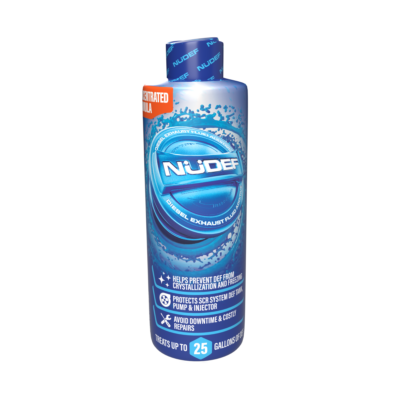
P207F is one of the codes listed on our product page as a code NüDef helps prevent. NüDef DEF Treatment, Additive & Stabilizer helps prevent crystallization, which helps keep crystals off the quality sensor and the doser. It also helps prevent freezing, and it protects the SCR system DEF tank, pump and injector. One 8 oz bottle treats 25 gallons; add it at every refill and do not exceed the dose.
NüDef does not repair a failed sensor or turn bad fluid into good fluid. If your tank tests out of spec, drain it first. Then treat the fresh fill. A single bottle costs $19.99, which works out to about 80 cents per gallon of DEF treated. That is small next to a quality sensor, a doser or a tow. Order NüDef direct and keep a bottle with your DEF.