
Updated November 2026. Every hazard rating, first aid step and cleanup method below comes from published DEF safety data sheets or an engine maker’s DEF handling bulletin, linked where each is used. When your own jug or tote came with a different safety data sheet, follow that one.
Is DEF Fluid Harmful? The Short Answer
Diesel exhaust fluid is a low-hazard fluid, and it still deserves basic care. One DEF producer’s safety data sheet lists the fluid as not classified under the US Hazard Communication Standard, with no signal word and no hazard statements. The same sheet says it may cause mild skin irritation, that prolonged exposure to the liquid may cause mild eye irritation, and that swallowing it is likely to be harmful. A second DEF safety data sheet reaches the same classification.
In plain terms: a splash on your hands at the pump is a wash-it-off event, DEF in the eyes calls for a long rinse, and nobody should drink it. The bigger risks are to equipment. DEF corrodes some common metals, it leaves white crystals wherever it dries, and contaminated fluid can foul an SCR system. This guide covers the human side first, then spills, the materials DEF attacks, and why clean handling matters before you treat a fill.
What the Safety Data Sheet Says
DEF is 32.5 percent urea and 67.5 percent water by weight, according to the composition section of the safety data sheet, and both ingredients are listed as not classified. The American Petroleum Institute describes the same fluid as a 32.5% solution of technically pure urea in purified water. The safety data sheet’s ratings and properties that matter for handling:
| Item | What the safety data sheet lists |
|---|---|
| GHS classification | Not classified; no signal word or hazard statements |
| NFPA ratings | Health 1, fire 0, reactivity 0 |
| HMIS III ratings | Health 1 (slight hazard), flammability 0, physical 0 |
| Skin | May cause mild skin irritation; no known skin sensitizers |
| Eyes | Prolonged exposure to liquid may cause mild irritation |
| Swallowing | Likely to be harmful or have adverse effects |
| Cancer | No substances classified as carcinogens by OSHA, NTP, ACGIH or IARC |
| Odor and pH | Slight ammonia odor; pH 9.8 to 10 |
| Transport | Not regulated under DOT, IMDG, IATA or TDG |
The NFPA health rating of 1 is defined on the sheet as exposure that could cause irritation but only minor residual injury even with no treatment. The sheet also notes that exposure may aggravate existing eye, skin or breathing conditions, so anyone with one of those should take more care around open containers.
Skin Contact
Skin contact is the most common exposure, from a drip off a nozzle, a jug that glugs over the filler, or a wet glove. The first aid on the producer’s sheet is simple: remove contaminated clothing and drench the area with water for at least 15 minutes, then get medical attention if irritation develops or persists. The second sheet adds washing all exposed skin with mild soap and water, followed by a warm water rinse.
Two habits from the handling section prevent most skin trouble. Wash your hands and any exposed skin with mild soap and water before eating, drinking or smoking, and again when you leave work. And change out of clothing that has soaked up DEF. When the water evaporates from a spot of DEF on a sleeve or a boot, the urea stays behind as white crystals, so a crusty patch on your clothes is a sign the fluid was there.
Eyes, Breathing and Swallowing
Eyes. Rinse cautiously with water for several minutes. Remove contact lenses if present and easy to do, and keep rinsing. Get medical attention if pain, blinking or redness develops or persists. The second safety data sheet says to rinse immediately with plenty of water.
Breathing. If symptoms show up, move to open air and ventilate the area, and get medical attention if breathing difficulty persists. In normal use the producer’s sheet says DEF is not expected to present a significant hazard. The sheet lists a slight ammonia odor for normal fluid; heat produces more ammonia, which the sections below cover.
Swallowing. Rinse the mouth, do not induce vomiting, and get medical attention. Never give anything by mouth to an unconscious person. Swallowing is the one route the sheet calls likely to be harmful, which is the strongest reason to keep DEF in its labeled container and out of food or drink bottles.
Gloves and Glasses: What to Wear
The protective equipment on the producer’s safety data sheet is modest. Wear chemically resistant gloves, and where there is a splash hazard, wear chemical goggles or safety glasses. Wear suitable protective clothing, and use approved respiratory protection only if exposure limits are exceeded or irritation is experienced. The sheet also asks for eye wash fountains and safety showers near any potential exposure in a workplace, and good ventilation in confined areas. The second sheet lists gloves and protective goggles.
For a pickup owner pouring a jug, that means chemically resistant gloves and safety glasses in the door pocket. For a shop that fills trucks, equipment or generators from a tote all day, it means a stocked eyewash station near the dispenser and gloves at the pump. Shops buying treatment for that many machines can set up an account through the NüDef wholesale program.
Cleaning Up a DEF Spill
The two safety data sheets agree on the main steps for an accidental release:
- Stop the leak if it is safe to do so, and ventilate the area. Keep people who are not needed for the cleanup away.
- Contain it. Use dikes or absorbents to keep the fluid from reaching sewers, storm drains or streams. Both sheets say to prevent entry to sewers and public waters, and the second sheet says to notify authorities if it does get there.
- Soak it up. Absorb the spill with inert material, such as clay or diatomaceous earth, as soon as possible, then collect it into a suitable container.
- Finish the small stuff. The second sheet allows mopping up small spills and washing down minor spillages with plenty of water.
- Dispose of it properly. Waste goes out according to local, state and federal rules, which the DEF disposal guide walks through.
The second sheet notes that the EPA has no established reportable quantity for spills of this material. Clean up fast anyway. A spill left to dry turns into a white urea crust on concrete, trailer decks and tool chests, and DEF that sits on the wrong metal starts to corrode it.
Materials DEF Can Attack
This is where DEF does its real damage. An engine maker’s DEF quality and maintenance bulletin, which cites ISO 22241-3 for handling and storage, says DEF is not hazardous but that short-term exposure can be mildly irritating to eyes and skin, and that some materials may corrode if contact with DEF goes on for an extended period. It lists:
- Carbon steel, zinc-coated carbon steel and mild iron
- Copper, copper alloys, zinc and lead
- Solder containing lead, silver, zinc or copper
- Aluminum alloys
- Magnesium and magnesium alloys
- Plastics or metals coated with nickel
The bulletin says to clean any surface DEF touches right away, and recommends containers of polyethylene, polypropylene or Grade 316 stainless steel for transport and storage. Brass fittings, galvanized cans and aluminum funnels from the oil shelf do not belong in DEF service. Besides the corrosion, metal that dissolves into the fluid becomes contamination that the SCR system then has to deal with. The contaminated DEF guide covers what that looks like in a truck.
Heat, Fire and Ammonia
DEF is not considered flammable, though the producer’s sheet says it may burn at high temperatures. The concern with heat is what the fluid turns into. When heated to decomposition, DEF emits toxic fumes; the listed decomposition products are ammonia, nitrogen oxides, irritating fumes and carbon oxides. The sheet lists strong acids, strong bases, strong oxidizers and alkalis as materials to keep it away from.
The engine maker’s bulletin adds the storage side. Keep DEF out of direct sunlight, and shade intermediate bulk containers in warm weather to limit water evaporation and conversion to ammonia. The DEF storage guide covers the temperature side in detail.
Clean Storage Before You Treat the Fill
Safe handling and good fluid come from the same habits. The bulletin says containers, funnels and other equipment that touch DEF should be free of oil, fuel, dust and detergents, washed and rinsed with distilled water before use, and that the tank neck, the container and the nozzle should be wiped clean before a fill. Closed containers, the right materials and shade keep both the person and the fluid out of trouble.
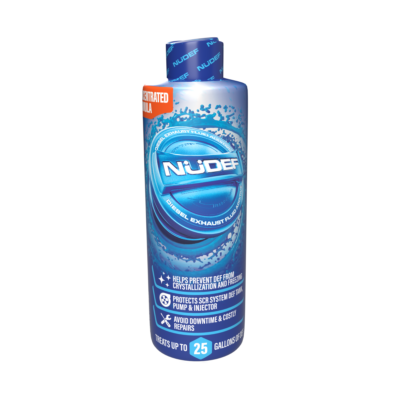
Fluid that is stored clean is worth protecting while it waits. Every jug, tote and vehicle tank cycles through heat and cold, water leaves the top of the fluid, and the urea left behind crystallizes on threads, necks and pickups. NüDef DEF Treatment, Additive & Stabilizer helps prevent crystallization in the DEF you treat. Use it with DEF certified to ISO 22241 or carrying the API mark, never in place of it. One 8 oz bottle treats 25 gallons: add one 8 oz dose per 25 gal fill at every refill and do not exceed the label dose. Read and follow the directions on the bottle, and store it in a ventilated room between 41°F and 86°F, closed and out of sunlight. Order NüDef direct, and see how to add DEF for a clean fill from jug to tank.