Who Makes Each Product?
Power Service Products, Inc. Power Service is a Texas-based company that’s been making diesel fuel additives since 1955. Their flagship product, Diesel Kleen + Cetane Boost (the silver bottle), is the most-sold diesel fuel additive in North America. Their DEF Booster is a more recent addition — released as DEF became mandatory on modern diesels, positioning Power Service to extend their diesel-additive franchise into DEF maintenance.
Power Service is a broad-line diesel additive company. They make fuel additives (Diesel Kleen, Diesel Fuel Supplement +Cetane Boost, Clear-Diesel Fuel & Tank Cleaner, Bio Kleen), winter products (Diesel 9-1-1, Diesel Fuel Supplement), and DEF products (DEF Booster). The company sells primarily through retail distribution — truck stops, auto parts stores, big-box retailers, and farm supply stores. Their orange/blue packaging is highly recognizable to diesel owners.
NüDef. NüDef is a Canyon Country, California-based company exclusively focused on DEF additives. We’re not a broad-line additive company — we make one product family, focused entirely on solving DEF crystallization in SCR systems. Our chemistry is purpose-built for the urea stabilization problem; we don’t dilute development effort across a wide product portfolio.
NüDef sells primarily through direct e-commerce at nudef.com, with select retail partners and fleet wholesale contracts as secondary channels. We don’t try to compete with Power Service on retail shelf space — we compete on focused chemistry and direct fleet relationships.
The category difference matters: Power Service is a brand-recognition-driven retail product. NüDef is a chemistry-driven specialist product. Both legitimate companies, both make products that work, both have real market positions — but they’re positioned for different buyer profiles.
The Underlying Chemistry — Two Different Approaches
Both products promise to prevent DEF-related SCR problems, but they’re built around different chemistry philosophies.
Power Service DEF Booster approach: Power Service positions DEF Booster as a DEF “freeze point depressant + stabilizer.” The product is engineered to:
- Lower the freeze point of DEF in cold-weather storage
- Extend DEF shelf life by inhibiting biological contamination
- Help prevent crystallization deposits in the SCR system
The specific active chemistry in Power Service DEF Booster isn’t publicly detailed in their SDS or technical literature — most diesel additive companies protect their formulations as trade secrets. The product is dosed at 16 oz per 100 gallons of DEF (about 1:100 ratio).
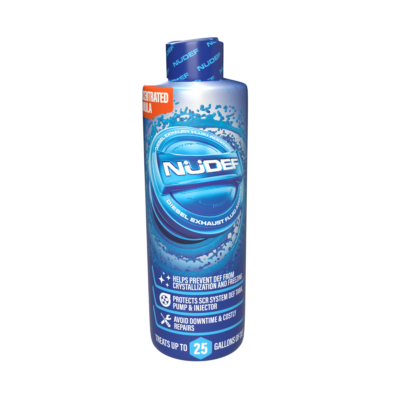
NüDef approach: NüDef is built around proprietary urea-stabilizer chemistry engineered specifically for the crystallization problem at the SCR catalyst face. The product is engineered to:
- Disrupt urea crystal formation during and after DEF injection into the exhaust stream
- Extend DEF shelf life in storage by stabilizing the urea concentration
- Reduce SCR catalyst poisoning from crystallization deposits
NüDef is dosed at one bottle per 25 gallons of DEF (about 4 oz per gallon, or about 1:32 ratio). The higher dose ratio reflects the more intensive chemistry — NüDef isn’t trying to be a light freeze depressant, it’s trying to actively prevent crystal nucleation at the catalyst face.
Both approaches have legitimate technical merit. They optimize for different parts of the problem. Power Service’s lower dose ratio means cost-per-gallon-treated is competitive at retail. NüDef’s higher dose ratio means more active chemistry per gallon of DEF, which our customer field data suggests delivers stronger crystallization prevention in real-world fleet operations.
What Each Product Claims to Do
Comparing the marketing claims from each manufacturer:
| Claim | Power Service DEF Booster | NüDef |
|---|---|---|
| Prevent DEF freezing | ✓ Yes (down to -22°F) | ✓ Yes (similar range) |
| Extend DEF shelf life | ✓ Yes | ✓ Yes |
| Prevent SCR catalyst crystallization | ✓ Claimed | ✓ Primary focus |
| Restore performance on systems already showing fault codes | Partial (varies by case) | Partial (varies by case) |
| Reduce P20EE / P20EF / P207F frequency | General claim | Specific fleet field data |
| Compatible with ISO 22241 DEF | ✓ Yes | ✓ Yes |
| Doesn’t void OEM warranty | Claimed | Claimed |
Honest assessment: the marketing claims overlap considerably. Both products claim to do similar things. The difference lives in the depth of chemistry behind each claim and the strength of supporting field data — both of which are hard to evaluate from marketing materials alone.
Where NüDef differs in claims: we anchor our claims to specific fleet field data we’ve collected from customers we’ve worked with — concrete reductions in P20EE/P20EF frequency over 90-day measurement windows. Power Service’s claims are more brand-trust-driven (50+ years of diesel additive credibility) than data-driven.
Where Each Is Sold and What It Costs
Power Service DEF Booster:
- Walmart, Costco, Sam’s Club (lowest pricing)
- AutoZone, O’Reilly, Advance Auto Parts, NAPA
- Most major and regional truck stops with diesel additive sections
- Home Depot, Tractor Supply
- Amazon (significant online presence)
- Local farm supply and equipment dealers
Retail pricing for Power Service DEF Booster:
- 16 oz bottle: $11.99–$16.99 (treats 100 gallons of DEF)
- 32 oz bottle: $19.99–$28.99 (treats 200 gallons of DEF)
- 1-gallon bottle: $58.99–$79.99 (treats 800 gallons of DEF — fleet/commercial size)
Cost per gallon of DEF treated: $0.075–$0.17 depending on bottle size and retail channel.
NüDef:
- Direct from nudef.com (primary channel — ships in 3–5 business days)
- Select truck stops and auto parts stores (regional, expanding)
- Amazon (smaller presence than Power Service)
- Fleet wholesale direct relationships
Retail pricing for NüDef:
- Single bottle: $25 (treats 25 gallons of DEF)
- Double pack: $45 (treats 50 gallons of DEF)
- 6-pack: $115 (treats 150 gallons of DEF)
- Case of 30: $360 (treats 750 gallons of DEF)
- Bulk fleet pricing: contact (855) 300-0031
Cost per gallon of DEF treated: $0.48–$1.00 retail; $0.40 and below at fleet wholesale tiers.
This is the most significant practical difference between the two products: Power Service is 3–6× cheaper per gallon of DEF treated at retail. That’s a real and meaningful price gap. Whether it’s the right comparison depends on how much active chemistry each product delivers per gallon and how much chemistry your application needs.
Bottle Sizes, Treatment Ratios, and Cost Per Treated Gallon
Working the numbers in detail:
Power Service DEF Booster math:
- Dose: 16 oz treats 100 gallons of DEF
- Ratio: ~0.5% by volume (1:200)
- 16 oz bottle at $13.99 retail = $0.14 per gallon DEF treated
- 1-gallon (128 oz) bottle at $69.99 = $0.087 per gallon DEF treated
NüDef math:
- Dose: 1 Single bottle treats 25 gallons of DEF
- Ratio: ~3.2% by volume (1:32) — about 6× more concentrated by volume
- Single at $25 retail = $1.00 per gallon DEF treated
- 6-pack ($115) = $0.77 per gallon DEF treated
- Case of 30 ($360) = $0.48 per gallon DEF treated
- Fleet wholesale = $0.30–$0.40 per gallon DEF treated
The 6× volume difference in dose ratio matters: NüDef delivers significantly more active chemistry per gallon of DEF than Power Service DEF Booster. That’s the engineering tradeoff — Power Service uses a lower-dose, lower-concentration approach optimized for cost-per-gallon retail pricing. NüDef uses a higher-dose, higher-concentration approach optimized for crystallization-prevention performance in demanding applications.
If your application is light-duty (one diesel pickup, 12–18 gallons of DEF per year, occasional cold weather), Power Service’s lower price-per-gallon is the dominant factor. If your application is heavy-duty (fleet operations, standby generators with critical operational requirements, or systems already showing crystallization symptoms), the more concentrated NüDef chemistry typically delivers better outcomes per dollar spent on the underlying SCR repair risk.
Head-to-Head: 7 Real-World Comparison Scenarios
To make the choice concrete, here’s how each product compares in seven specific situations:
Scenario 1: Diesel pickup owner, 1 truck, ~15 gallons DEF/year, never had a fault code.
- Power Service: 16 oz bottle ($14) treats your annual DEF supply with money to spare. Easy purchase at any truck stop or auto parts store. Total annual cost: ~$3 per year amortized.
- NüDef: One Single bottle ($25) treats 25 gallons — about 18 months of your DEF. Slightly higher annual cost (~$17/year) but more concentrated chemistry.
- Verdict: For a preventive maintenance use case without active problems, Power Service’s price-point convenience usually wins. The bigger question is whether you need either — and that depends on your truck’s age, mileage, and operating profile.
Scenario 2: Diesel pickup owner, 1 truck, recurring P20EE codes.
- Power Service: Has resolved P20EE in some cases. Mixed results depending on the underlying severity of catalyst crystallization.
- NüDef: Engineered specifically for the P20EE/crystallization use case. Higher chemistry concentration per dose.
- Verdict: NüDef is the more targeted answer for active fault codes. Honest caveat: neither product fully resolves catalyst damage that’s already occurred — they prevent further damage. For severe crystallization, professional diagnostic and SCR cleaning may still be needed.
Scenario 3: Owner-operator Class 8 OTR semi, 120,000 miles per year, 300 gallons DEF per year.
- Power Service: Gallon bottle ($70) treats 800 gallons — about 2.5 years of DEF. Total annualized cost: ~$28/year.
- NüDef: Case of 30 ($360) treats 750 gallons — about 2.5 years of DEF. Total annualized cost: ~$144/year.
- Verdict: Power Service is dramatically cheaper. But — if you’re a single owner-operator, one SCR catalyst failure costs $5,000–$8,000 plus 7–10 days of lost revenue ($5,600–$24,000). Spending $144/year on more aggressive prevention vs $28 on lighter prevention is a small bet against a large potential loss. For Class 8 OTR, the higher concentration of NüDef typically delivers better ROI per dollar spent.
Scenario 4: Light commercial fleet, 15 diesel pickups, ~225 gallons DEF/year per truck.
- Power Service: Gallon bottles in bulk procurement. Total annual fleet cost: ~$300.
- NüDef: Fleet wholesale pricing on bulk Single bottles. Total annual fleet cost: ~$1,800.
- Verdict: Power Service wins on absolute cost. But the math is similar to Scenario 3 — one SCR repair on a fleet pickup costs $2,500–$7,000 plus driver downtime. If NüDef prevents 1 SCR repair event per year on a 15-truck fleet, it pays for itself 2-3×.
Scenario 5: Heavy fleet, 30+ Class 8 semis, 9,000 gallons DEF/year, ROI-focused.
- Power Service: 1-gallon bottles in bulk; cost ~$800/year for fleet treatment.
- NüDef: Fleet wholesale tier; cost ~$3,600/year for fleet treatment.
- Verdict: The cost gap closes at scale, and the operational stakes are higher. For Class 8 fleets, the documented field data behind NüDef’s crystallization prevention typically delivers $30,000–$45,000 in annual savings on SCR repairs and downtime (see our fleet ROI analysis). NüDef is usually the right answer at fleet scale.
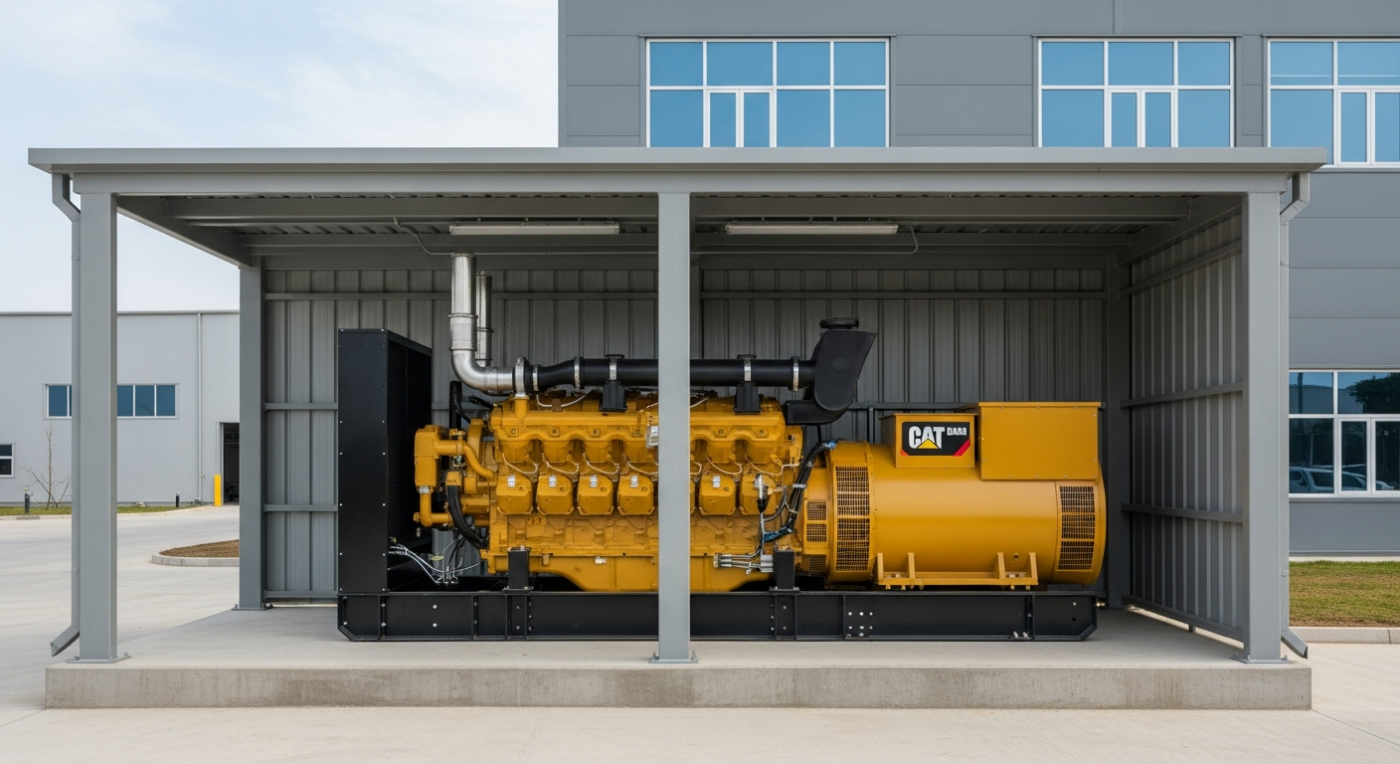
Scenario 6: Standby diesel generator, 500 kW unit at a hospital, runs 80 hours/year.
- Power Service: Light treatment of stored DEF.
- NüDef: More concentrated treatment optimized for long-term storage and infrequent operation.
- Verdict: For mission-critical standby generators (hospitals, data centers, life-safety code applications), NüDef’s higher concentration delivers better protection against the “first-time-it-matters-it-fails” risk. The cost gap is irrelevant compared to the consequence of generator failure during an actual outage.
Scenario 7: Industrial 1,500 kW Tier 4 Final prime power generator, runs 6,000 hours/year.
- Power Service: Not optimized for continuous prime power operation.
- NüDef: Designed for continuous-duty applications and large-volume DEF storage.
- Verdict: NüDef. SCR replacement on industrial generators runs $8,000–$35,000+. Prevention is dramatically cheaper than reactive repair. We discussed the math in detail in our Cost of Untreated DEF article.
Fleet Procurement: Where the Volume Math Lives
For fleet operations evaluating DEF additive products, the procurement math typically prioritizes three factors:
1. Documented field performance. What does this additive actually do in fleets that have used it? Power Service has 50+ years of brand-trust credibility but limited published field data specific to DEF Booster. NüDef has worked with fleet customers measuring P20EE/P20EF frequency over 90-day windows — we can share documented before-and-after data from those engagements when relevant to your application. For fleet operators making procurement decisions, the documented data matters more than brand recognition.
2. Total cost of ownership (not unit cost). The cheapest additive isn’t necessarily the lowest TCO. If $800/year of Power Service prevents 0 SCR repair events while $3,600/year of NüDef prevents 4 events at $5,000 each = $20,000 in averted cost, NüDef has a 5× better ROI despite being 4.5× more expensive on the unit-cost line. The math gets stronger when downtime costs are included.
3. Supply chain reliability. Power Service has nationwide retail distribution — if your fleet manager needs more product, it’s available at most large retailers. NüDef ships direct from our Canyon Country, California facility to your shop on whatever order cadence makes sense for your DEF consumption — Single bottles for one-off needs, Case (30) packs for monthly maintenance cycles, IBC tote treatment volumes for on-site bulk storage. For fleet operations, both approaches are workable. The decision usually comes down to whether your maintenance team prefers retail-purchase flexibility or scheduled direct shipment.
To talk through fleet wholesale pricing on Case (30) packs or bulk IBC-tote treatment volumes for your fleet, call (855) 300-0031 or email [email protected] with your fleet size and monthly DEF consumption.
Honest Verdict — Where Each One Wins
Both products are legitimate. Both work in some applications. The honest answer about which one to choose depends on your specific situation:
Choose Power Service DEF Booster when:
- You’re an individual diesel owner with 1–2 trucks and no current SCR issues
- You want a preventive maintenance product available at any truck stop or auto parts store
- Your fleet is light (5–10 trucks) and uses retail-procurement workflows
- Cost-per-treated-gallon is the primary procurement criterion
- You have existing brand familiarity with Power Service from their Diesel Kleen products
Choose NüDef when:
- You’re operating a fleet (15+ vehicles) and want documented field-data-based ROI
- You have standby generators in mission-critical applications
- Your application is industrial prime power or heavy continuous-duty
- You’re already experiencing P20EE/P20EF/P207F codes and want a focused intervention
- Your fleet maintenance program values supplier-relationship continuity over retail flexibility
For DEF system protection in general, see our other comparison reviews:
For individual purchase visit nudef.com — Single bottles ship in 3–5 business days. For fleet wholesale pricing call (855) 300-0031 or email [email protected].