The Three Failure Modes Untreated DEF Creates
DEF is required, DEF is consumed continuously, and DEF crystallization is a known and well-documented problem on every diesel platform built since 2010. Yet most fleet operations and individual diesel owners treat DEF crystallization as a maintenance reactive problem — they wait until something breaks, then they fix it.
That reactive posture costs significantly more than preventing the problem. To understand why, you need to know the three distinct ways untreated DEF causes failures:
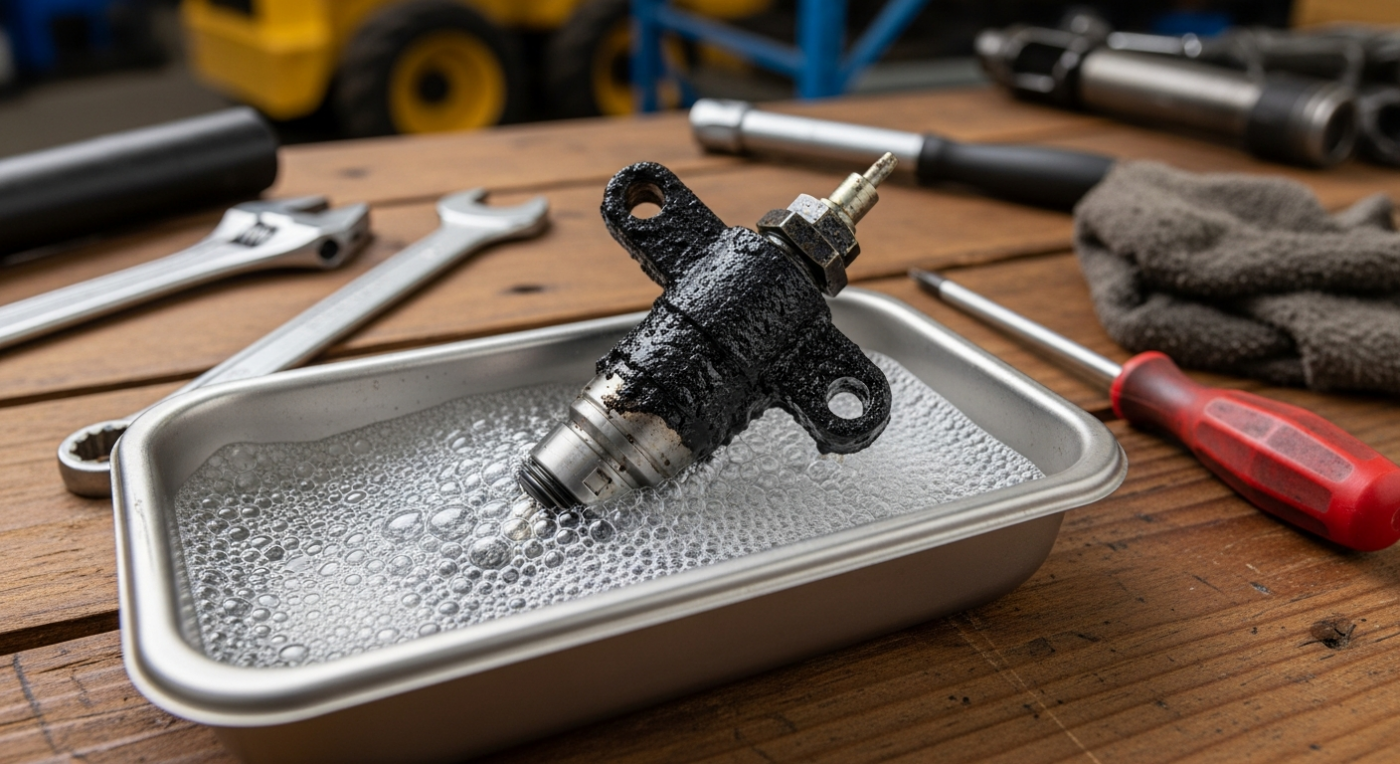
Failure Mode 1: Crystallization at the SCR injector. Your truck’s DEF injection nozzle sprays a precise pattern of fine DEF mist into the exhaust stream. Over time — typically 60,000–120,000 miles depending on operating conditions — urea crystals build up at the nozzle face. The spray pattern degrades, dosing becomes inconsistent, and eventually the injector either clogs or sprays inefficiently. Repair: nozzle cleaning or replacement, $400–$1,200.
Failure Mode 2: Crystallization on the SCR catalyst face. The selective catalytic reduction catalyst is a honeycomb-structured ceramic substrate coated with vanadium- and tungsten-based active materials. When DEF is sprayed onto this catalyst at the wrong temperature, in the wrong mixing ratio, or under transient load conditions, urea decomposition is incomplete. Crystals deposit on the catalyst face. Once they’re there, they remain there — the catalyst face is now partially blocked, reducing NOx conversion efficiency. The truck’s exhaust NOx sensor detects this, and the truck flags P20EE. Repair: catalyst cleaning ($800–$2,800 if salvageable) or replacement ($1,500–$12,000+ depending on vehicle class).
Failure Mode 3: Crystallization in the DEF storage system. Bulk DEF storage (drums, totes, on-site tanks) develops crystallization over time as water evaporates and biological contamination accumulates. By the time fleet operators dispense this DEF into vehicles, the DEF is partially out of spec — driving Failure Mode 1 and Failure Mode 2 in the trucks receiving it. Repair: drain and dispose of stored DEF, clean storage system, refill with fresh certified DEF. Cost: $400–$2,800 depending on storage volume.
Most fleet operations experience all three failure modes simultaneously across their fleet over time. The cost compounds.
Fault Code Progression: P207F → P20EE → P20EF → Limp Mode
The truck’s computer doesn’t tell the driver “you have 30,000 miles before you need to replace your SCR catalyst.” Instead, the truck communicates through diagnostic trouble codes (DTCs) in a progression that escalates from inconvenience to operational shutdown.
Stage 1: P207F (Reductant Quality Performance Range/Performance). The truck has detected that the DEF in your tank is not within the expected concentration range. This often shows up first because the quality sensor monitoring DEF concentration is more sensitive than the downstream NOx sensor. P207F might be triggered by genuinely off-spec DEF (contamination, expired stock, water dilution) or by crystallization-induced concentration drift in the system. Driver experience: warning light, no power loss yet, but the truck is logging the event. P207F deep dive.
Stage 2: P20EE (SCR System Efficiency Below Threshold). The truck’s NOx sensor downstream of the SCR catalyst is reading higher NOx than expected. The catalyst isn’t converting NOx to nitrogen efficiently — usually because crystallization has reduced the active catalyst surface area. P20EE is the most common “real” DEF-related code, and it’s the canary that something is wrong with your catalyst. Driver experience: warning light, possible minor power reduction, MIL (malfunction indicator lamp) on the dashboard.
Stage 3: P20EF (Reductant Quality Performance Inducement). The truck has decided your DEF quality issue is severe enough to warrant inducement — meaning the truck is preparing to enter limp mode unless the problem is resolved. P20EF often follows P207F if the underlying DEF quality issue wasn’t addressed. Driver experience: prominent warning, “service required” message, sometimes initial power derate.
Stage 4: Limp Mode. EPA-mandated power reduction. Power output drops 25–40%. Speed is limited (typically to 25 mph after a final warning sequence). The truck refuses to return to normal operation until the DEF quality issue is resolved AND the codes are cleared. Driver experience: truck is operationally useless until towed or driven slowly to a repair facility.
The progression from P207F to limp mode can take days, weeks, or months depending on how quickly the underlying problem develops. For fleet operations, the issue isn’t whether your trucks will hit this progression — it’s how often, and how expensively.
SCR Repair Costs by Vehicle Class
Here’s what fleet operators and individual diesel owners actually pay when DEF-related SCR damage requires repair:
| Vehicle Class | SCR Catalyst Replacement | Full SCR System | Plus Labor |
|---|---|---|---|
| Light-duty diesel pickup (F-250, Ram 2500, GM 2500HD) | $1,500–$3,200 | $2,800–$4,500 | $400–$800 |
| Medium-duty (F-650, Ram 5500, ISB 6.7) | $2,800–$4,800 | $4,500–$7,500 | $600–$1,200 |
| Heavy-duty Class 8 OTR (ISX 15, DD15, MX-13) | $4,200–$8,500 | $7,000–$12,000+ | $800–$1,600 |
| Vocational truck (refuse, concrete, dump) | $3,500–$6,500 | $5,500–$9,500 | $600–$1,400 |
| Standby diesel generator (200–1,000 kW) | $3,500–$8,500 | $6,500–$15,000 | $1,000–$2,400 |
| Industrial generator (1,500+ kW Tier 4 Final) | $8,000–$22,000 | $15,000–$35,000+ | $2,500–$6,000 |
These costs are what’s billed by dealer service or independent diesel shops in 2026. Owner-operator self-repair on light-duty pickups can be 30–50% less in parts cost but assumes the owner has the diagnostic equipment and mechanical skills. Heavy-duty repairs above Class 7 are virtually always dealer-network repairs because of the specialized SCR test equipment required.
The catalyst-only replacement cost assumes the rest of the SCR system (DEF tank, pump, injector, mixing tube, NOx sensors, control module) is intact. In reality, when one component fails another often shows wear too — bringing the total repair to “full SCR system” pricing.
One important point: SCR repair frequency increases with vehicle age. The first SCR failure on a truck might happen at 250,000 miles. The second often follows within 60,000–120,000 miles because underlying crystallization conditions weren’t addressed. The third can happen 30,000 miles after that. Fleets that don’t address the root cause end up replacing SCR catalysts on a recurring schedule — a $4,500 expense every 3–4 years per truck.
The Hidden Cost: Downtime
Repair invoices show up on the books as line-item expenses. Downtime usually doesn’t — but it’s often the larger cost.
Class 8 OTR semi-trailer downtime: $800–$2,400 per day of lost revenue. A truck with a P20EE that needs catalyst replacement is typically off-road for 5–10 business days while parts are sourced and installed. That’s $4,000–$24,000 in lost revenue on a single repair event, on top of the $5,000–$13,000 repair invoice.
Vocational fleet (concrete, refuse, utility): Downtime costs depend on operational redundancy. If you have 1 backup truck for every 8 active vehicles, a single SCR repair just rotates a vehicle out of service for a few days — minimal direct downtime cost. If you have 1 backup for every 30 vehicles, a single SCR repair can shut down a route or contract for the duration.
Light-duty work fleet (electricians, plumbers, contractors): Downtime costs are operator-skill-specific. A licensed electrician who can’t get to a job site because their truck is in the shop loses billable hours — typically $80–$160 per hour. Two days of truck downtime can cost $1,200–$2,500 in lost billings.
Standby generator: A failed SCR on a standby unit doesn’t usually shut down operations (the generator only runs during utility outages). But the next time utility power fails, the generator may not start or may fail emissions testing. For mission-critical applications (hospitals, data centers, life-safety code-compliant facilities), an SCR failure at the wrong time creates substantial liability.
Quantifying downtime cost across a fleet is difficult because it depends on operational redundancy, contract structure, and customer SLAs. But the rough math: downtime costs typically equal or exceed direct repair costs. A $5,000 SCR catalyst repair on a Class 8 truck typically carries $4,000–$24,000 in associated downtime cost. That’s the budget number fleet CFOs need to plan around.
DOT Compliance and Warranty Implications
SCR failures create regulatory and warranty exposure beyond the direct repair cost.
DOT roadside inspection. A truck running in limp mode or with active P20EE/P20EF codes may fail DOT roadside inspection. The truck can be placed Out-of-Service (OOS), requiring the driver to call for emergency repair. OOS placement also creates a roadside inspection record that affects the carrier’s CSA (Compliance, Safety, Accountability) Behavior Analysis and Safety Improvement Category (BASIC) scores. Multiple OOS events over a 24-month window can trigger DOT audits.
EPA tampering enforcement. Driving with a defective or bypassed SCR system, or modifying the SCR system to allow continued operation with crystallization issues, exposes the operator to EPA tampering enforcement. Penalties run $5,000–$25,000 per violation for individuals, higher for fleets. The risk isn’t theoretical — EPA has been actively enforcing tampering rules against fleet operators since 2018.
Manufacturer warranty. Most diesel truck manufacturers warrant the SCR system for 5 years / 100,000 miles or 5 years / 50,000 miles (depending on duty cycle). However, the warranty often excludes damage caused by off-spec DEF, contaminated DEF, or extended operation with diagnostic codes uncleared. A fleet operator with extensive SCR crystallization across the fleet may find their warranty claims denied because the warranty company can document chronic ignored fault codes.
Aftermarket warranty (extended warranty). Vehicles in fleet service often carry aftermarket extended warranties that include the SCR system. These warranty providers are increasingly aggressive about declining claims related to crystallization, often citing “lack of maintenance” or “extended operation with diagnostic codes.” For fleet operators, documenting a preventive DEF additive program creates legal defense if a warranty claim is challenged.
Fleet-Scale Math: 30 Trucks Untreated vs Treated
Here’s the math for a representative mid-size fleet — 30 Class 8 OTR trucks, average annual mileage 120,000 per truck:
Scenario A: Untreated fleet (typical 2026 operations).
- Annual SCR-related repair frequency: typically 4–6 trucks per year experience failures requiring catalyst or injector work (~15–20% of fleet)
- Average repair invoice per event: $6,800 (Class 8 OTR)
- Average downtime per event: 7 business days at $1,400/day = $9,800
- Total cost per event (repair + downtime): $16,600
- 5 events per year × $16,600 = $83,000 in DEF-related SCR cost
- Plus indirect: driver scheduling disruption, customer SLA exposure, regulatory documentation overhead — $15,000–$30,000
- Annual untreated cost: $98,000–$113,000
Scenario B: Same fleet with NüDef preventive treatment.
- 30 trucks × ~10 gallons DEF/month × $0.40 per gallon NüDef treatment cost = $120/month per truck (wholesale fleet pricing)
- Annual NüDef cost across 30 trucks: $43,200
- Documented reduction in SCR-related fault codes: typically 60–80% across treated fleets
- Estimated annual SCR-related repair frequency reduced to 1–2 trucks per year: $16,600 × 1.5 = $24,900
- Annual treated cost: $68,100
Net annual savings on a 30-truck fleet: $30,000–$45,000. The savings get larger as fleet size grows because the math scales linearly.
For more detailed fleet ROI analysis, see our Fleet ROI Breakdown. Call (855) 300-0031 for current fleet wholesale pricing on Case (30) packs and IBC tote treatment volumes.
The Standby Generator Problem
Diesel standby generators face the same DEF crystallization issues as on-road vehicles — but with one critical difference: they don’t drive every day. A standby generator sits idle most of the year, only running for utility outage events and monthly maintenance testing.
The DEF in a standby generator’s tank sits there for months at a time. It’s exposed to temperature swings (rising in summer, falling in winter), light exposure, and the engineered storage conditions that may not be ideal. Over a 12–24 month period of idle storage, the DEF drifts toward off-spec.
Then the standby generator gets called into service. Maybe it’s a utility outage during a heat wave. Maybe it’s a scheduled monthly maintenance test. Maybe it’s a code-required annual load test. The unit fires up, the SCR system tries to inject DEF that’s been sitting for months, and the catalyst fails to convert NOx efficiently. The generator either flags fault codes immediately or fails emissions testing — at the worst possible moment.
For mission-critical applications — hospitals, data centers, dialysis centers, life-safety code-compliant buildings — a generator that fails during an outage is potentially life-threatening and certainly contract-violating. The cost of an unsuccessful generator start during an actual outage event is virtually impossible to quantify — but it’s measured in dollars (downtime, business interruption, customer compensation) and potentially in regulatory exposure (HIPAA, life safety code violations).
For standby generators specifically, our Generator DEF Treatment guide covers the preventive maintenance strategy. Treating the DEF inventory with NüDef as part of the generator’s annual PM cycle is dramatically cheaper than the alternative.
Why “Just Use Better DEF” Doesn’t Solve It
The natural pushback when DEF crystallization is presented as a chronic problem: “I’ll just buy better DEF.” It seems intuitive — if the problem is in the fluid, get higher-quality fluid. But this doesn’t actually solve the underlying issue.
Here’s why: certified DEF that meets ISO 22241 is mechanically identical across brands. There’s no “premium DEF” that’s chemically superior to the commodity DEF you buy at Walmart. The standard exists precisely because chemical variation in DEF damages SCR systems. Every certified DEF has the same composition, same purity, same chemical behavior.
The crystallization problem isn’t in the fluid you put into the tank. It’s in what happens to that fluid after it enters the SCR system. Specifically:
- Injection happens at exhaust temperatures that aren’t always optimal for complete urea decomposition
- Mixing in the exhaust mixer isn’t always uniform
- Catalyst face temperature varies with engine load
- DEF dosing rate during transient loads is imperfect
- Long-haul operations expose DEF to vibration that accelerates degradation in the tank
All of these factors create urea decomposition intermediates that crystallize on the catalyst face. No DEF brand changes any of this — the fluid is identical chemically regardless of brand.
NüDef works in a fundamentally different way. NüDef contains proprietary urea-stabilizer chemistry that disrupts the crystal formation process at the catalyst face. The chemistry doesn’t change the DEF itself — it changes what happens to the DEF during and after the injection event. The result: meaningful reduction in crystallization deposits, reduced frequency of P20EE/P20EF codes, longer catalyst life, and lower total SCR maintenance cost over the asset’s service life.
This is why “just use better DEF” doesn’t work — and why a DEF additive engineered for the specific problem of crystallization is the cheaper, more effective answer. Read more about whether DEF additives actually work with the field data behind our claims.
NüDef ships direct from our Canyon Country, California facility. Single bottles for personal trucks ship to your door in 3–5 business days at nudef.com. Fleet wholesale pricing on Case (30) packs is available — call (855) 300-0031 or email [email protected] with your fleet size and monthly DEF consumption.