Updated November 2026. The fluid grades below come from the American Petroleum Institute’s DEF program page, the emission rules from the U.S. Code of Federal Regulations and the ABS yacht debrief, and each one links to its source.
Marine DEF: The Short Answer
“Marine DEF” means one of two fluids, and the engine decides which. Standard diesel exhaust fluid is AUS 32: the API defines it as a 32.5% solution of technically pure urea in purified water, made to ISO 22241. Marine DEF in the narrow sense is AUS 40: a high-purity urea solution at 40% concentration, certified to ISO 18611 and used to run SCR converters on large combustion engines, mostly on ships. A boat with an SCR system carries whichever grade its engine or SCR maker specifies, and the owner’s manual or the SCR installation manual names it. Read that page before you buy a single jug, because the two fluids are made to different standards and are not interchangeable.
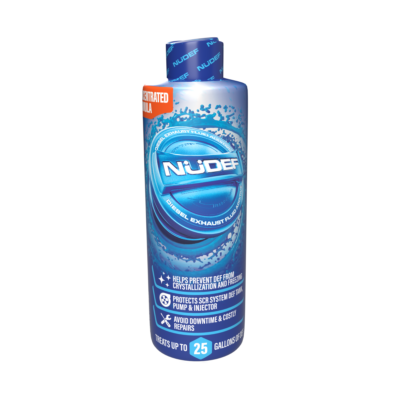
If your boat runs standard ISO 22241 DEF, the fluid faces the same problems it faces in a truck, and a few more: hot engine rooms, long idle stretches at the dock and partial containers stowed for months. NüDef DEF Treatment, Additive & Stabilizer is made for that fluid. It helps prevent crystallization and protects the SCR tank, pump and injector, and one 8 oz bottle treats 25 gallons.
AUS 32 vs AUS 40: The Chart
The two grades share a chemistry and a job. They differ in strength, in the standard behind them and in where you find them.
| Point | AUS 32 (DEF, AdBlue) | AUS 40 (Marine DEF) |
|---|---|---|
| Urea content | 32.5% urea in purified water | 40% high-purity urea solution |
| Standard | ISO 22241 | ISO 18611 |
| API certification | API Diesel Exhaust Fluid Certification Mark | API Marine DEF certification |
| Typical use | On-road trucks, pickups, equipment, smaller SCR systems | SCR on large combustion engines, mainly marine, some rail and land use |
| Treat with NüDef? | Yes, the label covers ISO 22241 and API-certified DEF | The label does not cover AUS 40; follow the engine maker |
API describes the 40% grade as the fluid needed to run SCR converters on large combustion engines, used mainly at sea and increasingly in rail and other land applications. It ties Marine DEF certification to the current edition of ISO 18611, the same way it ties standard DEF to ISO 22241. The engine and its dosing system are set up for one grade, which is why the manual is the first thing to check.
Which Boats Need DEF at All
Two sets of rules put SCR on a boat, and both depend on size, power, build date and use.
The international NOx rule (MARPOL Annex VI, Regulation 13). The U.S. version is 40 CFR 1043.60. Its NOx limits apply to engines over 130 kW installed on vessels covered by the rule. Tier III, the stage that brings SCR aboard, applies inside Emission Control Areas to engines on vessels built on or after January 1, 2016. Outside an ECA the same engines meet Tier II. For recreational vessels under 500 gross tonnage and 24 meters or longer, Tier III starts January 1, 2021.
The yacht exemptions. The ABS regulatory debrief for yachts lists the exemptions IMO approved: vessels under 24 meters designed and used solely for recreation; recreational yachts of 24 meters or more and under 500 GT built before January 1, 2021; and boats with combined propulsion power under 750 kW that cannot fit a Tier III system because of design limits, if the flag administration accepts it. ABS states that SCR is the technology typically applied for yachts to meet Tier III.
EPA Tier 4 for commercial engines. The domestic marine rule, 40 CFR 1042.101, sets Tier 4 standards for Category 2 and commercial Category 1 engines at or above 600 kW, with a NOx limit of 1.8 g/kW-hr. The start dates run by power: 2014 for 2,000 to 3,700 kW, 2016 for 1,400 to 2,000 kW and 2017 for 600 to 1,400 kW. Recreational engines at or above 3,700 kW are certified to Tier 3. Commercial vessels with engines in that power range, such as tugs, ferries and workboats, are the ones this rule reaches.
| Boat | Rule that can bring SCR | From |
|---|---|---|
| Any covered vessel, engines over 130 kW, inside an ECA | IMO Tier III (40 CFR 1043.60) | Built on or after Jan 1, 2016 |
| Recreational, 24 m or longer, under 500 GT, inside an ECA | IMO Tier III | Built on or after Jan 1, 2021 |
| Recreational, under 24 m | Exempt from Tier III | Not applicable |
| Commercial Category 1 at or above 600 kW, and Category 2 | EPA Tier 4 (40 CFR 1042.101) | 2014 to 2017 model years by power |
Where the Emission Control Areas Are
Tier III only bites inside a NOx ECA, so where a boat runs matters as much as when it was built. According to the ABS debrief, the North American area and the United States Caribbean Sea area took effect on January 1, 2016, and the Baltic Sea and North Sea became NOx ECAs with Tier III requirements from January 1, 2021. A yacht that cruises the U.S. coasts, Puerto Rico or the U.S. Virgin Islands is inside the North American or U.S. Caribbean area, so a Tier III build there runs its SCR and burns through DEF.
How a Marine SCR System Uses the Fluid
The chemistry matches a truck’s. The ABS debrief describes it: a reductant, typically ammonia from a urea solution, is mixed into the exhaust ahead of the catalyst blocks, the urea and water break down into ammonia and carbon dioxide, and the ammonia reacts with NOx across the SCR chamber to leave nitrogen and water. The SCR explainer walks through each part on the road side.
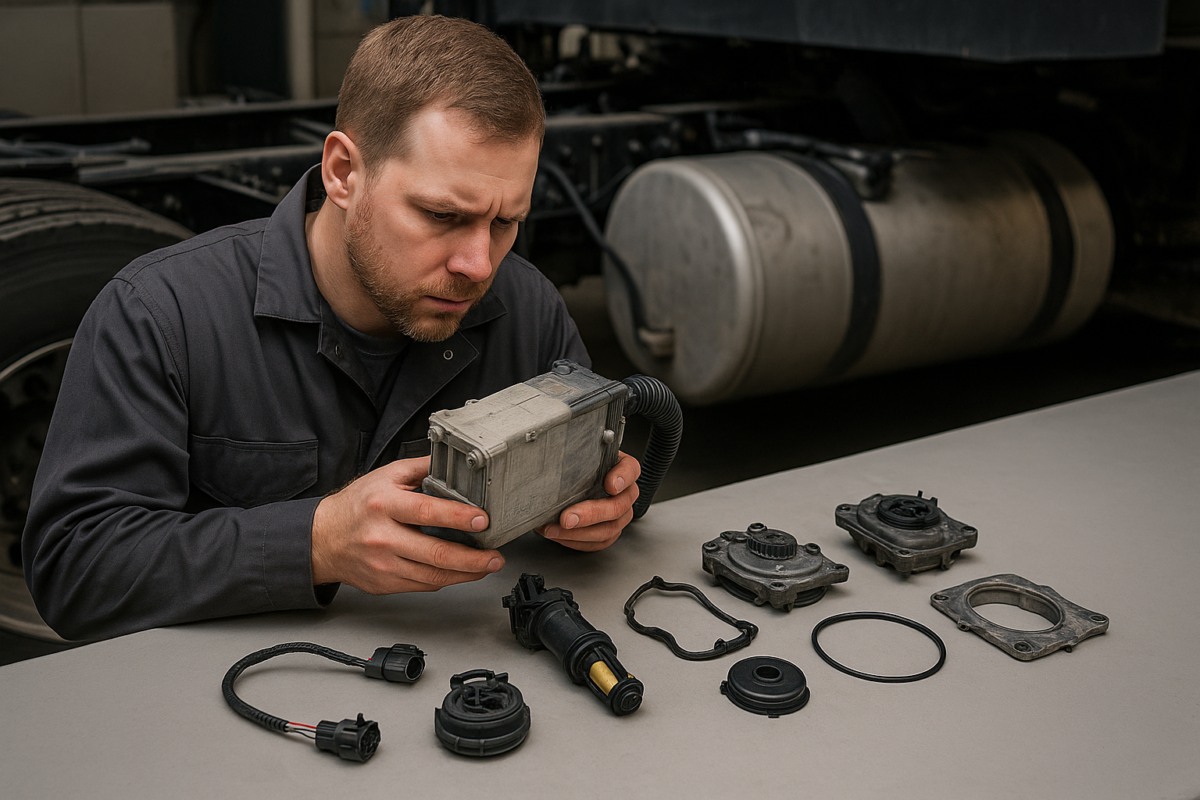
ABS lists the main parts a marine SCR needs: the reductant solution tank, a supply unit, an injection unit and a soot blower system. The tank, the supply lines and the injector are the same three places where DEF causes trouble on a truck. Urea that comes out of solution leaves white crystal on the injector tip, in the lines and around the tank fittings, and those deposits block flow and make the pump work harder. The DEF crystallization guide covers how that happens and what it costs on land.
Storing DEF on a Boat: Heat, Space and Ports
The ABS debrief names the yacht problems plainly. Space is the main one: the SCR and its parts need room the engine room may not have. The engine room may also need cooling arrangements for the correct storage of urea under certain ambient conditions. And the fluid may be hard to find at the ports where yachts berth, which means owners carry more of it aboard and keep it longer.
Each of those points works against standard DEF. Heat speeds up the breakdown of urea and the growth of crystals, cold can freeze the fluid (DEF freezes at about 12°F), and sitting time lets urea come out of solution. A boat that buys fluid in one port and burns it three ports later is storing DEF the hard way: in a warm space, for weeks, often in half-used containers. The DEF shelf-life guide explains how temperature and time affect stored fluid, and the freeze-point guide covers the cold side for boats laid up in northern yards.
Practical habits for AUS 32 aboard:
- Stow sealed containers in the coolest dry space you have, away from the engine and out of sunlight.
- Buy API-certified DEF from sources that move a lot of it, and check the fill date on the container.
- Keep the cap on the boat’s DEF tank clean and closed. Keep salt spray, dust and bilge water out of the fluid.
- Use the oldest container first and avoid keeping a half-used jug open across a season.
Lay-Up, Charters and Long Idle Stretches
Many boats run in bursts: a charter week, then ten days at the dock; a summer season, then months on the hard. Through each idle stretch the DEF sits in the tank and in the lines with the system shut down, warming and cooling with the weather. That is the pattern the NüDef product page describes as the one where a stabilizer earns its keep: engines that sit between jobs, hot climates and summer storage, cold starts and the half-used jug on the shelf.
Before lay-up, check the manual for what the engine maker wants done with the DEF tank, and follow it. At recommissioning, the fluid that goes back in at recommissioning should be fresh, certified and clean. If the boat throws a DEF quality or SCR fault after a long lay-up, the DEF quality warning guide lists the causes to rule out first.
Treating Marine DEF With NüDef
Start with the grade. The NüDef label says to use it with ISO 22241 or API-certified DEF, which is AUS 32, sold as DEF or AdBlue. If your engine runs that fluid, NüDef goes in the boat’s DEF tank or in the DEF container before you pour. If your engine runs AUS 40 to ISO 18611, the label does not cover it, so follow the engine maker and leave the additive out.
For AUS 32 systems, NüDef DEF Treatment, Additive & Stabilizer is a DEF stabilizer and anti-scaling agent. It helps prevent crystallization and protects the SCR tank, pump and injector. One 8 oz bottle treats 25 gallons of DEF. Add it at every refill and do not exceed the label dose. It goes in the DEF only, never in the fuel tank, and it is used with certified DEF, never in place of it. It cannot rescue fluid that is already off spec or replace a failed sensor, pump or injector, so scan and fix the part first, then treat the fluid.
The bottle comes as a Single ($19.99), Double ($37.99), 6 Pack ($109.99) or Case of 30 ($509.99), proudly made in the USA. Owners carrying fluid for a long cruise can keep a 6 Pack aboard with the DEF stock. Operators running several workboats, ferries or a charter fleet can buy by the case or ask about the NüDef wholesale program.
Before You Fill: A Five-Point Check
- Read the grade. The engine or SCR manual names AUS 32 (ISO 22241) or AUS 40 (ISO 18611). Buy only that grade.
- Look for the certification. API certifies both grades, so the container should carry the matching mark or a stated ISO standard.
- Check the date and the seal. Fresh, sealed fluid goes in first; a container of unknown age stays out.
- Treat AUS 32 at every refill. Add NüDef to the tank or the container, following the label: an 8 oz bottle treats 25 gallons.
- Stow the rest cool. Keep spare DEF away from the engine room heat and out of the sun until the next fill.
Boats with an SCR system follow the same rules as any other diesel with DEF: the right grade, clean fluid and a tank kept free of crystal. For AUS 32 systems, order NüDef direct and treat every fill. For other engines that sit between jobs, the generator DEF guide and the RV crystallization guide cover the same problem on land.