Ask when DEF “started” and you get a different answer depending on what you drive. Owners of big rigs remember 2010. Ford and Chevy diesel owners met the blue cap in 2011. RAM owners held out until 2013. And the chemistry under all of it was proven on power-plant smokestacks before most of today’s drivers were born. Here is the whole story — worth knowing, because the history explains almost everything about how the system behaves today, including why the fluid itself became the thing owners have to manage.
The Short Answer: 2010 (Mostly)
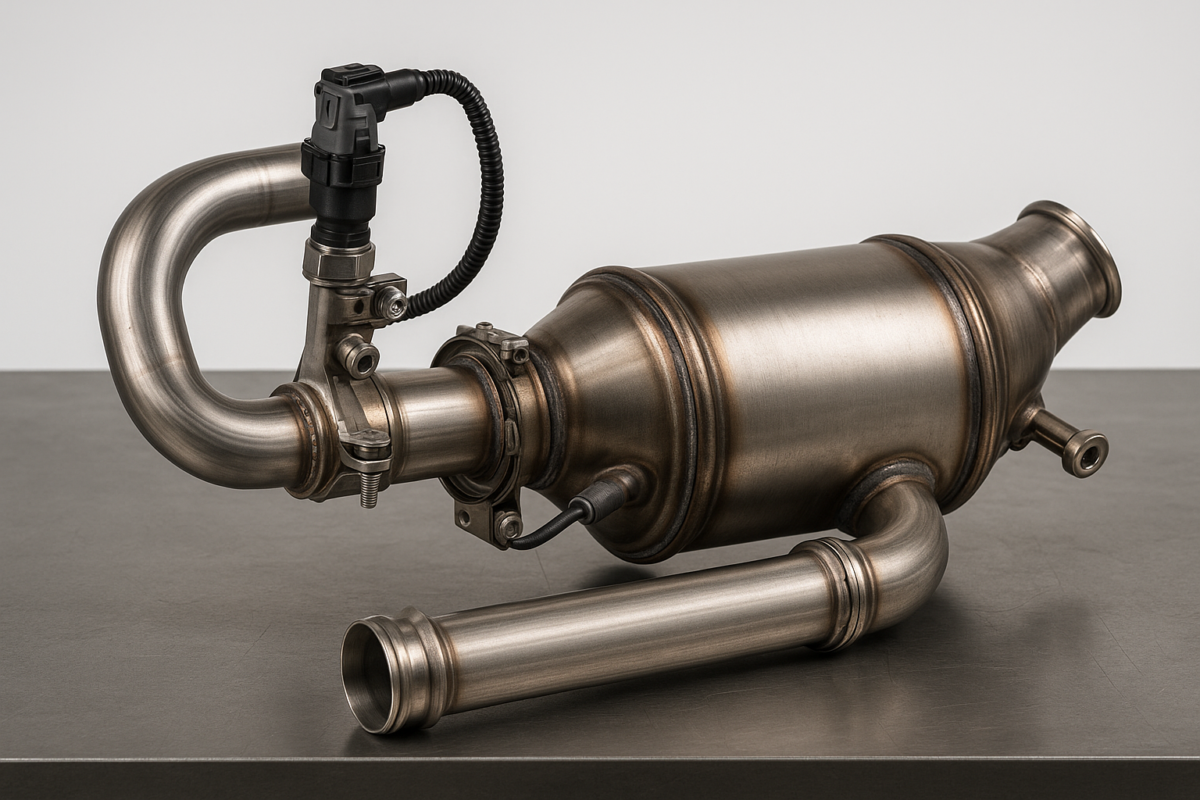
For the American market, 2010 is the year DEF arrived — the model year the EPA’s heavy-duty emissions standards dropped allowable NOx to 0.20 grams per brake-horsepower-hour, a limit roughly 90% below the standard a decade earlier. Nearly every engine maker met it the same way: selective catalytic reduction, which injects a urea solution — diesel exhaust fluid — into the hot exhaust, where it converts NOx into nitrogen and water. From the 2010 model year forward, the DEF tank became standard equipment on U.S. heavy trucks, and the pickups followed over the next three years. If your diesel was built in the last decade and a half, it almost certainly runs on this system.
DEF Timeline at a Glance
The dates that answer the question by vehicle, in one place; the table below the article repeats them with what each step meant for owners.
- 1957: urea-based selective catalytic reduction patented; decades of power-plant service follow.
- 2005–2006: Euro IV brings SCR and AdBlue to European trucks; ISO 22241 standardizes the fluid.
- 2007: U.S. heavy-duty standards add diesel particulate filters; NOx still handled in-cylinder.
- 2010: EPA heavy-duty NOx limit of 0.20 g/bhp-hr; SCR with DEF becomes standard on U.S. Class 8 and most medium-duty trucks.
- 2011: Ford 6.7 Power Stroke and GM Duramax LML launch with SCR; the DEF cap reaches pickups.
- 2013: RAM 6.7 Cummins adopts SCR.
- 2011–2015: Tier 4 Final phases SCR into tractors, construction equipment and generator sets.
- 2027: the next EPA low-NOx step, met with more capable SCR and tighter dosing.
Before DEF: How Diesel Got Cornered
DEF was the end of a squeeze that took decades to close. Diesel’s NOx problem is baked into its virtue: high compression and hot, efficient combustion produce power and fuel economy — and nitrogen oxides. Through the 1990s and 2000s, each round of EPA standards pushed engineers through the alternatives. Retarded timing traded NOx for fuel economy. Exhaust gas recirculation (EGR) cooled combustion at the cost of heat, soot, and complexity. The 2007 standards brought diesel particulate filters for soot. By the time the 2010 NOx limit was set, the in-cylinder tricks were exhausted — the only way to hit the number without wrecking efficiency was to clean the NOx after combustion, in the exhaust stream. That meant SCR, and SCR meant carrying a consumable reductant on board. The chemistry was already waiting: urea-based selective catalytic reduction had been patented back in 1957 and had decades of service scrubbing NOx from power plants and industrial stacks in Japan and Europe. The 2010 mandate simply shrank a smokestack technology down to a truck.
Europe First: AdBlue and Euro IV
Europe beat America to the pump by about five years. The Euro IV standards of 2005–06 pushed European truck makers to SCR, and the urea solution they standardized took the trade name AdBlue — chemically the same 32.5% urea fluid Americans would later call DEF. The European rollout mattered for everyone who came after: it proved SCR at fleet scale, built the first distribution networks, and produced the fluid standard (ISO 22241, more below) that the American market inherited ready-made. When U.S. manufacturers faced 2010, they were adopting a proven system, not gambling on a new one — one reason the transition, for all the grumbling, worked.
Why 2010 Happened in America
The 2010 heavy-duty standards were the final step of a phase-down the EPA had signaled years in advance, and the industry split briefly over how to meet them. Most engine makers went straight to SCR. A notable holdout tried to hit the limit with massive EGR alone to spare customers the second fluid — an approach that struggled against the physics and was eventually abandoned, settling the argument: SCR with DEF became the American standard the way it already was in Europe. The mandate’s designers also understood the obvious loophole — a system you could simply not refill — which is why every SCR vehicle enforces DEF use through the warnings, derates, and speed limits we covered in our run-out guide. The inducement ladder is as much a part of the 2010 story as the catalyst.
The Rollout, Maker by Maker
The blue cap arrived in waves, which is why “what year did DEF start” has make-specific answers:
- Heavy trucks (2010): Class 8 and most medium-duty diesels adopted SCR at the mandate. Fleet fueling networks added DEF pumps at the diesel island within a few years.
- Ford (2011): the all-new 6.7 Power Stroke launched for 2011 with SCR from day one — the first Super Duty diesel with a DEF tank. Our Ford DEF guide picks up that story.
- GM (2011): the Duramax LML brought SCR to Chevy and GMC HD pickups the same model year.
- RAM (2013): the 6.7 Cummins held out longest among the big three, adding SCR for 2013 — details in our RAM DEF guide.
- Diesel cars and SUVs (2009–2014): European makers brought AdBlue-equipped diesels to the U.S. market across the same window.
- Off-road and equipment (2011–2015): Tier 4 standards phased SCR into tractors, construction machines, and gensets on their own schedule.
The Standard Behind the Blue Cap: ISO 22241
One quiet decision made the whole system workable: the fluid was standardized before it scaled. ISO 22241 defines DEF precisely — 32.5% high-purity urea in deionized water, that specific concentration chosen because it is the eutectic point where the mixture’s freezing behavior is most stable, with strict limits on impurities that would poison the catalyst. The API certification program tests and licenses fluids against it. That standard is why any certified jug works in any SCR vehicle from any maker — and it is also the fine print owners trip over: DEF is standardized at manufacture, and heat, age, and contamination can carry a once-certified fluid out of spec long before it reaches your tank. The standard guarantees what you buy, not what you store.
Building the Network: Zero to Every Truck Stop
The least appreciated part of the 2010 story is logistical. A mandate that adds a consumable to millions of vehicles only works if the consumable is purchasable everywhere those vehicles go, and in 2009 the American DEF network barely existed. The build-out that followed was fast and layered: packaged jugs hit truck stops and parts stores first, bulk DEF pumps arrived at the diesel islands of the major travel centers over the next few years, and fleet terminals installed their own bulk storage as volumes justified it. Behind the retail layer grew a production and distribution industry — urea production capacity, certified blenders, dedicated tankers and totes — that simply had not existed at automotive scale before. Within about five years, running out of DEF anywhere on the interstate system became a planning failure rather than a supply problem. That is also why the fluid’s freshness became the modern issue: the network solved availability, but a jug can still sit on a rural shelf through two summers, and bulk tanks can hold fluid past its best. The network gets DEF near you; its condition when it reaches your tank is a separate question.
Transition-Era Myths That Still Circulate
Every technology transition breeds folklore, and 2010’s is remarkably durable. The persistent ones, settled:
- “DEF is toxic / dangerous to handle.” It is a urea-and-water solution — non-toxic, non-flammable, and safe to handle with basic care. It corrodes some metals and crystallizes where it dries, which is a cleanliness issue, not a safety one.
- “It’s mostly water, so you can stretch it or mix your own.” The 32.5% concentration and the purity limits are the whole point — automotive urea and deionized water to ISO 22241 spec. Off-spec fluid trips the quality sensor and can damage the catalyst. Our what-DEF-is-made-of guide covers why the spec is so tight.
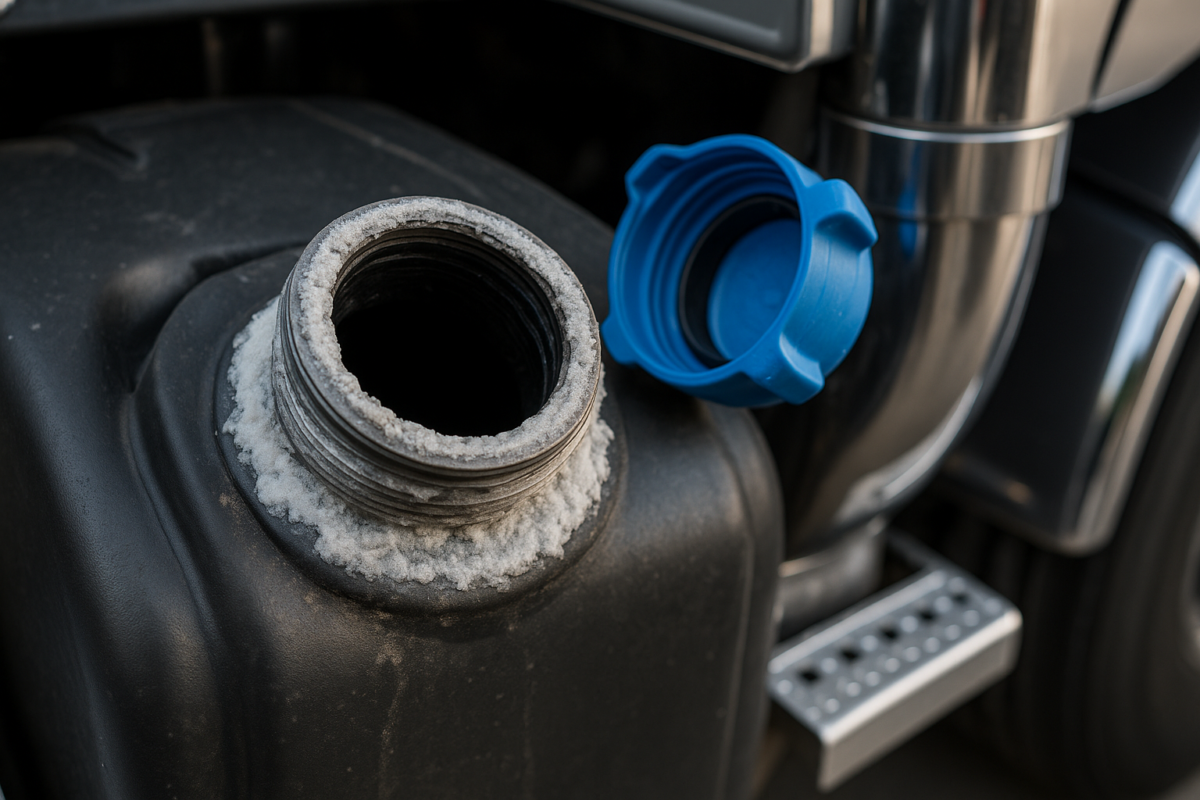
- “DEF ruins engines.” A 2010-era fear that inverted reality: DEF never touches the engine — it enters the exhaust after combustion. The genuine fluid-related failures (crystallized injectors, fouled pumps) come from degraded or contaminated DEF, which is a fluid-quality problem, not an indictment of the system.
- “Deleting it saves money.” The math has never worked once fines, failed inspections, voided warranties, and resale damage enter it — and enforcement has only tightened. Fifteen years on, the delete era is ending in exactly the courtrooms skeptics predicted.
- “Any blue jug is the same.” Certification is the floor, and storage history stands between the certification and your tank. Date codes and sealed containers matter; the certified fluid that baked in a truck bed all August is certified no longer.
How DEF Changed Diesel Ownership
The 2010 transition rewired the ownership experience in ways that are easy to forget were ever new. Diesel owners became two-fluid operators, with a second consumable to buy, store, and plan around. A refill network had to grow from nothing to every truck stop in the country — and did, remarkably fast. Emissions systems became enforcing systems, with warnings and derates that made compliance non-optional. And a new failure vocabulary entered the language: crystallization, dosing valves, NOx sensors, quality faults — the whole DEF trouble-code family that fills diagnostic forums today. What the mandate never fully solved is the part that happens after purchase: DEF is a fussy fluid, sensitive to heat and time, and fifteen years of field experience have made fluid quality — keeping it in spec between the jug and the catalyst — the frontier where most real-world DEF problems now live. That is the gap NüDef DEF Treatment, Additive & Stabilizer exists for: a stabilizer and anti-scaling agent that helps prevent the crystallization and deposits degraded fluid leaves in the pump, lines and injector, so the system the 2010 engineers designed gets fluid it can dose.
If the first fifteen years of DEF history were about mandating the fluid, the current chapter is about maintaining it. Stabilization is the modern layer: NüDef DEF Treatment, Additive & Stabilizer helps prevent crystallization and freeze-related deposits through the storage and duty cycles the 2010 rule-writers never modeled. One 8 oz bottle treats 25 gallons; fleets buy by the case of 30.
Where It’s Headed
DEF is a bigger part of diesel’s future than its past. The next round of EPA low-NOx standards, phasing in from 2027, cuts allowable NOx by another large step — and the engineering answer is more SCR capability: faster catalyst light-off, tighter dosing control, in some designs dual-dosing systems, all leaning harder on fluid quality than ever. Electrification will eventually shrink the diesel fleet, but the heavy work — long-haul, agriculture, construction, marine, backup power — runs on diesel for decades yet, and every one of those engines will run on DEF. The blue cap that showed up in 2010 is not a transitional artifact; it is standard equipment on the working half of the economy. Understanding the fluid — where it came from, what the standard promises, and what it needs from you — is simply part of running a diesel now.
Where That History Leaves DEF Today
Fifteen years after the 2010 mandate, DEF went from a compliance nuisance to standard equipment on every new diesel sold in America. The fluid itself has not changed: still 32.5% urea, still the ISO 22241 spec. What changed is everything around it. Trucks now carry sensors that judge fluid quality in real time, dosing systems meter it by the milliliter, and the warnings they throw stop a truck as surely as an empty fuel tank. The history explains why the system is built the way it is; the maintenance side, from storage rules to keeping the fluid in spec, decides whether it works for you or against you.