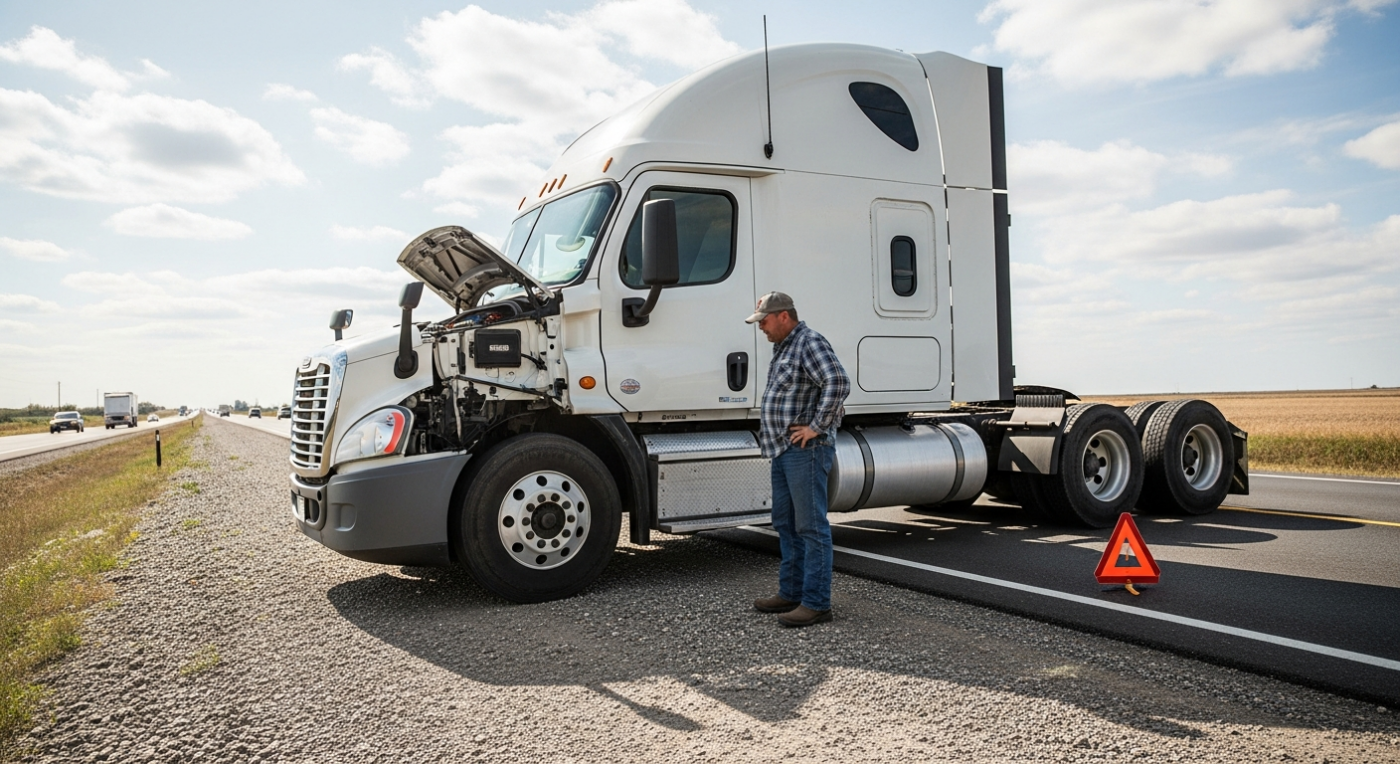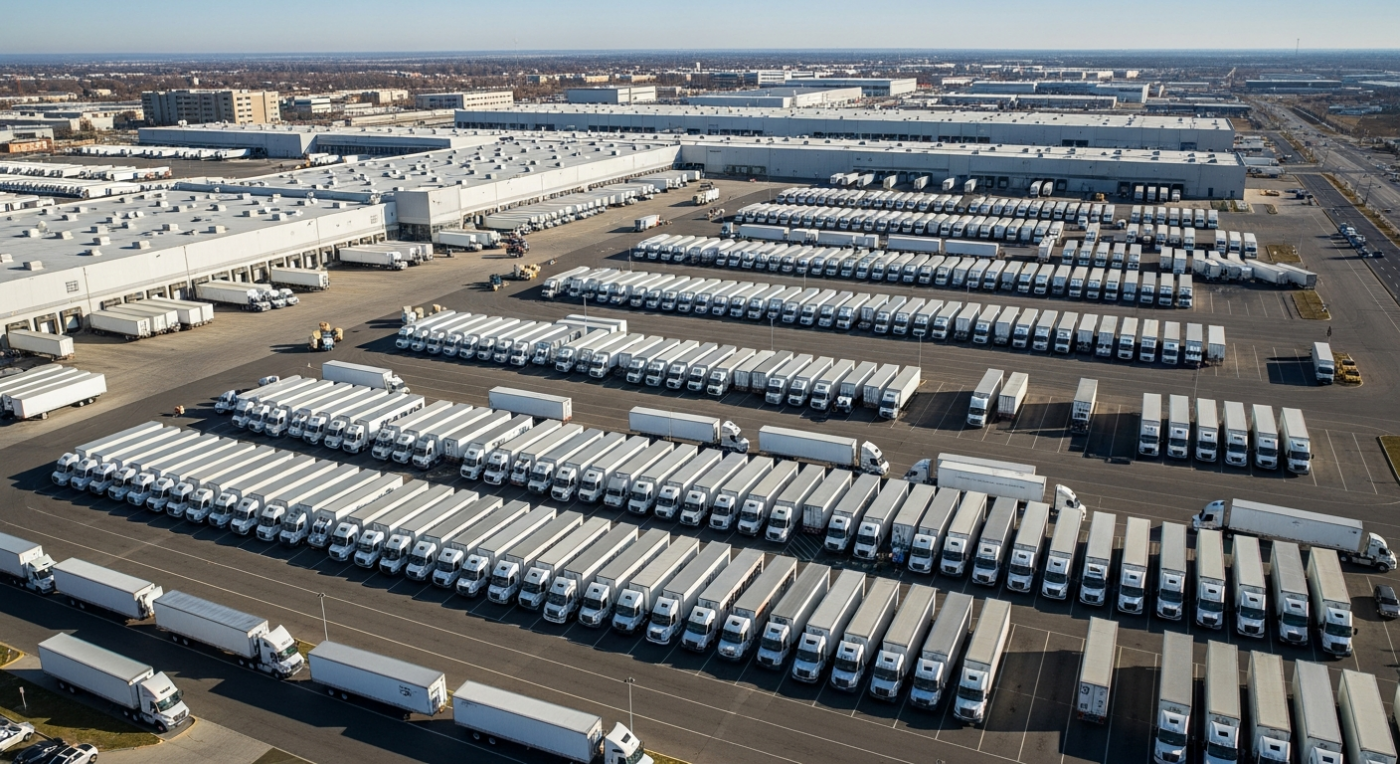
An 18-wheeler sitting in a DEF-related breakdown costs $800 to $1,500 per day in lost revenue before the repair bill. The repair itself, whether SCR injector replacement, catalyst cleaning, or worse, runs $3,000 to $8,000. For owner-operators running their own loads and for fleet managers operating 25 or 250 trucks, DEF system failures are one of the most financially damaging maintenance events in Class 8 operation.
The frustrating part is that many DEF failures are preventable. Here is why they happen in 18-wheelers specifically, what the fault code progression looks like, and how a DEF additive program helps reduce that exposure.
Why Class 8 Trucks Are Most Vulnerable to DEF Failures
Class 8 trucks run far more DEF through their SCR systems than a pickup does. More DEF consumption means more injection events, and more injection events means faster crystallization accumulation at the dosing injector nozzle where DEF evaporates after each dose.
Temperature cycling compounds the problem. Interstate trucks move through climate zones, transition between loaded highway runs and overnight parking, and idle for extended periods in conditions that create temperature swings the DEF system was not designed to handle continuously. Each temperature transition accelerates the evaporation-crystallization cycle at the injector.
Duty cycle intensity is the third factor. A Class 8 truck climbing grades at gross vehicle weight puts the SCR system under peak demand just when DEF quality matters most. Any variation in DEF concentration or dosing precision at high load produces measurable catalyst efficiency loss, which triggers P20EE and P204F fault codes.
Most Common DEF Problems in Semi Trucks
DEF problems in 18-wheelers fall into three categories based on where in the system the failure occurs:
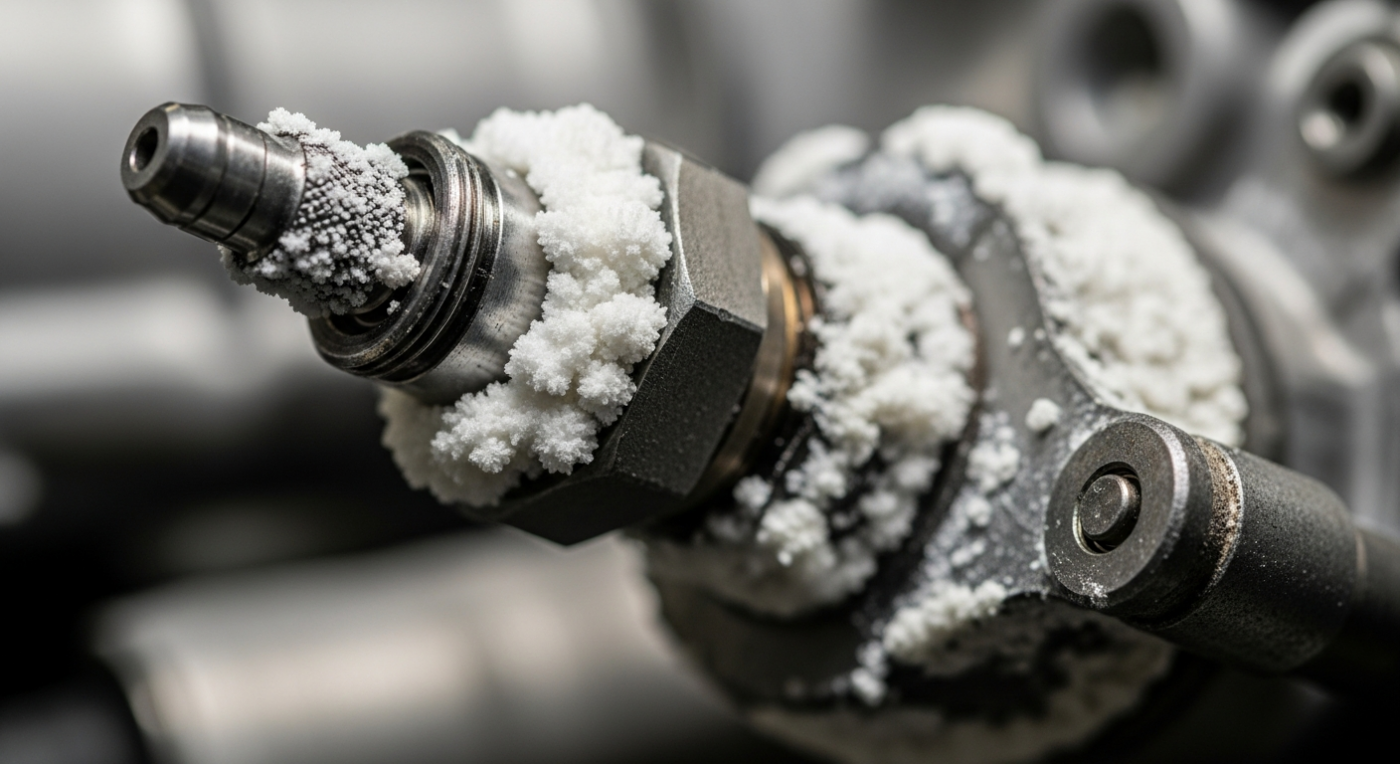
Dosing injector crystallization is the most common problem and a frequent cause of dosing-related fault codes. Urea crystals build up at the injector nozzle, restricting fluid flow and causing inconsistent dosing. Once crystals have built up, the injector needs physical cleaning or replacement. Treating fresh DEF at every fill helps keep them from forming again.
SCR catalyst fouling causes P20EE codes and typically follows untreated dosing problems. When the injector is delivering inconsistent doses, the catalyst receives DEF at non-optimal concentrations over time. Catalyst fouling repair is significantly more expensive than injector work and in some cases requires catalyst replacement, which often runs several thousand dollars.
Quality sensor contamination triggers P207F codes and can result from either genuine DEF quality issues or from crystallization particles that reach the sensor. This fault code often appears before the more serious injector or catalyst codes and is your earliest warning of a developing DEF system problem.
What a DEF Failure Costs Per Event
The total cost of a DEF failure in a Class 8 truck has three components that most fleet managers undercount:
Direct repair cost: Roughly $800 to $8,000 depending on what failed and how long the fault code was ignored. Injector replacement alone is $1,100 to $2,300. Catalyst involvement pushes the total to $3,000 to $8,000.
Downtime cost: A DEF fault that forces a truck off the road can cost an OTR owner-operator roughly $800 to $1,500 per day in lost revenue, on top of the repair bill. That is a rough estimate. It varies by lane and load.
Cascade cost: A truck that derate-limps to a repair facility in Stage 2 derate typically arrives with more catalyst damage than one towed in at first fault. Continuing to operate through early derates can turn a smaller repair into a much larger one.
The Engine Derate and Shutdown Sequence
Every modern Class 8 diesel truck engine control module enforces a fault code response sequence that escalates from warning to severe derate over multiple drive cycles. The exact stages and limits vary by engine maker. Understanding the sequence changes how drivers respond to early warnings:
Stage 1 (Warning): First fault code occurrence, no power derate. Amber warning light. This is the window to address the issue at minimal cost. Many drivers keep driving through Stage 1 without stopping.
Stage 2 (Derate): The fault persists. Engine power and road speed are limited. The exact limits vary by engine maker and model year. The longer a dosing fault runs, the more risk to the catalyst.
Stage 3 (Severe Derate): Persistent fault cycles. Road speed is held to a severe limit. At this point the truck is functionally inoperable on the highway and requires tow-in.
Stage 4 (Idle or No Restart): On some platforms, extended severe derate ends with the engine limited to idle or unable to restart until the fault is repaired.
How to Prevent DEF System Failures in Your Fleet
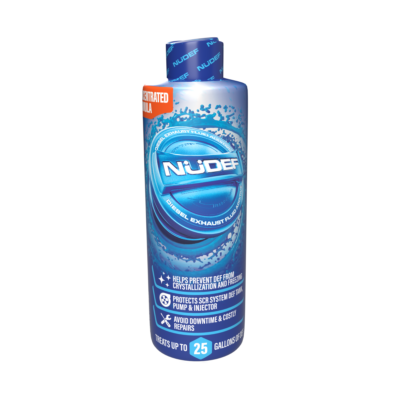
DEF crystallization is chemistry, and it is easier to prevent than to fix. NüDef is a DEF stabilizer and anti-scaling agent that helps prevent the crystal buildup that leads to injector restriction and sensor contamination.
The prevention protocol is simple: one dose of NüDef per 2.5 gallons of DEF, added to the DEF tank at every fill. Each bottle treats 25 gallons. The additive mixes throughout the tank and is present in the DEF throughout every injection event, providing continuous protection at the injector nozzle where crystallization initiates.
For trucks with existing fault code history, diagnose the fault first. If the DEF is off-spec, drain the tank, refill with fresh ISO 22241 / API certified DEF, and treat it at the standard dose. NüDef helps prevent new crystals from forming. It does not fix existing deposits or failed parts. Do not exceed the recommended dose.
Dosing Protocol and Fleet Implementation
Standard dosing for 18-wheelers: one dose of NüDef per 2.5 gallons of DEF added, or one bottle per 25 gallons. Do not exceed the recommended dose.
Fleet implementation options:
- Per-vehicle treatment: Store NüDef at the fuel island or DEF pump. Train drivers to add the right dose at every DEF fill. This works well for owner-operator fleets and smaller operations where driver compliance is high.
- Bulk tank treatment: For depots with centralized bulk DEF storage, add NüDef at the rate of one case (30 bottles) per 750 gallons. Every truck that fills from the tank is automatically treated without per-vehicle action.
- Mobile DEF delivery: If you use a mobile DEF service for fleet fills, coordinate with the service to add NüDef at each delivery.
Fleet wholesale accounts are available for Class 8 operations. Contact NüDef for fleet pricing and account setup.