P2048 is one of the reductant-system codes that lands a diesel in the shop with a dashboard warning and a countdown to a speed limit. It points at the DEF injector, and while the fix is often straightforward, the code has a habit of coming back if you treat the symptom and skip the cause. This guide walks through exactly what P2048 means, how to run it down on your own truck, what the repair runs, and how to keep it from returning.
What the P2048 Code Means
P2048 is a generic OBD-II powertrain code defined in SAE J2012 as Reductant Injection Valve Circuit Low (Bank 1, Unit 1). The reductant injector, also called the DEF injector or dosing valve, is the metering nozzle that sprays diesel exhaust fluid into the exhaust stream just ahead of the SCR (selective catalytic reduction) catalyst. Inside the catalyst, the DEF breaks down into ammonia and converts NOx into harmless nitrogen and water. The injector is an electrically controlled valve, and the engine control module watches its circuit constantly.
When the module commands the injector and reads the control circuit voltage as lower than the expected range, it logs P2048. In plain terms, the controller told the DEF injector to fire and the electrical feedback came back wrong on the low side. That points at the injector itself, its wiring, or the signal the module is receiving. Because emissions faults are treated seriously by the engine software, P2048 rarely sits quietly; it usually brings a warning light and a warning that a derate is coming if it is ignored.
It helps to picture how the injector actually works. The dosing control unit builds DEF pressure with a pump, then the module pulses the injector open for precise, millisecond-long shots timed to exhaust temperature and NOx demand. The nozzle atomizes the fluid into a fine spray so it flashes to ammonia before it reaches the catalyst. That injector is a solenoid-driven valve on a monitored circuit, and the module knows the electrical signature of a healthy pulse. When crystallized deposits change how the valve moves, or a wiring fault changes the circuit, the feedback drifts out of range and P2048 sets. Understanding that the code is about the injector’s electrical behavior, not the DEF level, keeps you from chasing the wrong part.
Symptoms You’ll Notice
P2048 shows up through the emissions warning system rather than through obvious driveability problems at first. The signs, roughly in the order they appear:
- Check-engine light and often a separate DEF or SCR warning lamp.
- A dashboard message and countdown — many trucks display a “DEF system fault, speed limited in X miles” or a starts-remaining countdown.
- Reduced engine power as the software pulls timing and fueling to protect the emissions system.
- A low-speed derate if the code is ignored long enough — commonly a 5 mph limp mode that will not clear until the fault is repaired and the drive cycle completes.
- No SCR dosing — the DEF injector stops metering, so downstream NOx readings climb and the system may log additional efficiency codes.
- Higher or unchanged DEF level — because the injector is not spraying, DEF consumption can drop while the fault is active.
The derate is the part that gets attention. A fleet truck stuck at 5 mph is off the road, so P2048 is worth chasing as soon as it appears rather than waiting for the countdown to run out.
What Triggers P2048
A handful of root causes account for nearly every P2048. Working from most to least common on modern diesels:
- A clogged or failed DEF injector. The number-one cause. DEF that has degraded or sat in the system crystallizes into hard urea deposits, and those deposits build up on the injector tip and internal passages. A partially blocked injector draws abnormal current, and a seized one reads open or low. Heat cycling near the hot exhaust accelerates the crystallization.
- Wiring or connector faults. The injector lives in a hot, vibration-heavy spot on the exhaust. Chafed wires, a corroded connector, a loose pin, or a damaged harness all drop the circuit reading and set the code.
- Low DEF pressure at the injector. If the DEF pump or supply line cannot hold pressure, the injector behaves abnormally and the module may flag its circuit. This often shows alongside pressure codes like P20E8.
- Contaminated or out-of-spec DEF. Fluid that is diluted, mixed with the wrong concentration, or contaminated crystallizes faster and fouls the injector. Correct DEF is 32.5% high-purity urea in deionized water; anything off that spec shortens injector life.
- A failed reductant control module or ECM driver. Least common, but a bad injector driver inside the control module can read low even with a healthy injector.
Notice that two of the top causes trace back to DEF quality. Crystallization is the recurring villain in reductant-injector faults, which is why prevention matters as much as the repair.
P2048 vs. Related Reductant Codes
P2048 travels in a family of reductant codes, and reading them together points you at the real problem faster. A single P2048 with no companions usually means the injector or its wiring. P2048 stacked with pressure or flow codes usually means the supply side is starving a healthy injector.
- P2047 / P2049 — reductant injector circuit open or high, the sibling faults to P2048’s low reading. Same component, different electrical failure mode.
- P20E8 — reductant pressure too low. When this rides with P2048, chase the pump and lines before condemning the injector.
- P204F — reductant system performance, a broader “the system is not doing its job” code that a clogged injector can trigger.
- P203F — reductant level low, a simple “fill the tank” fault that is unrelated but often seen nearby.
- P20EE — SCR NOx catalyst efficiency below threshold, a downstream consequence when the injector has stopped dosing.
For the full map of how these fit together, see our DEF trouble codes guide. Reading the whole set before you grab a wrench saves throwing parts at the truck.
How to Diagnose P2048, Step by Step
You can narrow P2048 down with a scan tool and a multimeter before spending on parts. Work in this order:
- 1. Pull codes and freeze-frame data. Note every stored code, not just P2048. Companions like P20E8 (pressure) or P204F (performance) change where you start. Record the freeze-frame conditions.
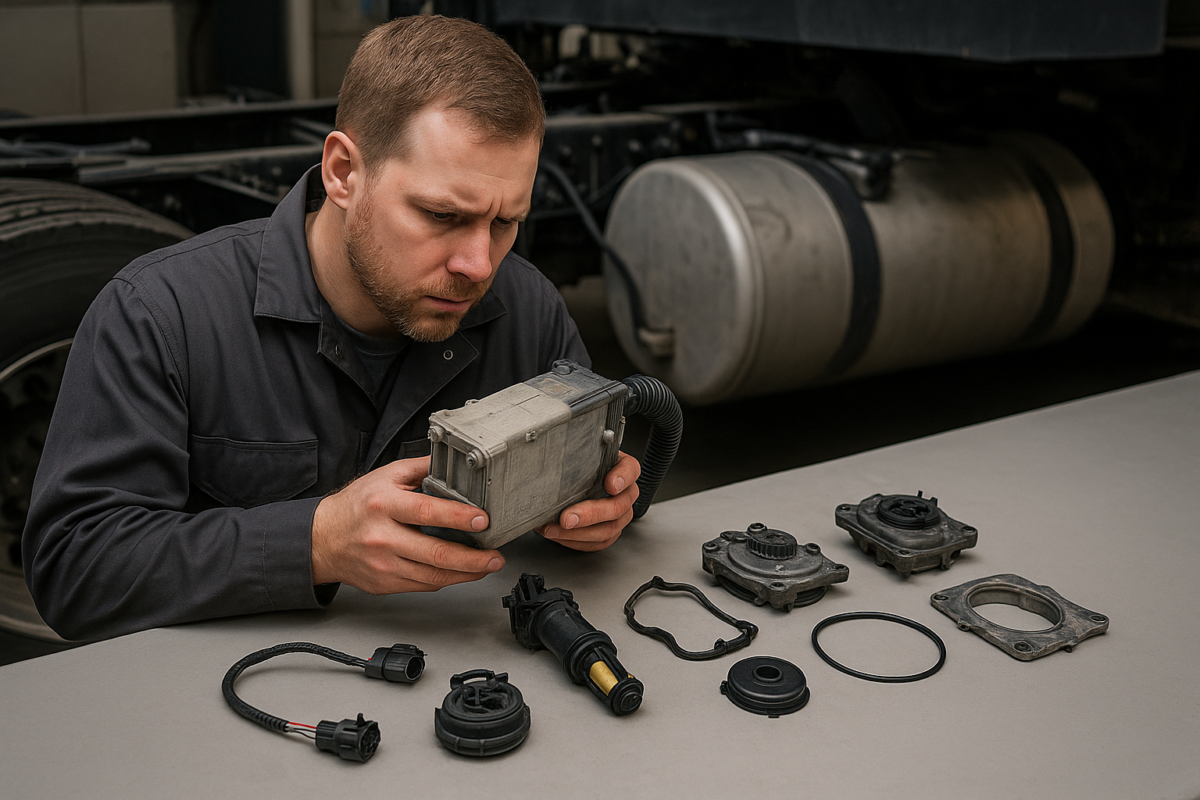
- 2. Inspect the injector connector and harness. Unplug the reductant injector connector and look for corrosion, spread or backed-out pins, melted insulation, or chafe where the harness routes near the exhaust. This finds a large share of P2048 faults in minutes.
- 3. Measure injector resistance. With the connector off, measure across the injector terminals and compare to the manufacturer spec (commonly a low single-digit to low-tens ohm value depending on the system). An open or badly out-of-range reading condemns the injector.
- 4. Check the circuit back to the module. Verify continuity and the ground/supply on the harness side. A break or high resistance in the wiring reads the same low signal that a bad injector does, so confirm which side is at fault.
- 5. Check DEF pressure. If a pressure or pump code is present, test that the system builds and holds the commanded pressure. A starving injector can throw P2048 while being perfectly healthy.
- 6. Inspect the injector tip for crystallization. Where the design allows access, pull the injector and look at the nozzle. Hard white or yellow urea deposits confirm crystallization as the cause and tell you to address DEF quality, not just swap the part.
- 7. Verify DEF quality. A cheap refractometer reads DEF concentration; it should sit at 32.5%. Off-spec or contaminated fluid explains repeat failures.
By the end of that sequence you will know whether you are looking at the injector, the wiring, the supply side, or the fluid. That is the difference between a $60 connector repair and an unnecessary injector.
How to Fix It
The repair follows the diagnosis:
- Clean the injector when deposits are light and the injector still tests within spec. A proper DEF-deposit cleaning can restore flow without a new part. Our guide on cleaning a DEF injector walks through it.
- Replace the injector when it is seized, out of resistance spec, or too crystallized to recover. Torque to spec and use a new gasket or seal so exhaust does not leak past it.
- Repair the wiring or connector for a harness fault — replace corroded pins, re-pin a loose connector, or splice and protect a chafed section, then loom it away from the exhaust heat.
- Address the supply side if pressure was low: repair or replace the DEF pump, clear a blocked line, or replace a failed pressure sensor so the injector gets what it needs.
- Flush the system and refill with in-spec DEF whenever crystallization or contamination is involved. Putting the same degraded fluid back guarantees a repeat.
After the repair, clear the codes and run a full drive cycle so the SCR system re-tests. The derate will not lift until the monitor completes and confirms the injector is dosing again.
What the Repair Costs
P2048 is usually a mid-range repair rather than a major one. A reductant injector itself typically runs $300–$700 for the part, with another hour or two of labor depending on access. A wiring or connector repair is far cheaper, often $50–$300. If the real problem is the DEF pump feeding the injector, budget $400–$900 for that assembly. A simple injector cleaning plus a fresh, in-spec fill can come in under $200 when the injector is salvageable. The expensive path is the one where the injector gets replaced, the underlying DEF-quality problem gets ignored, and the new injector crystallizes and fails again a few thousand miles later.
Before you pay out of pocket, check the warranty. In the United States, SCR and DEF-system components are emissions parts, and federal emissions warranty covers some of them for set periods, with different terms for light-duty and heavy-duty engines. Check your warranty booklet for which DEF components are included. A reductant injector that fails on a newer truck may be covered. Crystallization from neglected or off-spec DEF, though, can be ruled a maintenance issue rather than a defect, which is one more reason to run quality fluid and keep receipts. If the truck is in warranty, let the dealer document the failure before you start swapping parts yourself.
Vehicle-Specific Notes
P2048 is a generic code, so it appears across brands, but access and quirks vary:
- 6.7L Cummins (RAM, medium-duty). The reductant injector sits on the DPF/SCR housing and is prone to crystallization on trucks that idle heavily or run short cycles. Cummins platforms are also where DEF crystallization shows up most, so check the tip closely.
- 6.6L Duramax (GM). Watch the injector connector and the harness routing near the exhaust; heat-related wiring faults are common here alongside crystallization.
- 6.7L Power Stroke (Ford). Confirm DEF quality first on these; off-spec fluid is a frequent contributor. Ford also tracks starts-remaining aggressively, so address the code before the countdown runs down.
- Mercedes Sprinter. The reductant injector and lines are tightly packaged; verify the connector and check for low pressure, which Sprinters flag readily.
Across all of them, the pattern holds: a clogged injector from crystallized DEF is a common root, and fluid quality is the common thread.
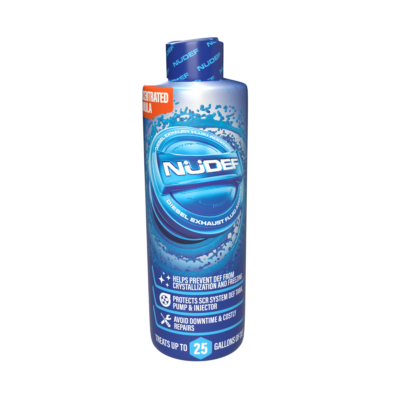
Because crystal buildup can damage the injector itself, prevention belongs in this guide: NüDef DEF Treatment, Additive & Stabilizer helps prevent DEF crystallization and helps protect the pump and injector. It does not repair a wiring fault or a failed injector coil, and it does not clear the code. One 8 oz bottle treats up to 25 gallons.
Preventing P2048 From Coming Back
Because crystallization is a common factor in reductant-injector failures, prevention comes down to fluid quality and treatment:
- Use fresh, high-purity DEF at the correct 32.5% concentration, and avoid fluid that has been sitting open or exposed to heat.
- Stabilize the DEF you run. Standard DEF degrades over time and heat cycles, and that breakdown is what forms the crystals that clog injectors. NüDef is a DEF additive and stabilizer that helps prevent DEF crystallization. Treating the fluid protects the injector you just cleaned or replaced.
- Do not let the system sit dry or half-full for long periods, which concentrates and crystallizes residual fluid around the injector.
- Fix supply-side faults promptly so the injector is never run against low or erratic pressure.
- Keep the injector connector clean and protected from heat and moisture at every service.
Fix the circuit or injector, then treat the fluid. Replacing the injector while running the same degrading DEF puts you on the clock for a repeat.
More in the reductant-code series: DEF trouble codes index · P203F · P20E8 · P249D · P204F