July 2026 update: Midwest fleets get both extremes, summer heat that ages DEF and drives crystallization, and winter cold that freezes it. NüDef stabilizer helps prevent crystallization, and its sell sheet says it helps prevent freezing. Running lanes into other regions? See our Texas and Southeast guides.
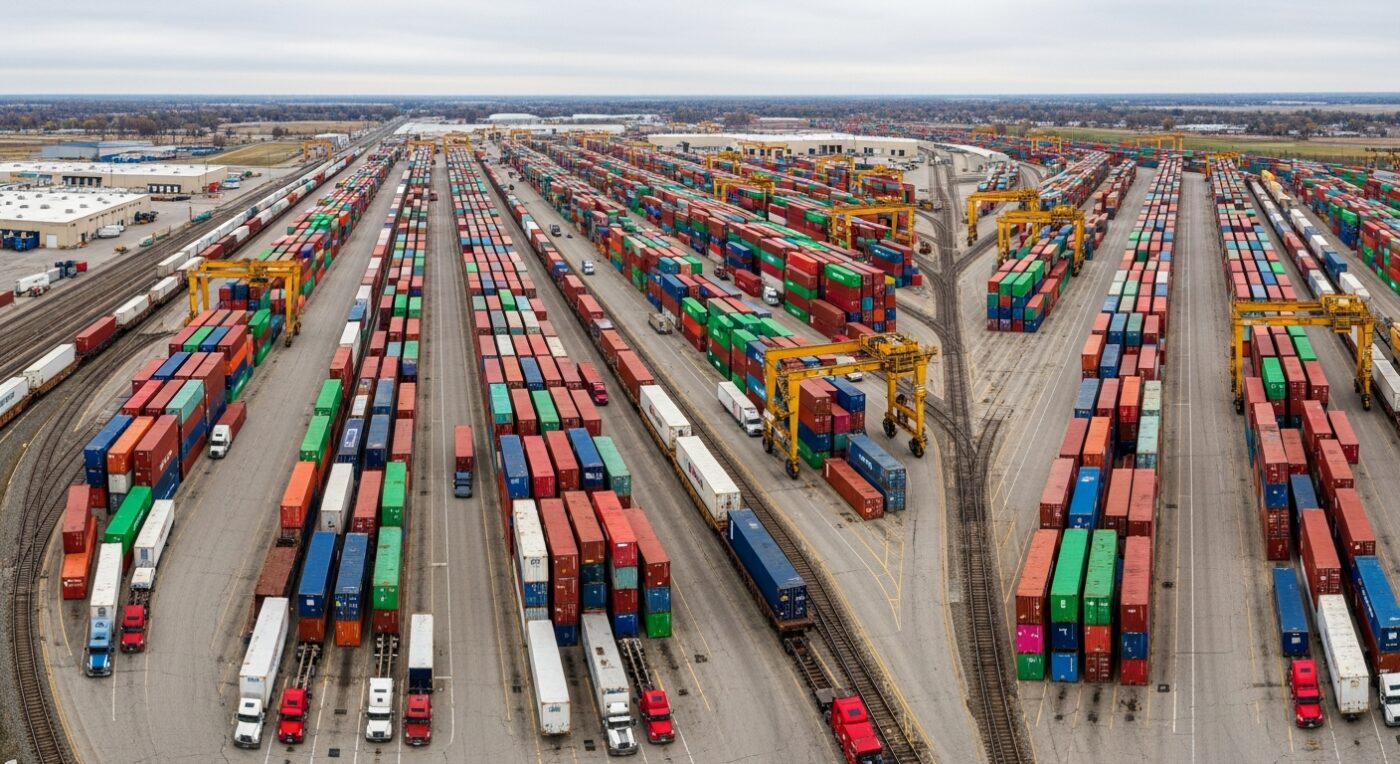
Chicago isn’t just a city with a skyline. It’s the place where six Class I railroads converge, one of the busiest intermodal hubs on the continent, and a crossroads for east-west freight. If you’ve hauled a load across I-80 or I-90, you’ve been part of Chicago’s gravity. The trucks pulling those containers, and the thousands more running parts to auto plants, grain to elevators, and livestock feed across four states, all run DEF systems. And those systems take a beating from Midwest weather.
The Midwest doesn’t have one weather problem. It has a cycling problem. That distinction matters for every fleet running diesel between Chicago and Cleveland.
The Freeze-Thaw Problem Nobody Talks About
Fleet managers in Michigan know cold. Fleet managers in Texas know heat. But the Midwest’s DEF challenge isn’t about one extreme — it’s about the swing.
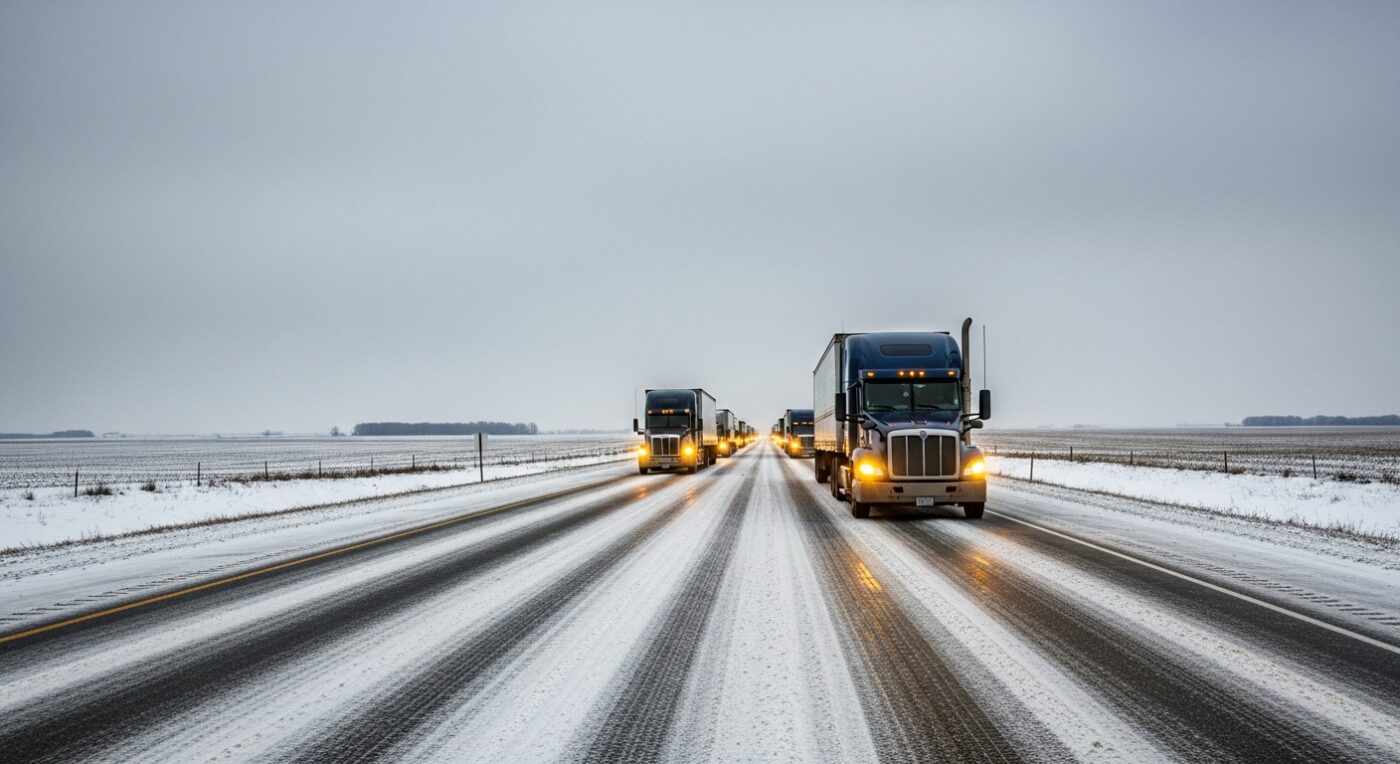
Great Lakes spring is a case study in thermal chaos. A Tuesday in April hits 62°F. By Thursday, you’re scraping frost off windshields at 24°F. The following Monday, it’s back to 55°F. This isn’t unusual weather. It’s the pattern — and it repeats from late February through mid-May across Illinois, Ohio, Indiana, and Michigan.
Freezing on its own doesn’t ruin DEF. At 32.5% urea, DEF freezes and thaws evenly and keeps its concentration. The cycling is still hard on the system around it. Frozen DEF can’t dose until the tank and line heaters thaw it, so heater circuits work hard every cold morning. Ice and condensation form around caps and fittings, and road salt gets into worn seals. Every warm spell followed by a cold snap means more chances for moisture and contamination to get in.
NüDef helps prevent crystallization, and its sell sheet says it helps prevent freezing. For Midwest fleets that see summer heat and winter cold on the same trucks, treating every fill covers both seasons. Keep the DEF heaters in working order and the caps sealed too.
If you’re looking for background on why DEF breaks down in the first place, we’ve covered the chemistry in detail: What Causes DEF Crystallization?
The Manufacturing Corridor: Auto Plants, Parts Shuttles, and Just-in-Time DEF Demand
The Midwest isn’t just a freight pass-through. It’s where things get built.
Toledo is home to the Stellantis Toledo Assembly Complex, which builds the Jeep Wrangler and Gladiator, and the city’s supplier network stretches across northwest Ohio. Northeast Ohio’s logistics infrastructure has served the Lordstown complex for decades. Ford runs Michigan Assembly in Wayne and Ohio Assembly in Avon Lake, and sources from many Midwest suppliers. Honda operates major Ohio plants in Marysville, East Liberty, and Anna. Toyota builds vehicles at its Princeton, Indiana plant.
Every one of these plants runs on just-in-time delivery. Parts arrive hours — sometimes minutes — before they’re needed on the line. The trucks making those deliveries are running tight loops: supplier to plant, plant to supplier, all day, every day. They’re short-haul, high-frequency diesel operations, and their DEF systems go through more start-stop thermal cycles in a week than a long-haul truck sees in a month.
A parts shuttle running between a Toledo supplier and Stellantis’s assembly complex might fill its DEF tank once a week. But that tank is cycling between a heated warehouse dock and a frozen outdoor lot multiple times per shift during winter. The DEF doesn’t sit at one temperature long enough to stabilize. It’s constantly transitioning, constantly stressed.
Treating at every fill is the protocol that makes sense for these operations. One bottle of NüDef treats 25 gallons, at one dose per 2.5 gallons of DEF added.
Four Corridors, Four Fleet Profiles
I-80/I-90: The East-West Backbone
This is the corridor that ties the Midwest together. I-80 and I-90 run from Chicago through the Indiana Toll Road, across northern Ohio, and into Pennsylvania. Along the way, you pass through Gary, South Bend, Toledo, Cleveland, and Youngstown. It’s the primary route for intermodal containers moving between Chicago’s rail yards and the eastern seaboard.
The fleet mix here is heavily tilted toward intermodal dray and long-haul truckload. Containers that come off rail in Chicago get drayed to distribution centers across the region. Eastbound loads heading for East Coast ports follow I-80/I-90 through the Lake Erie snow belt — one of the most aggressive winter driving environments in the lower 48. Lake-effect snow events can dump two feet overnight on the stretch between Cleveland and Erie, and the salt trucks that follow coat everything, including DEF tank caps and fittings, in corrosive brine.
If you’re running this corridor through winter, check your DEF fill caps for salt corrosion at every stop. A compromised seal lets moisture in, and moisture contamination combined with freeze-thaw cycling is the fastest path to an SCR fault. For fleet managers dealing with any DEF-related fault codes, we’ve broken down the most common ones and what they mean: DEF Trouble Codes Explained.
I-75: Detroit to Cincinnati Through the Heart of Ohio
I-75 is the Midwest’s north-south manufacturing artery. It runs from the Canadian border at Detroit through Toledo, Findlay, Dayton, and Cincinnati. Nearly every mile of this corridor passes through active manufacturing territory.
Detroit’s fleet concentration is obvious — OEM logistics, supplier networks, and the endless flow of finished vehicles heading to dealer lots across the country. But the I-75 corridor south of Toledo is where the density gets interesting. Findlay is Marathon Petroleum’s headquarters and a hub for fuel distribution logistics. Dayton-area fleets serve Wright-Patterson Air Force Base, one of the largest military installations in the country. Cincinnati sits at the Ohio-Kentucky border and functions as a distribution gateway between the Midwest and the Southeast.
The I-75 fleet profile is diverse: auto haulers, tanker trucks, military logistics contractors, and LTL carriers all sharing the same corridor. Each fleet type has different DEF consumption patterns, but they all share the same freeze-thaw exposure from November through April.
US-131 and I-96: Grand Rapids and West Michigan
Grand Rapids is the second-largest city in Michigan and one of the most active freight hubs on the western side of the state. The US-131 corridor runs north-south through Grand Rapids, connecting the city’s manufacturing base to Kalamazoo to the south and Traverse City to the north. I-96 runs east-west from Grand Rapids to Lansing and Detroit, serving as the primary route for auto parts, furniture manufacturing logistics, and food distribution.
Grand Rapids fleets see hard freeze-thaw cycling. Lake Michigan’s proximity drives lake-effect weather that can swing temperatures 30 degrees in 48 hours during transition seasons. DEF in truck tanks parked at Grand Rapids distribution centers goes through these swings repeatedly from late October through mid-April. For fleet managers looking for a DEF additive in Grand Rapids, NüDef helps prevent crystallization at every fill, and working heaters handle the cold.
The greater Grand Rapids area also hosts significant food processing and distribution operations, including cold-chain logistics fleets that run refrigerated trailers year-round. Where reefer units run DEF-equipped diesel engines, they add to the fleet count beyond the tractor itself. Treating both the tractor and reefer unit DEF systems with NüDef at every fill helps protect the cold-chain operation from crystallization-related downtime. Grand Rapids-area fleets interested in wholesale DEF additive pricing can reach NüDef through the wholesale program.
I-65: Gary to Indianapolis to Louisville
I-65 is Indiana’s freight spine. It connects the heavy industrial operations around Gary and the Chicago metro’s southern suburbs to Indianapolis — a city that’s quietly become one of the largest distribution hubs in the country. FedEx, Amazon, and multiple major retailers have built massive fulfillment operations along the I-65/I-70 interchange in Indianapolis precisely because of the central location.
South of Indianapolis, I-65 continues through Columbus, Indiana (home of Cummins’ global headquarters, which builds diesel engines and aftertreatment systems used in many heavy-duty trucks) and on to Louisville. The trucks running past Cummins’ front door need their SCR systems protected from the Indiana weather like everyone else’s.
Toyota’s Princeton, Indiana assembly plant sits just off I-69, feeding into the I-65 corridor. The supplier logistics network around Princeton adds hundreds of diesel trucks to the regional fleet count.
I-55/I-57: Chicago South Through Illinois
These two corridors run from Chicago’s southern suburbs down through central and southern Illinois. I-55 heads southwest toward Springfield and St. Louis. I-57 runs due south toward Champaign, Effingham, and eventually connects to I-24 toward Nashville.
The fleet profile on these corridors shifts dramatically from north to south. Near Chicago, it’s intermodal dray and urban distribution. By Springfield, it’s agricultural — grain haulers, livestock transport, and farm equipment on trailers heading to dealerships or auction yards. South of Effingham, you’re in coal country and ag country simultaneously, with a fleet mix that includes everything from owner-operators pulling flatbeds to corporate ag fleets running multiple trucks.
Harvest season — roughly September through November — turns these corridors into a DEF stress test. Grain trucks that have been sitting idle since spring get pressed into service with DEF that’s been sitting in tanks through an entire summer. That DEF has gone through months of thermal cycling and may have degraded well below spec. Treating stored equipment before harvest mobilization is one of the most impactful things an agricultural fleet can do. If you need to flush a tank that sat all summer, here’s the process: How to Clean a DEF Tank.
Farm & Home Supply and the Midwest Retail Network
The Midwest already has NüDef on retail shelves.
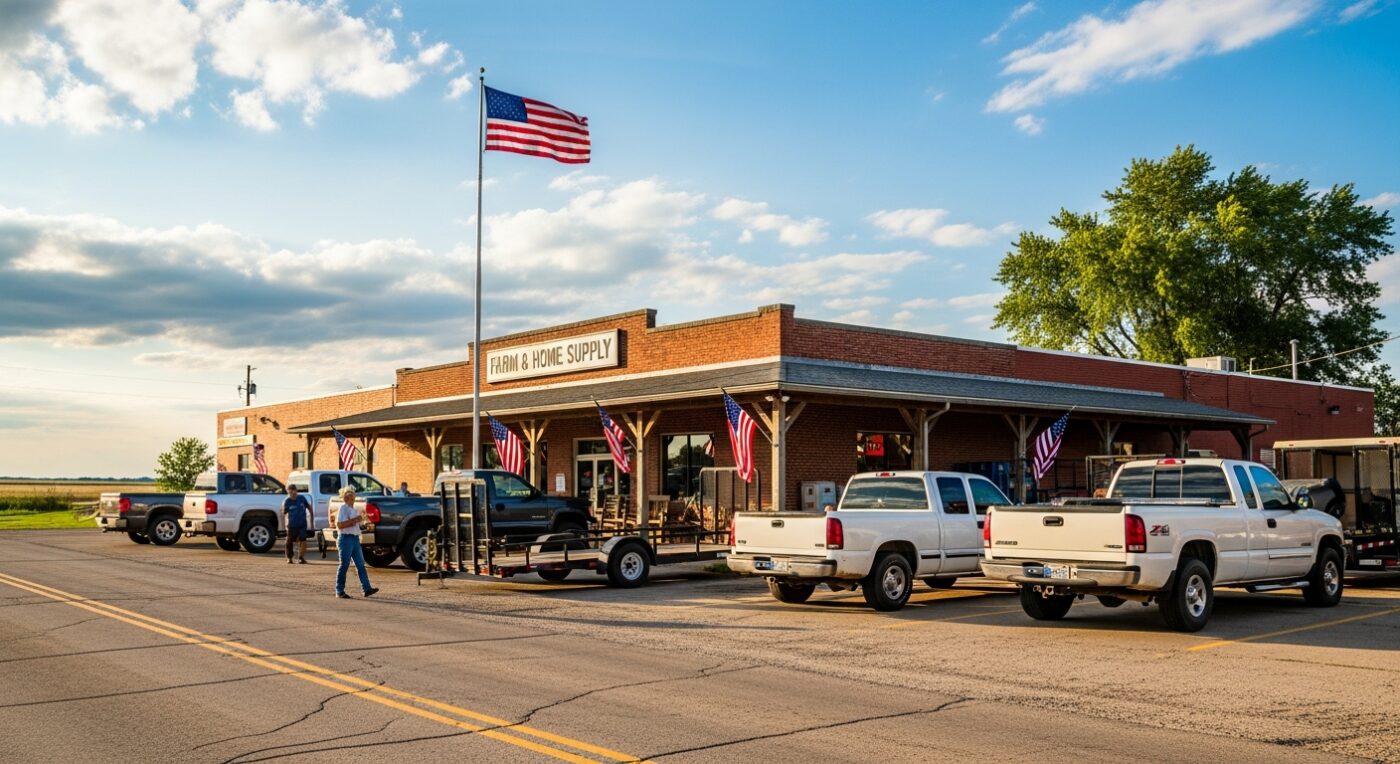
Farm & Home Supply carries NüDef across 15 locations in Illinois, Iowa and Missouri. These aren’t big-box stores — they’re the kind of places where the guy behind the counter knows the difference between a 6.7 Cummins and a Duramax, and where farmers and fleet operators actually shop. If you’re running equipment in central Illinois, the Quad Cities, or northeast Missouri, there’s a Farm & Home location within reasonable driving distance that stocks NüDef on the shelf.
Iowa 80 in Walcott, Iowa — the world’s largest truck stop — also carries NüDef. If you’re running I-80 between Chicago and Omaha, that’s your resupply point. It doesn’t get more convenient than that for over-the-road operators.
For the full list of retail locations, check our store locator.
Fleet Accounts and Wholesale Distribution
The retail network is one piece. But for fleets running 20, 50, or 200 trucks across the Midwest, retail purchasing doesn’t scale. That’s where NüDef’s wholesale program comes in.
Midwest wholesale demand breaks down into three categories:
Manufacturing logistics fleets — the parts shuttles and supplier networks around auto plants in Ohio, Michigan, and Indiana. These operations buy on a recurring schedule because their routes and DEF consumption are predictable. A 40-truck supplier fleet running Toledo-to-Detroit knows exactly how much DEF they’ll consume per month, and they want treatment product delivered on the same cadence.
Agricultural operations — farms and livestock operations that run seasonal equipment hard for three to four months and then store it. These buyers tend to order in bulk before harvest season and again before spring planting.
Truck service centers and parts distributors — shops that sell DEF treatment as a maintenance product to walk-in customers and fleet accounts. For service centers interested in carrying NüDef, wholesale pricing makes the margin work.
We’ve broken down the full ROI math for fleet-scale DEF treatment if you want to see how the numbers work before committing to a wholesale account.
How Midwest DEF Challenges Compare to Other Regions
Every region has its DEF headache. The Midwest’s is unique because of the cycling, but it helps to understand how it stacks up.
Texas fleets deal with sustained dry heat that drives evaporation and urea concentration drift. The problem is predictable: summer comes, DEF degrades, treat accordingly. California’s challenge is regulatory — CARB enforcement means a DEF quality fault isn’t just a maintenance issue, it’s a compliance citation. The Southeast combines humidity with heat and port-driven growth that’s outpacing fleet maintenance capacity.
The Midwest’s DEF challenge is operational complexity. You’ve got freeze-thaw cycling from November through April, heat exposure from June through September, and a two-month window on each side where conditions are changing fast enough that yesterday’s protocol doesn’t match today’s weather. Add the manufacturing sector’s just-in-time pressure, the agricultural sector’s seasonal surge, and the sheer volume of intermodal freight moving through Chicago, and you’ve got a region where DEF management can’t be an afterthought.
It has to be systematic. Treat at every fill. Treat bulk storage tanks. Treat seasonal equipment before it goes into service and before it goes into storage. That’s how Midwest fleets stay ahead of a problem that changes character with every weather front that rolls through.