Few dashboard messages cause more confusion than “DEF Quality Poor” (or “Exhaust Fluid Quality Poor”). Your DEF tank is full, yet the truck insists the fluid is bad — and threatens to limit your speed. This guide explains what the warning actually means, the handful of things that trigger it, how to clear it, and how to keep it from coming back across Ford, Ram, GM, and heavy-duty diesels.
What “DEF Quality Poor” Actually Means
The message means your truck’s quality sensor has read the diesel exhaust fluid as out of specification — not that the tank is low. Modern SCR systems continuously evaluate DEF concentration and purity, expecting the ISO 22241 standard of 32.5% high-purity urea in deionized water. When the reading drifts outside that window, the engine control module flags “quality poor” and starts an escalating compliance countdown, regardless of how full the tank is.
Why a Full Tank Still Reads Poor
This is the part that confuses owners. The warning is about quality, not quantity. A tank brimming with DEF that has aged, overheated, been topped off from a contaminated container, or begun to crystallize will read “poor” even though it is physically full. Refilling with more of the same questionable fluid does not help — and that is exactly why drivers report the light returning days after they “just added DEF.”
The Real Root Causes
In order of how often they are the culprit:
- Degraded / old DEF — urea breaks down with heat and time. DEF stored hot or kept past its usable life drifts out of spec. The single most common cause.
- Contamination — a dirty funnel, the wrong fluid, fuel, or water introduced during a top-off. Even small contamination shifts the concentration reading.
- Crystallization — evaporated DEF leaves hard urea deposits that foul the injector and the quality sensor itself, skewing readings.
- Sensor or heater fault — a failing DEF quality sensor or a dead tank heater (which lets fluid freeze and misread in cold weather) can trigger the warning even with good fluid.
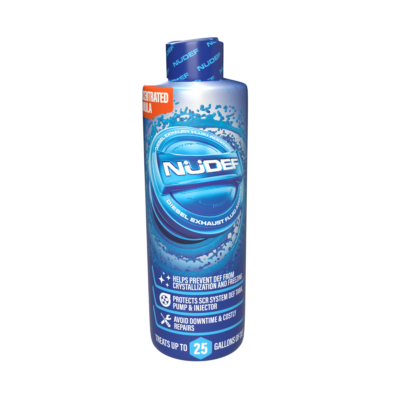
The first three are all fluid-related and all preventable. A treatment and stabilizer like NüDef keeps fluid in spec and resists the breakdown and crystallization that drive most of these cases.
How the Truck Escalates the Warning
Manufacturers are required to enforce DEF compliance, so the warning never simply sits there. It typically progresses from an amber message and chime, to a check-engine light with SCR/NOx codes, to a power or speed reduction, and finally to a hard speed derate (often around 5 MPH) that makes the truck nearly undrivable until the issue is resolved. Addressing it at the first message is far cheaper than recovering from a derate on the side of the road.
How to Clear It
If the fluid is the problem: drain the questionable DEF, refill with fresh, in-spec fluid, and add a stabilizer. The warning usually clears after the system re-tests good fluid across one or more drive cycles — sometimes it takes several heat cycles, so do not panic if it does not extinguish on the first key-on. If it persists after a verified-good refill, the issue is likely crystallization at the injector or a sensor/heater fault — see our crystallization cleaning guide and DEF trouble-code guide.
Ford, Ram & GM Differences
The underlying SCR logic is similar across brands, but the wording and thresholds differ. Ford 6.7 Power Stroke trucks show “DEF Quality Poor” / “Exhaust Fluid Quality” and count down to a speed limit; see our Ford Power Stroke DEF guide. GM Duramax (LML/L5P) trucks use similar messaging and the same root causes — our Duramax DEF guide covers the specifics. Ram 6.7 Cummins trucks behave the same way. In every case, fresh, stabilized fluid is the first move.
How to Prevent It
Three habits prevent the large majority of cases: use fresh DEF and do not let it age in the tank; never top off from an old, open container; and stabilize the fluid so it stays in spec between fills. Adding NüDef at fill-up is the single most effective step — it holds concentration and purity in range and reduces the crystallization that fouls the quality sensor.
When It Is the Sensor, Not the Fluid
If you have replaced the fluid with verified-good DEF, treated it, and run several drive cycles and the warning still returns, suspect hardware: a failed DEF quality sensor, a dead tank heater, or NOx-sensor drift. These require diagnosis with a scan tool and component replacement. Knowing the fluid is good first — which a fresh, stabilized fill confirms — saves you from chasing a sensor when cheap fluid was the real problem, and vice versa.