Why DEF Systems Need Heaters
Diesel Exhaust Fluid is 32.5% urea dissolved in 67.5% deionized water by weight. That’s the ISO 22241 specification — and that exact mix is what makes DEF freeze at -11°C (12°F). It’s not a sliding scale. The 32.5% concentration is the eutectic point — the urea-water ratio that freezes and thaws as a single material rather than separating into a urea-rich slush and a water-rich liquid. If the ratio drifts, the freeze point shifts and the SCR system stops dosing accurately.
So DEF freezes at temperatures any northern-tier diesel will see for four to six months of the year. The Upper Midwest sees -10°F regularly. Mountain West passes hit -25°F. Northern Plains and Canadian Prairie operators routinely see -30°F to -40°F. At those temperatures, a 5-gallon truck DEF tank turns into a solid block of urea ice within hours of engine shutdown.
And here’s the regulatory problem: federal emissions law (EPA 40 CFR Part 1065) requires SCR systems to reach working temperature and begin dosing DEF within a defined window after cold-start. The exact spec varies by engine model year and certification, but the practical industry shorthand is “70 minutes” — the vehicle must be capable of operating the SCR within roughly 70 minutes of a cold-start in freezing ambient conditions. If it can’t, the OBD system has to flag the fault and eventually derate the engine.
That 70-minute window is impossible without active heating. You cannot wait for ambient air or engine bay convection to thaw 5 gallons of solid DEF ice in subzero weather. Modern SCR systems have to physically heat the DEF — fast — and modern DEF systems include three separate heaters to do that.
This is the entire reason DEF heaters exist. They’re not a comfort feature, they’re not optional, and they’re not a maintenance item you can ignore. When they fail, the vehicle loses the ability to comply with emissions regulations in cold weather, and the engine ECU will eventually derate or refuse to start.
The Three-Heater Architecture: Tank, Supply, Return
Virtually every modern diesel SCR system uses a three-heater architecture. Each heater addresses a different freezing point in the DEF flow path:
1. The DEF tank heater. This is the largest and most important of the three. It sits inside (or around) the DEF tank itself and heats the bulk DEF supply on cold-start. The tank heater is what does the heavy lifting — converting a 5-gallon block of solid urea ice back into liquid fluid that the supply pump can actually pull. Tank heaters are sized in the 300W to 1,500W range depending on tank size and platform; heavy-duty Class 8 truck tank heaters can pull 1,500W or more in initial thaw mode.
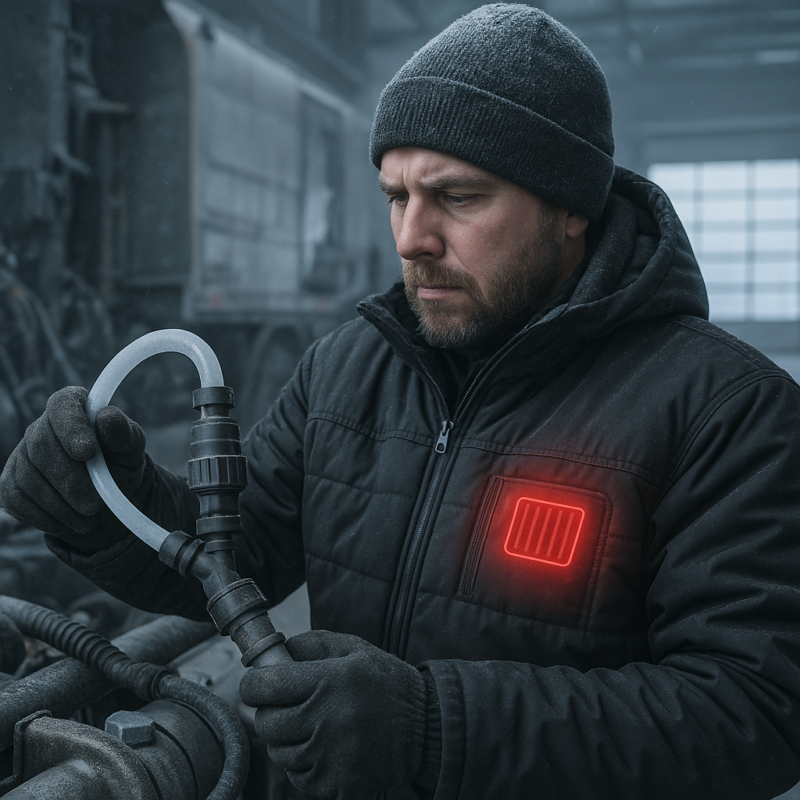
2. The supply line heater. The supply line is the small-diameter hose (typically 1/4″ or 3/8″ ID) that carries pressurized DEF from the supply module / pump to the dosing injector at the SCR catalyst inlet. This line can freeze between the tank and the injector even after the tank has thawed — particularly on long-wheelbase trucks where the supply line runs many feet along the chassis. Supply line heaters are typically wire-wound electric trace heaters bonded to the outside of the line and protected by an insulated sleeve. Power draw is in the 60W to 150W range.
3. The return line heater. Most DEF systems use a “pressure-and-purge” architecture — the supply pump pressurizes DEF to the injector; when the engine shuts off, the pump reverses and purges DEF out of the supply line and back into the tank to prevent freeze damage to the injector. The return line carries that purged fluid back to the tank. It also freezes in cold weather and also needs a heater. Return line heaters are smaller than supply line heaters (the line only flows briefly during purge) but they’re there. Power draw is typically 40W to 100W.
All three heaters are controlled by the DEF control module — sometimes called the SCR controller, the Aftertreatment Control Module (ACM), or on some platforms the engine ECU directly. The control module monitors DEF temperature via thermistors (one in the tank, sometimes additional ones at the supply module and injector) and switches each heater on when its associated DEF temperature drops below a threshold (typically 5°C to 10°C above the freeze point).
Each heater has its own electrical circuit, its own fuse, its own diagnostic monitoring, and its own fault code if the circuit reports an open, short, or out-of-range condition. When you see a single heater fault code, only one of the three has actually failed — the other two are still working. That distinction matters when scoping a repair because the three heaters have wildly different replacement costs.
Coolant-Based vs Electric Heaters: Platform Differences
Tank heaters come in two fundamentally different designs, and which one your vehicle has depends primarily on whether it’s a heavy-duty (HD) truck or a light-duty pickup.
Coolant-based tank heaters. Most Class 6 through Class 8 commercial trucks use coolant-based DEF tank heaters. The system routes engine coolant through a heat exchanger inside or wrapped around the DEF tank — exactly like a small radiator running in reverse. As the engine warms up and the coolant temperature climbs, the warm coolant thaws and heats the DEF. This is the dominant design on heavy-duty platforms because: (a) heavy-duty engines warm up faster than light-duty engines (more displacement, more BTUs), (b) heavy-duty trucks have plenty of available coolant heat to spare, and (c) coolant heating is more energy-efficient than electric heating since the energy is already in the coolant loop.
Coolant heating has one major weakness: it doesn’t start working until the engine itself is warm. On a -20°F cold-start, the engine needs to run 5 to 15 minutes before the coolant is warm enough to start thawing DEF. During that window, the supply line electric heaters do most of the actual work — they thaw enough DEF in the supply line and at the injector for initial dosing while the coolant slowly warms the bulk tank.
Common HD platforms using coolant tank heaters: Cummins X15, X12, B6.7 (in Class 6/7 chassis); Detroit DD13, DD15, DD16; PACCAR MX-11, MX-13; Volvo D11, D13, D16; Mack MP8; International A26, N13. Essentially every modern Class 8 OTR truck uses coolant tank heating.
Electric tank heaters. Light-duty diesel pickups and some medium-duty applications use electric resistance heating elements inside the DEF tank or integrated into the DEF supply module. Electric heating has the advantage of working immediately on cold-start — the heater turns on as soon as the ignition is on, before the engine even fires. That’s important on light-duty pickups because they’re often used for short-trip operation where the engine never gets warm enough for coolant heating to be useful.
Electric heating has two weaknesses: (a) it draws significant current from the vehicle electrical system, requiring heavier wiring and switching capacity, and (b) the heater elements are typically integrated into the DEF supply module assembly, which makes module replacement the only practical repair when an element fails.
Common light-duty platforms using electric DEF tank heaters: Ford 6.7L Power Stroke (2011 through current), GM Duramax 6.6L (2011 LML through current), Ram 6.7L Cummins HD (2013 through current). On all three platforms the DEF tank heater is integrated into the supply module — when the heater fails, you replace the module, not just the element.
Supply and return line heaters. These are universally electric on both HD trucks and light-duty pickups. There’s no practical way to run coolant through small-diameter DEF lines — the plumbing complexity would be prohibitive. Line heaters are always electric trace heating wire wrapped around the line and insulated.
The 70-Minute Thaw Spec and Why It Matters
The “70-minute thaw spec” is industry shorthand for an EPA regulatory requirement that shapes how DEF heating systems are engineered.
The actual spec (EPA 40 CFR §86.007-25 and §86.010-15, applied through engine certification protocols) requires that an SCR-equipped diesel be capable of restarting after a cold soak and reaching SCR working temperature — meaning the catalyst is above its light-off temperature and the DEF dosing system is functional — within a defined window in cold-ambient conditions. The window varies by engine certification class, but for most on-highway diesel engines the practical interpretation is roughly 70 minutes at -7°C (20°F) ambient.
If the vehicle cannot reach SCR working temperature within that window, the OBD system has to flag the cold-weather inducement counter. After enough cold-weather inducement events, the ECU will derate engine speed (the speed limit varies by manufacturer) and then to “low-idle inducement” mode (engine runs but won’t develop power) until the SCR system is restored to working order.
This is the practical reason DEF heater failures cannot be ignored. If your tank heater fails in early November and you ignore the warning light, by January the vehicle may stop being usable on the highway at all — even after the DEF itself has thawed. Once the cold-weather inducement counter trips into derate mode, you have to clear it with a proper repair plus a forced regeneration or ECU reset cycle. Many shops require a 30-minute warm-up dyno cycle plus a scan tool clear to fully remove the inducement.
The 70-minute spec also explains why DEF systems use three heaters instead of just one big tank heater. To meet the spec, the engineering target is: (a) supply line and injector have to thaw within 5-10 minutes of ignition so initial dosing can begin, (b) bulk tank thaw can be slower — up to 30-45 minutes — because the supply module pulls from a heated zone near the pickup tube even while the rest of the tank is still slushy, and (c) the system has to be robust enough that any single heater failure still allows at least limited dosing capability for limp-home operation.
The three-heater architecture is what makes the 70-minute spec achievable. Lose one heater and the system can usually still meet the spec, just with degraded margin. Lose two and the system fails to meet the spec, triggers fault codes, and starts the inducement countdown.
Symptoms of DEF Heater Failure
DEF heater failures present differently depending on which heater has failed and what time of year. Here are the actual symptoms field technicians see:
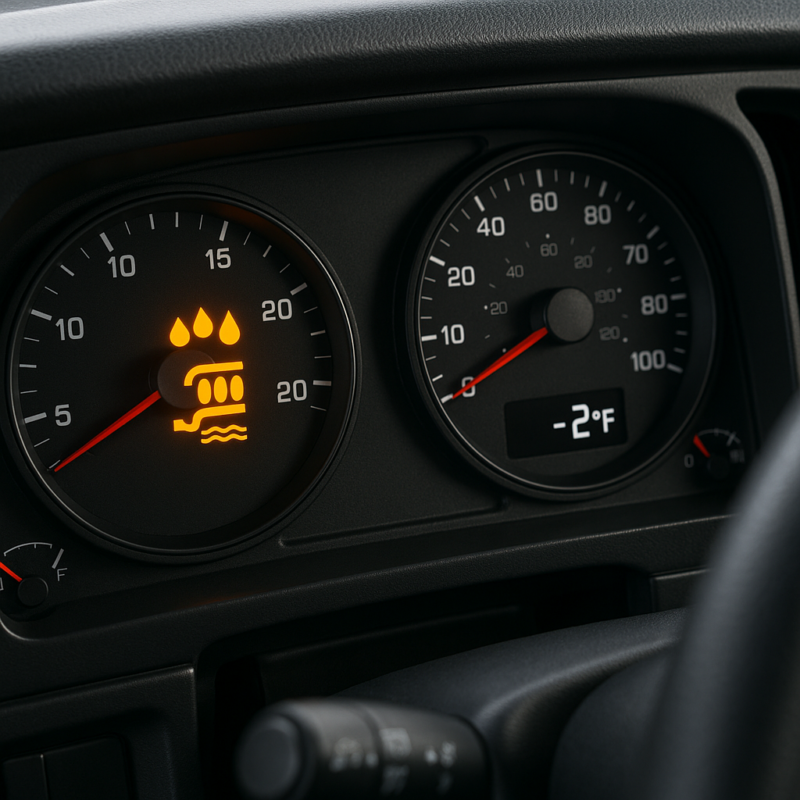
Persistent low-DEF-temperature warning code, even after engine has run for 30+ minutes. The dashboard shows a DEF system warning light, scan tool reads a low DEF temp code (ambient or near-ambient temperature reported by the tank thermistor), but the engine has been running for half an hour or more. In normal operation the tank heater should have raised DEF temp well above ambient within that time. If it hasn’t, the tank heater isn’t doing its job — either the heater element is failed, the heater circuit has lost power, or the thermistor is misreading.
Slow thaw on cold mornings. The vehicle starts and runs in cold weather, but takes 45 minutes to an hour before SCR dosing actually begins (you can sometimes see this as a delay before the DEF gauge needle moves from “frozen” to a normal reading, or via scan tool monitoring of DEF flow rate). Slow thaw usually points to either the tank heater operating at reduced capacity (partial heater element failure) or supply line heater failure that’s holding back initial dosing.
No thaw at all in cold weather — DEF gauge reports “frozen” indefinitely. In severe cold (below 0°F) with a fully failed tank heater, the DEF in the tank will not thaw during normal operation. The vehicle may continue to run for some period because the SCR has a “limp” mode that allows operation without DEF dosing for limited time, but the inducement counter is running and the engine will eventually derate.
Runtime derate after extended freeze exposure. The vehicle worked fine all summer and fall, then during the first multi-day cold snap (a “polar vortex” event) the dashboard lights up with SCR warnings and the engine derates. This pattern usually means the DEF heater system was marginal — working but compromised — through warmer weather, and finally failed once it had to do real work in deep cold.
Erratic SCR fault codes that only appear in cold weather. The scan tool shows P20EE, P207F, or similar SCR efficiency codes during winter operation that disappear once warm weather returns. This pattern often points to a heater system that’s failing intermittently — the heater works most of the time but cuts out under load or in extreme cold, allowing partial DEF freezing in the supply line, which produces inconsistent dosing and SCR efficiency codes.
Fault code returns immediately after clear. Some heater fault codes (particularly heater circuit “open” codes like P20B9 or P20BD) trip the moment the ECU performs its first heater self-test on key-on. The code will reappear within seconds of clearing if the underlying circuit problem isn’t resolved.
Visible exterior damage to DEF tank or lines. On older vehicles, a DEF tank that has frozen and thawed many cycles without proper heater function can develop cracks, particularly around the supply module mounting flange or in the lower tank wall. Visible cracks, DEF crystallization (white crusty residue) around tank fittings, or DEF wetness on the chassis below the tank all point to heater issues — even when the dashboard isn’t yet showing a fault code.
Heater-Circuit Fault Codes: P20B9, P20BD, P20C1 and Related Codes
The generic OBD-II heater codes come from SAE J2012, so the same definitions apply across makes. The standard labels the heaters A, B, C and D. Which physical heater (tank, supply line, return line) carries each letter varies by manufacturer, so confirm the assignment in your OEM service information. Here are the codes you’ll see most often:
P20B9 (Reductant Heater A Control Circuit/Open). The ECU commanded heater A and saw an open circuit. Causes: failed heater element, broken wire, blown fuse or failed heater relay. On many systems heater A is the tank heater, which makes this the highest-priority heater code.
P20BA (Reductant Heater A Control Circuit Performance). The heater circuit operates, but the controller does not see the expected result. On systems that monitor DEF temperature, this can point to a heater running at reduced capacity, low coolant flow on coolant-heated systems, or a temperature sensor misreading.
P20BB and P20BC (Reductant Heater A Control Circuit Low / High). Electrical faults in the heater A circuit, usually a short to ground or to power, or a failed driver in the controller.
P20BD (Reductant Heater B Control Circuit/Open) and P20BE (Reductant Heater B Control Circuit Performance). The same faults for heater B, often a line heater.
P20C1 (Reductant Heater C Control Circuit/Open). The same fault for heater C, often the return line heater on systems that have one.
P20B1 (Reductant Heater Coolant Control Valve Circuit/Open). On coolant-heated tanks, the valve that sends engine coolant to the DEF tank has an open circuit.
P204C (Reductant Pressure Sensor Circuit Low). Not a heater code, but it can appear alongside heater faults when frozen DEF upsets supply pressure readings.
P20EE (SCR NOx Catalyst Efficiency Below Threshold, Bank 1). Not a heater code, but it can appear when heater faults cause inconsistent DEF dosing.
Heavy-duty codes. Heavy-duty engines also report SAE J1939 SPN and FMI codes for the DEF tank heater, lines and dosing unit. A heavy-duty scan tool with the OEM software will show the exact definition for your engine.
Diagnostic Procedure and Repair Cost by Platform
A proper DEF heater diagnostic follows a standard sequence. Here’s the procedure a competent diesel tech runs when faced with a heater code:
Step 1: Scan tool — read all DEF-related codes and freeze frame data. Pull every active and pending code in the ECU, the Aftertreatment Control Module, and any related controllers. Capture freeze frame data for each heater code (ambient temp, DEF temp, vehicle speed, runtime at time of fault). The freeze frame tells you whether the fault tripped on cold-start, during operation, or under specific conditions.
Step 2: Visual inspection of the DEF system. Check the DEF tank for visible cracks, residue, wetness. Check supply and return line routing for chafing, kinks, or visible damage. Check the supply module mounting for security. Check wiring harness connectors at the tank, supply module, and any inline connectors for corrosion or backed-out pins.
Step 3: Electrical continuity check on the suspect heater circuit. With key off and the heater unplugged from the harness, measure resistance across the heater element terminals. Tank heaters typically read 1-5 ohms (electric) or are not electrically testable (coolant-based — you test these via flow and temperature differential instead). Supply line heaters read 5-20 ohms. Return line heaters read 8-25 ohms. Open circuit (infinite resistance) means a failed element. Shorted (near zero) means an internal short. Out-of-range means partial failure.
Step 4: Check supply voltage and ground at the heater connector. With key on and heater command active (sometimes requires scan tool actuation), verify the heater connector is seeing battery voltage on the power side and a good ground on the return side. Low voltage or missing voltage points to wiring or ECU driver issues, not heater element failure.
Step 5: For coolant-based tank heaters, verify coolant flow. Check that coolant hoses to the DEF tank heat exchanger are warm during engine operation (touch test after 15 minutes of running). If hoses are cold while the engine cooling system is at operating temperature, the coolant flow to the heat exchanger has been interrupted — could be a stuck shutoff valve, blocked hose, or failed pump.
Step 6: Thermistor function check. A failed DEF temperature thermistor can produce false low-DEF-temp codes that look like heater failures. With the system at known ambient temperature, scan tool should read DEF temp within a few degrees of ambient. If the scan tool reading is way off, the thermistor (not the heater) is the actual fault.
Step 7: Repair scope determination. Based on which heater failed and the platform, scope the actual repair. Here’s what the repair scope looks like on the five most common platforms:
Platform 1: Ford 6.7L Power Stroke (2011+).
- Tank heater failure: Replace DEF supply module assembly. Heater is integral. Part cost $850-$1,400 (OEM), $550-$900 (quality aftermarket). Labor 2-4 hours. Total $1,400-$2,400 at a shop.
- Supply line heater failure: Replace heated DEF supply line assembly. Part cost $180-$320. Labor 1-2 hours. Total $350-$600 at a shop.
- Return line heater failure: Replace return line. Part cost $120-$220. Labor 1 hour. Total $250-$450 at a shop.
- DIY difficulty: Moderate. Supply module replacement requires draining the DEF tank and removing the tank skid plate on some configurations.
Platform 2: GM Duramax 6.6L (2011 LML through 2024 L5P).
- Tank heater failure: Replace DEF tank assembly with integrated supply module. Part cost $700-$1,200 (OEM), $450-$800 (aftermarket). Labor 2-3 hours. Total $1,200-$1,900 at a shop.
- Supply line heater failure: Replace heated supply line. Part cost $150-$280. Labor 1-2 hours. Total $300-$550 at a shop.
- Return line heater failure: Replace return line. Part cost $100-$200. Labor 1 hour. Total $220-$420 at a shop.
- DIY difficulty: Moderate. Tank removal is straightforward on most configurations but requires DEF tank draining and refilling.
Platform 3: Ram 2500/3500 6.7L Cummins HD (2013+).
- Tank heater failure: Replace DEF supply module (tank-integrated). Part cost $750-$1,300 (OEM Mopar), $500-$850 (aftermarket). Labor 2-3 hours. Total $1,300-$2,100 at a shop.
- Supply line heater failure: Replace heated DEF line. Part cost $160-$300. Labor 1-2 hours. Total $320-$580 at a shop.
- Return line heater failure: Replace return line. Part cost $110-$210. Labor 1 hour. Total $240-$440 at a shop.
- DIY difficulty: Moderate. Supply module replacement on Ram requires DEF tank removal on some chassis configurations.
Platform 4: Class 8 Cummins X15 / ISX (2011+).
- Tank heater failure (coolant-based): Repair scope varies. If the coolant hoses or shutoff valve failed, parts are $50-$200 and labor is 1-2 hours, total $200-$500. If the heat exchanger inside the tank failed, that’s typically tank-integral and requires full DEF tank replacement, $1,800-$3,200 parts plus 4-8 hours labor, total $2,500-$4,500.
- Supply line heater failure: Replace heated supply line. Part cost $200-$450. Labor 2-3 hours (longer run, harder to access). Total $500-$900 at a shop.
- Return line heater failure: Replace return line. Part cost $150-$300. Labor 1-2 hours. Total $300-$600.
- DIY difficulty: Difficult. Heavy-duty truck DEF systems are higher pressure, larger, and harder to access. Most owner-operators outsource these repairs.
Platform 5: Class 8 Detroit DD15 (2010+).
- Tank heater failure (coolant-based): Similar scope to Cummins X15. Coolant plumbing repair $200-$500. Full tank replacement $2,500-$4,500.
- Supply line heater failure: Heated supply line assembly $250-$500 parts, 2-3 hours labor, total $550-$1,000.
- Return line heater failure: $180-$350 parts, 1-2 hours labor, total $350-$650.
- DIY difficulty: Difficult.
Patterns to notice across all five platforms: tank heater failures are the most expensive repair on every platform (because the heater is integral to the supply module or tank), while line heater failures are relatively cheap. If the code points to a line heater (often P20BD or P20C1), you’re looking at a $250-$1,000 repair. If it points to the tank heater (often P20B9), you’re looking at $1,200-$4,500. That’s a 5-10× cost difference and it’s worth knowing before you take the truck to a shop.
Aftermarket parts considerations: For light-duty pickups, quality aftermarket DEF supply modules from Dorman, Spectra Premium, and similar tier-2 manufacturers usually cost less than OEM and are generally reliable. For heavy-duty trucks, aftermarket DEF system parts are less mature — most fleet operators stick with OEM for heater-related repairs because the failure tolerance is lower and the labor cost dominates the parts cost anyway.
Cold-Weather Operating Tips and NüDef’s Role
Heater failure is partly bad luck and partly bad operating habits. Some practical things that extend DEF heater life and reduce cold-weather DEF system problems:
Park in a heated shop when possible during deep cold snaps. A vehicle parked overnight in a heated shop (even just above freezing) doesn’t need its DEF heaters to work hard on cold-start the next morning. Tank heaters experience much less thermal stress and last much longer in fleets that consistently park in heated facilities. For owner-operators, sometimes paying $25-$40 for a heated truck stop bay overnight during a polar vortex event is cheaper than the eventual cost of a failed tank heater.
Top off DEF before a cold spell. A fuller DEF tank thaws faster than a partially-empty tank with the same heater capacity. The reason is thermal mass distribution — when the tank is mostly empty, the heater has to thaw a smaller volume but the heat dissipates faster through the larger air gap. Counterintuitively, a fuller tank reaches the supply pump pickup zone faster and gets the SCR system operational sooner.
Run the engine periodically during extended cold weather shutdowns. If a vehicle will sit for several days during a deep cold spell, running the engine for 20-30 minutes every day or two keeps the DEF tank above ambient and allows the coolant heaters (on HD platforms) to maintain partial thaw. This is especially important for fleet trucks parked over weekends — Monday morning cold-starts after a 3-day sit in -20°F weather are when heater problems first manifest.
Address heater fault codes immediately when they appear. A line heater code (often P20BD or P20C1) on its own may not affect operation in the moment, but ignoring it through one winter can lead to a tank heater code by the next winter — because the line heater failure was an early warning sign of broader system aging or a wiring harness issue that’s spreading. Fix line heaters when you see them.
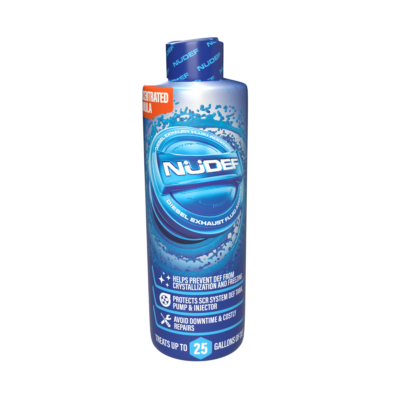
Treat the DEF with NüDef. NüDef DEF Treatment, Additive & Stabilizer helps prevent DEF crystallization and helps protect the SCR system, DEF tank, pump and injector, and the sell sheet adds that it helps prevent freezing. It does not replace the mechanical heaters, which are still required in cold weather, and it does not repair a failed heater circuit. One 8.45 fl oz bottle treats 25 gallons of DEF, added at every refill.
For NüDef fleet pricing call (855) 300-0031 or order direct at nudef.com. For related winter SCR maintenance content see our cold-weather DEF guide and our SCR fault code troubleshooting article.
One last note for fleet operators: DEF heater failures are a bigger budget item in cold regions. If you operate in the Upper Midwest, Mountain West, Northeast or Canada, plan for line heater and tank heater repairs, use heated parking where you can, and respond quickly to the first line heater code.