Background reading: when DEF freezes and what your heaters are protecting against, including the state-by-state freeze map.
When the DEF Heater Actually Needs Replacement (vs other fixes)
Before you spend $400 on a heater and 4 hours of labor, you need to confirm the heater is actually the failed part. The DEF heater is responsible for two things: thawing frozen DEF on cold starts so the SCR system can dose, and maintaining DEF temperature in the dosing path during operation. When it fails, you get a predictable family of fault codes — but those same codes can also come from wiring harness damage, a failed temperature sensor, a bad coolant control valve (on coolant-heated tanks), or even a corroded ground strap.
The actual heater element fails for two main reasons. First, electrical: the resistance wire inside the heater burns open or shorts to ground, often after years of thermal cycling. Second, mechanical: the heater body cracks where DEF crystallization has built up around it, allowing urea solution to contact the element and accelerate corrosion. Both failures look identical on a scan tool — you see a P20E8, P20EE, P203F, or platform-specific equivalent — but the repair paths are completely different.
Symptoms that genuinely point to a failed heater (vs other DEF system issues):
- Cold-weather-only fault codes that clear above 40°F. A heater whose element has degraded but not fully failed will work fine in mild weather and throw codes only when the truck needs the heater to thaw frozen DEF. This is the strongest single indicator.
- Heater circuit current draw fault codes (P20E8 family). The ECM monitors the current through the heater circuit. When it sees zero current commanded on or excessive current draw, it flags the heater specifically — not the broader DEF dosing system.
- Visible crystallization around the tank-heater interface. If you can see white crystal deposits leaking out of the heater port at the tank, the heater seal has failed and DEF is contacting the element directly.
- Open-circuit resistance reading. The single most diagnostic test (covered in detail in the next section). If the heater reads OL (open) on a multimeter, the element is gone — full stop.
Symptoms that LOOK like a failed heater but usually aren’t:
- P20EE codes that come and go year-round. Usually crystallization at the SCR catalyst face, not the heater. Our companion guide on DEF heater failure symptoms in cold weather walks through how to distinguish these patterns.
- Reduced power / limp mode without specific heater codes. Usually a DEF quality sensor, NOx sensor, or dosing valve issue.
- Codes that appear immediately after a DEF refill. Often contaminated DEF or a stuck DEF level sensor, not a heater issue.
- Intermittent heater codes that clear after a wiring harness disturbance. This is wiring or connector corrosion, not the heater itself.
The honest rule of thumb: don’t replace a DEF heater based on fault codes alone. Confirm with a resistance test at the heater connector. A 30-second multimeter check saves you from replacing a perfectly good $400 part when the actual problem is a $40 wiring repair.
Diagnosing Heater Failure: Codes, Resistance Tests, Visual Checks
Proper diagnosis happens in three layers, each more invasive than the last. Don’t skip layers — every shortcut leads to either misdiagnosis or replacing parts you didn’t need to.
Layer 1: Scan tool fault code review. Pull all DEF-system codes, not just the active one. Look specifically for the heater-circuit codes by platform:
- Ram 6.7 Cummins: P20E8 (Reductant Heater “A” Control Circuit), P20E9 (low), P20EA (high), P206A (Reductant Tank Temperature Sensor Circuit). Often paired with P20EE on cold starts.
- GM 6.6 Duramax: P203F (Reductant Level Too Low — but often appears when heater can’t thaw DEF), P20E8, P20EA, P21DC (Reductant Tank Heater Control Circuit Performance).
- Ford 6.7 Power Stroke: P20E8, P20E9, P20EA, P20BA (Reductant Heater “B” Control Circuit), P207F (Reductant Quality Performance).
- DD15: SPN 4376 FMI 5 (heater circuit open), SPN 3361 FMI 4/5 (heater control circuit), SPN 4334 FMI 18 (DEF pressure low at startup — often heater-related).
- C13/C15 Cat: Cat-specific MID 51 / MID 251 codes plus J1939 SPN 4376 family.
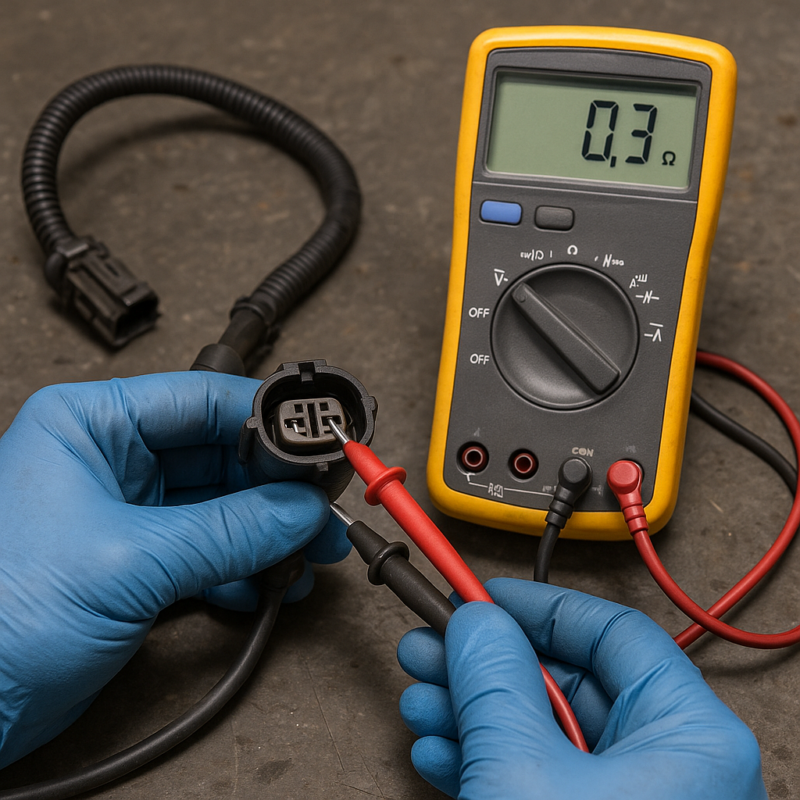
Layer 2: Resistance test at the heater connector. This is the most important diagnostic step and the one most often skipped. With the truck off and the connector at the DEF tank unplugged, measure resistance across the heater element terminals:
- Normal range across all pickup platforms: 0.5–2.5 ohms at room temperature (~70°F). Specific to platform:
- 6.7 Cummins: 0.8–1.5 ohms typical
- 6.6 Duramax: 0.7–1.2 ohms typical
- 6.7 Power Stroke: 1.0–2.0 ohms typical (varies by year)
- Open circuit (OL or “1.” reading): Element is dead. Replace heater.
- Shorted to ground (continuity to chassis): Element has failed and is grounding through the DEF or tank body. Replace heater.
- High resistance (5+ ohms): Element is degrading but not yet open. It will fail soon — and in cold weather it won’t generate enough heat to thaw frozen DEF. Replace as preventive maintenance.
- Low but not zero (e.g., 0.2 ohms): Partial internal short. Element will draw excessive current; ECM will throw P20EA-family codes. Replace heater.
Layer 3: Visual inspection of tank, heater port, and wiring. If the resistance test confirms a failed heater, before you order the part also verify:
- No external damage to the DEF tank itself. A cracked tank means you’re replacing the tank, not just the heater.
- No crystal buildup at the heater port that indicates the seal has been leaking long-term. This affects which gasket/seal kit you need.
- Wiring harness from heater connector back to the ECM/PCM is intact. Damaged wiring is a separate repair — don’t blame the heater for harness failures.
- Ground strap and connector pins are clean and corrosion-free. A corroded connector causes intermittent heater codes that look like heater failure but aren’t.
One more diagnostic step worth doing on platforms that support it: a bidirectional command from the scan tool to energize the heater while you watch current draw. A healthy heater draws roughly the voltage divided by the resistance — typically 8-15 amps on a 12V system. Significantly less means high resistance / failing element. Significantly more means a short. No draw at all means open element or wiring problem.
DEF Heater Replacement: 6.7 Cummins (Ram) Step-by-Step
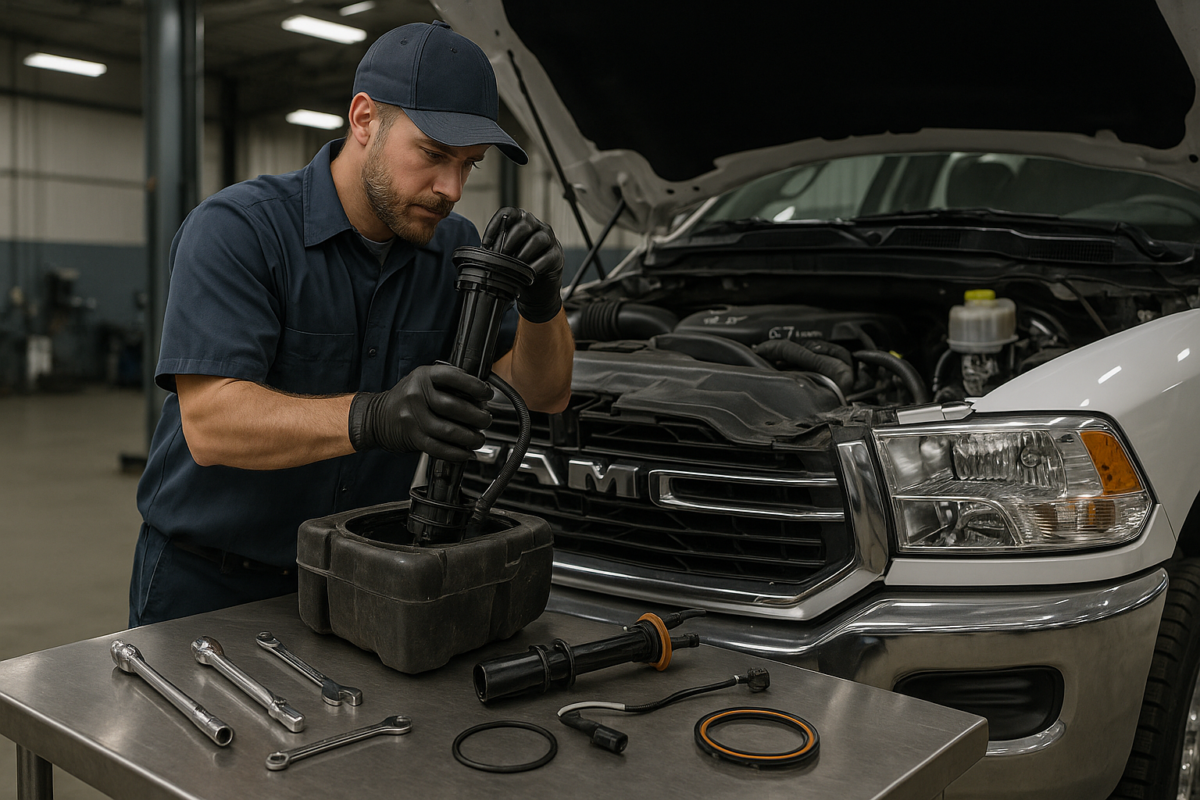
The 6.7 Cummins in Ram 2500 / 3500 / 4500 / 5500 trucks (2013-current) uses a separately serviceable DEF heater that bolts into the top of the DEF tank. This is the friendliest replacement of the three pickup platforms — you can often complete it without removing the tank from the truck.
Parts needed:
- DEF tank heater assembly. Mopar OE part #68142112AB or AC depending on year. OE pricing: $185-$385 from a Mopar dealer; $95-$210 from aftermarket suppliers (Dorman, Bosch, Walker). For fleet repair, the aftermarket parts from Bosch (the OE supplier) are essentially identical to OE at significantly lower cost.
- Heater gasket / O-ring kit (often included with part; verify before ordering).
- 2-3 gallons of fresh, in-spec DEF for refill.
Tools needed:
- Drain pan capable of holding entire DEF tank contents (~5-6 gallons on 2500/3500; ~8 gallons on 4500/5500).
- 10mm and 13mm sockets, basic ratchet/extension set.
- Torx T30/T40 driver set.
- Pliers for hose clamps.
- Multimeter (for confirmation testing after install).
- OBD-II scan tool capable of clearing DEF system codes (most basic scan tools can clear; if codes persist after repair, dealer-level tool may be needed for forced regen).
Procedure:
- Drain the DEF tank. Locate the drain plug on the underside of the DEF tank (passenger side, under bed for most Ram applications). Place the drain pan, remove plug, and allow tank to fully empty. DEF is non-hazardous but stains concrete and corrodes aluminum — clean any spills immediately with water. Reserve the drained DEF in a clean container if it’s recently been refilled with in-spec product; otherwise discard.
- Disconnect electrical connector at the heater. The heater connector is on top of the DEF tank, accessible from above through the bed-mounted access panel (later trucks) or from below (earlier trucks). Press the locking tab and pull the connector straight off. Inspect for corrosion or damaged pins.
- Disconnect DEF supply and return lines. These are quick-connect fittings on the heater module on most Ram applications. Squeeze the release tabs and pull straight off. Have rags ready for residual DEF in the lines.
- Remove heater retaining hardware. The heater is typically held by 6-8 Torx-head bolts in a circular pattern around the heater body. Loosen in a crossing pattern (like wheel lugs) to prevent warping the mounting flange.
- Pull the heater straight up out of the tank. Twist gently if it sticks — DEF crystallization can glue the heater to the tank port. Don’t pry against the tank itself (plastic damage). Once out, inspect the old heater: crystallization patterns tell you whether the failure was electrical (element looks normal but won’t pass current) or thermal (element body is discolored, possibly cracked).
- Install new heater with fresh gasket/O-ring. Apply a thin film of DEF (not oil, not grease) to the O-ring before installation to help it seat. Lower the heater straight down into the tank port; verify it bottoms out fully before installing bolts.
- Torque bolts in crossing pattern. Spec: 7-9 Nm (62-80 in-lb) — these are small bolts into a plastic tank flange and are easy to over-torque. Use an inch-pound torque wrench, not a foot-pound wrench, on these.
- Reconnect supply/return lines and electrical connector. Verify the electrical connector latches positively. A loose connector causes intermittent codes that look identical to a failed heater.
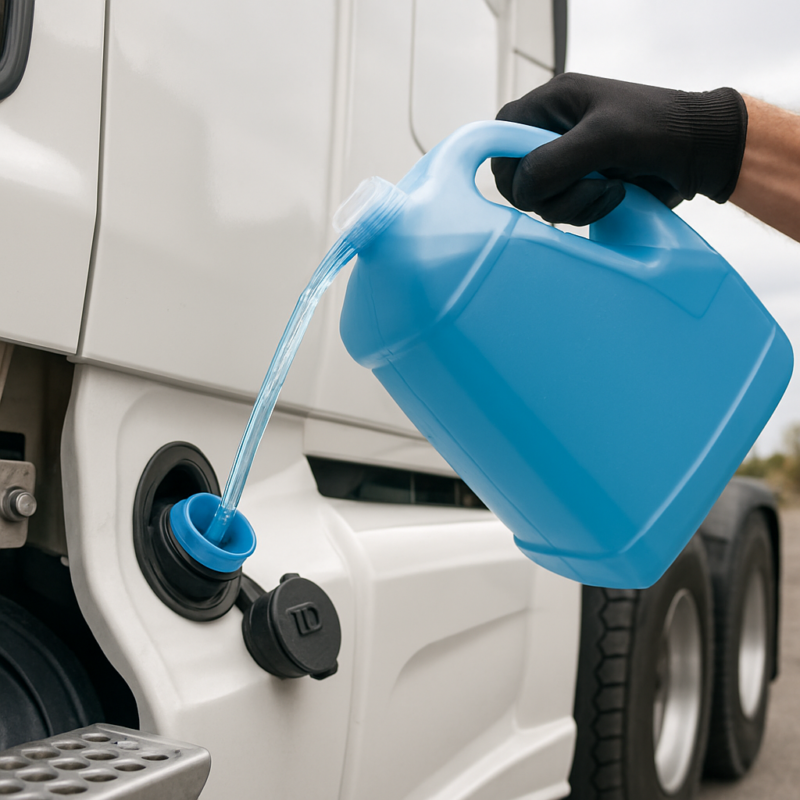
- Refill DEF tank with fresh, in-spec product. Use the truck’s DEF fill port, not the heater port. Fill to recommended level (typically the fill nozzle will auto-shut when tank is full).
- Cycle ignition to KOEO (key on engine off) and verify heater circuit. Some Ram applications energize the heater briefly during the ignition-on sequence. Use the scan tool’s live data feed to verify the heater is being commanded on and is drawing current.
- Clear DEF system codes. Most aftermarket scan tools can clear these. If the truck is in limp mode and won’t clear, you may need a forced DEF system reset via Mopar wiTECH or equivalent — most independent shops have this capability.
- Test drive and monitor. Drive at least 20-30 miles to allow the SCR system to complete adaptive learning. Recheck for codes after the test drive. If P20E8/P20EA codes return immediately, recheck the connector and wiring — not the heater.
Typical Ram 6.7 DIY labor time: 2-3 hours for someone who’s done it before, 3-4 hours for a first-time DIYer. Independent shop labor: typically billed at 2-3 hours. Dealer labor: typically billed at 2.5-4 hours.
DEF Heater Replacement: 6.6 Duramax (GM) Step-by-Step
The 6.6L Duramax in Chevy/GMC 2500HD/3500HD trucks (2011-current) uses a tank-integrated DEF heater module. Depending on year and configuration, this is somewhat more involved than the Ram procedure — many GM applications require partial removal of the DEF tank for adequate heater access.
Parts needed:
- DEF tank heater module. GM OE part numbers vary by year — common references include 22899393, 23165603, 23207611. OE pricing through GM dealer: $215-$425. Aftermarket equivalents (ACDelco aftermarket line, Bosch, Dorman): $115-$245. The ACDelco aftermarket part is the same factory part with different packaging.
- Tank mounting strap hardware if removing tank.
- Heater O-ring / seal kit.
- 5-7 gallons of fresh DEF.
Tools needed:
- Drain pan, 8-10 gallon capacity.
- 10mm, 13mm, 15mm sockets; deep sockets recommended.
- Long extensions and a swivel adapter (the tank straps are in tight quarters).
- Floor jack and jack stands if the tank needs to come out fully.
- OBD-II scan tool with GM enhanced DEF system support (GDS/Tech2 capability is helpful for forced regen on later trucks).
Procedure:
- Drain the DEF tank. On most Duramax applications the tank doesn’t have a dedicated drain plug — you’ll need to either suction the DEF out through the fill port or remove the heater module first and let it drain through the heater port (messier).
- Support and partially lower the DEF tank. The DEF tank on most Duramax trucks is frame-mounted on the driver-side rail. Two tank straps secure it. Loosen but don’t fully remove the straps; the tank should hang down enough to give you access to the heater connector and supply/return lines from above.
- Disconnect electrical connector. The DEF heater connector on Duramax applications is typically a 4-pin connector on top of the heater module. Press the lock tab and disconnect. Inspect pins for corrosion (common on Duramax trucks operated in salt-belt states).
- Disconnect DEF supply and return lines. Quick-connect fittings; press the release tabs. Some 2017+ Duramax trucks added a tank temperature sensor connector — disconnect this as well if equipped.
- Remove heater module retaining ring. Unlike Ram, the Duramax heater is typically held by a large plastic retaining ring rather than individual bolts. The ring turns counterclockwise — use a strap wrench or specialized DEF heater wrench (the Lisle 14710 or equivalent). Avoid using a screwdriver and hammer to tap the ring loose; the plastic ring breaks and then you’re also replacing the retaining ring.
- Lift the heater module straight up out of the tank. The Duramax module is longer and skinnier than the Ram unit — it extends down into the tank to the level sensor float. Lift slowly and pay attention to the float assembly; it can hang up on internal tank baffles.
- Install new heater module. Lubricate the new O-ring with DEF (not oil). Lower the module into the tank, oriented to match the original (some modules are keyed; others have alignment marks on the flange). Confirm the float moves freely after insertion.
- Install retaining ring. Hand-tighten then turn with strap wrench until snug. GM spec is generally hand-tight plus 1/4 turn — don’t over-torque the plastic ring.
- Reconnect supply/return lines, electrical connector, and tank temperature sensor (if equipped). Verify positive lock on every connection.
- Re-secure the tank to the frame. Torque the tank strap bolts to spec (typically 18-22 ft-lb).
- Refill DEF tank. Use the truck’s normal fill port.
- Clear codes and verify heater operation. GM trucks often require a longer drive cycle than Ram to fully clear DEF system fault codes — plan on a 30-50 mile test drive. If codes persist after that, a GDS2 / Tech2 forced reset may be required (many independent shops have this; if not, dealer time runs ~$150 for the procedure).
Typical Duramax DIY labor time: 3-4 hours first time, 2.5-3 hours experienced. Independent shop: typically 3-4 hours billed. Dealer: typically 3.5-5 hours billed.
DEF Heater Replacement: 6.7 Power Stroke (Ford) Step-by-Step
The 6.7L Power Stroke in Ford F-250/F-350/F-450/F-550 (2011-current) is the most variable of the three pickup platforms — and unfortunately, on some build years, the DEF heater is not separately serviceable. You replace the entire DEF tank module, which includes the heater, level sensor, supply pickup, and quality sensor as one assembly.
Important: identify your platform variant before ordering parts.
- 2011-2014 6.7 Power Stroke: DEF heater is part of a tank head assembly that includes the level sensor and supply line. The heater itself isn’t separately serviceable — you order the complete tank head module (Ford part numbers in the BC3Z-5K200 family). OE pricing: $385-$615 for the complete module. Aftermarket equivalents (Dorman, Motorcraft remanufactured): $245-$425.
- 2015-2019 6.7 Power Stroke: Some configurations allow heater-only replacement; others still require the full module. Verify by VIN before ordering. Standalone heater OE: $245-$395. Module-only OE: $425-$595.
- 2020+ 6.7 Power Stroke: Heater is typically separately serviceable, similar to the Ram approach. OE pricing: $265-$495 for the heater. Aftermarket: $135-$285.
Tools needed:
- Drain pan, 8-10 gallons.
- Standard metric socket set, deep sockets, swivel adapters.
- Special tank head retaining tool (Ford service tool 303-1670 or equivalent) — this is the most common reason DIY Ford 6.7 heater jobs go wrong. The plastic retaining ring is large-diameter and requires the specific tool to release without cracking.
- OBD-II scan tool with Ford IDS-equivalent DEF system support. For forced reset on most years, you’ll need Ford IDS or FORScan (paid version recommended for SCR-specific commands).
Procedure (2015+ with serviceable heater):
- Drain the DEF tank. Ford applications have a drain port on most years; on years without, suction through the fill port.
- Disconnect battery negative. Ford applications require this to prevent ECM faults during heater removal (other platforms tolerate hot-swap; Ford specifically calls for battery disconnect).
- Disconnect electrical connector at heater. The connector on Ford is usually a 6-pin connector (heater plus tank temp sensor on same connector).
- Disconnect DEF supply, return, and (on some years) vent lines. Quick-connect fittings on most years.
- Remove tank head retaining ring with the Ford service tool. Counterclockwise rotation. The tool has tabs that engage the ring’s recesses; without the tool, you’ll likely crack the ring. (Aftermarket equivalents to the Ford tool are available from Astro Pneumatic, Lisle, and OTC for $40-$80.)
- Lift heater assembly straight up. The Ford 6.7 heater extends fairly deep into the tank to reach the supply pickup. Lift slowly and watch for the level sensor float clearing internal baffles.
- Install new heater assembly with fresh seal. Apply DEF to the seal before insertion. Verify alignment marks match before installing the retaining ring.
- Install retaining ring with the service tool. Hand-snug, then engage the tool to bring to spec. Ford spec on the ring is typically 50-65 Nm.
- Reconnect all electrical and DEF lines. Reconnect battery.
- Refill DEF and clear codes. Ford requires a longer adaptive learning cycle than Ram or GM — plan on 40-60 miles of test driving for the SCR system to fully relearn. Forced reset via FORScan or IDS is often necessary if codes don’t clear naturally.
Procedure (2011-2014 with full tank head module replacement):
- Drain DEF tank completely.
- Disconnect battery negative.
- Disconnect ALL connections at the tank head module: electrical connector, supply line, return line, vent line, fill neck connection.
- Support the tank head and remove retaining ring/bolts (varies by year).
- Lift the entire head assembly out — this is heavier than the heater-only replacement (10-15 lbs vs 3-4 lbs).
- Install new head module, reconnecting all connections in reverse order.
- Refill, clear codes, test drive. The full module replacement procedure typically requires a Ford-specific forced reset; plan for dealer involvement if your scan tool can’t handle SCR system resets on 2011-2014 Power Stroke.
Typical 6.7 Power Stroke labor time: 3-4 hours DIY for heater-only on 2015+; 4-5 hours DIY for full module on 2011-2014. Independent shop: 3-5 hours billed. Dealer: 4-6 hours billed (often higher on 2011-2014 due to full module work and forced reset requirements).
Class 8 Heavy Duty: DD15, C13, C15 Replacement Notes
Class 8 heavy-duty trucks (Freightliner Cascadia, Peterbilt 579, Kenworth T680, etc.) use larger DEF tanks and substantially different heater designs from pickup-class trucks. The replacement procedure is conceptually similar but operationally different — bigger tank, more involved electrical, more aggressive labor times.
Detroit DD15 (Cascadia and others):
- Heater is part of the DEF pump/heater module on most builds. OE part pricing through Detroit Diesel: $385-$725.
- Aftermarket equivalents through fleet parts suppliers (FleetPride, Vipar, etc.) typically $245-$465.
- Tank size on Cascadia: 23 or 33 gallons depending on configuration. Drain time matters when scheduling the job.
- Detroit Diesel Diagnostic Link (DDDL) is typically required for forced reset and adaptive learning. Most independent heavy-duty shops have DDDL.
- Replacement labor: 4-7 hours billed at most independent shops; 5-8 hours at Freightliner dealers.
Caterpillar C13 / C15 (older Class 8 vocational and OTR):
- Heater is integrated into the DEF tank head module on most builds. OE pricing through Cat: $425-$795.
- Aftermarket availability is limited compared to DD15 — Cat has tighter parts distribution control. Some remanufactured options through CAT Reman: $325-$595.
- Cat ET (Electronic Technician) is required for system reset. Most independent heavy-duty shops have ET licenses.
- Replacement labor: 5-8 hours billed independent; 6-10 hours at Cat dealers.
Class 8 considerations independent of platform:
- DEF tank in Class 8 trucks is often integrated into the fuel tank or sidemount assembly. Removing/lowering the tank may require coordinating with other systems (air lines, fuel lines, fairings).
- Many Class 8 trucks have dual DEF tanks with crossover lines. Heater failure can be on either side — both need to be diagnosed separately.
- Fleet operators typically maintain a parts inventory of DEF heater modules for the platforms they operate. Single-truck owner-operators usually order parts as needed; expect 2-5 day lead times on Cat parts in particular.
- For owner-operators or small fleets, Class 8 DEF heater replacement is usually NOT a DIY job — the labor isn’t dramatically more than pickup-platform work, but the diagnostic tooling (DDDL, ET) and parts access make shop-based repair the practical default.
Costs Comparison: DIY vs Independent Shop vs Dealer
Here’s the honest cost picture across all five platforms, parts plus labor:
| Platform | OE part | Aftermarket part | DIY labor (hrs) | Dealer labor (hrs) | Total range |
|---|---|---|---|---|---|
| 6.7 Cummins (Ram) | $185-$385 | $95-$210 | 2-3 | 2.5-4 | $95-$725 |
| 6.6 Duramax (GM) | $215-$425 | $115-$245 | 2.5-4 | 3.5-5 | $115-$925 |
| 6.7 Power Stroke (Ford) | $245-$495 | $135-$285 | 3-5 | 4-6 | $135-$1,200 |
| DD15 (Class 8) | $385-$725 | $245-$465 | 4-7 (not DIY) | 5-8 | $890-$1,925 |
| C13/C15 Cat (Class 8) | $425-$795 | $325-$595 (reman) | 5-8 (not DIY) | 6-10 | $1,025-$2,295 |
Notes: Total range assumes lowest cost = aftermarket part + low end of DIY labor at $0/hr (your time); highest cost = OE part + high end of dealer labor at $175-$200/hr labor rate. Independent shop labor typically falls between DIY and dealer numbers; figure $110-$150/hr at most independent diesel shops.
DIY pathway honest assessment:
- 6.7 Cummins: Genuinely friendly to DIY. If you have a basic tool kit, an OBD-II scanner, and 3-4 hours, you can do this job. Save $300-$500 vs shop labor.
- 6.6 Duramax: DIY-able with the right strap wrench / heater nut tool. Slightly tighter quarters than Cummins, longer drain time. Save $400-$700 vs shop labor.
- 6.7 Power Stroke: Marginal DIY. The Ford-specific retaining ring tool is essential, and forced reset often requires FORScan extended licensing. On 2011-2014 full-module replacements, dealer or independent shop is usually the right call. Save $200-$500 if you have the tools; lose money if you don’t.
- Class 8 (any platform): Not a DIY job for most owner-operators. The diagnostic tools and parts access make shop-based repair the practical default. Some fleet shops are equipped to do this in-house at scale.
OE vs aftermarket parts decision:
- For pickup platforms, Bosch aftermarket parts are often identical to OE (Bosch is the OE supplier for both Ford and Ram DEF heaters). Save $90-$210 with no quality difference.
- Dorman aftermarket parts are generally adequate but have higher reported failure rates in service than OE/Bosch. For a daily driver, fine. For a work truck where downtime is expensive, OE is the safer call.
- Walker Products and ACDelco aftermarket parts fall in between — better than Dorman, slightly cheaper than OE.
- For Class 8 (DD15, C13/C15), aftermarket parts availability is more limited and quality varies more. Fleet operators typically default to OE through their preferred parts supplier; the price difference is smaller relative to total job cost.
Prevention — Why DEF Heaters Fail Early and How to Stop It
DEF heaters fail for two main reasons: thermal cycling fatigue and crystallization damage. The first is unavoidable as the element ages — but it’s typically not the primary failure mode in trucks under 200,000 miles. The second is the bigger issue, and it’s preventable.
Here’s the mechanism: when DEF is exposed to elevated temperatures (around the heater element, particularly during the warm-up cycle), urea can decompose to ammonia and biuret. Biuret deposits as a crystalline solid on the heater body. Over time, that crystallized layer acts as thermal insulation — the heater has to work harder and run hotter to deliver the same DEF temperature, accelerating its own failure. The element also sees mechanical stress from the crystal growth around it. The end result: heater elements that should last 200,000+ miles fail at 80,000-120,000 miles in trucks running off-spec or contaminated DEF.
What accelerates crystallization at the heater?
- Off-spec DEF. DEF that doesn’t meet ISO 22241-1 (32.5% urea, deionized water, specific contamination limits) crystallizes faster than in-spec DEF. The most common off-spec DEF in the field is product that’s been stored too long, exposed to temperature extremes, or contaminated by water/fuel from cross-tank fills.
- Long DEF dwell time at heater temperature. Trucks that idle frequently or operate with low DEF demand (short trips, light loads) keep DEF at elevated temperature near the heater longer than highway driving does. More dwell time = more crystallization opportunity.
- Cold-start cycling without complete thaw. When the heater partially thaws frozen DEF but the truck shuts down before complete thaw, the partial-thaw zone refreezes with concentrated urea — the next thaw cycle has to dissolve a more crystalline starting condition. Repeated partial thaws accelerate buildup.
- DEF storage contamination at the fleet level. Fleet operators with bulk DEF storage tanks sometimes get water-, dust-, or microbial contamination in their DEF inventory. That contaminated DEF accelerates SCR and heater problems on every truck filled from that tank.
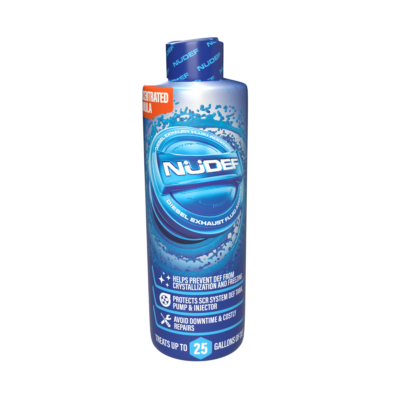
NüDef is engineered specifically to reduce crystallization in DEF. The active chemistry stabilizes urea concentration and disrupts crystal nucleation — which means less crystallization at the heater element, less thermal stress, and longer heater service life. We’ve measured this in fleet field data: trucks running NüDef-treated DEF show heater replacement intervals extending from ~100,000 miles to ~180,000+ miles in comparable duty cycles.
The economics matter: a $400 heater plus $600 in shop labor every 100,000 miles is $1,000 per 100,000 miles in DEF heater maintenance. NüDef treatment runs roughly $250-$400 per 100,000 miles depending on fleet wholesale tier — and extends heater life. For fleet operators, that’s a clear win on total cost of ownership.
To treat your DEF supply with NüDef, visit our product page for single bottles, multi-packs, and case quantities. For fleet wholesale pricing or to discuss a structured trial program where we measure heater-related fault code reduction over a 90-day window on your trucks, call (855) 300-0031.
Related reading on DEF heater and SCR system maintenance:
- DEF Heater Failure: Cold Weather Symptoms & Fix — the companion guide to this one, covering symptom identification before you commit to replacement
- Cost of Untreated DEF: The Real Cost of Doing Nothing
- Best DEF Additive 2026 — Complete Guide