
What a DEF Filter Is and Where It Lives
Every modern diesel with selective catalytic reduction (SCR) has a DEF filter. Most owners never see it, never service it, and only learn it exists when their truck throws a derate code and the dealer hands them a service bill. The filter is small, and it lives inside the DEF supply module (also called the DEF pump assembly, urea pump, or in some manuals the “metering and delivery unit”).
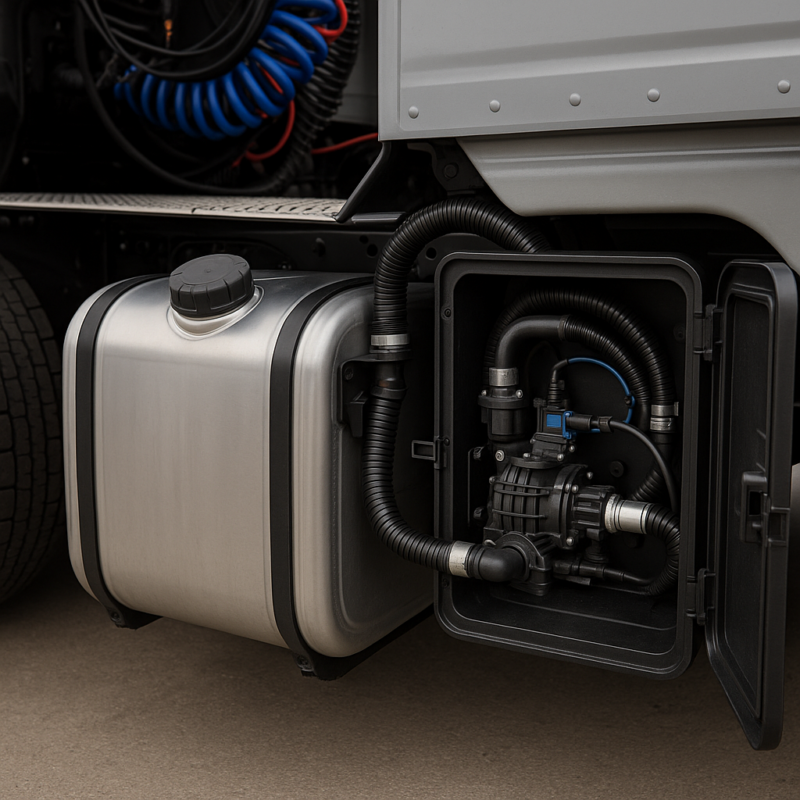
The supply module is the box that draws DEF out of the tank, pressurizes it, and meters it through a line to the injector at the SCR catalyst. On most pickups, the supply module is mounted directly to the DEF tank, often on top, sometimes on the side. On heavy-duty trucks the module is a separate unit mounted under the cab or near the tank, plumbed to it with a short pickup line. On industrial generators and continuous-duty equipment, the supply module is typically mounted on the engine skid or in the dosing cabinet alongside the SCR.
Inside the supply module, the filter sits in the suction path between the pickup line and the pump. Anything that comes out of the DEF tank passes through this filter before it ever reaches the pump rotor, the pressure sensor, the metering valve, or the injector. That’s the whole point: the filter is the last line of defense against contamination reaching the injector tip, which has spray orifices roughly 0.10–0.15 mm across and clogs almost instantly if anything gritty makes it through.
There are three filter architectures you’ll see in the field, and which one your truck has matters for service:
- Supply-module integrated filter. The most common modern design. The filter is a cartridge inside the supply module housing, accessed by removing a cap or by removing the entire supply module from the tank. This is what’s on most 2017+ Cummins, Detroit, Cat, Ford 6.7 PS, GM 6.6 Duramax, and Ram 6.7 Cummins applications. Replacement requires partial draining of DEF and careful resealing.
- In-tank filter (sock or strainer). Some earlier SCR designs and a handful of current applications use a coarse strainer or fabric “sock” inside the tank, typically on the pickup tube. This is sometimes considered a pre-filter, with a finer filter still inside the supply module downstream. The in-tank piece is usually a lifetime part you only touch during tank service.
- Inline filter. Less common on new equipment but found on retrofit SCR installations, some industrial generators, and aftermarket SCR builds. The filter is in the DEF line itself, between the pump and injector. Easier to service: replacement is usually just unscrewing two fittings and swapping the cartridge.
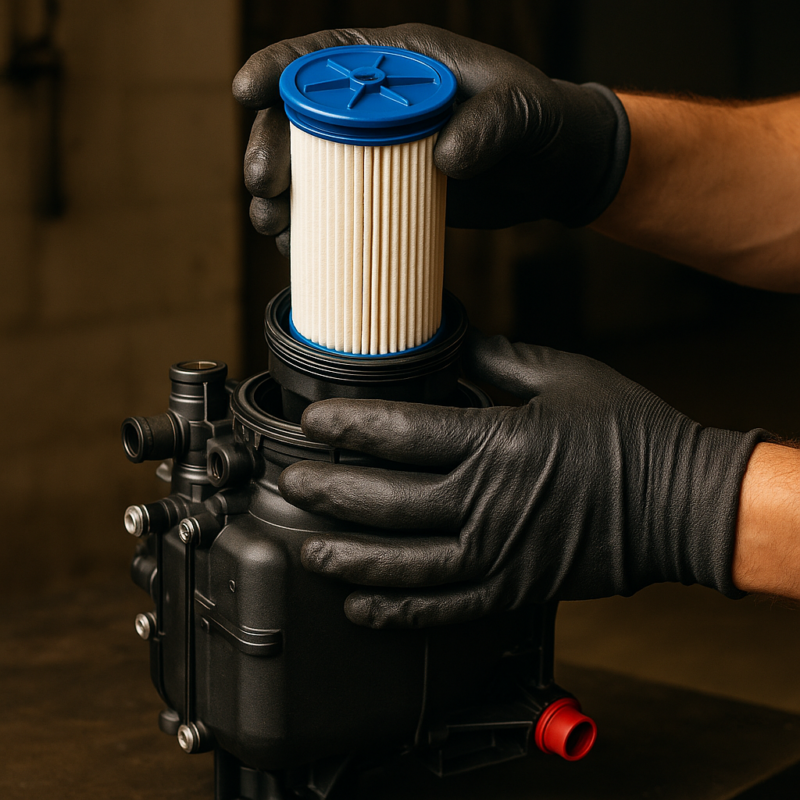
The filter element itself is typically a multi-stage construction: a polymeric mesh on the outside (catches larger particles and any tank debris), a cellulose or pleated synthetic media in the middle (catches the fine stuff: urea crystals, biological haze, dust), and a structural plastic frame holding the whole thing together. Some premium filters add a polyamide or PTFE membrane for ultra-fine filtration. None of it is rebuildable. Once an element is loaded with crystals or biological gunk, it’s a replacement item, not a clean-and-reinstall item. More on why in the prevention section.
Why DEF Needs Filtration in the First Place
DEF (diesel exhaust fluid, also called AdBlue outside North America) is a precisely engineered solution: 32.5% high-purity urea dissolved in 67.5% deionized water, manufactured to the ISO 22241 specification. In a perfect world, ISO 22241-compliant DEF would never need filtration. It’s already made to a tight purity spec at the factory, sealed in a clean container, and pumped directly into your tank with zero contamination.
In the real world, three things happen to DEF between the factory and the injector, and the filter exists to deal with all three.
Urea crystallization. Urea is in solution, but it doesn’t want to stay there forever. Heat, evaporation, and certain catalytic surfaces all push urea back toward its solid crystalline form. The most aggressive crystallization happens at the SCR injector tip and inside the catalyst, but a slower form happens upstream: in the tank, in the supply module, and anywhere DEF sits and dries. Every time the system cools down and warms back up, a little water evaporates and a few crystals form. Over months and years, those crystals accumulate, slough off tank walls and supply module surfaces, and travel toward the filter. The filter catches them. This is the dominant clogging mechanism on long-haul trucks and high-mileage pickups.
Tank biology. DEF is mostly water, and water in a vented tank grows things. The bacteria and algae that live in DEF tanks aren’t dangerous. They don’t hurt the truck, they don’t hurt you, they’re not the same organisms that grow in diesel tanks. But they do produce a hazy biological film that loads the filter the same way crystals do. The problem accelerates in hot climates, in equipment that sits for long periods between uses (standby generators, seasonal equipment), and in tanks that have been topped off many times without ever being fully consumed and refilled fresh.
Dust and contamination. Every time you remove the DEF fill cap, dust enters the tank. Every time you use a jug that’s been sitting in a shop, micro-debris from the jug enters with the fluid. Every time DEF is transferred from a bulk tote to a pickup tank, environmental particulate joins the trip. None of this is dirty by diesel-fuel standards. DEF is much cleaner than fuel. But the SCR injector orifices are much smaller than diesel injector orifices, so the cleanliness bar is higher. The filter catches what slipped past everywhere else.
Without filtration, all three of these failure modes converge on the injector. Once the injector tip clogs even partially, atomization quality drops, the spray pattern distorts, urea dose accuracy collapses, NOx slips past the catalyst, and the truck either fails the closed-loop NOx feedback test or starts derating. A DEF filter costs far less than an injector, and an injector costs far less than an SCR catalyst. The filter is the cheapest part of the system, doing the most expensive prevention.
OEM Service Intervals by Platform
Every diesel platform has an OEM-published DEF filter service interval. These are the manufacturer’s “scheduled maintenance” intervals: what they recommend you replace the filter at whether or not it’s actively causing problems. Real-world replacement frequency depends on DEF quality, tank biology, crystallization rate, and operating environment, so plenty of trucks need filter service well before the OEM interval. A handful of trucks make it past the OEM interval without symptoms. The published intervals are a starting point, not a guarantee.
Intervals change with model year, engine, emissions calibration and duty cycle, and OEMs revise them. Get the current interval and the filter part number for your exact engine from the sources below:
| Platform | Where to Find the Interval | Where to Find the Filter Part Number |
|---|---|---|
| Cummins ISX / X15 (HD truck) | Cummins Operation and Maintenance Manual, or QuickServe Online by engine serial number | QuickServe Online parts lookup by engine serial number, or a Cummins dealer |
| Detroit DD13 / DD15 | The Detroit maintenance manual for your engine | A Detroit or Freightliner dealer, by engine serial number |
| Cat C13 / C15 | The Cat Operation and Maintenance Manual for your engine | parts.cat.com or your Cat dealer, by serial number |
| Ford 6.7 Powerstroke | The scheduled maintenance section of your owner’s manual | A Ford dealer parts counter, by VIN |
| GM 6.6 Duramax | The maintenance schedule in your owner’s manual | A GM dealer parts counter, by VIN |
| Ram 6.7 Cummins | The maintenance schedule in your owner’s manual | A Ram dealer parts counter, by VIN |
A few practical notes on intervals:
- Real-world clog can happen before the OEM interval. Especially on equipment that sits for long periods (standby generators, seasonal trucks, fire apparatus), in hot climates, and where DEF supply quality is inconsistent.
- Hour-based intervals matter on generators and equipment. A standby generator that runs only a few hours a year can take many years to reach an hour-based interval, and the DEF in its tank can crystallize and degrade long before then. Ask the engine maker whether a calendar-time interval applies to standby units.
- Always check the current revision. OEMs occasionally revise filter intervals. Your specific year, displacement and emissions calibration may differ from another truck in the same model line.
Symptoms of a Clogged DEF Filter
A DEF filter doesn’t fail like a fuel filter. It doesn’t snap shut and starve the system in one event. It clogs gradually over weeks and months, presenting a progression of symptoms that escalate from “subtle annoyance” to “immediate derate.” Knowing the progression helps you distinguish a clogged filter from the dozen other DEF system problems that look similar.
Stage 1: Subtle, easy to miss.
- DEF level on the dash drops slower than it used to. If your truck used to consume DEF at roughly 2–3% of fuel volume and now seems to be using less, the metering valve is dialing back doses because pump pressure is dropping at the upstream side of the filter.
- Cold-start whine from the DEF pump area, lasting longer than usual before quieting down. The pump is working harder to draw fluid through the partially restricted filter.
- Pending (not active) codes occasionally appearing in the diagnostic data, especially P204F (Reductant System Performance) or pressure-range codes. Pending codes don’t trigger the dash light but show up if a technician pulls codes.
Stage 2: Active codes, no derate yet.
- P204F (SAE J2012: Reductant System Performance). A code often associated with filter restriction. Often pairs with low pump pressure data.
- P20E8 (SAE J2012: Reductant Pressure Too Low). These can also indicate pump failure, but a clogged filter is the cheaper place to start.
- Dash MIL (check engine light) on solid. No countdown timer yet. Truck operates normally.
Stage 3: Active derate sequence.
- Dash messaging changes to a multi-mile countdown (“Service DEF system, derate in 200 miles” or similar).
- Truck enters the first inducement stage, usually a torque limit.
- If not addressed, the next stage adds a vehicle speed limit.
- If still not addressed, the final stage is a severe speed limit until the SCR fault is repaired.
EPA rules require these inducements on SCR-equipped engines. The exact stages, speed limits and countdowns vary by manufacturer and model year.
How filter clog symptoms differ from other DEF problems:
- vs DEF pump failure (motor or rotor). Pump failure usually presents abruptly: a single drive cycle where everything was fine, and then suddenly no pressure at all. Filter clog presents gradually, with weeks of subtle stage-1 symptoms before active codes. If your pressure data goes from “normal” to “zero” in one event, suspect the pump. If pressure drops slowly over weeks, suspect the filter first.
- vs DEF injector clog. Injector clog presents as crystallized deposits at the SCR injector tip and downstream NOx feedback failures (P20EE, P207F, P20EF). Filter clog presents as upstream pressure-side codes (P204F, P20E8). They can occur together if the upstream filter has been failing long enough to dose poor-quality fluid.
- vs DEF quality fault (water contamination, wrong concentration). Quality codes like P20E8 or P204F can also come from off-spec DEF. Diagnostic distinction: pull a sample from the tank with a refractometer and check the concentration. If it’s 32.5% urea, the DEF is fine and the filter is the more likely culprit.
- vs DEF level sensor fault. Sometimes a slow-dropping dash gauge points to a stuck or failing level sensor, not to reduced consumption. The diagnostic distinction is whether the truck’s consumption data (in the ECM’s calculated DEF consumption rate) matches the dash gauge. If the ECM is dosing normally but the dash gauge isn’t moving, suspect the sensor, not the filter.
A scan tool with manufacturer-specific data is the fastest way to distinguish these problems. Live data on pump pressure, pump RPM, dose rate, and NOx sensor readings tells you in 60 seconds what could otherwise take hours of guessing.
DIY vs Dealer: How to Decide
DEF filter replacement is one of those jobs that sits on the boundary between “owner-serviceable” and “take it to the dealer.” Some owners handle it routinely with basic tools. Others learn the hard way that it’s the kind of job where a single mistake can turn a filter job into a supply module replacement. Here’s how to think about which side of the line you’re on.
Lean toward DIY when:
- You have experience on the specific platform (you’ve worked on this engine family before, even just oil changes and basic service).
- The filter is accessible from above the tank or from a service panel, so you don’t have to drop the tank or pull the cab.
- You have a scan tool that can talk to the SCR system, clear codes after service, and ideally trigger a forced DEF system prime/purge cycle.
- You have a clean shop environment. DEF is a high-purity fluid, and doing this job on a dirt driveway introduces contamination that’s hard to avoid.
- You have correct OEM-spec gaskets, O-rings, and seals on hand. Reusing old gaskets is the single most common DIY mistake on this job.
- You have a way to capture and dispose of the drained DEF properly. Used DEF that’s been in a contaminated tank is not the same as fresh DEF. See the disposal section below.
Lean toward dealer or independent diesel shop when:
- The truck is under powertrain warranty. Some OEMs treat DIY SCR work as a warranty risk, even though the filter itself isn’t a warranty item. Check your specific warranty language.
- The filter requires dropping the tank or pulling the supply module from underneath the truck. The job is technically simple but physically awkward, and the chances of damaging the tank pickup line or wiring harness go way up.
- You’re getting active codes and aren’t sure they’re from the filter. Pay a shop to diagnose first; replace the filter yourself if that’s confirmed to be the issue.
- The truck is a fleet asset and downtime costs more than dealer labor. A dealer that does this job often is usually much faster than a first-time DIY.
- You’ve never disassembled a supply module before. The first one is a learning experience. Make that experience happen on a less critical situation.
Dealer and shop pricing for DEF filter service varies with the platform, filter access and local labor rates. Ask for a quote that lists the filter, seals and labor separately. On industrial generators and continuous-duty equipment, access and whether the dosing cabinet has to be drained drive most of the labor.
For a first-time owner doing the job, budget for the filter and new seals, a scan tool that can prime the system and clear codes if you don’t already have one, and a few hours of labor. The savings vs dealer service is real but isn’t dramatic on the first job. The savings becomes meaningful on the second and third filter service, when you already have the tools and you know the procedure.
Step-by-Step Replacement Procedure
Specific procedures vary significantly by platform. This is a general procedure covering the steps that apply to most modern supply-module-integrated filter designs (Cummins, Detroit, Cat, GM Duramax, Ford 6.7 PS, Ram 6.7 Cummins). Always reference the specific service manual for your exact platform. The differences matter: Cummins ISX filter access is fundamentally different from a Ford 6.7 PS filter access, and substituting one procedure for another is how supply modules get destroyed.
1. Park, cool, and prep. Park on a level surface. Let the truck cool. Hot DEF off-gasses ammonia, and you don’t want to be doing this with a warm tank. Have on hand: a drain pan (5+ gallon capacity), shop towels, nitrile gloves (DEF is mildly irritating to skin), safety glasses, the new filter, all new O-rings and gaskets specified for the job, the manufacturer’s torque values, and your scan tool.
2. Disconnect the battery. Most supply modules have electrical connections to the pump motor, pressure sensor, and sometimes a heater. Disconnect the negative battery terminal before unplugging anything to avoid stray-voltage shorts.
3. Drain DEF below the filter level. Different platforms have different drain procedures. Some have a drain plug at the bottom of the tank. Some require pulling the DEF tank to drain. Some let you drain through the supply module access port. The key principle: the DEF level inside the tank needs to be below the filter location before you open the supply module, or DEF will pour out everywhere. On most pickups, you can drain by removing the supply module from a partially full tank and letting it drain into a pan as you withdraw it, but this only works on supply modules mounted at the top.
4. Disconnect electrical and fluid lines. Label everything if you’re not sure where it goes. Carefully unplug the pump motor connector, pressure sensor connector, heater connector (if equipped), and any temperature sensor. Disconnect the high-pressure DEF line going from the supply module to the SCR injector. This line often has a quick-connect fitting: push the collar in and pull the line out. Disconnect the low-pressure return line if equipped. Cap or wrap every disconnected line and connector to keep contamination out.
5. Remove the supply module. Most supply modules are bolted to the DEF tank with 4–8 fasteners. Remove them in a cross pattern to avoid warping. Some have a circular flange with a clamp ring; loosen the clamp and lift. Some pull straight up; some twist-and-lift. The OEM service manual is specific. Catch DEF that drips out during removal in your pan.
6. Open the supply module to access the filter. On some platforms, the filter is accessible by removing a cap from the supply module without further disassembly. On others, the supply module has to be disassembled to a deeper level, sometimes splitting it into halves, to get at the filter. Note the orientation of every component you remove. Take photos before you remove anything. Note the gasket placement, the O-ring locations, and any spring-loaded check valves that might pop out when the housing opens.
7. Remove the old filter. Often the filter is held by a retaining clip or threaded cap. Remove it. The filter will be dripping wet with DEF and may smell of ammonia if it’s been clogged for a while. That’s biological gunk. Put the old filter in a sealed plastic bag for disposal.
8. Install the new filter. Orient correctly: many filters have a “this end up” or “flow direction” indicator. Install all new O-rings and gaskets. Never reuse old O-rings on this job. The O-rings are typically Viton or hydrogenated nitrile, specifically rated for urea solution; don’t substitute generic O-rings. Lightly wet new O-rings with fresh DEF before installation to ensure they seat correctly.
9. Reassemble the supply module. Reverse order from disassembly. Torque all fasteners to the OEM-specified values: overtightening cracks the housing, undertightening leaks. Some supply modules use stretch bolts that must be replaced once removed; check the service manual.
10. Reinstall the supply module to the tank. Use new flange gaskets. Torque in cross pattern. Reconnect all fluid lines first, and make sure quick-connects click positively home and pull-test them. Reconnect all electrical connectors. Verify nothing is pinched.
11. Refill the DEF tank. Use fresh, ISO 22241-compliant DEF from a sealed container. Don’t use the drained DEF you just removed. It’s been contaminated by exposure to atmosphere during the service. Fill to the level required for the system to prime properly (usually at least half-tank).
12. Reconnect the battery. Reattach the negative battery terminal.
13. Prime the system and clear codes. Turn the key to “ON” without starting. Most SCR systems will run a DEF pump prime cycle (you’ll hear it). Some require you to use a scan tool to trigger a forced prime. Listen for leaks during priming. Once primed, use the scan tool to clear stored codes. Some platforms require a “reset” of the DEF filter service interval counter. Do this if your scan tool supports it; otherwise the dash will still show “DEF service required” until manually cleared.
14. Start the engine and verify. Run for 5–10 minutes. Check live data: DEF pump pressure should reach normal range (use the range in your service information), no active codes, dosing should occur at normal intervals once exhaust temps are warm. Check for leaks at every fitting and gasket you touched.
Common DIY failure modes to avoid:
- Reusing old gaskets and O-rings. A common cause of post-service DEF leaks. Always replace every seal you broke.
- Cross-threading the supply module housing or fittings. DEF housings are often plastic. Hand-thread first, then torque. Never start with a wrench.
- Pinched electrical connectors during reassembly. Verify every connector seats fully and the harness has clearance.
- Forgetting to reset the service interval. Not a functional failure, but the dash will keep telling you to service the filter.
- Skipping the prime cycle. Running an empty pump tears up rotors. Always prime before starting the engine.
- Contaminating fresh DEF with shop debris. Use only sealed-container DEF and don’t leave fill caps open longer than necessary.
- Spilling DEF on the truck. DEF is mildly corrosive to certain finishes and chrome over time. Wipe spills with water immediately.
OEM vs Aftermarket Filter Options
Once you know your platform’s part number, you have two procurement paths: OEM-genuine filter from the dealer parts counter or aftermarket equivalent from a parts retailer. Both are legitimate. The right choice depends on the application.
OEM-genuine filters. These come directly from the OEM (Cummins, Detroit Diesel, Cat, Ford Motorcraft, GM ACDelco, Mopar). They’re the exact specification the OEM uses for warranty service. Generally the most expensive option, often 1.5–2× the price of aftermarket equivalents.
- Choose OEM when: The truck is under powertrain warranty, the truck is a fleet asset on a structured maintenance program where parts traceability matters, the filter is a critical service in a tightly documented SCR system (e.g., compliance-mandated maintenance), or you want zero ambiguity about compatibility.
Aftermarket filters. The main aftermarket players in the DEF filter space are Donaldson, Hengst, Mann+Hummel, Baldwin, Fleetguard (which is technically the Cummins-affiliated aftermarket brand), and a handful of smaller specialty filter manufacturers. All of these companies make high-quality filtration products for many other applications and have legitimate DEF filter offerings for most platforms.
- Choose aftermarket when: The truck is out of warranty, you want a lower per-filter cost while maintaining quality, you’re running a fleet program with high-volume filter consumption where price matters, or your maintenance shop has a preferred aftermarket supplier relationship.
A few honest observations on the aftermarket side:
- Donaldson, Hengst, Mann+Hummel, and Fleetguard are the safe choices. These are established global filtration companies with engineering depth, real specification testing, and consistent quality control. They make filters that meet or exceed OEM specs across the major platforms.
- Cheap unbranded eBay/Amazon filters are a risk. The DEF filter market has attracted some low-cost suppliers whose products may not meet OEM micron ratings, may use incompatible media that releases fibers into the DEF, or may have inferior gasket materials. The cost savings on the filter doesn’t justify the risk of damaging a supply module or an SCR catalyst. Stick with named manufacturers.
- Match the spec as well as the part number. Cross-reference the aftermarket part number to the OEM part number through a reputable parts database. Some aftermarket manufacturers offer multiple filter grades for the same fitment, and the cheapest grade may be a downgrade from OEM micron rating. Read the specifications.
- OEM gaskets vs aftermarket gaskets. Even if you use an aftermarket filter, consider using OEM-genuine gaskets and O-rings. They’re cheap and they’re the part most likely to be the difference between “perfect service” and “callback in two weeks for a leak.”
Cummins X15 DEF Dosing Unit Filter Service
The X15 is the 15-liter Cummins heavy-duty engine that replaced the ISX15. Its DEF filter is a replaceable element in the DEF dosing unit, the pump assembly that pressurizes fluid for the doser in the aftertreatment. Where that unit is mounted depends on the truck builder and model year, so find it on your chassis before you order the kit.
Interval. Use the interval in the Cummins Operation and Maintenance Manual for your engine, or look it up by engine serial number in Cummins QuickServe Online. Duty cycle changes the answer, and trucks that idle a lot, run short hauls or sit for weeks tend to need the filter sooner.
Signs the X15 filter is the problem. Low dosing pressure faults, a dosing unit that runs hard without reaching pressure, and a derate that returns after codes are cleared. A plugged filter does not set a DEF quality fault. If the scan also shows a quality code (SAE J1939 SPN 3364, DEF tank quality), test the tank fluid with a refractometer and read our DEF sensor guide before blaming the filter. Code definitions are in the DEF trouble codes guide.
Service notes.
- Key off and let the system finish its after-shutdown purge before you open anything.
- Clean around the filter cap first so road grime does not fall into the housing.
- Catch the drained fluid and throw it away. Never pour it back into the tank.
- Install every seal and O-ring that comes in the kit, and tighten the cap to the torque in the service manual.
- Clear codes and run the dosing system checks in INSITE, or have a shop do it, then confirm pressure builds normally.
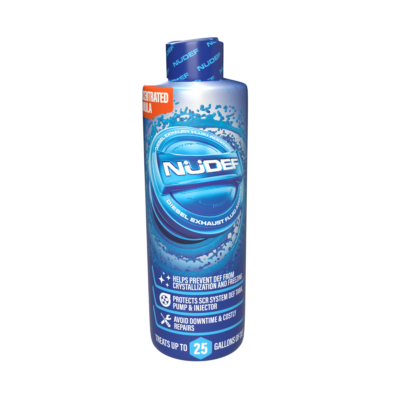
Crystals forming in the tank and dosing unit are a big part of what loads the element. NüDef DEF Treatment, Additive & Stabilizer helps prevent DEF crystallization and protects the SCR system, DEF tank, pump and injector. Add one 8 oz bottle per 25 gallons of certified DEF at every refill. It does not unclog a filter that is already plugged. Replace the filter first.
Prevention, Disposal, and Reducing the Next Clog
Replacing a DEF filter is straightforward maintenance. The more useful question is how to extend the interval between replacements and how to keep the next filter from clogging early, because the cleaner the DEF that reaches the filter, the longer the filter and everything downstream lasts.
Manage tank hygiene.
- Buy DEF in sealed containers: totes, drums, or jugs. Avoid filling from open bulk tanks of unknown age.
- Consume DEF before it’s been sitting for more than 12 months in your tank. Old DEF crystallizes faster and grows more biology.
- Never top off with rainwater or any other water source if your tank is low. Water dilutes the urea concentration below 32.5% and the SCR system fails its quality check.
- Inspect the DEF tank during major service intervals. If you see haze, sediment at the bottom, or crystallized buildup on the walls, drain and clean the tank before refilling.
- Keep the DEF fill cap clean. Wipe the cap and fill neck before opening. Don’t leave the cap off during fueling.
Use NüDef to help reduce crystal load on the filter. Crystallization of the DEF itself is one factor in DEF filter clog rate that you can control. Crystals that form in the tank and supply module are what load the filter element over time. NüDef DEF Treatment, Additive & Stabilizer is a DEF stabilizer and anti-scaling agent that helps prevent DEF crystallization and protects the SCR system, DEF tank, pump and injector. Fewer crystals in the DEF means less material reaching the filter. Keep following the OEM filter interval for your platform. For fleet wholesale pricing call (855) 300-0031.
Service the filter on the OEM interval, not on symptoms. If you wait for the dash light to come on, the filter has already been restricting flow long enough to drop pump pressure into the fault threshold. Catching the filter service at the OEM interval, or slightly ahead of it on equipment in tough environments, keeps the rest of the SCR system out of derate territory. Filter replacement is cheap. Letting a clogged filter starve the pump until the pump fails is expensive.
Always replace, never clean. A used DEF filter cannot be effectively cleaned. The filter media is partially loaded with urea crystals that have chemically interacted with the cellulose or polymeric substrate. Washing in water will remove some surface crystals but won’t restore the deep media. Compressed air will damage the media. Solvent cleaning will leave residues that contaminate the DEF on reinstall. Filter elements are inexpensive enough that replacement is always the right answer. The “clean and reinstall” approach exists mostly in shadetree YouTube videos and rarely ends well.
Disposal of used DEF filters. A used DEF filter is contaminated with urea crystals, biological residue, and trace SCR system contaminants. In most U.S. jurisdictions, used DEF filters are not classified as hazardous waste under RCRA, but local and state regulations vary, and some commercial fleets are required by their environmental compliance programs to track DEF filter disposal. As a default practice:
- Drain residual DEF from the old filter into a sealed container.
- Bag the filter in a sealed plastic bag.
- Dispose with general shop waste in residential/individual applications.
- For commercial fleets, follow your environmental compliance program. Some fleets work with waste-stream contractors who collect spent filters for proper aggregation and disposal.
- Drained DEF residue from the service should not be poured down storm drains. Small quantities can be disposed in sanitary sewer per local regulations; larger fleet quantities should be aggregated and removed by a waste service.
For fleet quantities, see NüDef wholesale pricing or call (855) 300-0031. For a single truck, order NüDef direct.
Related reading on DEF and SCR systems: