
Your driver just texted a photo of the dash — “AdBlue: See Operator’s Manual,” 47 stops still loaded, and the Sprinter 2500 is threatening to derate to 5 mph in a Costco parking lot. It’s 6:45 AM, route dispatch is in fifteen minutes, and you’re standing in the staging lane doing math you hate: pull the van and burn a rescue driver, or roll the dice and pray it holds through the route. If you’re running Sprinters — whether it’s an Amazon DSP fleet in Atlanta, a FedEx Ground contract out of Phoenix, or a dozen HVAC vans across three counties — you already know this isn’t a one-off. It’s a Tuesday. The Sprinter’s DEF system is the single highest-frequency failure point in last-mile delivery fleets, and NüDef exists specifically because we got tired of watching fleet managers lose $800 per incident on a problem that’s entirely preventable with the right fluid treatment protocol.
This isn’t a generic “what is DEF” explainer. Below is the Sprinter-specific teardown — OM651 vs. OM654 quirks, the heater relay that’s silently killing your SCR catalyst, and a shop-ready troubleshooting decision tree built from real fault data across 2,200+ Sprinter vans running NüDef-treated DEF.
Why Sprinters Are Different: DEF System Quirks by Platform
Not all DEF systems are the same, and the Sprinter’s has characteristics that make it more susceptible to certain failure modes than a Cummins- or Duramax-powered truck.
The tank is small. The NCV3-generation Sprinter (2010–2018) uses a 5.3-gallon (20-liter) DEF tank. The VS30 platform (2019+) bumped it to roughly 5.8 gallons. Compare that to a Ram 3500’s 8-gallon tank or a Class 8 truck’s 15+ gallon tank. A smaller tank means more frequent fills, more cap-open events, and more opportunities for contamination and moisture ingress.
AdBlue branding creates confusion. Mercedes calls DEF “AdBlue” throughout the instrument cluster and owner’s manual. It’s the same ISO 22241 fluid — 32.5% urea in deionized water — but the branding leads some fleet drivers to think they need a special Mercedes-specific fluid. They don’t. Standard API-certified DEF works fine. The confusion, though, sometimes leads drivers to avoid filling up at truck stops or use questionable AdBlue sources from auto parts stores with slower inventory turnover.
Engine variants matter. The OM651 four-cylinder (2014–2018 Sprinters) and the OM654 four-cylinder (2019+ Sprinters) use different SCR calibrations. The OM651 is known for running the DEF dosing injector at higher duty cycles during city driving — exactly the kind of driving delivery vans do all day. That higher duty cycle means more heat at the injector tip and faster crystal accumulation. The OM654 improved the injector design but introduced a more sensitive NOx sensor that throws quality codes earlier.
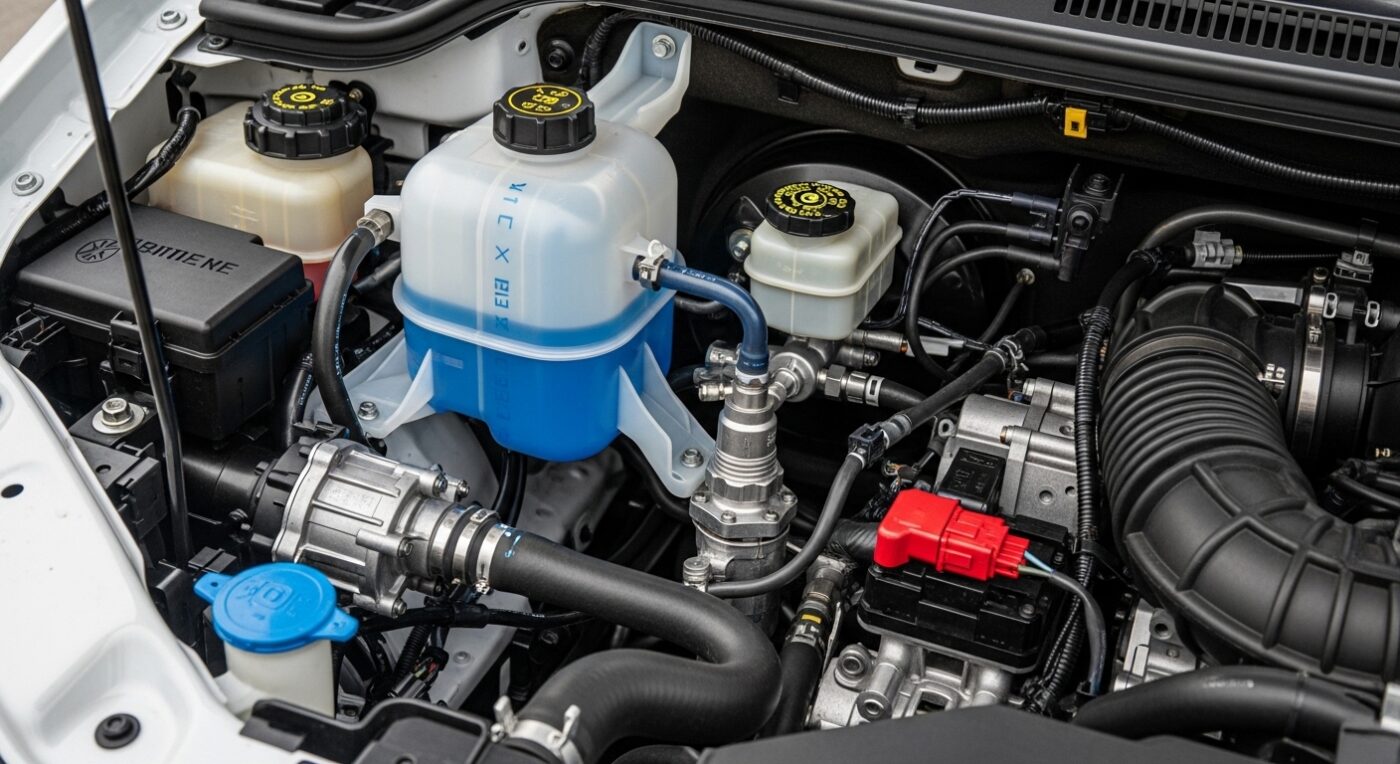
The DEF heater is the silent failure. The Sprinter’s DEF tank heater element sits inside the tank and is powered through a relay on the driver-side fender well (NCV3) or the relay/fuse box under the hood (VS30). When that relay fails — and it does, regularly — the DEF doesn’t reach operating temperature in cold weather. Unheated DEF doesn’t atomize properly at the injector, which leads to crystallization buildup even with perfectly fresh fluid. A failed heater relay can quietly cause crystal damage for weeks before a fault code appears.
The combination of small tank, high-frequency fills, city-cycle duty, and relay-dependent heating makes the Sprinter one of the most DEF-sensitive platforms in any commercial fleet.
Sprinter DEF Troubleshooting Decision Tree
When a Sprinter comes back to the depot with a DEF warning, don’t guess. Work through this decision tree in order. Each step either eliminates a cause or points you to the fix.
Step 1: Check the DEF Level
Is the tank below 10%?
If yes: fill it up with fresh, API-certified DEF. The Sprinter’s low-level warning triggers at approximately 10% remaining, and the system won’t clear the alert until it sees a level above roughly 20%. Fill the tank completely, drive for 15–20 minutes, and see if the warning clears on its own. If it does, your problem was simply low fluid. Log it — because if the same van keeps running low, you’ve got a driver training issue or a consumption spike that could indicate a dosing problem.
If the tank isn’t low, move to Step 2.
Step 2: Check DEF Age and Source
When was the DEF in this van last filled, and where did it come from?
DEF has a shelf life. Fluid that’s been sitting in a hot van for more than 60 days in summer can degrade enough to trigger quality codes. Check the purchase date on the DEF jugs your shop stocks. If you’re buying DEF by the case and storing it in a non-climate-controlled warehouse, you could be putting already-degraded fluid in your vans.
For a deeper explanation of why DEF breaks down and how crystallization begins, see our complete guide to DEF crystallization causes.
If the DEF is fresh and from a reputable source, move to Step 3.
Step 3: Scan for Fault Codes
What codes are stored?
Plug in a scan tool that reads Mercedes-specific SCR codes. The generic OBD-II codes (P207F, P20EE, P20EF, and others) will be present, but the Mercedes-specific codes give you more detail on which subsystem is flagging. For a full breakdown of what each code means and how to interpret the derate staging, see our DEF trouble codes guide.
What you’re looking for at this step isn’t the specific code definition — it’s the pattern. One van with a quality code is a van problem. Three vans in the same week with quality codes is a DEF source problem. More on that in the fleet-scale section below.
Step 4: Inspect for Crystallization
Open the DEF filler cap. What do you see?
White or gray crusty buildup around the filler neck is the earliest visible sign. Pull the DEF tank sender unit if your platform allows access (easier on the NCV3 than the VS30) and look for crystal deposits on the pickup screen. On the OM651, also inspect the dosing injector — it’s accessible from underneath the van near the SCR catalyst, and crystal buildup on the injector tip is the most common mechanical cause of Sprinter DEF fault codes.
If you find crystals, the tank needs to be cleaned. We’ve got a step-by-step DEF tank cleaning guide that covers the full process. Don’t skip the rinse — residual crystal particles will re-contaminate fresh fluid within days.
If the system looks physically clean, you’re likely dealing with an electrical issue — heater relay, NOx sensor, or dosing injector wiring. Time for dealer-level diagnostics.
Step 5: Check the DEF Heater Circuit
Is it cold-weather season?
If you’re seeing DEF warnings during fall, winter, or early spring — especially on morning startups — suspect the heater circuit first. On the NCV3 Sprinter, the DEF heater relay is on the driver-side inner fender and can be tested with a multimeter. On the VS30, it’s in the main fuse/relay box. A failed relay won’t always throw its own code immediately; instead, the system just sees “bad DEF quality” because the cold fluid isn’t performing correctly at the injector.
Replace the relay ($15–$40 part) before chasing more expensive diagnoses. It’s one of the cheapest and most commonly overlooked fixes in Sprinter fleet maintenance.
When One Van Has a Problem, Check the Whole Fleet
This is the part most single-vehicle guides miss entirely.
If you’re running 15 Sprinters out of a depot and van #7 comes back with a DEF quality code, your first instinct is to fix van #7. That’s correct — but it’s not sufficient. You need to ask: did van #7 fill from the same DEF source as the rest of the fleet?
If you’re buying DEF by the case from a single supplier and dosing all your vans from the same batch, a contaminated or degraded batch will show up as a wave of fault codes across multiple vehicles over a 2–4 week window. The first van to throw a code is your canary.
Immediate fleet response when you see a cluster:
- Quarantine the current DEF supply — pull it from the shelf
- Check the manufacture date on every jug (should be printed on the container)
- Scan every van in the fleet, not just the symptomatic ones — you’ll often find pending codes in 3–4 other vehicles that haven’t triggered the dash warning yet
- If you use a bulk DEF tank at the depot, test it with a refractometer ($30 tool, takes 10 seconds) — the reading should be 32.5% ±1.5%
Fleet operators who catch a bad batch early and treat proactively save themselves from a cascading series of individual van repairs that can shut down routes for days.
Prevention Protocol for Sprinter Van Fleets
Prevention looks different for a van fleet than it does for a long-haul trucking operation. Sprinter vans are high-frequency, short-run vehicles with multiple drivers, rapid DEF turnover, and depot-based fueling. That changes the prevention strategy.
At the Depot Level
Centralize your DEF supply. Don’t let drivers buy DEF at random gas stations. Every off-brand fill is an uncontrolled variable. Stock DEF at the depot, rotate inventory on a first-in-first-out basis, and store it indoors or in a shaded area where temperatures stay below 86°F.
Treat at the source. If you run a bulk DEF tank, treat the entire tank with a DEF stabilizer and anti-crystallization additive. Every van that fills from that tank gets treated automatically — zero driver action required, zero compliance risk. For fleets buying DEF by the jug, add treatment to each jug before it goes on the shelf, or train your shop techs to dose each van during routine service.
Track DEF consumption per van. A Sprinter that’s suddenly burning through DEF faster than its fleet average has a dosing issue developing. Catch it at the consumption anomaly stage and you’ll fix it before the fault code stage.
At the Driver Level
Make DEF fill part of the pre-trip. Drivers should check the DEF gauge during their pre-trip walk-around the same way they check tire pressure and fuel level. A laminated card on the dash with three rules works better than a 30-minute training session:
- If the DEF gauge is below half, fill it at the depot before departing
- If you see any DEF warning light, radio dispatch immediately — don’t wait to see if it goes away
- Never add anything to the DEF tank except API-certified DEF from the depot supply
Simple. Drivers don’t need to understand SCR chemistry. They need three rules they can remember at 5:30 AM.
At the Maintenance Level
Add DEF system inspection to every PM interval. During oil changes or scheduled maintenance, inspect the DEF filler neck for crystal buildup, check the heater relay with a quick continuity test, and scan for pending SCR codes. A 5-minute DEF check during a PM can prevent a $2,000+ unscheduled repair.
Keep spare heater relays in stock. At $15–$40 each, there’s no reason not to have five on the shelf. A relay swap takes 10 minutes and prevents cold-weather crystallization cascades.
Seasonal adjustment: In summer, focus on DEF freshness and storage temperature. In winter, focus on heater circuit integrity and cold-start crystal prevention. The failure mode shifts with the season, and your prevention emphasis should shift with it.
Fleet-Scale DEF Treatment
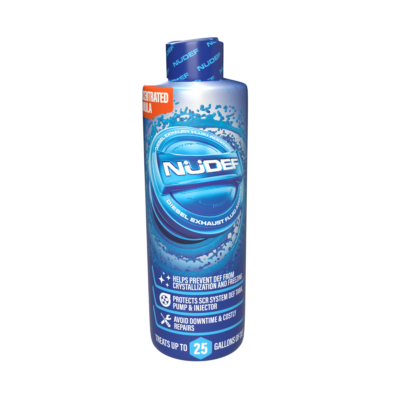
For van fleet operators looking at treatment in bulk, NüDef offers a wholesale program built specifically for commercial van fleets. One bottle treats 25 gallons of DEF — and for depot-based operations, the math works better when you’re treating a bulk tank rather than dosing individual vans. Contact the wholesale team for fleet-scale pricing based on your van count and monthly DEF consumption.
Sprinter-Specific Details Worth Knowing
A few things that don’t fit neatly into the decision tree but matter for anyone maintaining a Sprinter fleet:
The BlueTEC badge is going away. Mercedes used “BlueTEC” branding on OM642 and OM651 Sprinters to indicate the diesel+SCR system. Newer OM654-equipped vans don’t carry the BlueTEC badge, but they still use an SCR/DEF system. Don’t assume a Sprinter without a BlueTEC badge doesn’t need DEF maintenance — if it’s a diesel built after 2010, it has an SCR system.
The VS30 NOx sensor is expensive. The downstream NOx sensor on the 2019+ Sprinter runs $400–$600 for the part alone. Crystal contamination from degraded DEF is the leading cause of premature NOx sensor failure. Prevention here isn’t optional — it’s cheaper than a single sensor replacement.
Sprinter scan tools aren’t universal. Generic OBD-II scanners will pull the standard P-codes, but Mercedes uses manufacturer-specific codes in the SCR system that provide much more diagnostic detail. Xentry (the Mercedes dealer tool) is the gold standard, but Autel MaxiSys and Launch X-431 both read Sprinter-specific SCR data at a fraction of the cost. If you’re running 10+ Sprinters without a Mercedes-capable scan tool, you’re flying blind on DEF diagnostics.
Aftermarket DEF tanks exist — proceed with caution. Some fleet operators replace the stock 5.3-gallon tank with a larger aftermarket unit to reduce fill frequency. This can work, but only if the replacement tank includes a properly calibrated level sensor and heater element. A larger tank with no heater is worse than the stock tank in cold weather.
The DEF injector is a wear item. On high-mileage Sprinters (150,000+ miles), the DEF dosing injector should be treated as a wear item regardless of fault code history. Proactive replacement at $200–$350 during a scheduled PM is far cheaper than an emergency derate on a loaded route. Budget one injector replacement per van every 150,000–200,000 miles.
The Bottom Line for Fleet Operators
Sprinter DEF problems aren’t random and they aren’t mysterious. They follow predictable patterns based on tank design, duty cycle, and maintenance practices. The operators who rarely deal with DEF downtime aren’t lucky — they’re running a simple prevention protocol at the depot level and catching early warnings before they become mid-route failures.
Start with the decision tree. Post it in your shop. Train your drivers on the three rules. And if you’re seeing DEF codes across multiple vans, look at the supply before you look at the vehicles.