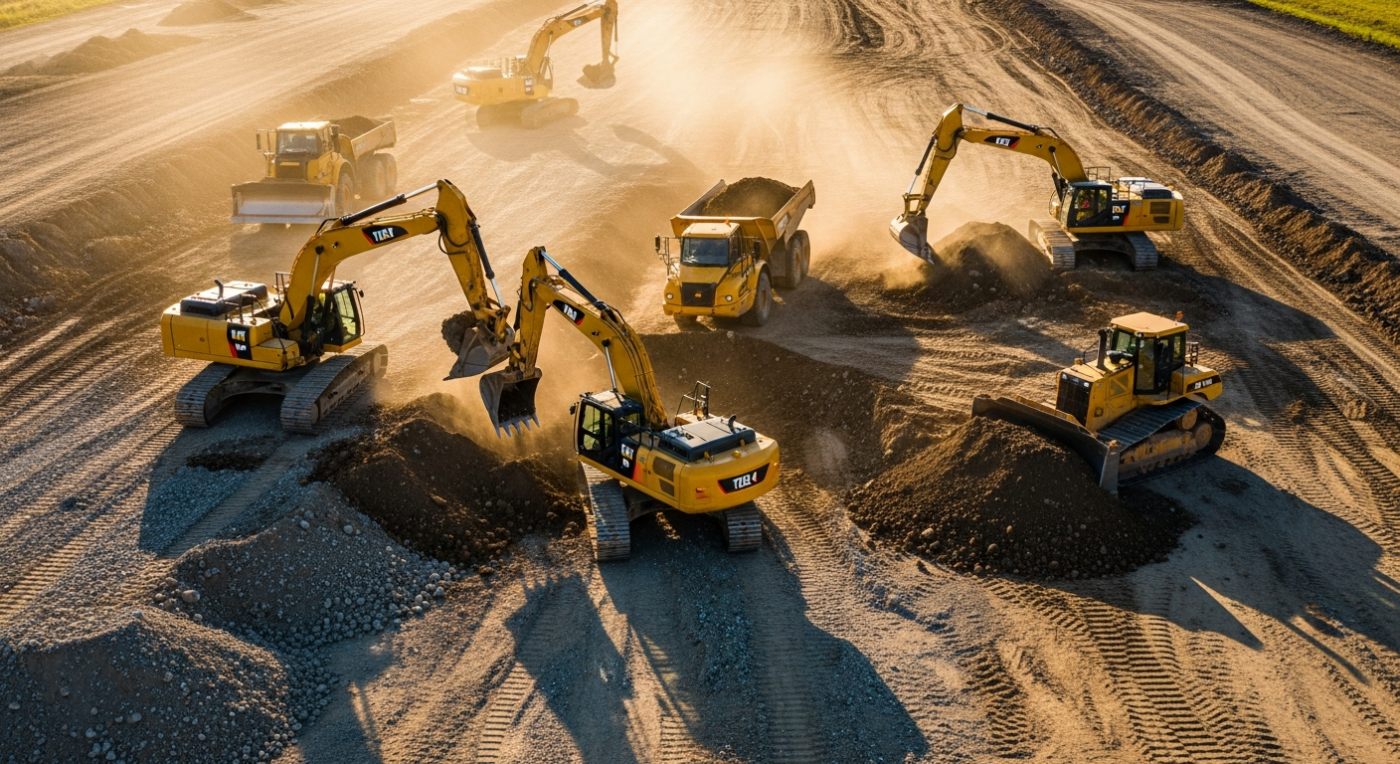
When a CAT 336 excavator goes down on an active jobsite, it does not just cost the repair bill. It shuts down the crew working around it. The dozer operator waiting on the excavator to move material. The haul trucks queued behind a machine that is not running. The project manager explaining to the GC why the day earthwork production is zero.
DEF system failures on Tier 4 construction equipment are increasingly common as machines that entered service in 2014-2016 accumulate hours and their SCR systems pass the threshold where crystallization becomes a routine problem. The failure pattern is predictable, the cost is significant, and the prevention is straightforward.
Why Construction Equipment Has Unique DEF Challenges
Construction equipment operates in environments that stress DEF systems in ways that highway trucks and pickup trucks do not experience. Three factors create elevated crystallization risk in heavy construction machinery:
Extreme duty cycle variation. A large excavator can go from full-load breakout force on a rock face to 30 minutes of idle while the operator repositions. These rapid load transitions create temperature swings in the SCR system that accelerate the evaporation-crystallization cycle at the dosing injector.
Extended idle and storage periods. Construction equipment regularly sits idle overnight, over weekends, or during weather delays. During extended idle periods with DEF in the tank, urea concentration can change due to slow evaporation and temperature cycling, creating conditions that promote crystallization even when the engine is not running injection cycles.
Contamination risk. Jobsite DEF fills are frequently done in dirty conditions: open tank tops, dusty fuel service trucks, high-vibration environments. Even small amounts of contamination in the DEF supply can trigger quality sensor faults that are often misdiagnosed as system failures.
Tier 4 Final: What Changed and Why DEF Now Matters More
EPA Tier 4 Final emissions standards took effect for large construction equipment above 174 hp in 2014 and required manufacturers to reduce NOx emissions by 96% from pre-Tier levels. The technology path chosen by every major OEM, including Caterpillar, Komatsu, John Deere, and Volvo CE, was Selective Catalytic Reduction using DEF.
The SCR systems installed to meet Tier 4 Final requirements were well-engineered and reliable when new. Eight to twelve years and 10,000 to 20,000 hours later, those same systems are showing the accumulated effects of temperature cycling, vibration, contamination, and the fundamental chemistry of DEF at the dosing injector.
Equipment purchased in the 2014-2019 window is currently at the highest crystallization risk. Old enough to have accumulated significant deposit buildup, but typically not yet flagged for DEF system replacement. A DEF additive program started now prevents further accumulation in aging systems and reduces the likelihood of the $3,000 to $8,000 failure event these machines are trending toward.
Most Common DEF Failures on Construction Equipment
The failure modes in construction equipment DEF systems mirror those in commercial trucks but with some equipment-specific patterns:
Dosing injector crystallization is the most common failure across all construction equipment types. The injector nozzle accumulates urea crystals over thousands of injection cycles. The failure sequence begins with intermittent dosing irregularities that trigger P207F or P20EE codes, escalates to restricted flow, and ends with injector seizure.
SCR catalyst plugging occurs when crystallization particles from the upstream injector reach the catalyst substrate. Construction equipment catalysts are more vulnerable to plugging than truck catalysts because of higher vibration levels that can dislodge deposits from injector walls and carry them downstream.
Quality sensor failure is common on equipment filled from contaminated DEF supplies or that has experienced concentration changes due to improper storage. Sensor replacement on construction equipment runs $200 to $600 depending on the OEM.
What Jobsite Equipment Downtime Actually Costs
The true cost of equipment DEF downtime on an active project has multiple components that the repair invoice does not capture:
Repair cost: $1,500 to $8,000 depending on severity. Injector replacement on a large excavator typically runs $1,200 to $2,500. Catalyst involvement adds $2,000 to $5,000. Emergency field service call-outs add a premium of $200 to $400 to any repair.
Direct downtime cost: A large excavator billable at $800 to $2,000 per day on project allocation loses that revenue when it is down. For a 2-day repair, that is $1,600 to $4,000 in downtime cost before the repair bill.
Cascade project impact: Earthwork, grading, and material handling sequences are tightly scheduled. A downed excavator can back up haul trucks, delay concrete pours, and push schedule milestones on activities that depend on completed earthwork. Schedule delay cost on commercial construction projects can run $5,000 to $25,000 per day or more in penalty exposure.
Fleet DEF Treatment Protocol for Construction Sites
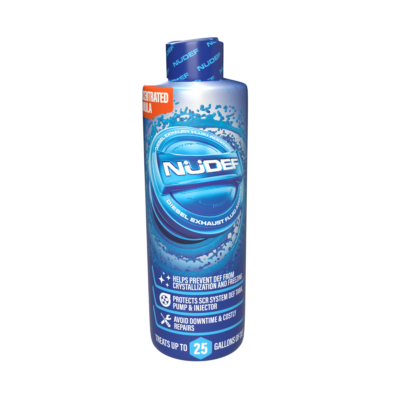
The most operationally efficient implementation for construction fleets is to add NüDef to the service truck bulk DEF supply rather than treating machines individually. This approach requires no per-machine action and automatically treats every piece of equipment that gets DEF from the service truck.
Each bottle of NüDef treats 25 gallons. Service truck bulk tank dosing: add one case (30 bottles) per 750 gallons of bulk DEF in the service truck. The additive distributes throughout the bulk supply and treats every machine at the standard dose rate when DEF is dispensed.
For equipment serviced individually at a yard or depot, the individual dosing protocol applies: one bottle of NüDef per DEF fill, added to the machine DEF tank before filling with fresh DEF.
For machines returning from extended storage or winter laydown, use a double dose, two bottles per fill, for the first two treatment cycles to address any deposits that accumulated during storage, then return to standard single-bottle dosing.
Procurement: Getting NüDef on the Jobsite
Construction fleets typically procure DEF additive through the same channels used for fuel additives, hydraulic fluids, and other maintenance chemicals: equipment dealers, regional industrial supply distributors, or directly from the manufacturer.
NüDef fleet and wholesale accounts are available for construction companies. At retail, a single bottle is $19.99, a 6-pack is $109.99, and a case of 30 bottles is $509.99. Fleet accounts receive volume pricing. The 1-gallon bulk jug treats 375 gallons of DEF and is available for high-volume operations. Contact NüDef for fleet account pricing and to discuss service truck bulk tank treatment options.