Working on a different part of the DEF system? Use the right guide:
DEF tank crystallization is the root cause of most SCR system fault codes, engine derates, and unplanned shop visits on diesel vehicles. When urea deposits build up inside the tank, lines, or dosing injector, the system cannot deliver DEF correctly, and the ECU responds with warning codes and progressive speed restrictions. Knowing how to clean a DEF tank properly, and when to use a def crystal cleaner versus a full flush, is the difference between a $40 DIY fix and a $900 dealer visit.
This guide covers the complete process for cleaning a DEF tank at home or in the shop: what you need, step-by-step instructions, what to do when the tank alone is not the problem, and how to prevent crystallization from coming back.
Signs Your DEF Tank Needs Cleaning
DEF fault codes. P207F (Reductant Quality Performance), P20EE (SCR Catalyst Efficiency Below Threshold), and P20EF (Reductant Injection Valve Stuck) all trace back, in most cases, to crystallization in the tank, lines, or dosing injector. If you have pulled one of these codes and the DEF looks discolored, cloudy, or has visible white deposits, the tank is the starting point.
White residue at the filler neck or cap. DEF is colorless and clean when fresh. White chalky deposits at the fill point mean urea has been concentrating and crystallizing at the surface where evaporation occurs fastest. If you see it outside the tank, there is almost certainly more inside.
Strong ammonia smell. DEF has a mild ammonia scent normally. A sharp, strong smell indicates the urea concentration has risen beyond spec as the fluid degrades. Combined with a fault code or reduced SCR performance, this confirms the system needs a drain and clean before refilling.
What You Need Before You Start
- Fresh ISO 22241 certified DEF: for refilling after the clean
- Distilled or deionized water: for flushing (never use tap water; the minerals will contaminate the system)
- A clean DEF-rated collection container: to catch the drain
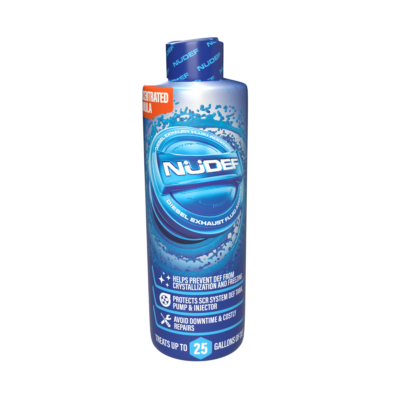
- NüDef def crystal cleaner: to treat the fresh fill and dissolve residual deposits
- Nitrile or chemical-resistant gloves: DEF leaves white urea deposits on skin and clothing as it dries
- Drain plug location: check your service manual or a quick web search; it varies by make and model
Step-by-Step DEF Tank Cleaning
Let the engine cool completely. DEF lines and the dosing injector operate under pressure when the system is warm. A hot system makes access difficult and potentially unsafe. Park on a level surface and wait at least 30 minutes after shutdown.
Locate and prepare the drain plug. On most pickup trucks, the DEF tank drain plug is accessible from underneath near the tank. On commercial vehicles, look for a panel on the side. Position your collection container beneath the drain point before loosening the plug.
Drain the tank completely. Inspect the fluid coming out. Cloudy, discolored, white-particle-laden, or strongly ammonia-scented DEF has degraded significantly. Dispose of it properly. It is not hazardous waste but should not be poured into storm drains.
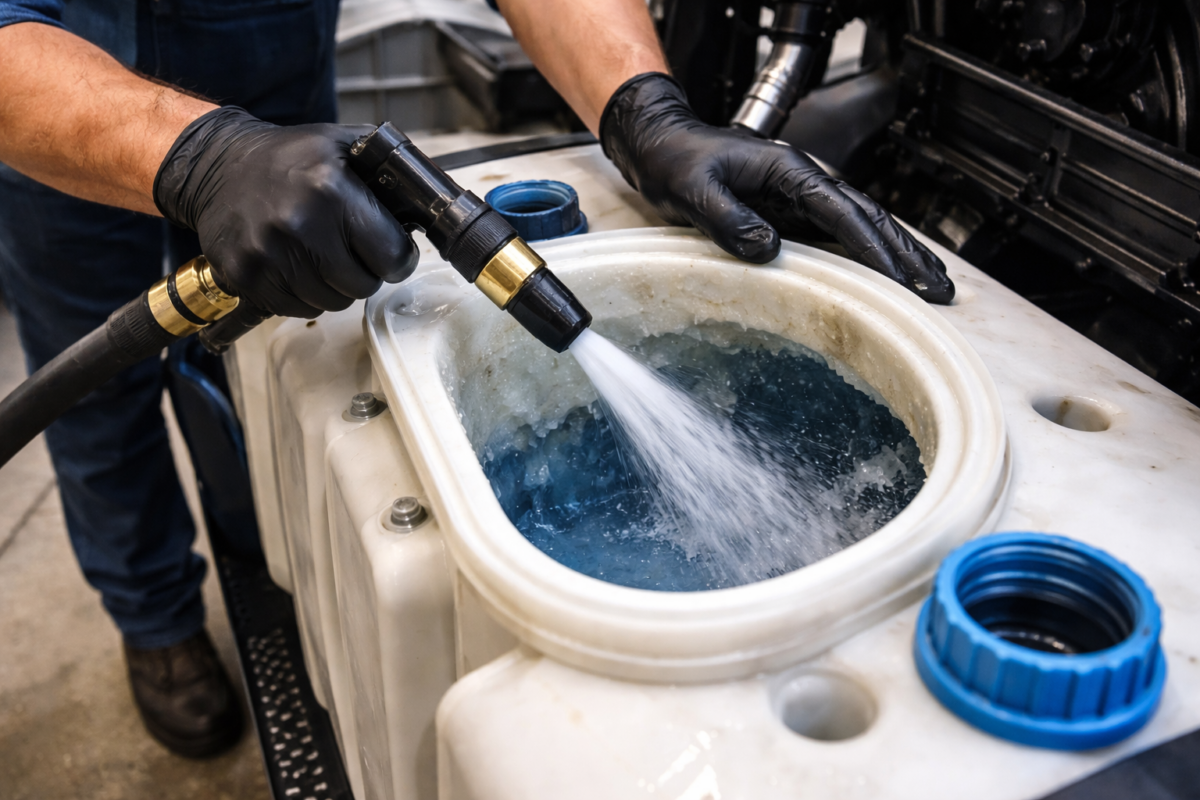
Rinse with distilled water. Add one to two gallons of distilled water through the filler neck. Distilled only. Tap water contains calcium, magnesium, and minerals that will contaminate the SCR catalyst. Swirl or gently rock the vehicle to loosen crystalline deposits from the tank walls, then drain completely.
Repeat the rinse if needed. If the first rinse came out visibly white or cloudy with suspended deposits, do a second rinse. A clean rinse runs clear or very slightly blue-tinted. When it runs clear, the tank is ready to refill.
Add NüDef, then refill with fresh DEF. Add NüDef def crystal cleaner to the empty tank first at the recommended dose, then fill with fresh ISO 22241 certified DEF. NüDef dissolves any residual deposits the rinse did not fully remove, stabilizes the fluid, and provides a protective treatment on internal surfaces.
Run the engine through a full warmup cycle. Start the engine and let it idle for 10 to 15 minutes to complete a full DEF system initialization. Then drive at highway speeds for 30 to 60 minutes. The higher exhaust temperatures dissolve remaining deposits in the lines and injector. Most quality-related fault codes (P207F, P20EE) clear within one to three drive cycles after a proper drain, rinse, and NüDef treatment.
DEF Crystals in Tank: What They Look Like and How to Remove Them
DEF crystals in the tank are distinct from crystals found in the dosing injector or supply lines, and they require a different assessment. Tank crystals form when DEF sits in a partially filled tank for weeks or months, allowing water to evaporate from the air-to-liquid surface. The urea concentrates at the top of the fluid column first, then precipitates as white crystalline deposits on the tank walls, the level sensor, and the outlet strainer at the bottom of the tank.
Visually, DEF crystals in the tank appear as a white chalky coating on internal surfaces that you can see when inspecting through the filler neck with a flashlight. In advanced cases, loose crystalline sediment settles at the bottom of the tank and can be felt as grit when you run a finger along the drain plug area. The fluid itself may appear cloudy or have visible white particles suspended in it rather than running clear.
Tank crystals are a problem even if the dosing injector is still clean. The crystalline sediment at the tank bottom clogs the outlet strainer, restricting DEF flow to the pump. Reduced flow means the pump works harder and the injector receives less DEF per cycle than the ECU expects, which triggers P207F (Reductant Quality Performance) fault codes. If enough sediment passes the strainer, it reaches the pump screen and accelerates crystallization downstream in the supply lines and injector.
To remove DEF crystals in the tank, follow the full drain-and-rinse procedure above. Pay special attention to the distilled water rinse step: swirl or rock the vehicle to dislodge crystals from the tank walls and level sensor. Drain and inspect. If the rinse water comes out white or gritty, repeat until it runs clear. After refilling with fresh DEF treated with NüDef, the stabilizer prevents the concentration drift that produced the tank crystals in the first place.
When Cleaning the Tank Is Not Enough
If fault codes return after a tank drain and refill, the crystallization has moved beyond the tank into the supply lines or dosing injector. The dosing injector is the most common location for deposits that survive a tank cleaning. It operates at the hottest and most thermally variable point in the system, which is exactly where crystals form fastest.
For severe injector blockage producing a P20EF code (Reductant Injection Valve Performance), the injector may need physical cleaning or replacement at a diesel shop. This is a 1 to 3 hour job at a cost of $300 to $900 depending on vehicle platform and labor rates. Catching the problem at the tank drain stage, before it progresses to full injector blockage, avoids this cost entirely.
How Often to Clean Your DEF Tank
A diesel vehicle with DEF treated regularly with NüDef should never need an emergency tank cleaning. The stabilizer prevents the crystallization and concentration drift that makes cleaning necessary in the first place. If you are treating at every fill-up or before every storage period, the tank will not accumulate deposits.
For vehicles that have not been treated, or where treatment was inconsistent, a preventive drain and refill with NüDef treatment is worth doing once per year for vehicles that see seasonal storage, extreme temperature exposure, or low annual mileage. Consider it a DEF system reset: fresh fluid, clean tank, NüDef treatment, and a fresh protection cycle begins.
For commercial vehicles running daily with high DEF consumption, an annual inspection of the tank outlet screen and supply line connections is sufficient if treated DEF is used consistently. Fleet operators who treat bulk DEF with NüDef at the fueling island rarely encounter the tank crystallization issues that untreated fleets deal with on a regular cycle.
Preventing Crystallization from Coming Back
The most common mistake after cleaning a DEF tank is refilling with untreated DEF and expecting different results. The conditions that caused crystallization the first time, including temperature swings, evaporation, and extended parking, have not changed. Without NüDef, the process begins again immediately.
Add NüDef to every DEF fill going forward. The dose is simple: add NüDef to the tank before adding DEF, or mix directly into a DEF jug before pouring. The stabilizer integrates with the DEF and remains active through normal operation and storage periods. It does not affect the urea concentration outside ISO 22241 specifications and does not impact engine or emissions system warranties.
For vehicles stored for more than three weeks between uses, including seasonal trucks, RVs, marine vessels, and generators, treat the tank before parking in addition to at every fill. The pre-storage treatment is the most critical dose. It protects the DEF through the exact conditions of static fluid, temperature swings, and slow evaporation that produce crystallization without it.