Which Duramax Engines Have DEF/SCR
The Duramax 6.6 has been built in five major generations since 2001. Only the last three of them use DEF/SCR aftertreatment. If you own a Duramax built before the 2011 model year, your truck doesn’t have a DEF tank, doesn’t have a reductant injector, doesn’t throw P20EE codes, and isn’t subject to any of the failures discussed in this guide. That’s a meaningful distinction we want to clear up first, because the question “does my Duramax have DEF?” is one of the most common we see from GM 2500/3500 owners.
LBZ (2006 – mid-2007). 360 HP, 650 lb-ft. EGR-only emissions strategy with no DPF and no DEF. The LBZ is widely considered the high-water mark for unencumbered Duramax performance — no aftertreatment complexity, strong cold-weather behavior, and bulletproof reliability when maintained. If you own an LBZ, the DEF conversation doesn’t apply to you. Your only fluid is engine oil, coolant, and fuel.
LMM (mid-2007 – 2010). 365 HP, 660 lb-ft. The LMM added a diesel particulate filter (DPF) for the new 2007.5 emissions cycle but still does not use DEF or SCR. Regeneration cycles, DPF maintenance, and EGR cleaning are real LMM topics — but reductant chemistry is not. If you own an LMM and a shop tells you it needs DEF work, that’s a misdiagnosis. Your truck has no DEF tank, no DEF pump, no DEF heater, and no NOx sensors of the post-SCR variety.
LML (2011 – 2016). 397 HP, 765 lb-ft. The LML was the first Duramax with full DEF/SCR aftertreatment. GM added a urea injection system to meet the 2010 EPA NOx regulations that became binding on heavy-duty diesel pickups in the 2011 model year. The LML uses a DEF tank with integrated heater and level sensor, a DEF pump module, a single reductant injector, two NOx sensors (upstream and downstream of the SCR catalyst), and a Tech 2-compatible diagnostic interface. It also debuted GM’s heavy-duty Allison 1000 transmission paired specifically to the 397 HP output. As the first-generation DEF Duramax, the LML inherited every first-generation DEF growing pain — heater failures, NOx sensor coking, pump failures, and the now-infamous DEF tank module issues.
LGH (2011 – 2016). 335 HP, 685 lb-ft (in standard tune). The LGH is the chassis-cab / commercial variant of the LML — same DEF/SCR hardware, slightly different tune optimized for sustained-load commercial duty cycles rather than peak-output pickup performance. LGH trucks are widely found in service-body work trucks, utility fleets, and 3500HD chassis cabs with aftermarket beds. From a DEF system standpoint the LGH and LML are essentially identical — same failures, same parts, same diagnostic procedures.
L5P (2017 – current). 445 HP, 910 lb-ft. The L5P is GM’s clean-sheet Duramax redesign for the 2017 model year. It uses a redesigned DEF/SCR system with improved DEF heater, more durable NOx sensors, and a more robust DEF pump module. The L5P also debuted GM’s heavy-duty 10-speed Allison 10L1000 transmission (in later 2020+ trucks). DEF reliability on the L5P is meaningfully better than the LML/LGH — but the system still uses the same underlying urea chemistry, which means it’s still subject to crystallization-driven failures when DEF quality is marginal or the truck sits unused for long periods.
For the rest of this guide, when we say “Duramax DEF system,” we mean LML, LGH, and L5P. LBZ and LMM owners can skim ahead to the prevention section if they’re curious about general diesel fuel chemistry — but the DEF-specific discussion doesn’t apply to your truck.
LML / LGH (2011-2016) Common DEF Failures
The LML and LGH share virtually identical DEF/SCR hardware. As first-generation DEF Duramaxes, they’re the trucks where we see the highest frequency of urea-related repairs — partly because they’re the oldest DEF Duramaxes still in service (most are now 10-15 years old), and partly because the first-generation hardware is genuinely less durable than the L5P redesign.
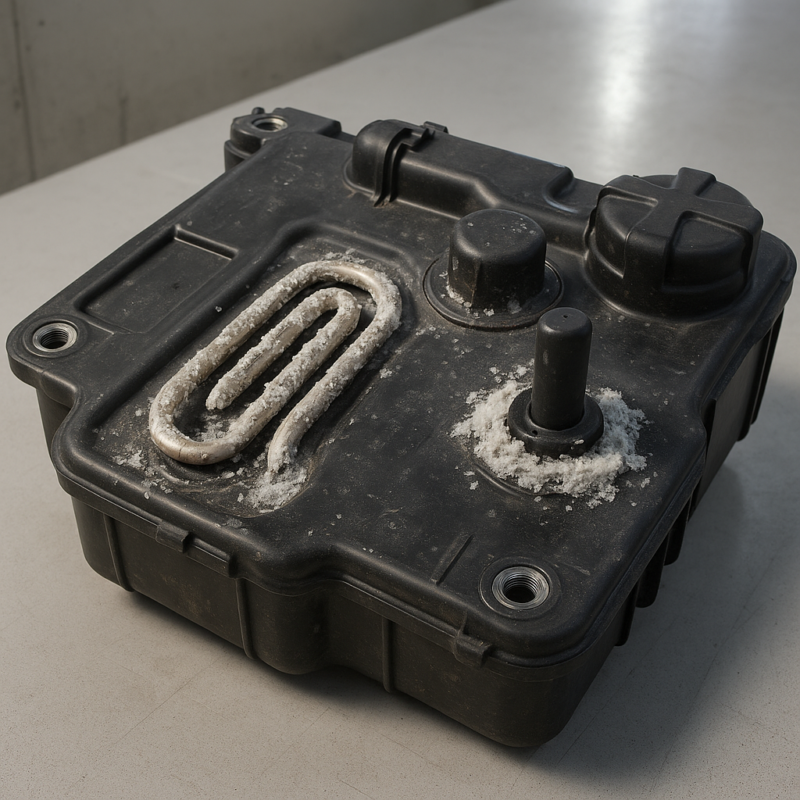
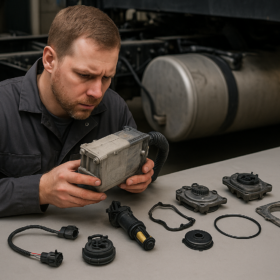
DEF tank heater failure. This is the single most common LML/LGH DEF repair. The DEF tank has a heater coil submerged in the DEF that’s responsible for thawing crystallized urea and frozen DEF in cold weather. The heater coil is a resistance element that takes a direct beating from the urea precipitate that forms whenever DEF is left to sit in the tank without movement. Over time the coil scale-builds with crystallized urea, develops hot spots, and eventually opens (fails open-circuit). The diagnostic code is usually P22B6 (Reductant Heater Control Circuit) or a related heater performance code.
Symptom pattern: cold-weather no-start with DEF warnings, DEF gauge reading “0 miles to no-start,” or persistent DEF heater MIL after temperature normalization. Replacement requires removing the DEF tank in many cases (some LMLs have an accessible heater service port; most do not). 2026 parts cost runs $385–$575 for the heater + level sensor assembly; total labor adds another $250–$450 depending on shop rate and accessibility. Total repair: $635–$1,025.
NOx sensor failure. The LML uses two NOx sensors — one upstream of the SCR catalyst (measures engine-out NOx) and one downstream (measures post-SCR NOx, used to verify SCR efficiency). Both sensors are exposed to high exhaust temperatures and aerosolized urea spray. Over time the sensing element gets coated with urea precipitate (cooked-on white residue) and the sensor drifts out of spec or fails entirely. The diagnostic codes are typically P2200-series (upstream NOx sensor) and P229E-series (downstream NOx sensor), often paired with P20EE (SCR low efficiency) when both sensors disagree.
Symptom pattern: persistent P20EE code that returns after clearing, slow DEF consumption, derate at 200 starts countdown, or “Service Emissions System” message. Replacement is straightforward — each sensor unscrews from the exhaust like an oxygen sensor — but the parts aren’t cheap. 2026 parts cost runs $485–$685 per sensor; labor is typically 0.5–1.0 hours per sensor ($75–$150). Replacing both sensors (which is often advisable since they age together): $1,120–$1,670 total.
DEF pump failure. The DEF pump module pressurizes DEF from the tank, meters the dose, and delivers it to the reductant injector. The pump is a small electric module with internal seals and a diaphragm. On the LML/LGH the pump module is integrated into the DEF tank assembly and can fail from several causes: seal degradation from sitting unused, internal contamination from urea precipitate, electrical failure of the pump motor, or pressure-sensor drift inside the pump head.
Symptom pattern: P204F (Reductant Quality Sensor Circuit), P207F (Reductant Quality Performance), or pump performance codes; “Service Emissions System” message; loss of DEF dosing despite a full tank; derate countdown starting. Replacement typically requires removing the DEF tank assembly to access the pump module. 2026 parts cost runs $685–$1,150 for the pump module; labor is typically 2–4 hours ($150–$600). Total repair: $835–$1,750.
Reductant injector clogging. The reductant injector is a small electrically-controlled valve that sprays DEF into the exhaust stream upstream of the SCR catalyst. The injector tip sits directly in the hot exhaust gas and is exposed to repeated DEF spray cycles. Over time, urea precipitate cooks onto the injector tip and partially or fully clogs the spray pattern. The diagnostic codes are typically P20E8 (Reductant Pressure Too Low) or injector-specific performance codes.
Symptom pattern: gradual loss of SCR efficiency (P20EE), inability to maintain DEF dosing pressure, or visible white urea crust around the injector mount when inspected. Replacement parts run $185–$385; labor is usually 1.5–2.5 hours ($110–$375). Total repair: $295–$760.
DEF tank level sensor drift. The DEF tank uses a level sensor that reports remaining DEF volume to the truck’s PCM. On the LML/LGH the level sensor is often integrated with the heater assembly — meaning when the heater fails, the level sensor often fails alongside it. The diagnostic code is P229F (Reductant Level Sensor Circuit). The symptom is usually a stuck DEF gauge that doesn’t decrement properly, or a low-DEF warning that won’t clear after refilling.
L5P (2017+) DEF System Differences
The L5P is GM’s 2017 clean-sheet Duramax redesign. Compared to the LML/LGH, the DEF/SCR system has meaningful improvements in three specific areas:
Improved DEF heater design. The L5P uses a redesigned heater coil with better materials and better thermal cycling resistance. Heater failure rates on the L5P are meaningfully lower than the LML/LGH — but heaters still fail when DEF quality is marginal or when trucks sit unused for extended periods (more than 60-90 days without movement). 2026 parts cost for an L5P DEF heater runs $425–$685; labor is typically 1.5–2.5 hours ($110–$375). Total repair: $535–$1,060.
More durable NOx sensors. The L5P NOx sensors are physically larger, use upgraded sensing element materials, and have improved heater elements (NOx sensors have their own internal heater to keep the sensing surface clean). Failure rates are lower than the LML/LGH first-generation sensors, but L5P NOx sensors are not immune — we still see P20EE and P229E codes on L5Ps, particularly on trucks operating in dusty environments (construction, agriculture, oil-and-gas service) or on trucks that have used marginal-quality DEF. 2026 parts cost runs $485–$685 per sensor.
Less common DEF pump failures. The L5P DEF pump module is more durable than the LML/LGH version. Pump failures still occur but at lower frequency. When they do occur, parts cost runs $785–$1,150 (slightly more expensive than the LML pump due to the redesigned hardware), and labor is comparable at 2–4 hours.
What the L5P didn’t fix. The L5P uses the same underlying urea chemistry as the LML/LGH. That means it’s still vulnerable to the same root-cause failure mode: crystallization at heater coils, sensor tips, and injector tips. The L5P’s improvements are about better hardware tolerance for that failure mode — not eliminating the underlying chemistry problem. If you operate an L5P in a duty cycle that produces marginal DEF quality (extreme heat causing in-tank concentration, extreme cold causing sluggish dosing, or long idle periods causing precipitate formation), you’ll still see failures at lower-than-expected mileage. The chemistry root cause is what NüDef addresses.
The L5P-specific gotcha: emissions warranty. 2017+ L5P trucks are subject to the federal 8-year / 80,000-mile emissions warranty on major emissions components (PCM, catalysts, NOx sensors, DEF system components). If your L5P is within that window and develops a DEF system fault, GM dealers should cover the repair under emissions warranty before you pay out of pocket. This warranty does not cover damage caused by contaminated or out-of-spec DEF — which is part of why DEF quality matters even when the truck is under warranty. Document your DEF purchases (receipts, source) in case of a warranty dispute over DEF contamination.
Diagnostic Fault Codes Specific to Duramax
GM’s diagnostic protocol on the Duramax DEF system uses standard SAE OBD-II reductant codes, with some GM-specific extensions. Here are the codes you’ll actually see, what they mean, and what they usually indicate as the root cause:
P20EE — SCR NOx Catalyst Efficiency Below Threshold (Bank 1). This is the most-frequently-seen DEF code on Duramax trucks. P20EE indicates that the SCR catalyst is not reducing NOx by the expected percentage — measured as the difference between the upstream and downstream NOx sensor readings. Causes (in order of frequency): NOx sensor failure (either sensor), catalyst poisoning from urea crystallization, DEF dosing fault (pump or injector), contaminated DEF, or genuine catalyst failure. Diagnostic approach: check live data on both NOx sensors first — a stuck reading or wildly out-of-range value points to sensor failure rather than catalyst failure. If both sensors are reading reasonably, suspect dosing or DEF quality.
P207F — Reductant Quality Performance. Indicates the truck’s reductant quality monitor (a combination of NOx sensor data, DEF consumption rate, and pump pressure data) shows that the DEF in the tank is not performing as expected. Causes: out-of-spec DEF (concentration error, contamination, or expired), DEF pump fault, or NOx sensor calibration drift. This is the code that GM dealers most often misdiagnose — they tend to default to “you put bad DEF in the tank” without confirming the underlying chemistry. Diagnostic approach: confirm DEF concentration with a refractometer (should read 32.5% urea), then check NOx sensor live data.
P204F — Reductant Quality Sensor Circuit. Indicates an electrical fault in the reductant quality sensor circuit — usually the pump module’s internal pressure/quality sensor. Causes: pump module electrical failure, harness damage, or PCM-side circuit fault. This code typically means the pump module is the next part to test. Diagnostic approach: check pump module connector for corrosion or pin damage, then test pump module functionality with a Tech 2 / GDS2 scan tool.
P22A2 — Diesel Exhaust Temperature Sensor Performance. The Duramax uses multiple exhaust temperature sensors to manage DPF regeneration and SCR operation. P22A2 indicates one of those sensors is reporting out-of-range or unrealistic data. Causes: exhaust temperature sensor failure (most common), wiring harness damage, or PCM sensor circuit fault. While this isn’t strictly a “DEF” code, it commonly accompanies DEF system faults because the SCR operating logic depends on accurate exhaust temperature data. Replacement: $125–$275 parts + 0.5–1.5 hours labor.
P22B6 — Reductant Heater Control Circuit. Indicates the DEF tank heater’s electrical circuit is reporting an open, short, or out-of-range condition. Causes: heater coil failure (most common — the coil opens after years of crystallization stress), wiring harness damage between the PCM and the heater, or PCM-side heater driver circuit failure. Diagnostic approach: check heater resistance with a multimeter at the heater connector; expected resistance varies by model year but is typically 2-8 ohms. Open circuit or out-of-range resistance confirms heater failure.
P229F — Reductant Level Sensor Circuit. Indicates a fault in the DEF tank’s level sensor circuit. Causes: level sensor failure (often paired with heater failure on LML/LGH), wiring harness damage, or stuck level reading from urea precipitate buildup. Diagnostic approach: check live data on the DEF level sensor while filling the tank — a non-responsive or stuck reading confirms sensor failure.
P20E8 — Reductant Pressure Too Low. Indicates the DEF pump is not maintaining the expected output pressure to the reductant injector. Causes: pump module failure, blocked reductant injector, kinked or leaking reductant lines, or low DEF level (sometimes false-triggers from a faulty level sensor). Diagnostic approach: confirm DEF level first, then test pump output pressure with the scan tool, then inspect lines for damage.
P203F — Reductant Level Too Low. Indicates the DEF level is below the operating threshold and a derate countdown will begin. Cause: low DEF (refill) or level sensor failure (P229F often accompanies). Always confirm with a visual check of actual tank fill before assuming sensor failure.
What to do with these codes: don’t just clear them. The PCM stores them as freeze-frame data for the dealer to read later, and clearing them without addressing the root cause means the underlying failure progresses while you keep driving. The right sequence is: read code → confirm root cause with live data → repair the underlying part → reset the SCR adaptation values (next section) → verify the code doesn’t return after a drive cycle.
DEF Heater & NOx Sensor Replacement Costs
Real 2026 repair cost ranges, broken out by generation. These ranges reflect a mix of OEM and quality aftermarket parts (Dorman, Standard Motor Products, Bosch, Continental) and a mix of dealer and independent shop labor rates. Your specific cost will depend on local labor rate, parts source, and whether you DIY any of the work.
LML / LGH (2011-2016) repair costs:
- DEF tank heater + level sensor assembly: $385–$575 parts; $250–$450 labor; $635–$1,025 total
- NOx sensor (each, upstream or downstream): $485–$685 parts; $75–$150 labor; $560–$835 each, $1,120–$1,670 for both
- DEF pump module: $685–$1,150 parts; $150–$600 labor; $835–$1,750 total
- Reductant injector: $185–$385 parts; $110–$375 labor; $295–$760 total
- Exhaust temperature sensor: $125–$275 parts; $75–$225 labor; $200–$500 total
An LML/LGH that hits all three major failures (heater, both NOx sensors, pump) in a 50,000-mile window can realistically rack up $3,500–$5,000 in DEF system repairs. We see this pattern frequently on trucks that have used unmonitored DEF, have sat unused for extended periods, or have operated in extreme-temperature climates without protective additive chemistry.
L5P (2017+) repair costs:
- DEF tank heater + level sensor assembly: $425–$685 parts; $200–$400 labor; $625–$1,085 total
- NOx sensor (each): $485–$685 parts; $75–$150 labor; $560–$835 each, $1,120–$1,670 for both
- DEF pump module: $785–$1,150 parts; $150–$500 labor; $935–$1,650 total
- Reductant injector: $225–$425 parts; $110–$375 labor; $335–$800 total
- Emissions warranty (within 8 years / 80,000 miles): $0 for emissions-covered components
L5P repair frequency is meaningfully lower than LML/LGH, but unit cost per repair is comparable or slightly higher because the parts are more expensive. The emissions warranty (federal 8 year / 80,000 mile) covers most of these components on early-warranty L5Ps — make sure to verify warranty status with a GM dealer before paying out of pocket on a truck that’s still within the window.
DIY vs shop decision tree. NOx sensors and reductant injectors are realistically DIY-able with a 22mm or 27mm sensor socket, basic hand tools, a torque wrench, and a scan tool capable of clearing codes. Budget 1–2 hours for sensor replacement. DEF tank heater and DEF pump module work usually requires dropping the DEF tank, which is a multi-hour job that benefits from a lift and impact tools — most owners pay a shop for this work. Reductant injector replacement is borderline DIY depending on access on your specific truck and how much urea crust has welded the injector to the exhaust mount.
If you’re buying aftermarket parts, stay with established suppliers — Dorman, Bosch, Continental, Standard Motor Products, and Walker are all legitimate. We’ve seen field-failures from cheap eBay NOx sensors at 5,000-15,000 miles; the OEM-equivalent parts last meaningfully longer. The cheapest part isn’t the cheapest repair.
DEF System Reset After Repair (Tech 2 & Aftermarket)
After any DEF system repair on a Duramax, you almost always need to reset the SCR adaptation values, clear the stored fault codes, and (depending on the repair) reset the DEF quality counter. Just unplugging the battery doesn’t do this — the PCM stores DEF system adaptations in non-volatile memory that survives power loss.
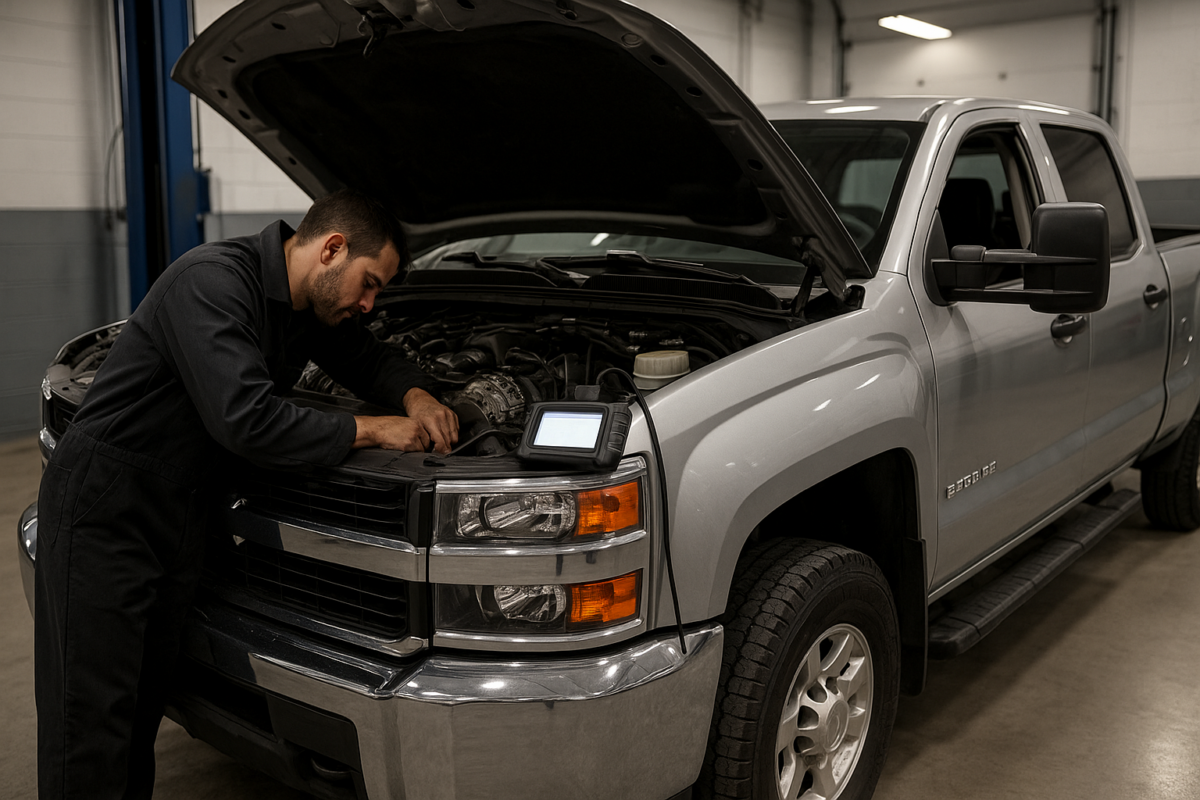
GM Tech 2 / GDS2 (dealer-level). GM dealers use the Tech 2 (older) or GDS2 / MDI 2 (current) factory scan tool for full DEF system reset procedures. The Tech 2/GDS2 can clear fault codes, reset SCR adaptation values, perform a DEF pump prime cycle (necessary after pump or tank work), force a DEF quality test, and reset the derate countdown timer. Dealer reset typically takes 30–45 minutes and runs $90–$225 in labor, depending on dealer rate and whether they bundle it with the repair work.
Aftermarket scan tools that work on Duramax DEF. A number of professional-grade aftermarket scan tools can perform DEF system functions on the Duramax — though feature support varies by tool and software version. Tools known to support Duramax DEF reset functions include:
- Snap-on Modis Edge / Solus / Zeus (with Duramax software loaded)
- Autel MaxiSys MS909 / MS919 / Ultra
- Launch X431 Pro5 / PAD VII
- OTC Encore / Pegisys
- Innova 5610 (limited DEF reset support)
Lower-tier OBD-II readers (Bluetooth dongles, generic code readers) can usually read and clear DEF codes but typically cannot perform DEF pump prime, SCR adaptation reset, or DEF quality counter reset. If you’re doing significant DEF work yourself, budget for either a capable scan tool or a $90–$150 service visit to a dealer or specialty diesel shop for the post-repair reset.
DEF derate countdown reset. If your truck has progressed into the DEF derate sequence (countdown of starts remaining before the truck refuses to start), resetting the countdown requires both repairing the underlying fault and performing a scan-tool reset that clears the derate counter. There’s no “drive it enough miles” workaround — GM specifically requires the scan-tool reset to verify the repair before clearing the derate. This is a deliberate design decision to prevent owners from clearing the counter and driving with an active emissions fault.
SCR adaptation reset procedure (general). The exact menu varies by scan tool but the sequence is consistent: connect tool, identify VIN and engine code (LML, LGH, or L5P), navigate to “Aftertreatment” or “Emissions System” menu, select “SCR System,” then perform in sequence: clear stored fault codes → reset NOx sensor adaptation → reset DEF dosing adaptation → reset DEF quality counter → if pump or tank was serviced, perform DEF pump prime cycle. After completion, drive the truck for a full warm-up cycle and verify codes don’t return.
CP4.2 Pump Recall vs DEF Problems — Don’t Conflate
One of the most frequent points of confusion in Duramax conversations is the CP4.2 fuel pump issue versus DEF system problems. These are completely different systems with completely different failure modes — but they get conflated in forums, social media, and even at some independent shops. Let’s separate them clearly.
The CP4.2 fuel pump issue. The Bosch CP4.2 is the high-pressure common-rail fuel pump used on 2011-2016 LML/LGH Duramax engines (and on 2011-2019 Ford Power Stroke 6.7 engines — same pump, different application). The CP4.2 has a well-documented failure mode where the pump internally cavitates and sheds metal particles throughout the fuel system. When this happens, the metal contamination destroys injectors, common rail components, and often the pump itself. Repair costs run $8,000–$20,000+ because the entire fuel system has to be cleaned of debris.
The CP4.2 issue is about fuel — diesel fuel quality, pump cavitation, and metal contamination through the fuel system. It has nothing to do with DEF. CP4.2 doesn’t cause DEF codes. DEF problems don’t cause CP4.2 failures. They’re separate systems running on separate fluids on separate sides of the engine.
Why the conflation happens. The CP4.2 failure tends to occur on the same LML/LGH trucks that also experience DEF system failures — partly because both issues affect 2011-2016 model years, partly because both issues correlate with high-mileage age, and partly because owners researching one problem often read about the other in the same forum threads. The result is occasional Google searches like “duramax CP4 DEF problem” — which is a non-existent intersection. The two issues are real but unrelated.
What CP4.2 owners can do. If you own a 2011-2016 LML/LGH with the original CP4.2 pump, consider the well-documented CP3 conversion (swapping the CP4.2 for the older, more durable CP3 pump used in earlier Duramax generations). The conversion runs $1,800–$3,500 installed and dramatically reduces the catastrophic fuel system failure risk. This is a fuel system upgrade — it has no impact on the DEF/SCR system, which is governed by separate hardware.
L5P fuel system. The 2017+ L5P uses a redesigned Bosch CP4.2 with revised internals, and Duramax has reported lower failure rates than the LML/LGH version — though the conversation is ongoing and L5P CP4.2 failures do still occur. Again, this is fuel system, not DEF system.
The point: when you read or hear “Duramax pump failure,” confirm which pump is being discussed. DEF pump failures are common, run $685–$1,150 in parts, and are part of the DEF/SCR conversation we’ve been having. CP4.2 high-pressure fuel pump failures are catastrophic, run $8,000–$20,000+ in damage, and are a separate fuel-system conversation. Don’t let a shop conflate them in a diagnostic conversation or repair quote.
Prevention: Why Duramax DEF Failures Happen Early
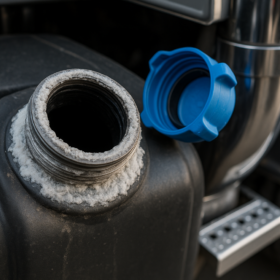
The single most common root cause across every Duramax DEF failure we’ve discussed in this guide is urea crystallization. The DEF heater coil scales over with precipitate and eventually opens. The NOx sensor tips get coated with cooked-on urea residue and drift out of spec. The reductant injector clogs from precipitate buildup at the spray tip. The DEF pump module’s internal seals and pressure sensor accumulate precipitate that disrupts dosing accuracy. Even when the catalyst itself fails, the failure is usually crystallization-driven catalyst poisoning rather than thermal degradation.
The chemistry of why this happens is straightforward. DEF is a 32.5% urea solution in deionized water. When water evaporates (from heat in the SCR catalyst, from sitting in a tank in warm weather, from idle cycles that produce light dosing) the remaining mixture becomes more concentrated than 32.5%. At higher concentrations, urea precipitates out of solution as solid crystals. Those crystals don’t redissolve when you add fresh DEF — they accumulate on whatever surface they formed on, and they keep growing.
The places urea crystallization concentrates on the Duramax are exactly the places we see failures:
- DEF heater coils — high surface temperature accelerates water evaporation; precipitate forms on the coil and degrades thermal performance until the coil opens.
- NOx sensor tips — sensors sit in the hot exhaust stream where DEF spray is partially evaporated; precipitate coats the sensing element and disrupts NOx measurement.
- Reductant injector spray tips — repeated DEF spray cycles into hot exhaust evaporate water; precipitate accumulates at the spray orifice and disrupts the spray pattern.
- SCR catalyst face — partially-evaporated DEF deposits crystals on the catalyst substrate; crystals occupy active sites that should be reducing NOx.
- DEF pump module internal pressure sensor — precipitate in the dosing flow path accumulates around the pressure sensor and degrades dosing accuracy over time.
What prevents crystallization. Two factors matter:
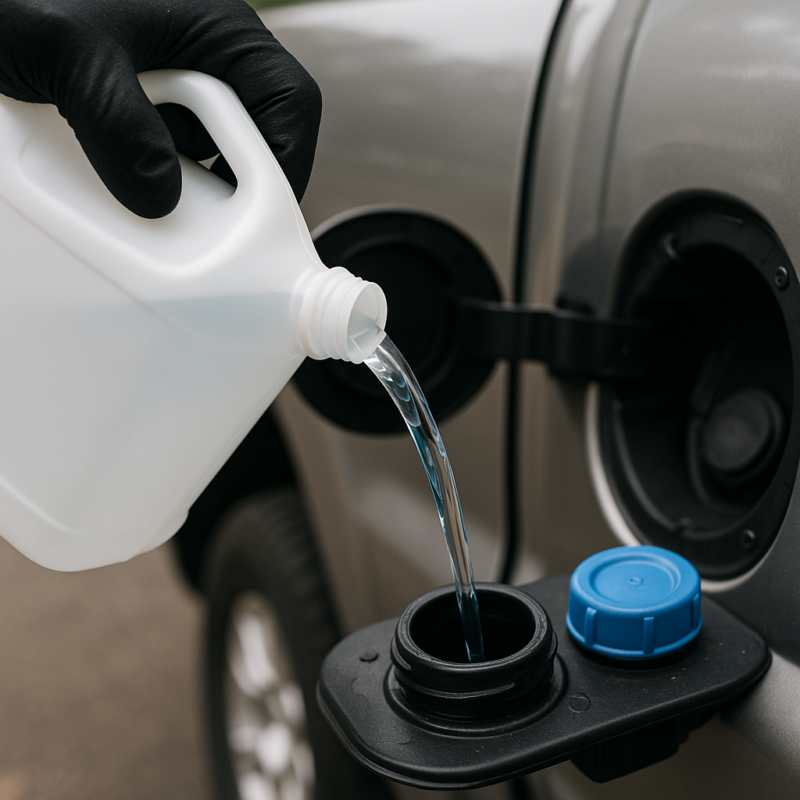
Factor 1: DEF quality at purchase. Buy DEF from a high-volume source that turns inventory frequently. DEF sitting on a shelf for months in warm conditions starts to concentrate before you even purchase it. Read the production date if it’s listed. ISO 22241-compliant DEF in a recently-opened container is the baseline starting point.
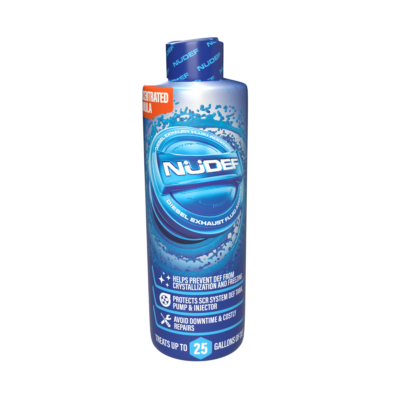
Factor 2: Crystallization-prevention chemistry in the DEF. A stabilizer additive disrupts urea crystal formation during and after injection. NüDef is engineered specifically for this purpose — the chemistry interferes with crystal nucleation at the catalyst face, at the injector tip, and at the heater coil. Customer field data shows meaningful reductions in P20EE and P207F code frequency on fleets that have moved to stabilizer-treated DEF. For Duramax owners specifically, the most-impactful protected components are the DEF heater (highest unit cost when it fails) and the NOx sensors (highest frequency of failure).
Our complete crystallization breakdown lives in our 6.7 Cummins DEF Crystallization Complete Fix Guide — the chemistry is the same on Duramax as on Cummins. For platform-specific failure walkthroughs on other diesels see our Ford Power Stroke DEF Problems deep-dive. For heater-specific repair cost detail across all three major platforms see our DEF Heater Replacement Guide.
For Duramax owners — LML, LGH, or L5P — the prevention math is favorable. A bottle of NüDef on a single-truck preventive cadence runs $25 and treats 25 gallons of DEF (roughly 18 months of typical pickup DEF consumption). One DEF heater failure runs $635–$1,085. One NOx sensor pair runs $1,120–$1,670. One DEF pump runs $835–$1,750. The prevention spend doesn’t have to prevent every failure to pay for itself many times over — it just has to push the failures meaningfully later in the truck’s life.
For fleet operators running multiple Duramax 2500s and 3500s in service-body, utility, agriculture, or commercial work-truck applications, the math is even more compelling because the failures stack across the fleet. A 20-truck Duramax fleet that’s averaging 2-3 DEF system repairs per year across the fleet is spending $5,000-$12,000 annually on reactive DEF repairs — fleet-wholesale NüDef treatment runs a fraction of that and typically reduces the repair frequency meaningfully. Call (855) 300-0031 for fleet wholesale pricing and to discuss a structured trial on a treated subset of trucks.
To buy NüDef directly visit nudef.com. For Duramax-specific questions, fleet wholesale, or technical support call (855) 300-0031 or email [email protected].