Every SCR injector replacement in a diesel truck costs $3,000 to $8,000 in parts and labor, not counting downtime at $800 to $1,500 per day while the truck sits idle. For fleet managers operating 25 or more diesel vehicles, DEF system failures are not a question of if. They are a question of when and how many at the same time.
A fleet DEF additive program eliminates most of that exposure. Here is the math and the mechanics behind why fleet DEF treatment programs deliver better ROI than almost any other preventive maintenance investment.
The Real Cost of DEF System Failures in Your Fleet
DEF system failures follow a predictable pattern in untreated diesel trucks. DEF evaporates from the dosing injector nozzle after each injection event, leaving behind a thin layer of concentrated urea. Over hundreds of injection cycles, that urea layer builds into a crystalline deposit that restricts flow, triggers fault codes, and eventually seizes the injector.
The fault codes come first: P207F (Reductant Quality Performance), P20EE (SCR Catalyst Efficiency Below Threshold), and P20EF (Reductant Dosing Performance). A first fault code warning gives you a window to diagnose. By the second or third occurrence on the same vehicle, the injector is physically compromised.
Repair cost breakdown for a typical Class 8 truck DEF injector failure:
- DEF dosing injector replacement: $800 to $1,800 parts
- DEF pump replacement (if clogged): $400 to $900
- SCR catalyst cleaning or replacement: $1,500 to $4,500
- Labor: $300 to $600
- Downtime: 1 to 3 days at $800 to $1,500 per day in lost revenue
Total per-vehicle exposure per DEF failure event: $3,000 to $8,000 in parts and labor plus downtime. For a 100-truck fleet with a 5% annual DEF failure rate, that is $15,000 to $40,000 in preventable repair costs per year.
Why Fleets Need a DEF Additive Program
DEF crystallization is not caused by low-quality DEF. It is caused by the chemistry of how DEF behaves at the injector nozzle in normal operation. Every diesel truck with a Selective Catalytic Reduction (SCR) system is susceptible, regardless of the brand of DEF used or how new the vehicle is. The crystallization is a function of temperature cycling, evaporation rate, and injection frequency.
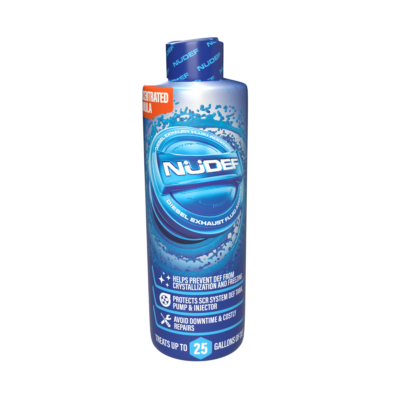
NüDef addresses this at the chemistry level. It stabilizes the urea in solution, preventing concentration from rising above the 32.5% threshold where crystallization occurs. It also inhibits crystal nucleation on the metal and polymer surfaces inside the DEF system: the injector nozzle, supply lines, pump screen, and tank walls.
NüDef treats 25 gallons per bottle, which is three times the coverage of most competing products that treat 8 to 10 gallons. When you are buying for a fleet of 50 to 500 trucks, that coverage ratio directly determines your program cost per vehicle.
Fleet and Wholesale Pricing
NüDef offers fleet and wholesale pricing for commercial operators. Pricing is structured by volume and account type. Contact the NüDef team to get pricing specific to your fleet size and consumption rate. Approved accounts can order through the wholesale portal at nudef.com.
Fleet accounts have access to:
- Volume pricing based on annual consumption
- Wholesale and distributor account options
- Bulk gallon jug formats for high-volume operations (the 1-gallon jug treats 375 gallons of DEF)
- Direct ordering through the NüDef wholesale portal
Fleet ROI: The Math
The ROI case for a fleet DEF additive program is straightforward because the failure costs are well documented and consistent across Class 8 operations.
A typical Class 8 truck adds DEF approximately once per week under normal interstate operation, roughly every 3,000 to 5,000 miles. Each bottle of NüDef treats 25 gallons. At retail, a single bottle is $19.99 and a case of 30 is $509.99. Fleet accounts receive volume pricing. Contact NüDef for fleet account rates.
The break-even calculation is simple: a single avoided DEF injector replacement at $3,000 to $5,000 in parts and labor pays for the DEF additive program across a meaningful portion of your fleet for the year. For most fleet operators, the program pays for itself on the first prevented repair.
Industry data places the DEF system failure rate in untreated fleets at 4 to 8% annually for trucks operating in environments with normal temperature variation. For a 100-truck fleet at a 5% failure rate, that is 5 DEF events per year at an average repair cost of $4,500 each.
Dosing Protocol for Fleet Operations
Standard dosing for fleet use: one bottle of NüDef per 25 gallons of DEF added. For trucks with active fault code history, use two bottles per fill for the first three fill cycles to address existing deposits, then return to standard one-bottle dosing.
Best practice for fleet yards: position NüDef at the DEF dispensing station or fuel island alongside the DEF supply. When treatment is co-located with the DEF fill, driver compliance is significantly higher than when the product is stored separately.
For fleets with bulk DEF storage tanks, add NüDef at the rate of one case (30 bottles) per 750 gallons of bulk DEF. This treats the entire bulk supply and automatically doses every truck that fills from the tank.
Setting Up a Fleet Account
Fleet accounts are available to commercial fleet operators, maintenance contractors, and fleet management companies. Wholesale and distributor account options are available depending on your volume and business type.
To get started, visit the wholesale section at nudef.com or use the contact form. Include your fleet size and vehicle types so the team can set up the right account structure for your operation.