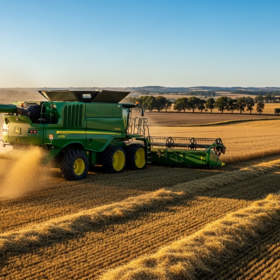
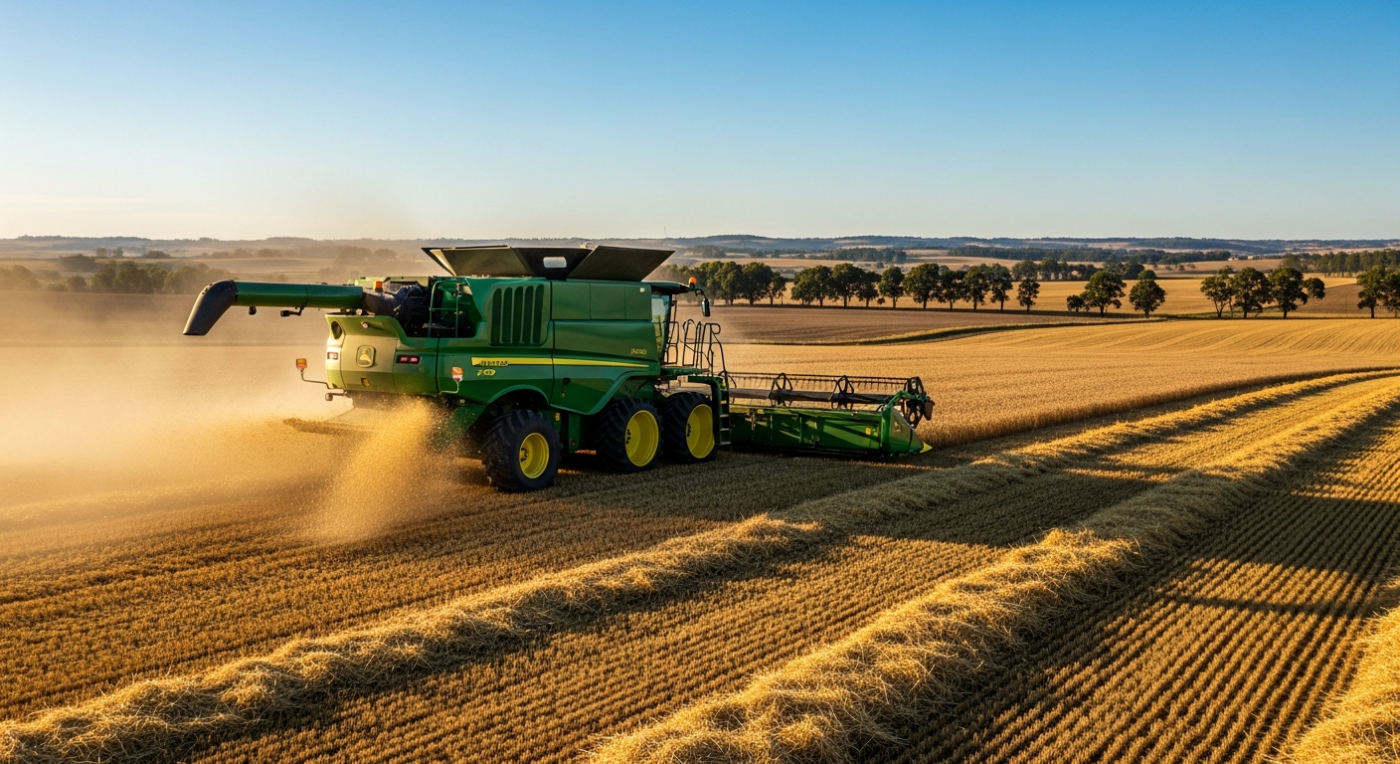
Last October a guy north of Hereford lost two days of cutting because his S780’s DEF system threw a derate code at 6 AM on a Monday. The wheat was ready. The combine wasn’t. His dealer in Amarillo had the sensor on backorder. By the time a tech got out there Wednesday afternoon, he’d watched 200 acres of ready wheat just sit while the forecast kept moving rain closer.
That’s not a hypothetical. That’s a phone call we hear every harvest. Nobody calls their Deere dealer during cutting because they want to — they call because a $600,000 combine is sitting in the field with an SCR fault and the weatherman says rain Thursday. The combine doesn’t care that you’re behind. The DEF system doesn’t know it’s harvest. It just sees degraded fluid or a clogged injector and shuts you down.
Farm and ranch equipment runs on a seasonal calendar that creates unique DEF challenges at every stage of the year. Your John Deere S780 doesn’t operate like a line-haul truck that runs steady miles twelve months straight. It sits for weeks or months, then runs sunup to sundown for a concentrated window where every hour counts.
This guide follows the farm year from spring startup through winter storage, covering what to do with the DEF in your equipment at every phase — so you’re not the guy making that phone call during harvest.
Spring Equipment Prep: Waking Up the Fleet
March and April in ag country mean pulling equipment out of barns and shops where it’s been sitting since November or December. That DEF has been in the tank for three to six months. Even in a heated shop — and most farm shops aren’t heated — DEF degrades over time. In an unheated Panhandle shop where temperatures cycled between 15°F and 70°F through the winter, that DEF has been through freeze-thaw cycles that accelerate crystallization.
Before you turn the key on spring field work, here’s the protocol:
Check every DEF tank visually. Pop the cap and look. If you see white residue on the fill neck or floating particles, that DEF needs attention. On a Case IH Axial-Flow combine, the DEF tank is relatively accessible. On some Kubota tractors, you’re working in tighter quarters, but the inspection still matters.
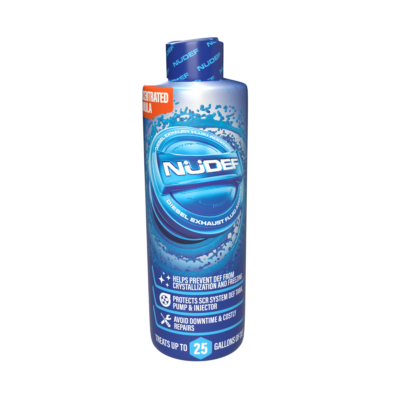
Treat standing DEF before the first start. If the DEF has been sitting untreated for more than 90 days, add NüDef before the first engine start of the season. One bottle treats 25 gallons. The treatment works to stabilize the urea concentration and inhibit the crystal formation that clogs injectors and fouls sensors.
Run the engine at operating temperature for 20 minutes. This circulates treated DEF through the entire SCR system — lines, pump, injector, decomposition chamber. You want the system fully primed before you ask it to work a 14-hour planting day.
Spring is also when you’ll find the problems that developed over winter. A DEF quality sensor that’s been sitting in degraded fluid may throw fault codes at first startup. Better to discover that in the shop yard than when you’re halfway through planting corn.
Planting Season: High-Utilization DEF Management
Planting is the first high-demand window. Tractors pulling planters run long days — often 16 to 18 hours with operators rotating shifts. DEF consumption during planting is substantial because engines are working under consistent load.
A John Deere 8R 410 pulling a 24-row planter consumes DEF at roughly 2-3% of diesel consumption. That means on a heavy planting day burning 80 gallons of diesel, you’re going through around 2 gallons of DEF. Over a two-week planting window, a single tractor can consume 30 to 40 gallons of DEF.
During planting, your DEF management priorities shift:
Treat every fill. When you’re topping off the DEF tank at the end of each day or the start of each morning, add NüDef to the fresh DEF going in. This keeps the SCR system consistently protected during the highest-demand operating period.
Watch your DEF supply chain. Most farm operations buy DEF in 2.5-gallon jugs or 55-gallon drums from their local farm supply store. Wherever you’re buying, make sure that DEF hasn’t been sitting on a loading dock or in a non-climate-controlled warehouse through summer. DEF that’s already degraded before it goes into your equipment creates problems faster.
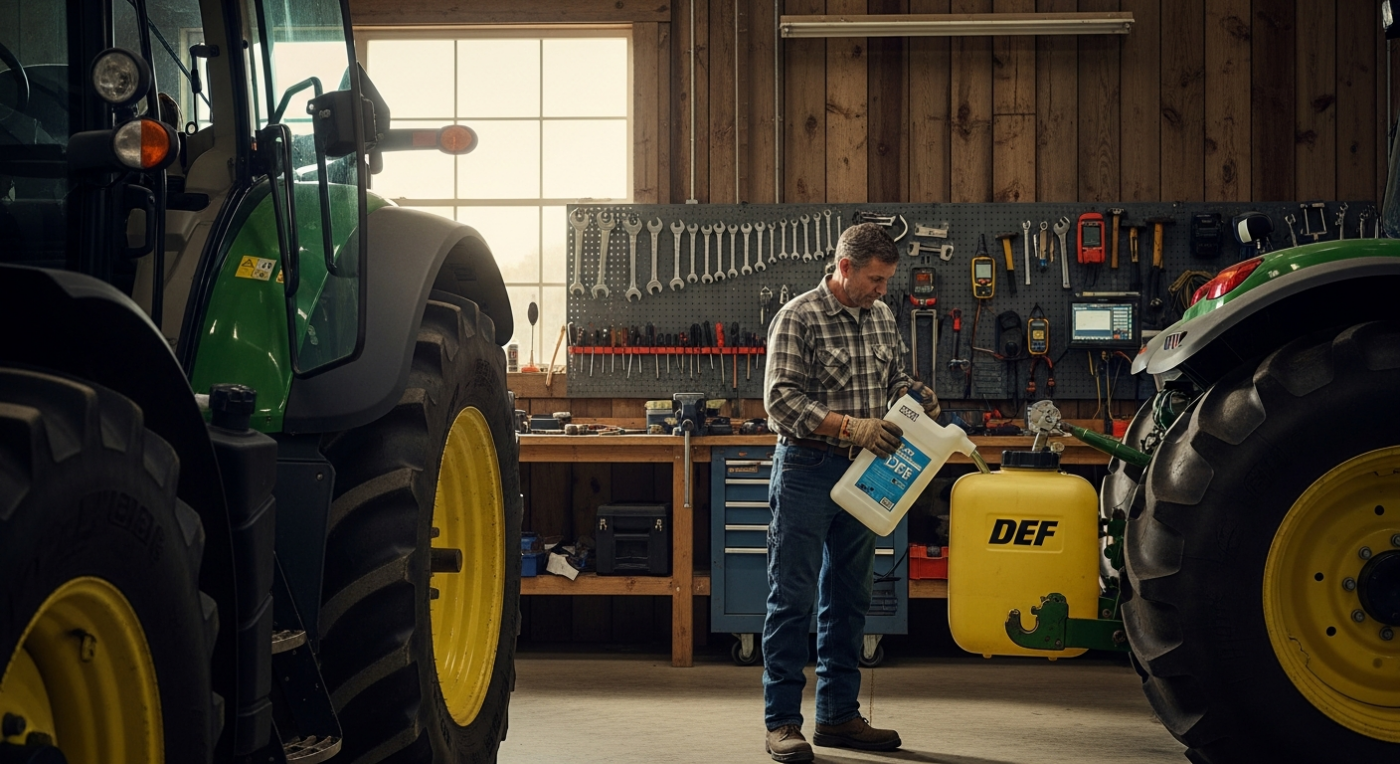
Keep the DEF fill area clean. Dust during planting is unavoidable. It’s in everything. But contaminants in DEF — even small particles — can damage the dosing system. Use a clean funnel, keep the cap on the DEF jug until you’re pouring, and wipe the fill neck before opening the tank cap. These sound like small things until you’re the one pulling an injector because a grain of sand got past the filter.
Summer: Heat, Idle Time, and Bulk Storage Risks
Summer creates two distinct DEF challenges on agricultural operations.
The first is heat degradation in active equipment. Sprayers running through July and August in the Texas Panhandle or South Plains are operating in ambient temperatures above 100°F. DEF breaks down faster at elevated temperatures. The fluid in a DEF tank mounted on a sprayer boom tractor, exposed to direct sun all day, can degrade significantly within weeks.
Self-propelled sprayers like the John Deere R4044 or Case IH Patriot 4440 are particularly vulnerable because they run intermittently — a few days of application, then they sit. That stop-start cycle with heat exposure is the worst combination for DEF quality.
The second challenge is bulk DEF storage. Many operations store DEF in 275-gallon totes or 330-gallon IBC containers in their shop or barn. These buildings typically have no climate control. In a metal shop building in Lubbock or Amarillo, interior temperatures can reach 120°F or higher on a summer afternoon.
DEF stored above 86°F begins to degrade. At 120°F, the degradation rate accelerates dramatically. If you’re buying DEF in bulk for the season, treating the entire storage container with NüDef at the time of delivery extends the usable life of that DEF through the heat of summer and into fall harvest.
Harvest: Zero Downtime, Maximum Stakes
Harvest is where everything matters and nothing can wait.
In the Texas Panhandle, the wheat harvest window is roughly 45 days. Cotton harvest in the South Plains has a similar compressed timeline. During that window, you’re running combines, grain carts, trucks, and sometimes tractors pulling grain buggies — all simultaneously, all day, every day that weather allows.
A combine down for a DEF fault code during harvest isn’t an inconvenience. It’s a crisis. Here’s what actually happens:
The combine throws a DEF quality or SCR efficiency code. The operator sees a derate warning. Depending on the brand and the specific fault, you might have 3 to 5 engine hours before the machine goes into forced idle or won’t restart. That’s not enough time to get a dealer tech out to most operations, let alone source a part.
On a John Deere X9 1100 combine — a machine that can harvest 100 acres a day in wheat — every day of downtime represents significant revenue loss. And you can’t just rent another X9. There aren’t spares sitting around during harvest.
The same applies to Case IH 9250 Axial-Flows, AGCO Fendt IDEAL combines, and Gleaner S9 Series machines. Every modern combine runs DEF. Every one is vulnerable to the same crystallization issues.
Harvest DEF treatment protocol:
Treat every combine DEF fill throughout the harvest window. No exceptions.
Treat every grain cart tractor. These are running all day, every day, alongside the combines.
Treat the trucks. Semi-trucks hauling grain from field to elevator are part of the harvest fleet. A truck down with a DEF fault at the elevator means the combine has nowhere to unload — so now the combine stops too.
Pre-harvest, inspect every DEF tank, line, and fill neck on every piece of equipment. Clean any tanks showing signs of contamination or crystallization before harvest starts.
Have NüDef on hand before harvest begins. Don’t wait until you’re three days into cutting to realize you need product. Stock up at your local Gebo’s in Amarillo, Hereford, Dalhart, Lubbock, or Plainview before the season starts.
Winter Storage: The Most Critical Treatment Window
Ask any ag mechanic what causes the most DEF problems on farm equipment, and they’ll tell you the same thing: winter storage.
Equipment that sits from November through March with untreated DEF in the tank develops crystallization. It’s not a matter of if — it’s a matter of how much. The urea in DEF begins to break down and form deposits in the tank, lines, and most critically, at the injector tip and inside the decomposition chamber.
The reason winter storage is the worst is simple: the DEF isn’t circulating. In an operating engine, DEF moves through the system constantly. During storage, it’s static fluid in a tank, gradually degrading.
Winter storage treatment protocol:
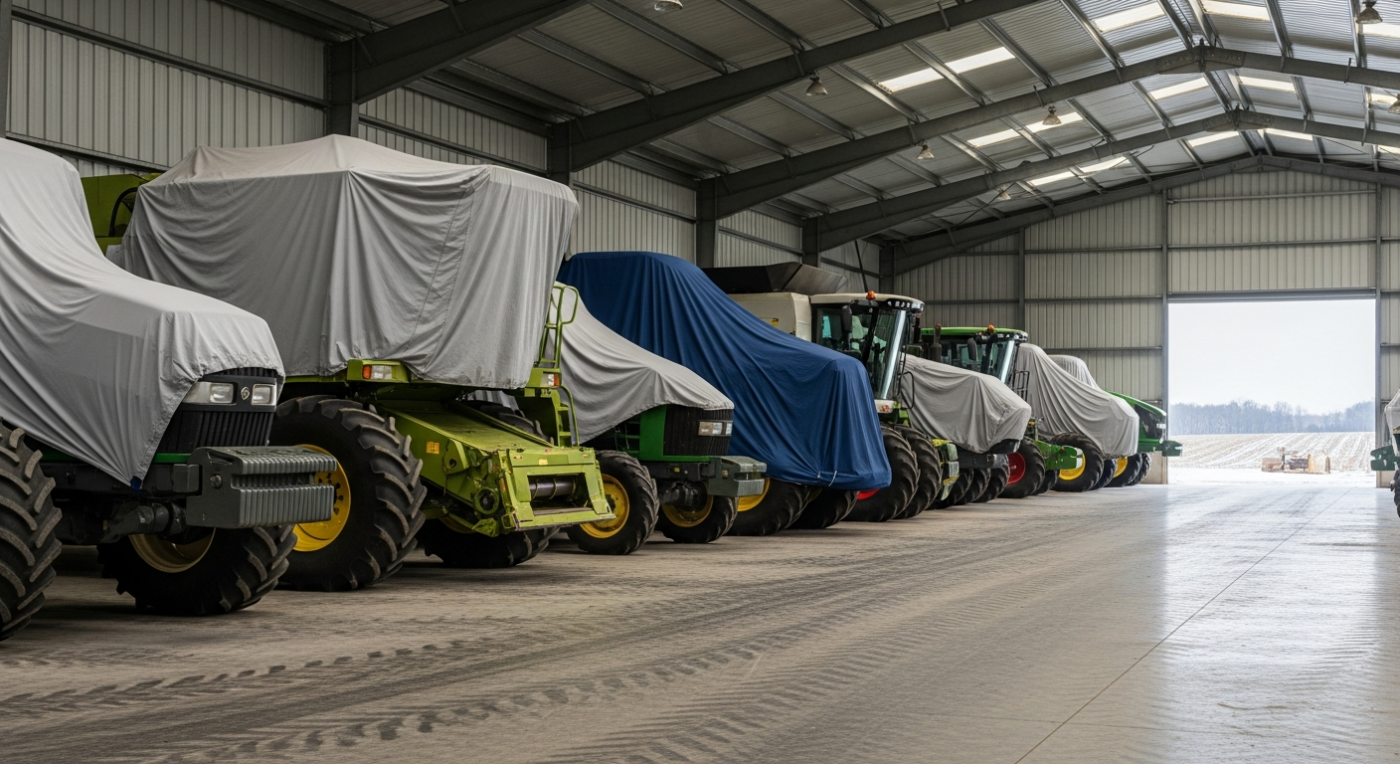
Before parking the equipment for winter, fill the DEF tank to full and add NüDef. A full, treated tank minimizes the air space where condensation can form and gives the stabilizer maximum contact with the fluid.
Run the engine for 10 minutes after treatment. This circulates treated DEF through the entire system, including the lines and the dosing module. You want treated fluid in every part of the system, not just the tank.
Don’t drain the DEF tank for winter. Some operators think draining the tank prevents problems. It doesn’t. An empty DEF system leaves residual fluid in the lines and pump that crystallizes in concentrated form. Plus, an empty tank accumulates condensation. Treated, full tanks are the correct winter protocol.
This applies to every piece of equipment on the operation: combines, tractors, sprayers, grain trucks, and any other machine with an SCR system. If it has a DEF tank and it’s going to sit for more than 30 days, it gets treated.
Equipment-Specific DEF Considerations
Different farm equipment presents different DEF management challenges.
Combines (John Deere S780/X9, Case IH 9250, AGCO Fendt IDEAL, Gleaner S9): These machines have the longest storage periods and the most critical operational windows. DEF tank sizes range from 12 to 23 gallons depending on model. Combines are the highest-priority equipment for seasonal DEF treatment because they’re irreplaceable during harvest.
Row-crop tractors (John Deere 8R/9R, Case IH Magnum/Steiger, Kubota M7/M8): Tractors see the most diverse use — planting, spraying, grain cart duty, fall tillage. They’re the workhorses that run the most total hours. DEF tanks on large row-crop tractors range from 8 to 18 gallons.
Self-propelled sprayers (John Deere R4044, Case IH Patriot, AGCO RoGator): Sprayers have the worst combination of intermittent use and heat exposure. They might run hard for three days, then sit for two weeks. That cycle is brutal on DEF quality.
Grain trucks: Farm trucks often get overlooked in DEF treatment programs because they’re “just trucks.” But during harvest, your trucks are as mission-critical as your combines. A truck that won’t restart at the elevator because of a DEF fault shuts down the entire harvest chain.
Where to Buy NüDef for Your Agricultural Operation
NüDef is on the shelf at your local Gebo’s — the same farm supply store where you’re already buying DEF, filters, hydraulic oil, and fencing supplies. Gebo’s carries NüDef at all 18 Texas locations, including stores across the Panhandle and South Plains that serve the state’s most productive agricultural regions.
If you’re running a farm or ranch operation near Amarillo, Hereford, Dalhart, Lubbock, or Plainview, you can pick up NüDef on the same trip you’re making for parts and supplies. No special ordering, no waiting on shipments.
For larger operations that want to stock NüDef by the case or pallet, the NüDef wholesale program provides volume pricing for agricultural accounts. Some operations treat their bulk DEF storage containers at delivery and keep individual bottles on each piece of equipment for field fills.
The best time to stock up is before planting season and again before harvest — the two highest-consumption windows when DEF treatment matters most. Walk into your nearest Gebo’s location, grab what you need, and you’re covered.
For operations in construction as well as agriculture — and plenty of ranch operations run both — the same NüDef product works across all Tier 4 Final equipment regardless of brand or application.