The 6.6L Duramax diesel has powered Chevy Silverado HD and GMC Sierra HD trucks through multiple generations, and it remains one of the most capable diesel engines available in a production pickup. But like every modern diesel with a Selective Catalytic Reduction system, the Duramax depends entirely on DEF quality to avoid fault codes and engine derates. When DEF crystallizes, degrades, or falls outside specification, the ECU responds with fault codes and a countdown to power restriction that ends the workday.
LML and L5P Duramax owners experience this more than they should. Understanding why, and knowing exactly what to do when it happens, keeps the truck running and keeps you out of the dealership service bay.
LML vs L5P Duramax: Are the DEF Systems Different?
The LML Duramax, produced from 2011 through 2016, was GM’s first widespread adoption of a DEF-based SCR system in the HD truck line. The LML system uses a Bosch dosing injector, a reductant quality sensor, and upstream/downstream NOx sensors to continuously monitor SCR efficiency. Compared to later systems, the LML is more sensitive to DEF quality variation. Small changes in urea concentration or purity are more likely to trigger fault codes on an LML than on later generations.
The L5P Duramax, introduced in 2017, brought an updated SCR system with improved temperature management, revised sensor calibration, and better integration with the truck’s overall powertrain management. L5P owners generally report fewer spontaneous DEF quality faults under comparable conditions. The L5P also has a more capable DEF heater that provides faster warmup on cold starts, which reduces the freeze-thaw cycling damage common on LML trucks in northern climates.
Despite these improvements, both engines share the same fundamental chemistry vulnerability. DEF that crystallizes, concentrates from evaporation, or degrades from sustained heat exposure causes fault codes on either platform. The difference is that LML owners need to be more proactive, treating DEF at every fill-up rather than every other one.
Why Duramax DEF Crystallization Happens
DEF crystallization in the Duramax system follows the same chemistry as every other diesel platform, but three factors make Silverado and Sierra HD owners particularly susceptible. The first is the heavy towing profile. Duramax trucks are frequently used for sustained heavy towing: fifth wheel trailers, car haulers, gooseneck loads. Extended towing generates high exhaust temperatures that transfer heat to the DEF system, accelerating fluid degradation beyond what the shelf life rating accounts for.
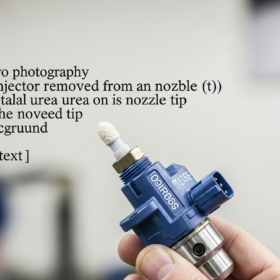
The second factor is seasonal storage patterns. Duramax owners who use their trucks for hunting, seasonal work, or recreational towing often store their trucks for weeks or months between uses. DEF left stagnant in the tank during storage allows slow water evaporation through the cap vent, concentrating the urea above the 32.5% ISO 22241 specification. When that concentrated fluid enters the dosing injector, crystal deposits form at the nozzle tip where fluid contacts cooler surfaces.
The third factor is temperature cycling in northern climates. LML trucks without the improved DEF heater of later models are particularly prone to freeze-thaw damage. When DEF freezes and thaws repeatedly through a northern winter, small concentration inconsistencies develop across the tank. Over multiple cycles, those inconsistencies accumulate into measurable quality variations that the reductant quality sensor flags.
Duramax DEF Fault Codes You Will See
P207F is the primary DEF quality fault code on both LML and L5P Duramax trucks. It indicates the ECU has determined that DEF quality is below the threshold needed for proper SCR catalyst operation. The downstream NOx sensor is seeing more NOx than the system expects given the amount of DEF being dosed, a clear signal that the DEF is either degraded, contaminated, or being dosed incorrectly due to a partially blocked injector.
P20EE appears when the SCR catalyst efficiency drops below threshold, the downstream consequence of extended P207F conditions. If DEF quality issues go unaddressed, P20EE typically follows within a few hundred miles as the catalyst’s ability to convert NOx compounds. These two codes almost always appear together in progressive DEF system failures.
SPN 3364/FMI 1 is the J1939 equivalent of the P207F quality fault, seen more commonly on LML trucks and in diagnostic tool readouts on commercial Duramax applications. P20EF indicates a stuck-closed or physically blocked dosing injector, the hardware failure that often follows extended crystallization. Each of these codes triggers the GM restart countdown and eventually the 5 mph derate.
How to Fix Duramax DEF Problems
When DEF fault codes first appear and the derate countdown has started, the most effective first response is a complete DEF drain and refill. Most Duramax trucks have an accessible DEF tank drain. Remove the plug, allow the tank to drain completely, inspect the strainer for visible crystal deposits, and clean any buildup you find before reinstalling.
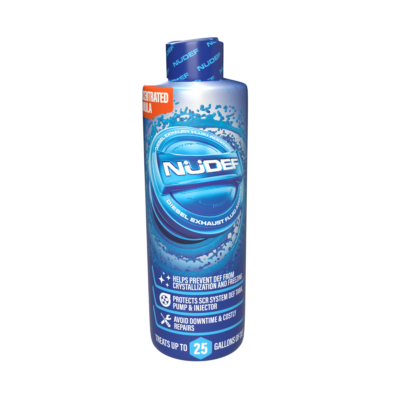
Refill with fresh certified ISO 22241 DEF and add NüDef stabilizer before completing the fill. Drive the truck through at least two full operating cycles: warm startup, normal operating temperature, cool down. The combination of fresh DEF, NüDef’s cleaning action on mild deposits, and heat cycling typically clears quality-related fault codes within those two cycles without requiring a dealer visit or scan tool reset.
If the dosing injector is physically blocked (indicated by P20EF that doesn’t respond to fresh DEF), the injector requires removal and either ultrasonic cleaning or replacement. This is a shop job requiring DEF system purge equipment and the appropriate torque specs for reinstallation. Injector replacement on the Duramax runs $350 to $700 depending on labor rates and whether the injector can be cleaned or must be replaced outright.
Preventing Duramax DEF Issues with NüDef
Consistent treatment is the only strategy that keeps the Duramax out of the fault code cycle entirely. NüDef stabilizes DEF by slowing the evaporation that concentrates urea, maintaining fluid consistency through temperature cycling, and providing a surface treatment on the dosing injector components that inhibits crystal nucleation.
For LML owners, treating at every DEF fill-up is the recommended approach given the system’s sensitivity to quality variation. For L5P owners with the improved system, treating every other fill-up provides strong protection under normal conditions, with every fill-up recommended during heavy towing seasons or in sustained hot-climate operation.
For trucks going into seasonal storage, treating the DEF tank before parking is the single most cost-effective preventive action available. The fluid inside the tank, lines, and dosing injector is protected through the storage period, and the truck starts in the spring without the crystallization issues that produce fault codes on the first drive.
Silverado 2500 vs Sierra 2500: Any DEF Differences?
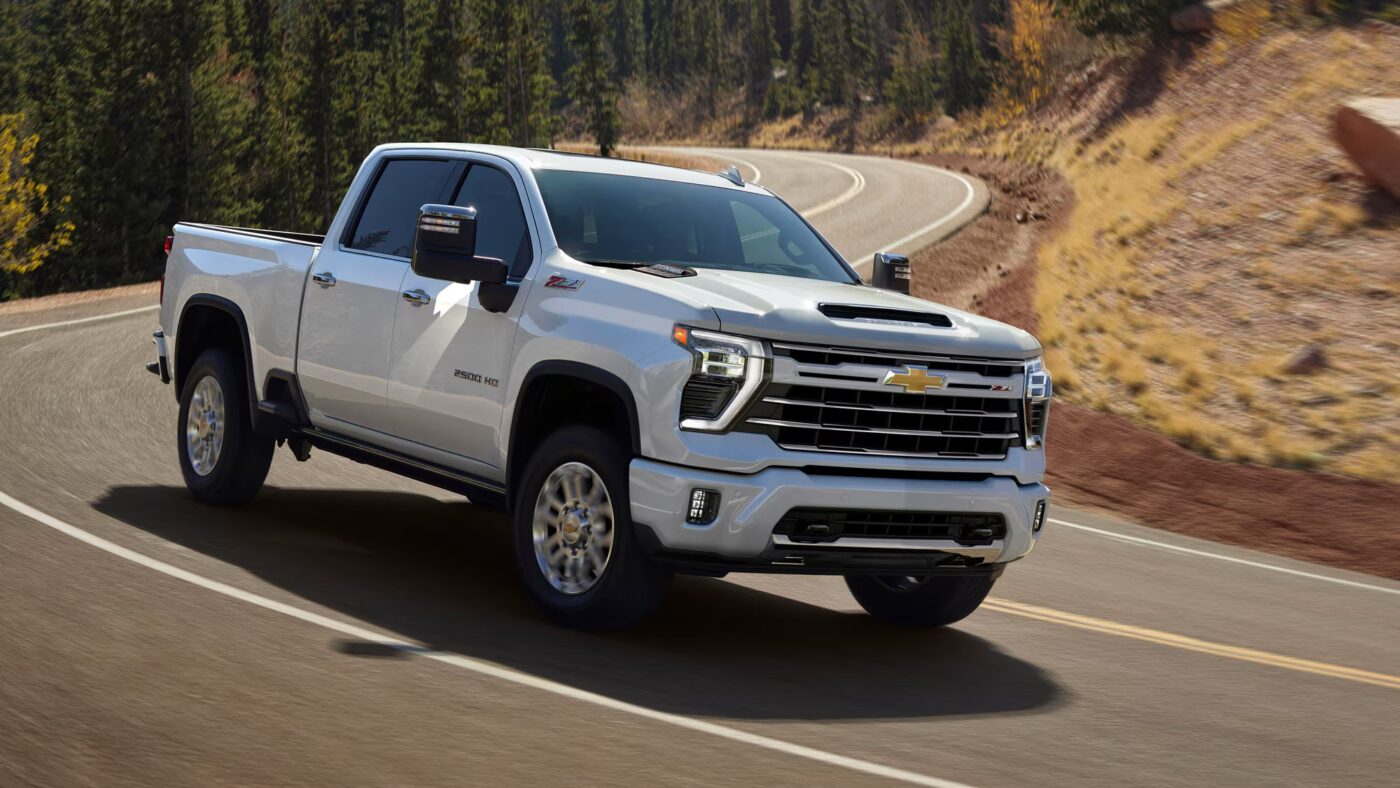
The Silverado 2500 HD and Sierra 2500 HD use identical Duramax engine and SCR system components. The DEF tank, dosing injector, reductant quality sensor, and ECU calibration are the same across both nameplates in the same model years. There are no platform-specific differences that affect DEF system behavior or fault code thresholds.
The 3500 HD configuration in both lines is also identical from a DEF system perspective, with the only relevant difference being that heavy haulers and gooseneck tower operators, who tend toward the 3500, put higher sustained thermal loads on the DEF system. Those use cases benefit from treating DEF at every fill-up rather than every other one. Aside from use pattern differences, NüDef provides the same protection across all Duramax HD configurations.